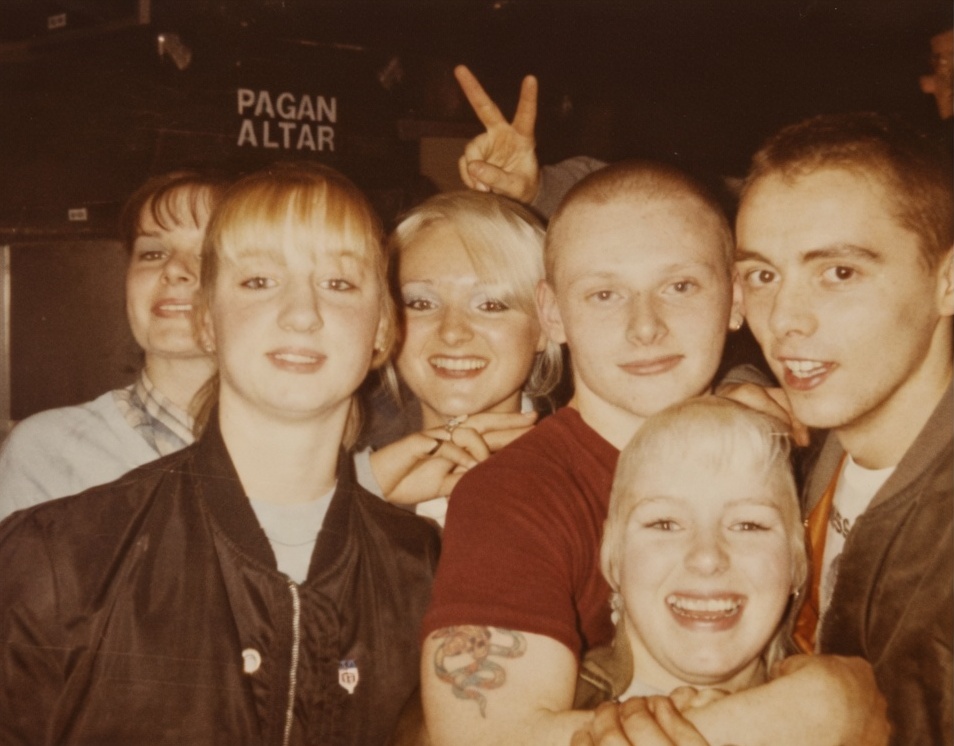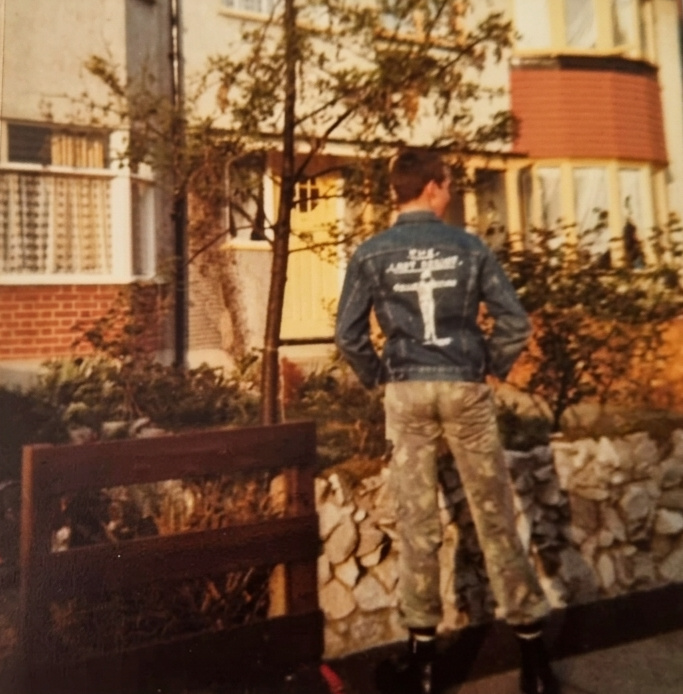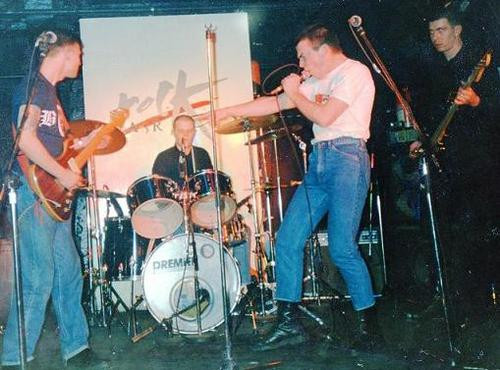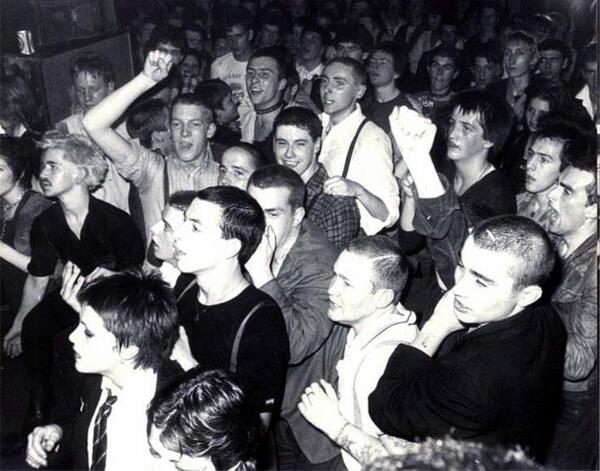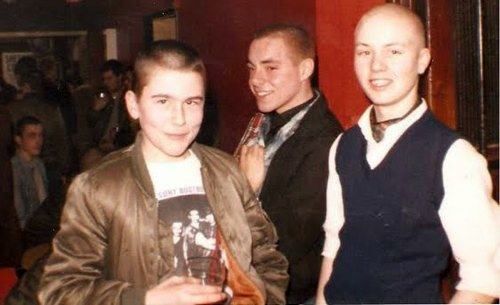
In the late ’70s and early 80’s, Barney St George was a young skinhead from the outer West London suburb of North Hillingdon. Travelling regularly into central London with friends, he became part of the scene around Carnaby Street. Here are some of his private photos and recollections of the skinhead scene, most of them taken in 1981. These pictures were never published before.
“I was more of a bootboy in 1977–78. I was also lucky as my mum worked in Brunel University in Uxbridge, West London and they had a thriving gig scene there. I had a ticket for the Sex Pistols but never went.
I was booking shows at ABC No Rio [an alternative community centre in Manhattan] in 1990 when I met Dan Sabater. At the time, he was a skinny anarcho-punk fresh out of high school and heavily involved with the political squatter scene on the Lower East Side. He was funny, charismatic, goofy and simultaneously deadly serious about his beliefs and told some scary tales of being chased in his Brooklyn neighborhood for looking ‘punk rock’; especially some encounters with the notorious Sunset Skins.
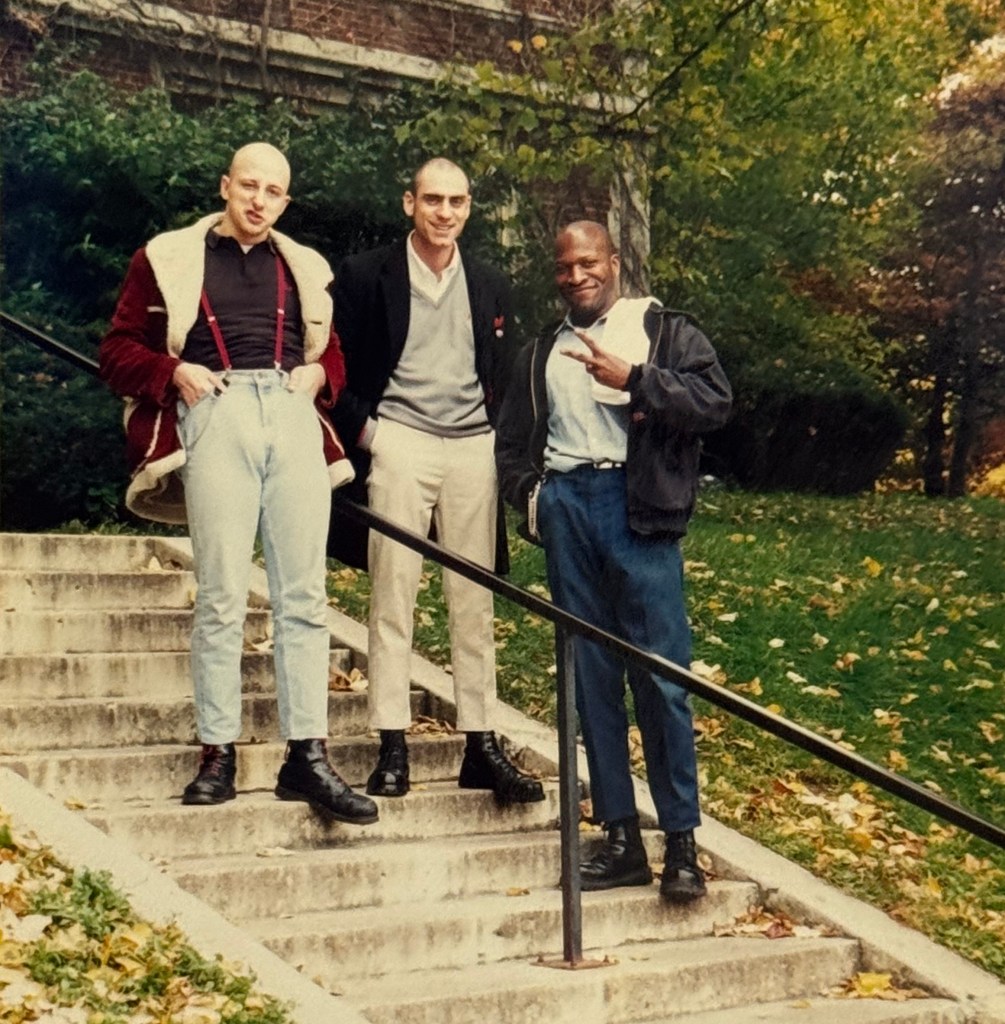
Dan Sabater, English Dan & Marty from Chicago
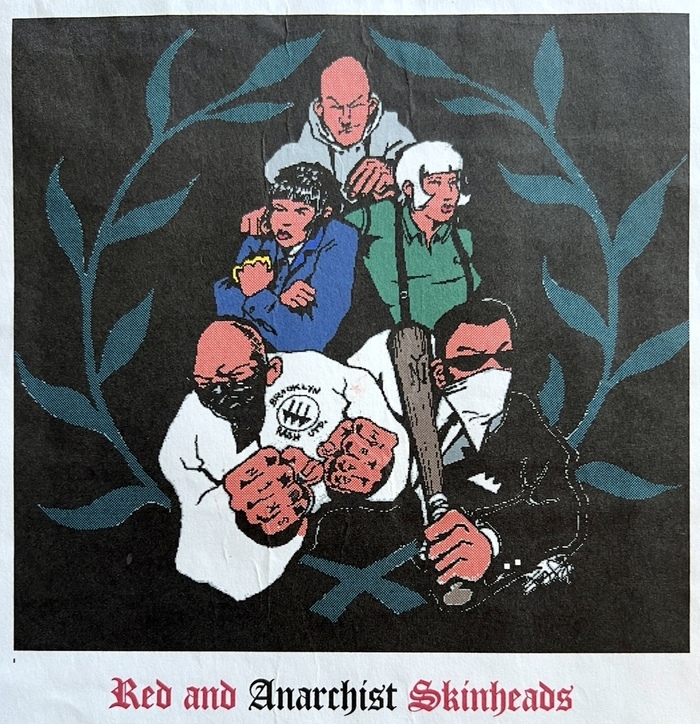
Imagine my surprise three years later when he pops up with a bald head, boots and braces, into boxing, soccer, reggae and all things related to being a traditional skinhead. I knew a lot of skins from growing up in the NYHC scene that came from different backgrounds but what made Dan stand out is him keeping his radical anarchist beliefs, combine them with socialist ideology inspired by European entities like the Redskins and start a group that synthesise these ideas, layering them onto a new skinhead identity.
An interesting reader’s letter regarding our review of Paul Burnley’s Skinhead Diaries has reached us this week. It discusses the first volume of the book, which we reviewed HERE, but also the follow-up:
I read both volumes.
I agree with what Crombieboy wrote about the first one.
On one hand, there’s an obvious right-wing bias, selective memory, and what looks like revisionism and exaggeration – probably with the intention of normalising his particular take on skinheads. Basically: “Well, everyone was actually a nazi, and the ones who weren’t secretly wanted to be but didn’t have the guts.” This frames nazis as the ultimate skinheads, rather than just one specific subset within the broader scene.
In 2017 I unexpectedly fell on hard times and had to take on a second job fast. It was a shit job, frankly, but one that had me walking all over London for long hours. By the end, I knew London’s streets, alleys, and corners, its whole geography, better than ever.
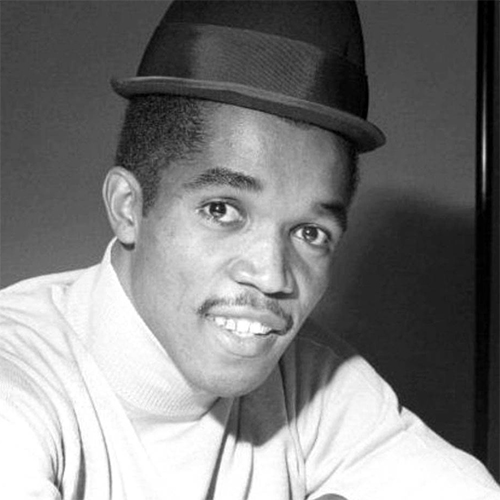
Following our recent article on the mysteries of rude boy fashion, we decided to dig a little deeper. While searching for material on rude boys in general, we found a 2006 piece that struck us as the best primer we’d come aross. Ironically, it wasn’t written in Britain – let alone Jamaica – but by a self-described ska fanatic from Italy, Sergio Rallo, for Skabadip.it. That site was a direct offshoot of Skabadip.com, the first Italian website devoted to ska and related genres, founded by Alessandro Melazzini.
A couple of notes before we begin. First, bear in mind that this piece appeared 23 years ago, and new information may have emerged since. Second, in Italian the term ‘rude’ is used much more freely than in English, referring to a broader attitude and scene rather than to rude boys in the strict sense. For example, Italian skinhead bars where reggae and Oi are played are known as ‘rude bars’ – the Sally Brown in Rome and the Bluebeatin Lecce being notable examples. Hence, towards the end of his article, the author applies the term ‘rude’ to all manner of things. What follows is our translation of Rallo’s piece:
Some time ago, a devoted reader of SkabadiP wrote to me asking about rude boys. He wanted to know what they were really like, what they thought, what their lifestyle was like and if they had a philosophy. As usual, I replied at length, within the limits of what I know. However, I also made the mistake of forwarding my email to Alessandro, the boss, who immediately seized the chance to order me to tidy up my reply so he could turn it into a nice little article for SkabadiP, that fine purveyor of ska culture – probably just to satisfy his own mischievous curiosity. After adding some more information following further research, here’s my article:
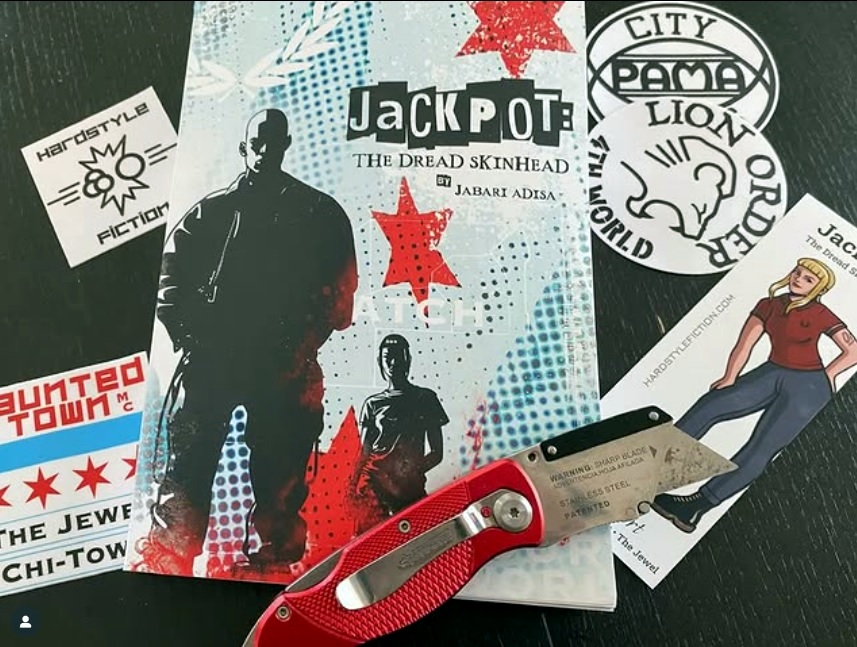
Our mate Jabari Adisa, aka Corky Boxcutter from Chicago, has recently published his first book, Jackpot: The Dread Skinhead. He also commented on our article about the rude boy style, and we think his take is worth sharing as a standalone piece:
“A few thoughts.
1. Rude Boy has always been a counter-culture and not a subculture. Rude Boys in both Jamaica and in England were a scorned, distrusted class (as you correctly call out in regards to the music), but at a certain point, being a rude youth became a badge of courage / defiance, a culture of resistance onto itself. That’s when you start to see ‘Rudie don’t fear’ and other pro-rude, proud rude tunes. And by the time Rhygin comes along, it’s a legitimate mentality.
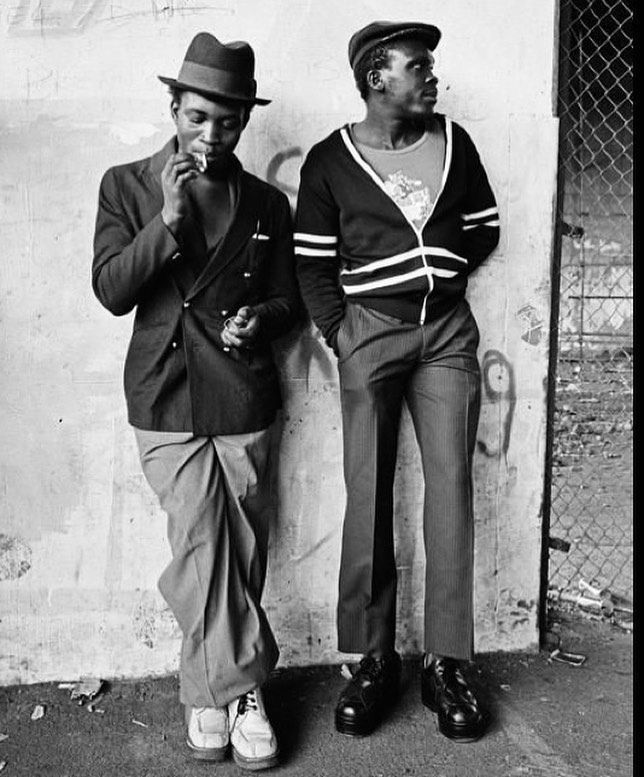
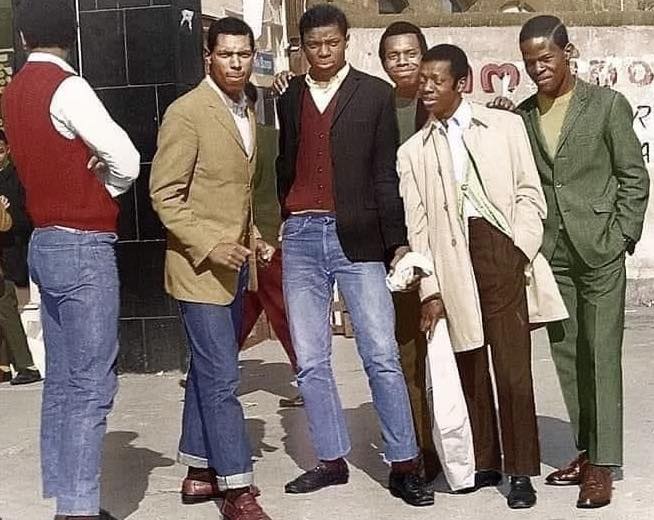
When the picture below popped up on social media, some commented that it showed a bloke called Bubbles and his crew from Brixton. Apparently, it was taken circa 1968/69 at the top of Granville Arcade (now known as Brixton Village), which is located at the junction of Coldharbour Lane and Atlantic Road. I liked the photo, but I couldn’t tell whether this lot were rude boys, skinheads, or neither. Clothes-wise, nothing strays too far from the original skinhead look.
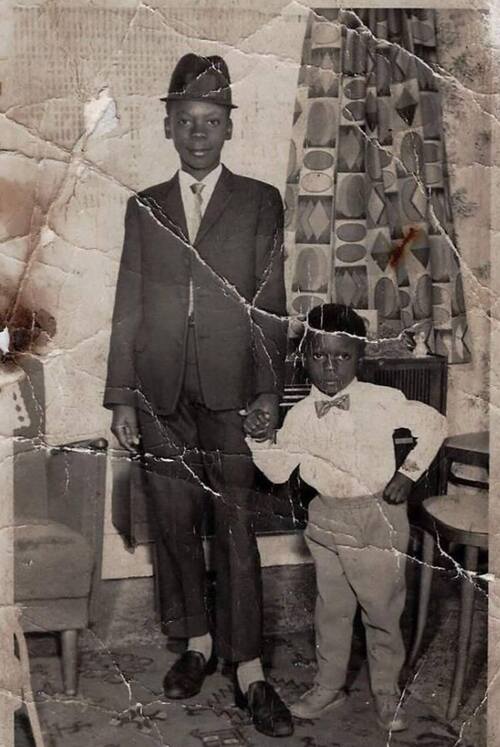
Then it occurred to me that, although rude boys are mythologised in reggae songs and often mentioned in passing in retrospective accounts of the original skinhead era, they remain photographically under-documented – which explains my considerable ignorance of their style, and why I can’t really place the lads in the picture.
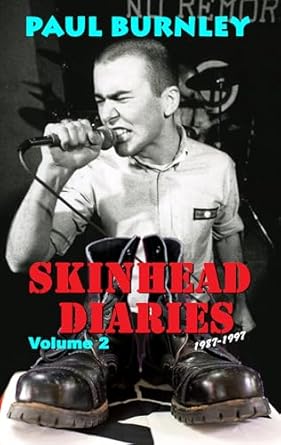
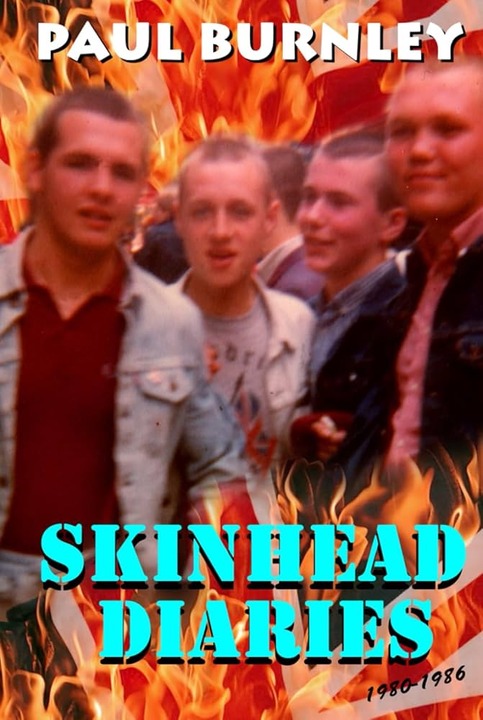
Paul Burnley: Skinhead Diaries 1980–1986. A Coming of Rage Story
This book is the first part of the autobiography of Paul Burnley – in reality Paul Bellany, son of the famous painter John Bellany. As most readers will know, Burnley was briefly the vocalist of the National Front skinhead band Public Enemy from Maidstone, and later the singer of the London-based No Remorse – one of the most self-consciously extreme nazi bands on the Blood & Honour scene. This volume, however, covers his teenage years before he joined No Remorse – roughly 1980 to 1986 – when he became a ‘rudeboy’ and then a skinhead, quickly drifting to the far right under the influence of his mates and various formative experiences.
A very young Paul Burnley, left
Skinhead Diaries is self-published through Amazon, so much of the dosh is going straight into Burnley’s pockets. You may ask why I handed over my cash for the book, and why I’m helping promote it on this blog? To answer the first question, curiosity got the better of me. All things considered, I found it unlikely that my money would go on to fund some far-right terror cell. More plausibly, I’d be buying a retired ex-nazi a few pints. If that makes me morally complicit, so be it.[1]
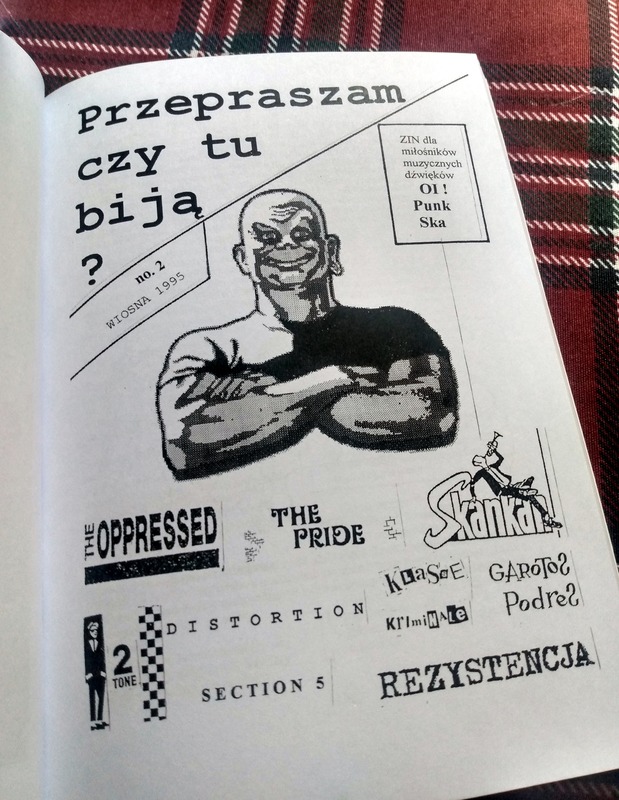
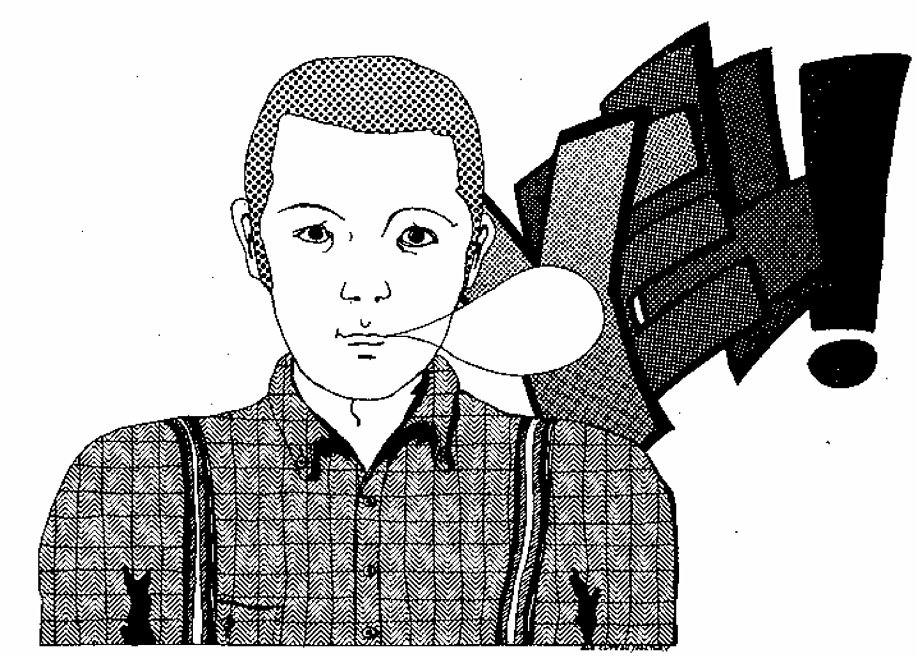
Readers will remember my exhaustive interview about the Polish skinhead scene of the ’80s and early ’90s, and this anthology, published by Bad Look Records of Warsaw (more specifically, Warsaw-Służewiec, which also happens to be the neighbourhood of my childhood), more or less picks up where that interview left off. It contains all issues of the Warsaw skinzine Przepraszam, czy tu biją?, which translates as ‘Excuse me, do they beat up people here?’ and ran from 1994 to 1997 – five issues in total.
I met Lou Morales in 1988 while hanging out at the CBGB’s matinees. At the time, I didn’t realise he was only 14, as he was always mature for his age and seemed more level-headed than the rest of the crew he hung out with: the notorious Sunset Skins, a predominantly Puerto Rican group of skinheads from Sunset Park in Brooklyn.