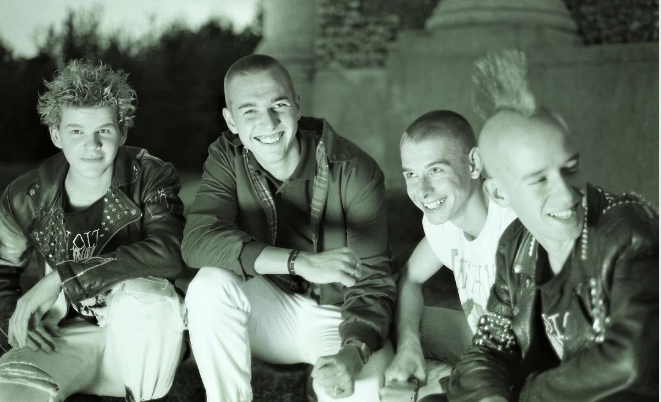
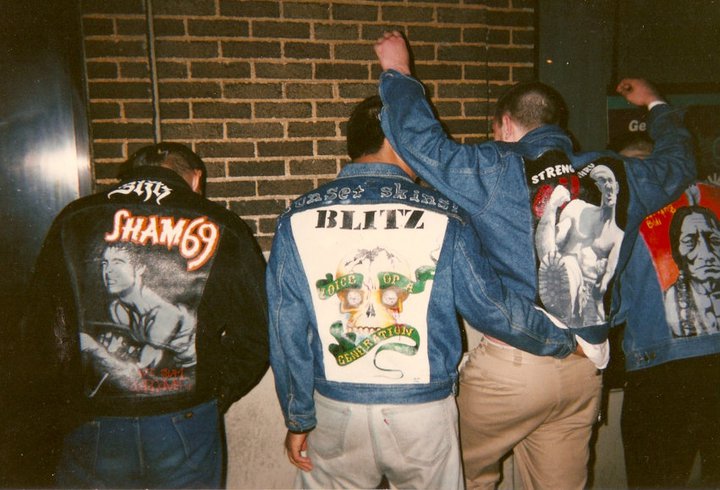
I met Lou Morales in 1988 while hanging out at the CBGB’s matinees. At the time, I didn’t realise he was only 14, as he was always mature for his age and seemed more level-headed than the rest of the crew he hung out with: the notorious Sunset Skins, a predominantly Puerto Rican group of skinheads from Sunset Park in Brooklyn.
Continue readingCategory: Skinhead history
Skinheads in Peru
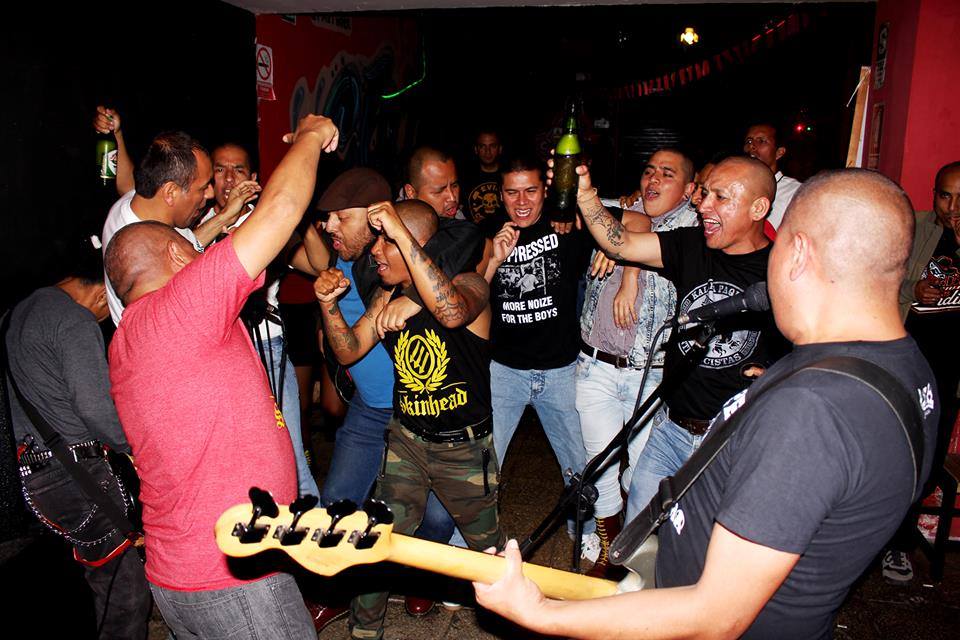
The history of a distinct shaved head and boots & braces wearing subculture in Peru doesn’t start until the early 1990s, even though there were isolated sightings during the legendary 80s ‘subterranean rock’ scene in Lima. Economic conditions, isolation and misconceived public notions nurtured a true working-class based skinhead movement, small in numbers, but big in committed ideals. Taking a cue from legit sources, they sought to preserve the original ethos of this movement without ignoring the reality of day-to-day life in Peru. A class-based caste system has been the norm for centuries in this country, and the recent pandemic has exacerbated these differences to a boiling point. The skins in Peru realise that it’s not just fashion and music that fuels them but also protest, whether political dissent or direct action on the streets, that makes this movement a vital subculture dedicated to radical change.
I spoke to Mendo (visual artist and original member of the first skinhead collective in Lima) and Abraham (singer of Ultima Amenaza) about the history and current state of the scene. For more info follow their Cronicas Skinhead Peru page on Facebook.
Freddy Alva

This article appears in the newly released Oi! The Black Book Volume 2: https://urbanstylesnyc.bigcartel.com/product/oi-the-black-book-vol-2
When is the beginning of the skinhead movement in Perú and who are the first skinheads seen in Lima?
Continue readingStompin’ in Bologna: Rude’s Ghetto 84 Chronicles
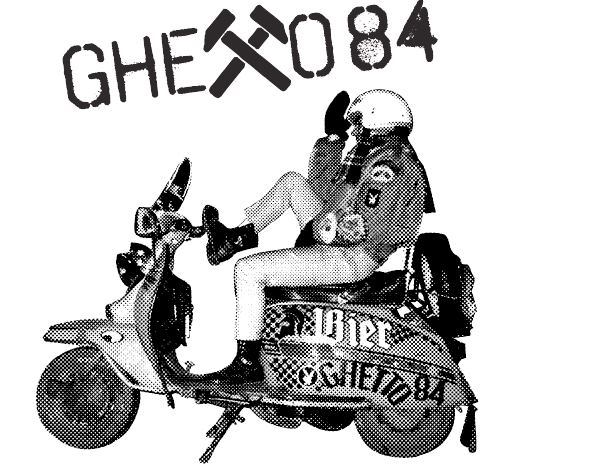
The Italian town of Bologna has a population of less than 400,000, but the density of local Oi and punk combos has always been incredibly high. Nabat (arguably continental Europe’s most influential Oi band) hails from the San Donato quarter, while the nearby Bolognina neighbourhood is the historical breeding ground for groups such as Ghetto 84 and Zona Popolare. Ghetto 84 were fronted by Rude, a second-generation Bologna skinhead. He was part of the wave that ruled the latter half of the 80s and established a strong connection between skins and Bologna FC 1909 ultras.
During their initial period, Ghetto 84 recorded the 7-Song tape La Rumba!, released on Nabat’s C.A.S. Records in 1987, and a couple of tracks for the excellent 1991 compilation Oi! Siamo ancora qui!, which was curated by Klasse Kriminale’s Marco Balestrino. An album, A denti stretti, followed in 1996. After that, Ghetto 84 fans had to exercise patience – it took over 20 years for the comeback album, Ultras Rock ‘n’ Roll, to be released.
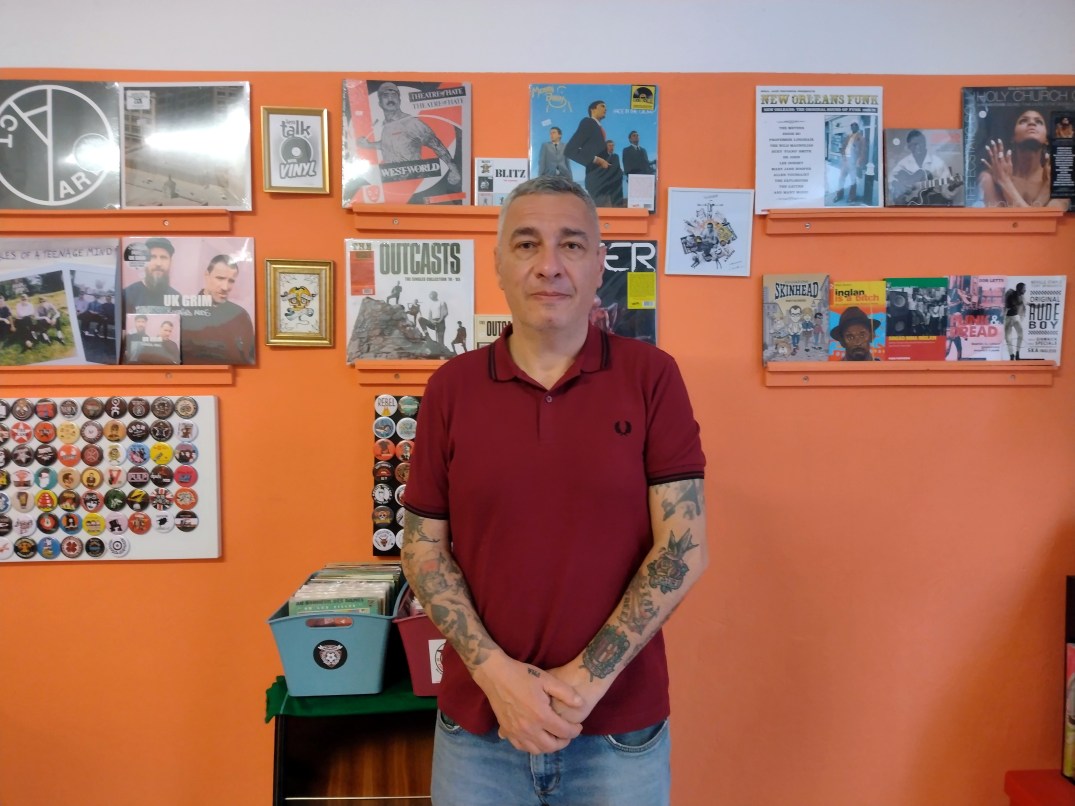
One joyous afternoon in May 2023, we met with Rude at Hellnation Records in the Bolognina quarter of Bologna. The shop is located on the very street where Rude grew up in the 70s and 80s (and right next to Black Panda Tattoo, where Bologna skins get inked). Today, Rude lives in Dresden, Germany, and he was in town for a visit. We took the opportunity to sit him down in a nearby bar and find out about skins, ultras, punks and mods in 80s Bologna, Rude’s old band Ghetto 84, his subsequent career as a musician and DJ, and his present stint with Zona Popolare.
Interview: Matt Crombieboy
Photos of Rude at Hellnation shop: Francesca Chiari
CLICK PICTURE FOR STOMPING IN BOLOGNA PART 1
CLICK PICTURE FOR STOMPING IN BOLOGNA PART 2
Fight to live, live to fight: Skinheads in the Polish People’s Republic and after
Conventional wisdom suggests that prior to the emergence of SHARP, Polish skinheads were essentially boneheads – in other words, thugs with fascist sympathies and little appreciation for the finer aspects of skinhead culture. While there’s a certain truth to the stereotype, it is too simplistic to do justice to the skinhead scene of the Polish People’s Republic, which was no less contradictory than its counterparts in the western countries.
In anti-fascist accounts of the latter half of the 80s, all Polish skinheads are routinely referred to as naziskini [nazi skins]. Yet the Security Service of the Polish state had a somewhat more realistic assessment: in an internal report from 1986, it estimated that there were approximately 200 skinheads in Poland, of which it regarded 30 as “fascists”. By 1987, the overall number remained the same, but the count of “fascists” had increased to 50. This indicates a clear majority of “non-fascist” skins, although things were to change rapidly with Poland’s political transformation in 1989.

While one could argue that the emergence of skinheads in Poland was a symptom of globalisation, the politics and concerns of Polish skins often had distinctly local roots, shaped by Polish conditions and history. It wasn’t until the latter half of the 90s that neo-nazism – i.e. George Lincoln Rockwell’s fusion of German nazism with Southern U.S. white racism – became the predominant tendency. By that time, the neo-nazi faction was in competition with a traditionalist Oi revival and the budding SHARP movement.
Continue readingBlank Generation: The Untold Story of a High Wycombe Oi band
Though not often brought up today, there was something of an Oi revival happening in the early 90s. In England, some of the foremost acts were Boisterous, Another Man’s Poison, Braindance and Argy Bargy, and the must-have compilations of the hour were Oi! The New Breed and British Oi! – Working Class Anthems. The latter album also comprised a band of youngsters from High Wycombe, a market town some 30 miles west of central London. Named Blank Generation – though not after the Richard Hell song, as we shall see – the group managed to record a demo, a single and the album Out Of My Head during its four-year existence.
The core of the band were the industrious brothers Benny and Chez on vocals and bass respectively (alongside Kneill on guitar and soon joined by Don on drums). Today they’re both based in London, and if you live north of the river you’re likely to bump particularly into Benny – for, no matter how much he insists that he’s through with the skinhead world, he’s magnetically drawn back to it time and again. Recently it struck me that the story of Blank Generation has never been told, but probably should be, as it offers a glimpse of the British Oi scene at a particular moment in time. So I decided it was time for a historical interview with Benny and Chez.
Continue readingOi! This is Antwerp. Klaas Vantomme of Comrade interviewed
Comrade – a band name that will ring familiar to historians of European Oi, especially those of a left-wing persuasion, but to few others. Formed in 1986 in the Belgian town of Antwerp, they went on to perform music based on classic British Oi, but with socialist sloganeering and ‘red’ imagery, across European stages until 1990. Last year, Mad Butcher Records released a retrospective compilation – but, although their former vocalist Klaas Vantomme remains a skinhead at heart, he has apparently mellowed out a lot politically, and reunion gigs seem to be off the cards. Girth spoke to him, and Matt Crombieboy sent him a couple of follow-up questions.
Continue readingSteve Goodman: an early seventies skinhead in 1988 (video)
The clip below, taken from an 80s student movie, was kindly forwarded to us by the filmmaker himself, who promised that there’s “more to come”. It features an interview with an early 70s skinhead at the first International Ska Festival, held at the Brixton Fridge in 1988. The skinhead isn’t exactly unknown: Steve ‘Grogger’ Goodman, editor of the 80s skinzine Chargesheet, author of the subculture novel England Belongs to Me (1994), and writer of the film script Pressure Drop (which is apparently still for sale if you fancy making an OG skinhead movie).
He says in the interview that he became a skinhead round about 1972, which strikes me as an odd year to adopt the style in London. The accepted narrative, after all – confirmed by numerous original skins over the years – is that the look had begun shifting towards suedehead by 1970, and then towards smoothie and bootboy in the following years. By 1972, the original skinhead style would have seemed hopelessly outmoded to most Greater London kids, who were probably Bowie boys or girls by then.
Continue readingBuzz Buzz and the Common Oi: Reaction EP
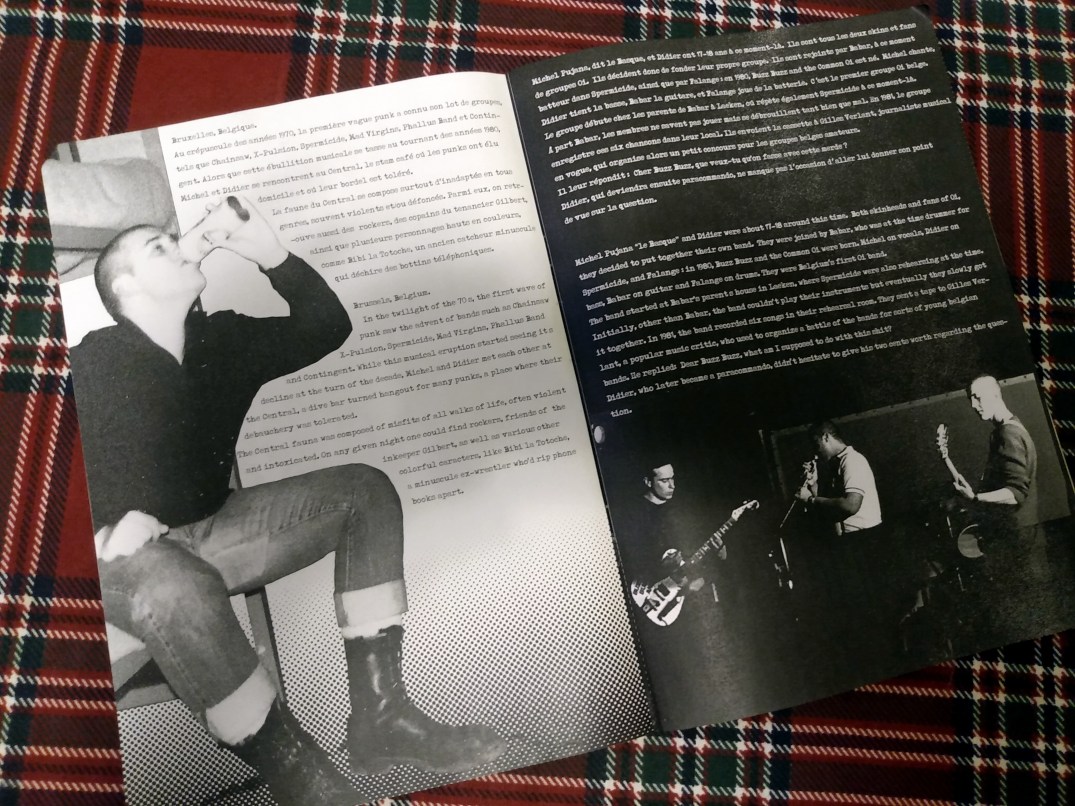
How’s that for a bizarre band name? The nice folks of Maximum Labour Records who sent me this slab of vinyl are certainly Oi historians: they have unearthed and remastered the demo tapes of a band from Brussels that had donned a skinhead image years before it occurred to any other Belgian punk band to do likewise. As early as 1980, Buzz Buzz and the Common Oi were seen on Belgian stages with closely cropped hair and – customary among first-generation Oi bands from the continent – more or less improvised skinhead gear. That’s early if you consider that it took the Germans and the French another year or two to get there – ‘Oi! The Album’ had only just hit the shelves.
Continue readingLetter: A Crombie Can Get You Arrested
A reader’s letter in response to our old article on crombies has just reached us. We’d like to thank Dave from Liverpool for his anecdote:
“Thanks for the fascinating article.
My first crombie was made to measure from Burtons in early 1971. Just turned 15 and paid my Mum back 10 bob a week from my window cleaning round.
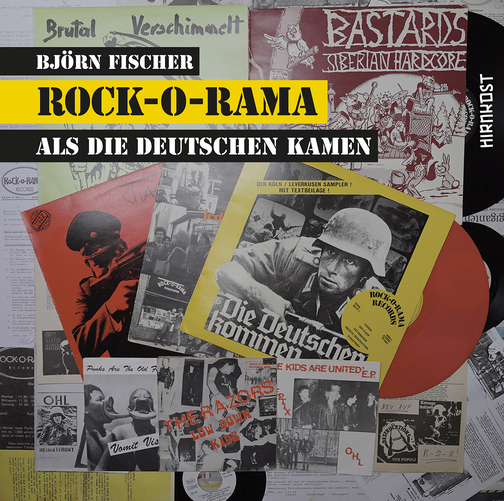
Continue readingThe Germans are coming: an interview with Björn Fischer about Rock-O-Rama
It was 1980 in the centre of Cologne. The sign on the shop spelt ‘Rock-O-Rama: Rock ‘n’ Roll, Rhythm & Blues, Punk’. Inside, small handfuls of teds and punks were swapping suspicious glances while trying to avoid each other – not easy in a room that couldn’t hold more than 10 people. The burly man behind the counter, well into his 30s and sporting a quiff, a tache with friendly mutton chops and white ankle boots, put a record on: the first production of his very own Rock-O-Rama label, Punks Are the Old Farts of Today by Vomit Visions. For once, the bewildered teds and punks were in agreement: this racket was completely unlistenable.
Continue reading