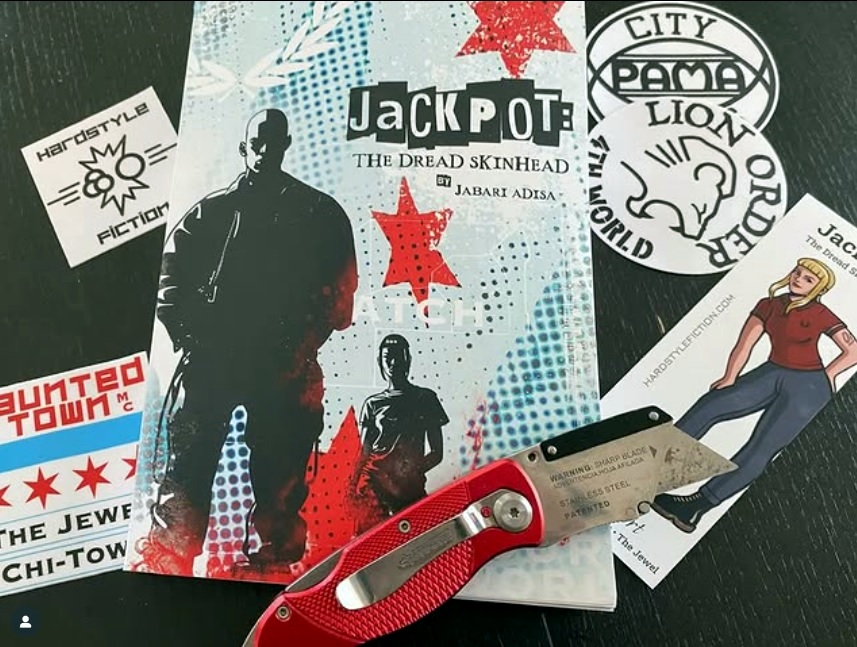
Our mate Jabari Adisa, aka Corky Boxcutter from Chicago, has recently published his first book, Jackpot: The Dread Skinhead. He also commented on our article about the rude boy style, and we think his take is worth sharing as a standalone piece:
“A few thoughts.
1. Rude Boy has always been a counter-culture and not a subculture. Rude Boys in both Jamaica and in England were a scorned, distrusted class (as you correctly call out in regards to the music), but at a certain point, being a rude youth became a badge of courage / defiance, a culture of resistance onto itself. That’s when you start to see ‘Rudie don’t fear’ and other pro-rude, proud rude tunes. And by the time Rhygin comes along, it’s a legitimate mentality.
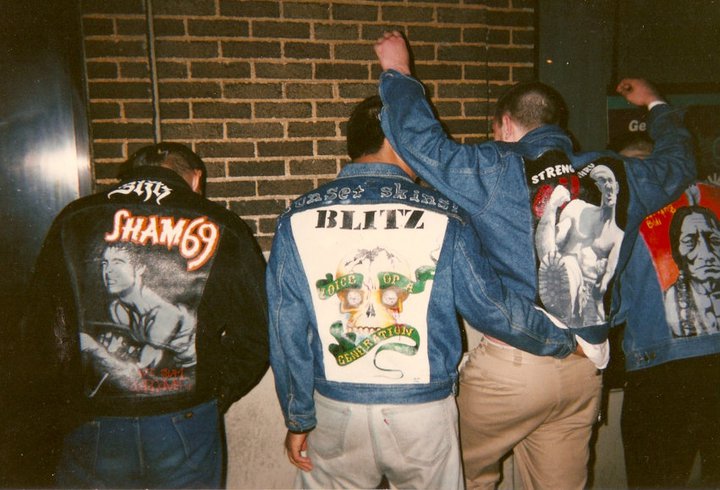
I met Lou Morales in 1988 while hanging out at the CBGB’s matinees. At the time, I didn’t realise he was only 14, as he was always mature for his age and seemed more level-headed than the rest of the crew he hung out with: the notorious Sunset Skins, a predominantly Puerto Rican group of skinheads from Sunset Park in Brooklyn.
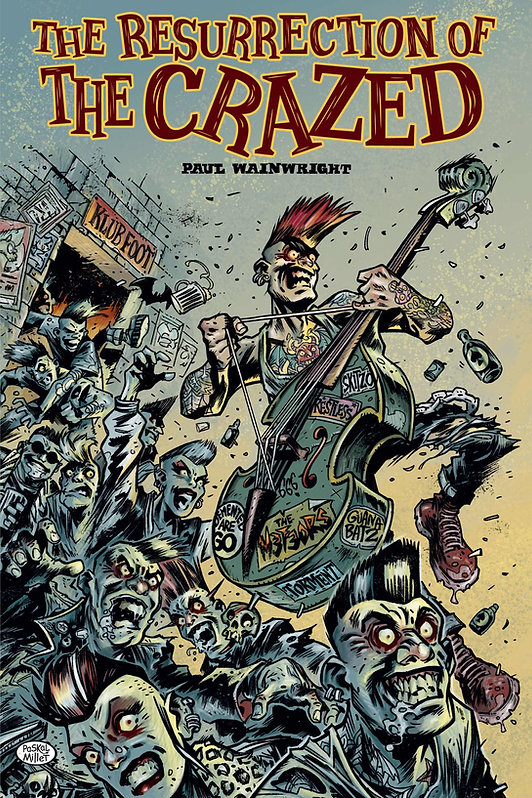
Here at Creases, we’re not afraid to dip a toe into other subcultures if the influences (and MA1s) fit. Last year one-time teenage Psychobilly Paul Wainwright published a book version of his at-the-time zine The Crazed, which carried interviews with the likes of The Meteors, Demented Are Go and Skitzo. The book itself, The Resurrection of The Crazed (Earth Island Books), is an altogether deeper dive into the subculture once referred to (by a compilation of the era) as The James Deans of the Dole Queue. Andrew Stevens dug out his dictaphone and recorded this with the author over a snakebite or several to hear more about stomping at the Klub Foot.
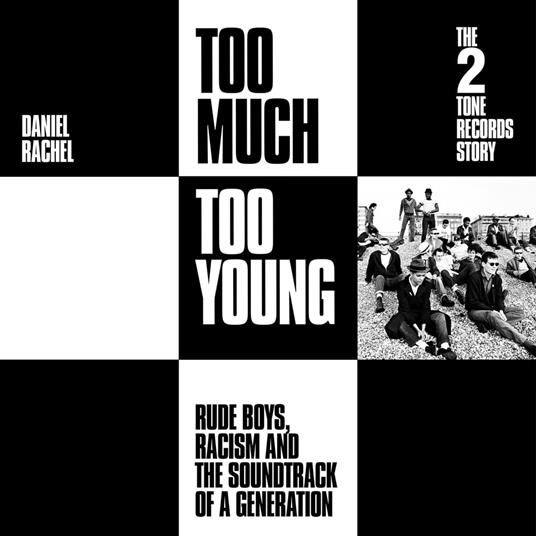
Author of a history on Rock Against Racism and all that came after, followed up by the co-written autobiography with The Beat’s Ranking Roger, Daniel Rachel has made a name for himself as a devoted chronicler and authority on the 2 Tone era. His latest, Too Much Too Young: The 2 Tone Records Story is out now. It may well be the same old show, but Andrew Stevens just had to tune in to hear more about punks, teds, National Front, natty dreads, mods, rockers, hippies and… skin-heads!
When we last spoke you’d just covered the tricky gamut of music and politics from Rock Against Racism through 2 Tone to Red Wedge. Is this a book you’d always wanted to write before then and the Beat book or a natural progression from them? I can only think of George Marshall’s and Garry Bushell’s collected writings from the time which came out not long back.
There has never been a comprehensive book on the 2 Tone label beyond George Marshall’s one in the early 90s. That was great, but thin. So yes, I’ve always wanted to write the 2 Tone Records Story, but the timing was as much to do with getting Jerry Dammers on side.
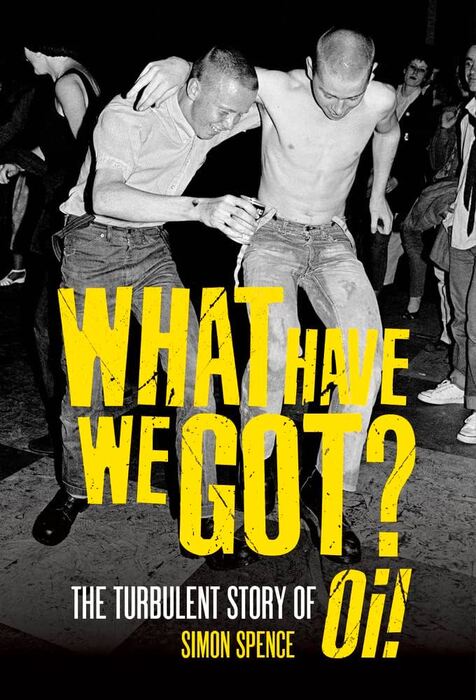
What Have We Got? The Turbulent Story Of Oi! by Simon Spence (Omnibus Press 2023)
This is the heartwarming story of a journalist who, having written extensively about britpop, discovers and falls in love with Oi. Now Simon Spence is spreading the good news about skinhead rock to a whole new audience – and so, his book is very much pitched towards those who have discovered the genre even more recently than he did. Spence’s opening sentences are: “A definitive history of Oi!? Yes and no”. Serious historians don’t do definitive, not even a hedged definitive.[1]
Important progenitor: Gary Lammin
There is a foreword by Cock Sparrer founder Gary Lammin, and the book concludes with a chapter on Lammin’s old band, among other things. This sets Cock Sparrer up as the founding fathers of Oi. However, Spence begins with a chapter entitled ‘The New Breed: Crown Court’. Lots of people like Crown Court, but for me the band’s name was almost enough to put me off ever listening to them. The name is shared with a really boring and thankfully now defunct TV show. That isn’t why the band took the name, but anyone my age who grew up in the UK is likely to make the association. What next? Oi bands called things like Strictly Come Dancing and Good Morning Britain? Incidentally, ‘the new breed’ is a phrase I first came across in Richard Allen skinhead novels when I was reading them in the 1970s, but there’s no mention of that here.
Moving on, there is a delve into Oi precursors, including Sham 69, Menace and Angelic Upstarts. Spence opts for a very conventional view of the bands that inspired Oi, despite the fact that genres evolve and their boundaries change. He very much works with a pre-existing template on the origins of Oi and seems uninterested in broadening this out. Nonetheless, what some early Oi musicians enjoyed musically went way beyond this narrow range of influences.
Spence doesn’t mention west London band Neat Change, who had members geared up as skinheads back in 1967![2] Or, indeed, any of the far-out bootboy glam outfits who paved the way for punk – and with this, you could go all the way back to tunes like ‘Factory Grime’ by Crushed Butler. There are some lines in the book about the influence of dystopian tales such as 1984, Brave New World and Clockwork Orange on Oi culture. From this, it could be argued that some minor league London punk bands such as The Unwanted – whose simplistic vinyl releases included ‘Freedom’ (on the first Live At The Roxy LP), ‘Secret Police’ and ‘1984’ – were also precursors to Oi.
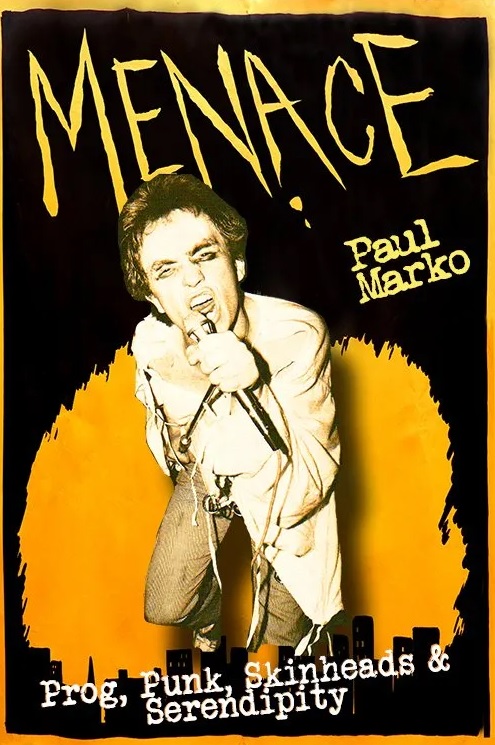
Menace: Prog, Punk, Skinheads & Serendipity by Paul Marko (Punk 77 Books)
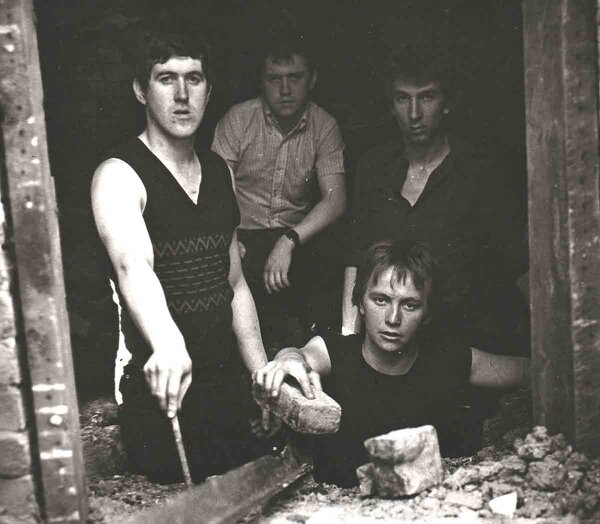
Menace were a classic four man late-seventies punk group. That said, the fact they had an Islington-based Canadian singer was slightly unusual for a London band of the time. Vocalist Morgan Webster was not only a great frontman, with his eye makeup and flamboyant dress he looked way more punk than the rest of Menace. That said, I preferred the real and ordinary dressed-down look sported by the majority of the band, although I can also understand why Paul Marko has opted to use a picture of the band’s singer on the cover of his book. The group created a great racket that was one of the earliest manifestations of what became known as street punk.
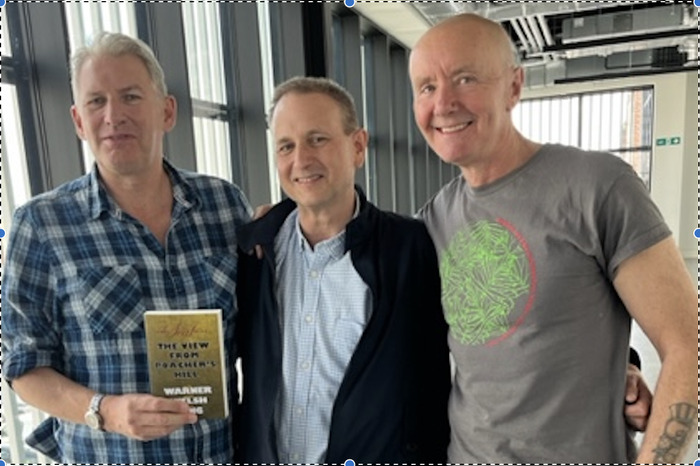
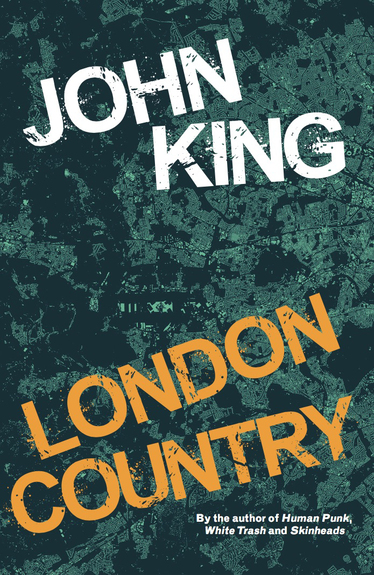
A new three-novella collection of uncensored, unapologetic tales for our conservative conformist times, The View From Poacher’s Hill is the second instalment in an ongoing collaboration between the authors Alan Warner, Irvine Welsh and John King. Following The Seal Club, published at the end of 2020, Poacher’s Hill features Warner’s ‘Migration’, Welsh’s ‘In Real Life’ and King’s ‘Grand Union’. And kicking off the last of these stories is Skinheads’ own Nutty Ray English, fresh from King’s new novel London Country. Set in the autumn of 2021, Grand Union finds Ray at peace with the world. But trouble is on its way…
And to some, it was – but to many, myself included, choosing your own haircut was a rite of passage. I was around 11 years old when I begged my mum to let me go to the barbers and get a crop. Up until then she had cut my hair herself, most certainly through necessity rather than any penny-pinching. She was a single mum bringing up two kids in a flat above a row of shops. My clothes came from jumble sales. It took a lot of pleading and whining, but she eventually relented and off I went to the barbers expecting to be transformed in to Suggs’s lovechild, but that’s a whole other story.
It is easy to forget that in the late 1970s, early 80s, you could still be sent home from school for daring to turn up with hair shorn too short. A mohican or dyed hair would almost certainly have got you suspended until you agreed to comply with school dress code. Yet in some weird way, it is exactly because these boundaries and rules were in place and enforced that this period of time is so memorable. I have been asked why my novels, Too Much Too Young and Feathers, are set in the period that they are. It’s really simple. It’s a time I am familiar with and one that, rightly or wrongly, I am very fond of. For myself and many, this period was our first dipping of our wicks in to the exciting world of music, fashion, social freedoms and autonomy.
It’s fair to say you’ve made it in your writing career when your books are as anticipated as those of John King (The Football Factory), who as the saying goes needs no introduction to any sussed reader (though this is a good start). London Country (London Books, 2023) is a familiar canter through King’s authorly hinterland of West London (“Herbert Manor”), not only spliced and infused with more punk references than you could shake a mic stand at but revisiting three of his most popular and successful ‘cycle’ novels, Human Punk, White Trash and Skinheads.
London Country centres on familiar characters from those earlier novels, their personal crises and brushes with the judicial system, collapsing healthcare and occasionally boss sounds on tape and vinyl. Readers will be pleased to know that skinhead cabbie Hawkins makes an appearance amid the ruminations on the state of the nation, as Brexit hurtles from pinstriped gentlemen’s clubs and electoral fringe politics into daily life (King was once a leading light in the ‘Lexit’ No2EU coalition of trade unionists). Working class history writer and original skinhead Martin Knight was on hand to hear more.
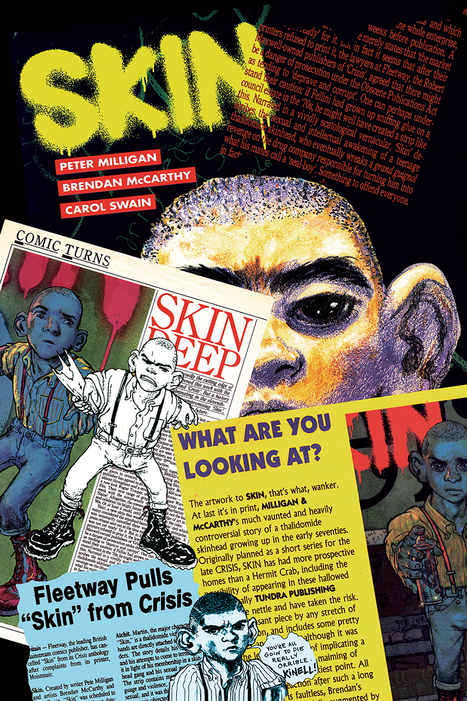
The British comic strip Skin – conceived and drawn by Brendan McCarthy, written by Peter Milligan and coloured by Carol Swain – was commissioned by Fleetway Publications, who intended to publish it in Crisis magazine in 1990. The story revolved around Martin Atchet, a young skinhead whose arms are malformed from birth. Like so many real-life children in the 50s and 60s, the Martin character is born deformed because his pregnant mother is prescribed thalidomide, an anti-nausea drug whose effects on pregnant women are not properly tested.
Due to the raw and potentially controversial subject matter, the publishers soon changed their minds and withdrew their offer, however, and Milligan and McCarthy’s splendid work remained in limbo until 1992, when Kevin Eastman – co-creator of the Ninja Turtles alongside Peter Laird – finally made it available to the public via Tundra Publishing.
In Italy, Skin was published in three parts in Tank Girl magazine, namely from November ‘95 to February ‘96, and this original Italian edition is quite difficult to find. However, Hellnation Libri are now issuing a new Italian edition, edited and translated by Flavio Frezza (of Garageland magazine). For this interview, Flavio and the skinhead artist Alessandro Aloe (of Moriarty Graphics) had a chat with Brendan McCarthy, who like his co-author Peter Milligan was a skinhead in the very early 70s.
This interview was originally published in Italian on the Crombie Media blog.




 Creases Like Knives