Stompin’ in Bologna: Rude’s Ghetto 84 Chronicles

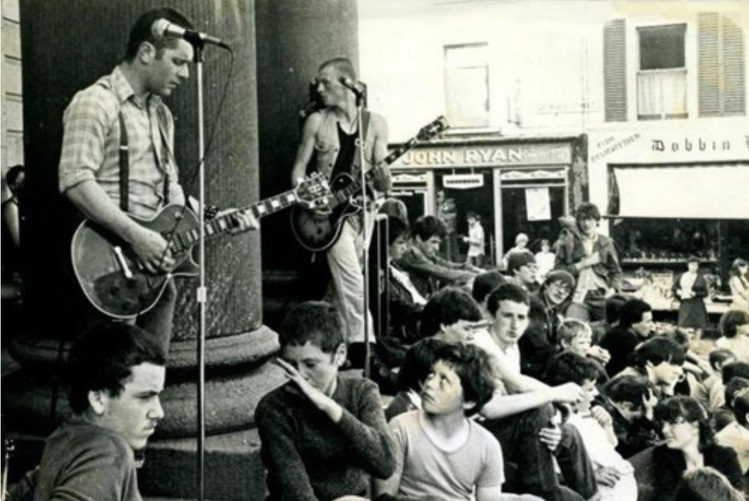
The Italian town of Bologna has a population of less than 400,000, but the density of local Oi and punk combos has always been incredibly high. Nabat (arguably continental Europe’s most influential Oi band) hails from the San Donato quarter, while the nearby Bolognina neighbourhood is the historical breeding ground for groups such as Ghetto 84 and Zona Popolare. Ghetto 84 were fronted by Rude, a second-generation Bologna skinhead. He was part of the wave that ruled the latter half of the 80s and established a strong connection between skins and Bologna FC 1909 ultras.

During their initial period, Ghetto 84 recorded the 7-Song tape La Rumba!, released on Nabat’s C.A.S. Records in 1987, and a couple of tracks for the excellent 1991 compilation Oi! Siamo ancora qui!, which was curated by Klasse Kriminale’s Marco Balestrino. An album, A denti stretti, followed in 1996. After that, Ghetto 84 fans had to exercise patience – it took over 20 years for the comeback album, Ultras Rock ‘n’ Roll, to be released.

One joyous afternoon in May 2023, we met with Rude at Hellnation Records in the Bolognina quarter of Bologna. The shop is located on the very street where Rude grew up in the 70s and 80s (and right next to Black Panda Tattoo, where Bologna skins get inked). Today, Rude lives in Dresden, Germany, and he was in town for a visit. We took the opportunity to sit him down in a nearby bar and find out about skins, ultras, punks and mods in 80s Bologna, Rude’s old band Ghetto 84, his subsequent career as a musician and DJ, and his present stint with Zona Popolare.

Interview: Matt Crombieboy
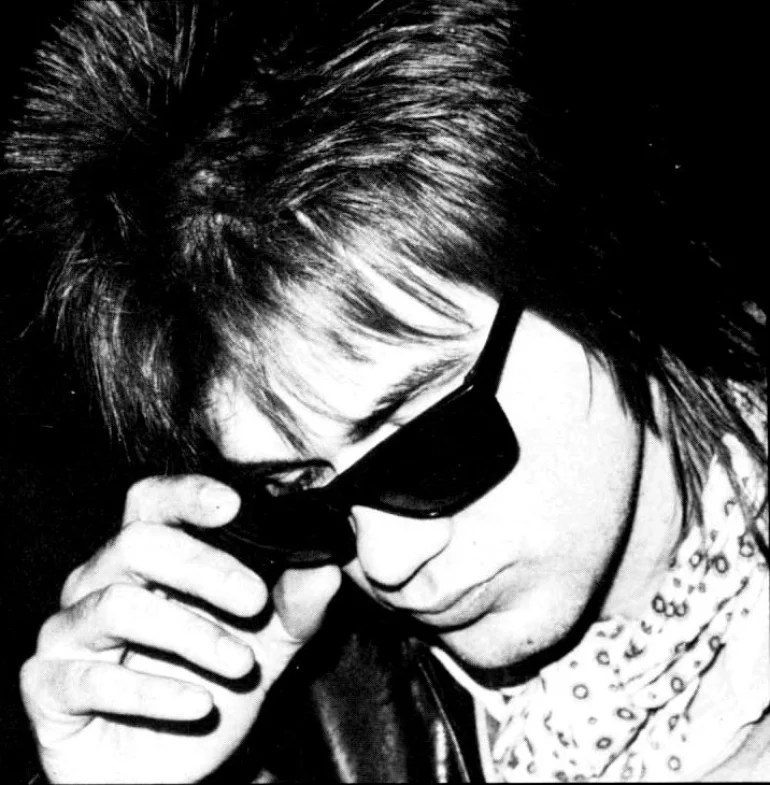
Photos of Rude at Hellnation shop: Francesca Chiari

CLICK PICTURE FOR STOMPING IN BOLOGNA PART 1

CLICK PICTURE FOR STOMPING IN BOLOGNA PART 2

‘What Have We Got? The Turbulent Story Of Oi!’ by Simon Spence, reviewed by Stewart Home

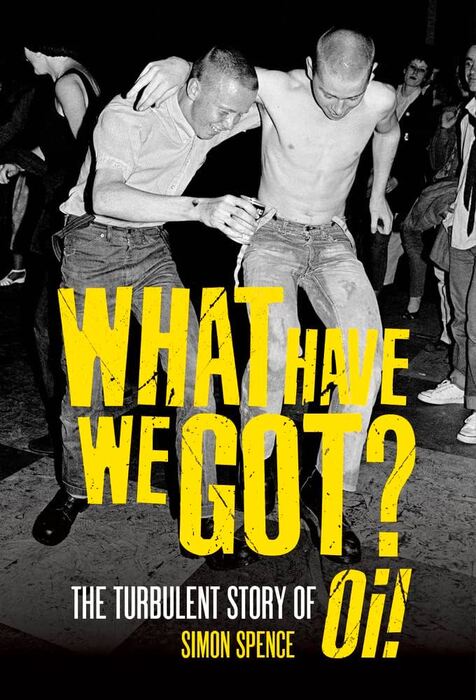
What Have We Got? The Turbulent Story Of Oi! by Simon Spence (Omnibus Press 2023)

This is the heartwarming story of a journalist who, having written extensively about britpop, discovers and falls in love with Oi. Now Simon Spence is spreading the good news about skinhead rock to a whole new audience – and so, his book is very much pitched towards those who have discovered the genre even more recently than he did. Spence’s opening sentences are: “A definitive history of Oi!? Yes and no”. Serious historians don’t do definitive, not even a hedged definitive.[1]

Important progenitor: Gary Lammin

There is a foreword by Cock Sparrer founder Gary Lammin, and the book concludes with a chapter on Lammin’s old band, among other things. This sets Cock Sparrer up as the founding fathers of Oi. However, Spence begins with a chapter entitled ‘The New Breed: Crown Court’. Lots of people like Crown Court, but for me the band’s name was almost enough to put me off ever listening to them. The name is shared with a really boring and thankfully now defunct TV show. That isn’t why the band took the name, but anyone my age who grew up in the UK is likely to make the association. What next? Oi bands called things like Strictly Come Dancing and Good Morning Britain? Incidentally, ‘the new breed’ is a phrase I first came across in Richard Allen skinhead novels when I was reading them in the 1970s, but there’s no mention of that here.

Moving on, there is a delve into Oi precursors, including Sham 69, Menace and Angelic Upstarts. Spence opts for a very conventional view of the bands that inspired Oi, despite the fact that genres evolve and their boundaries change. He very much works with a pre-existing template on the origins of Oi and seems uninterested in broadening this out. Nonetheless, what some early Oi musicians enjoyed musically went way beyond this narrow range of influences.

Spence doesn’t mention west London band Neat Change, who had members geared up as skinheads back in 1967![2] Or, indeed, any of the far-out bootboy glam outfits who paved the way for punk – and with this, you could go all the way back to tunes like ‘Factory Grime’ by Crushed Butler. There are some lines in the book about the influence of dystopian tales such as 1984, Brave New World and Clockwork Orange on Oi culture. From this, it could be argued that some minor league London punk bands such as The Unwanted – whose simplistic vinyl releases included ‘Freedom’ (on the first Live At The Roxy LP), ‘Secret Police’ and ‘1984’ – were also precursors to Oi.

Continue reading

Fight to live, live to fight: Skinheads in the Polish People’s Republic and after

Continue reading

Symond Lawes on skinhead girls

I read on these various groups, often run by Americans who don’t seem to have any connection or vague identity as skinheads talking about ‘skinhead birds’ in some sort of sexual demeanour, as easy meat or some sort of fetish. I’m not quite sure really, it’s the same lot that are constantly screaming about racism, but they don’t have any more knowledge than what they’ve read on some toilet paper.

As for me, coming from a family of three sisters I’ve always 100% put girls on an equal platter to boys, or in fact I have more respect for women than men in many ways, the hardship of being a working class girl on a council estate with the only expectations of becoming a cleaner, typist or if you’re really successful a school teacher or nurse.

Continue reading

United Skins: My (non-) interview with Tony of Control Zone

Continue reading

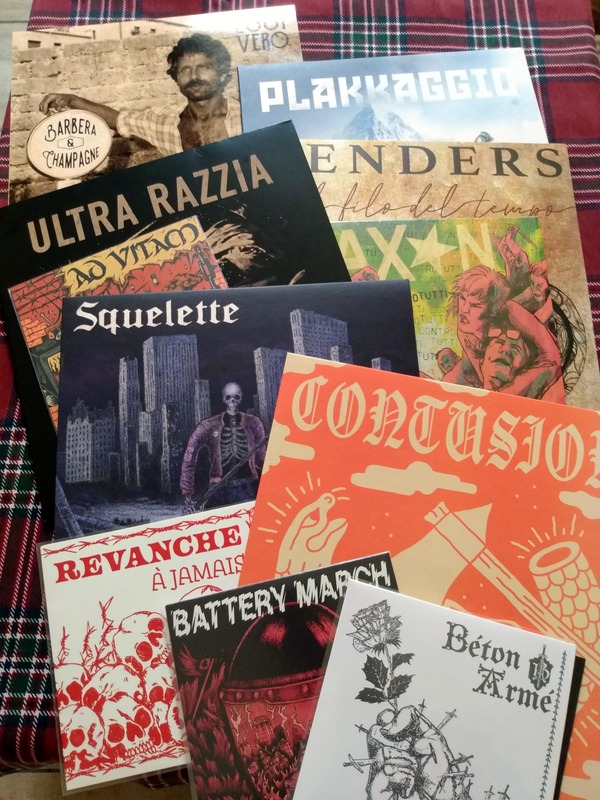
Squelette, Lenders, Ultra Razzia and others: Record Reviews

Continue reading

Dressed-down bootboy punk from Islington: Menace

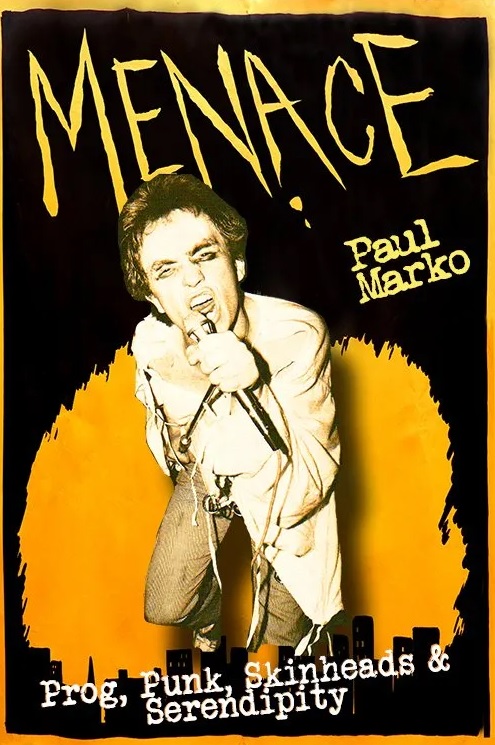
Menace: Prog, Punk, Skinheads & Serendipity by Paul Marko (Punk 77 Books)

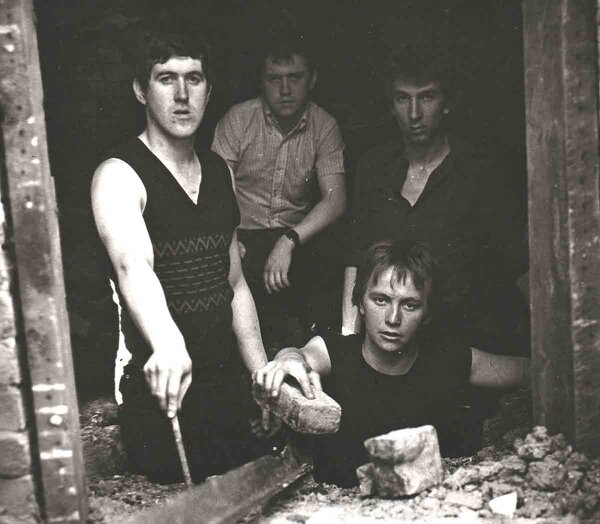
Menace were a classic four man late-seventies punk group. That said, the fact they had an Islington-based Canadian singer was slightly unusual for a London band of the time. Vocalist Morgan Webster was not only a great frontman, with his eye makeup and flamboyant dress he looked way more punk than the rest of Menace. That said, I preferred the real and ordinary dressed-down look sported by the majority of the band, although I can also understand why Paul Marko has opted to use a picture of the band’s singer on the cover of his book. The group created a great racket that was one of the earliest manifestations of what became known as street punk.

Continue reading

The return of Nutty Ray English: ‘Grand Union’ by John King

Continue reading

Meet the Miners: drilling into Italy’s Oi scene

Confront your average ‘progressive’ with the term “traditional values” and they’ll shudder. But in truth, “traditional values” mean different things depending where in the world you are and who you ask. For Miners, an Oi band from the town of Bergamo in north Italy’s Lombardy region, these values are “sharing, solidarity, a sense of belonging, dignity, fun and a sense of humour” – the traditional values of the Italian working class back when it was among the strongest in Europe. Today, after three decades of Italy’s complete political liberalisation, these values have all but evaporated, they say, replaced by self-seeking individualism and resentment.

Miners were formed about a decade ago and are a powerful live proposition, but they only have two releases under their belt. Valentina Infrangibile asked them why that was, also probing on topics such as Italian vs English lyrics, clobber and being an outsider. Miners are: Albe (vocals), Fil (guitar), Tiziano (bass), Beppe (drums).

Continue reading

Dalton, proletarian subculture and rock & roll

I was tempted to let Papillon by Dalton enter our Classic Albums series, but it isn’t what you’d call a classic like Red Alert’s We’ve Got the Power or Voice of a Generation by Blitz just yet. For one, it only came out three years ago – and few people outside of Italy will have heard it.

For the Italian skinhead and ultras scene, though, the album was a game-changer and a towering achievement. Dalton, a Roman group formed by former members of Oi bands Pinta Facile and Duap, debuted in 2015 with Come stai?, an album with packed with melodic but robust bovver rock hits. As I have written here before, they’re “very Italian, musically too their music is pub-rock and glam-rock based, but it has the atmosphere of Italian working-class bars. They sound authentically like where they’re from, mixed with what they’re into”.

Continue reading