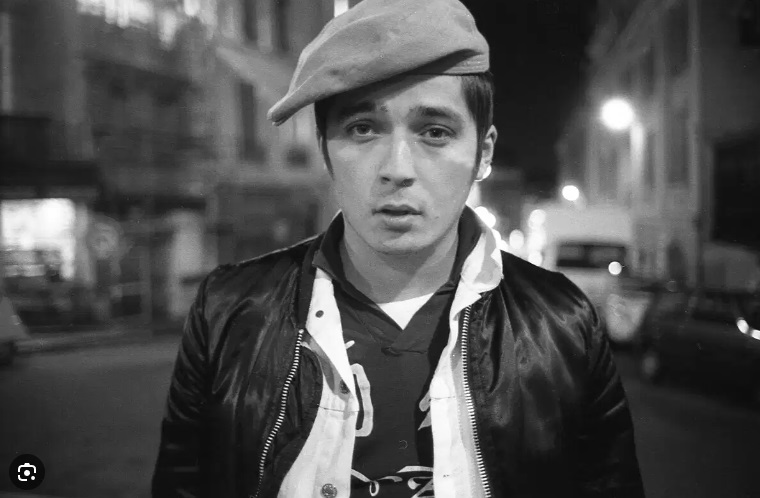
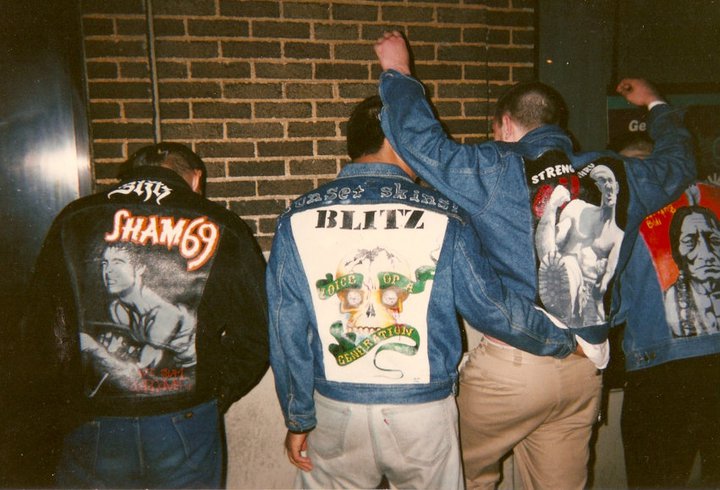
I met Lou Morales in 1988 while hanging out at the CBGB’s matinees. At the time, I didn’t realise he was only 14, as he was always mature for his age and seemed more level-headed than the rest of the crew he hung out with: the notorious Sunset Skins, a predominantly Puerto Rican group of skinheads from Sunset Park in Brooklyn.
Continue readingAuthor: Crombieboy
Take A Razor To Your Head: The Crazed
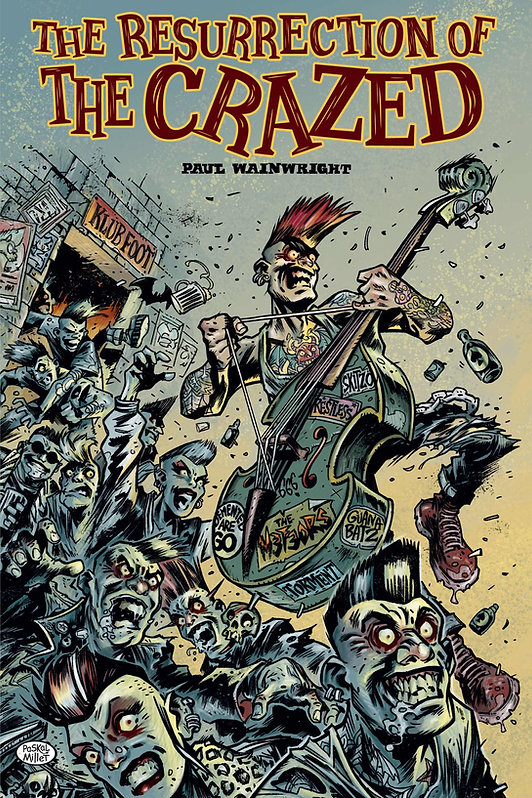
Here at Creases, we’re not afraid to dip a toe into other subcultures if the influences (and MA1s) fit. Last year one-time teenage Psychobilly Paul Wainwright published a book version of his at-the-time zine The Crazed, which carried interviews with the likes of The Meteors, Demented Are Go and Skitzo. The book itself, The Resurrection of The Crazed (Earth Island Books), is an altogether deeper dive into the subculture once referred to (by a compilation of the era) as The James Deans of the Dole Queue. Stevo dug out his dictaphone and recorded this with the author over a snakebite or several to hear more about stomping at the Klub Foot.
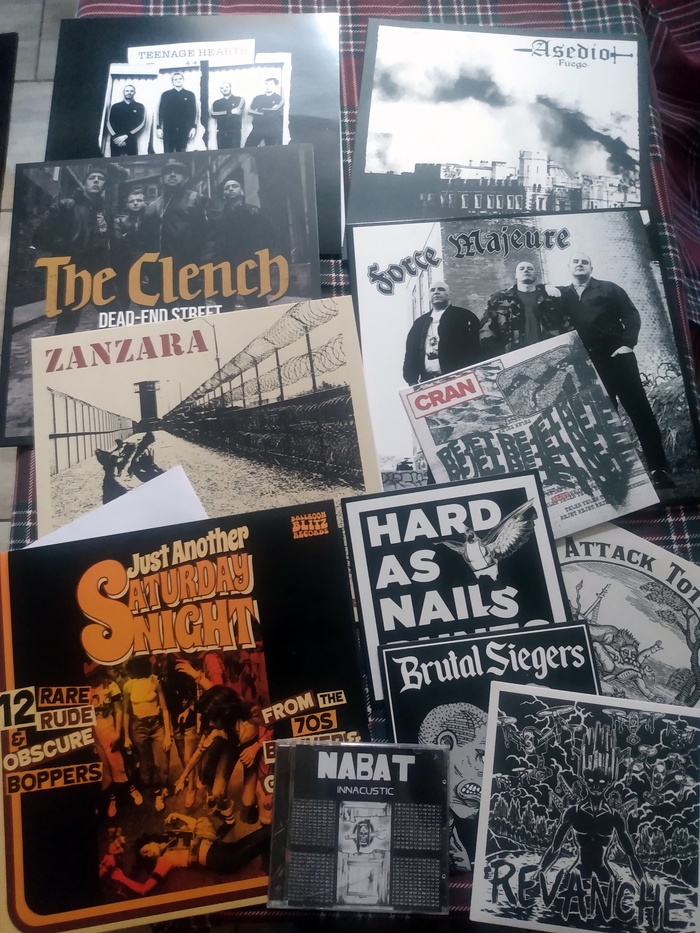
Continue readingNabat, Force Majeure, Asedio and others: Record Reviews
Been a while since you heard from us, hasn’t it? Last December, we celebrated what had been an exceptionally productive year for Creases Like Knives. Then, as if to undermine any hopes we’d become a ‘proper’, ‘professional’, or regular publication, we only gave you one article in the whole first four months of 2024. The truth is precisely this: we aren’t professionals, nobody’s paying us, and we just happened to have lots on our plate lately. One thing’s for sure: Creases Like Knives isn’t ceasing operations – I think in some form we’ll always be around. But our levels of activity will vary, depending on what else life throws at us. In this sense, apologies to the good folks from Common People, Primator Crew, Une Vie Pour Rien, Hellnation and Ballroom Blitz Records who sent us most of the albums reviewed here – we made some of them wait for ages. All reviews by me this time.
Matt Crombieboy
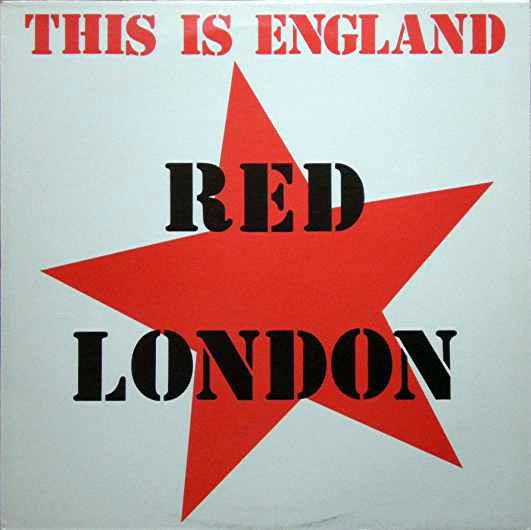
Classic Albums: ‘This Is England’ by Red London (1984)
Having already done Red Alert’s We’ve Got Power with the late Steve Smith in this series, it seemed entirely natural and would be remiss not to extend the same treatment to Red London’s This Is England. Thankfully bassist (and occasional Angelic Upstart) Gaz Stoker and mainstay frontman Patty Smith were quite game and dusted off 40 years of memories since the release of their still urgent debut. Matt and Stevo heard all about regicide on Wearside, life inside Durham Prison, urban riots, the Falklands, nightclub brawls and the bomb, so just the usual for an Oi album from 1984 then.
Continue readingIn memory of Taï-Luc, by Jean-Eric Perrin
La Souris Déglinguée held a special place in the hearts of the first skinhead generation of Paris, particularly those notorious kids from the Les Halles neighbourhood. They weren’t an Oi band, nor really a punk band either – but they were cut from the same cloth as their audience. La Souris Déglinguée were also a significant force in French rock ‘n’ roll in general. The passing of their vocalist, Taï-Luc, last Friday, with the news only surfacing yesterday, has left a profound void. In tribute to his memory, we present an obituary by Jean-Eric Perrin, a co-author of the band’s 2016 biography, Week-ends sauvages – La Souris déglinguée, 1981-1990.

One of a kind. A true street icon. A genuine rock ‘n’ roll hero. A role model. A poet of the mavericks. A philosopher of outcasts. Taï-Luc, who tragically left us on 1 December 2023, was worthy of such praise, but he was too modest to accept it. The truth is he should be rightfully bestowed the honour as leader of La Souris Déglinguée (“the fucked-up mouse”, aka LSD), the band he led for so many decades.
Continue readingMissing Words: Daniel Rachel and the 2 Tone Story
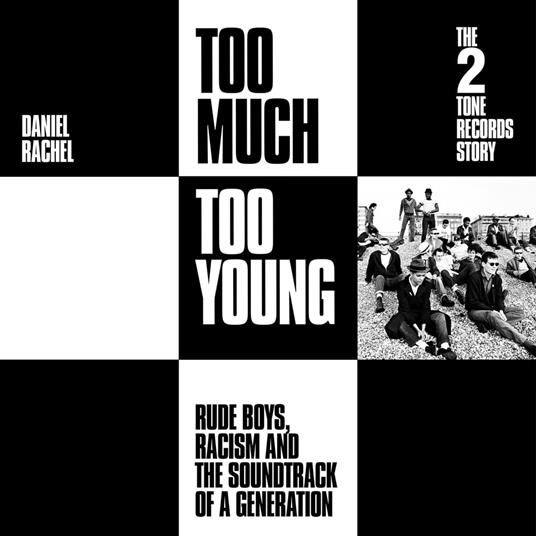
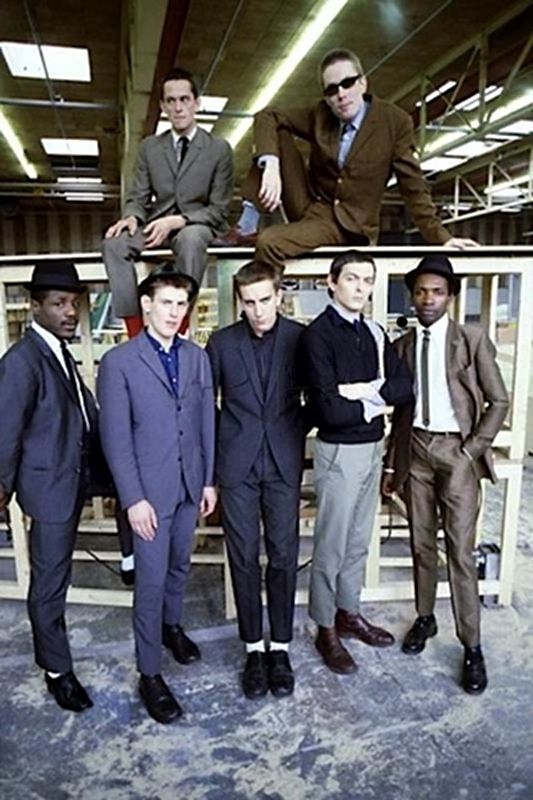
Author of a history on Rock Against Racism and all that came after, followed up by the co-written autobiography with The Beat’s Ranking Roger, Daniel Rachel has made a name for himself as a devoted chronicler and authority on the 2 Tone era. His latest, Too Much Too Young: The 2 Tone Records Story is out now. It may well be the same old show, but Stevo just had to tune in to hear more about punks, teds, National Front, natty dreads, mods, rockers, hippies and… skin-heads!

When we last spoke you’d just covered the tricky gamut of music and politics from Rock Against Racism through 2 Tone to Red Wedge. Is this a book you’d always wanted to write before then and the Beat book or a natural progression from them? I can only think of George Marshall’s and Garry Bushell’s collected writings from the time which came out not long back.
There has never been a comprehensive book on the 2 Tone label beyond George Marshall’s one in the early 90s. That was great, but thin. So yes, I’ve always wanted to write the 2 Tone Records Story, but the timing was as much to do with getting Jerry Dammers on side.
Continue readingSkinheads in Peru
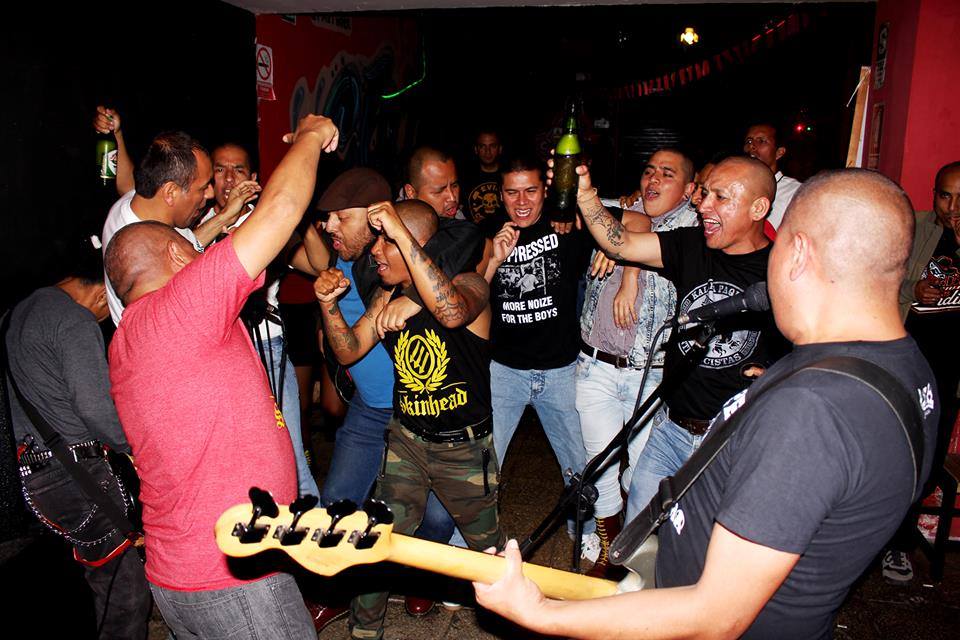
The history of a distinct shaved head and boots & braces wearing subculture in Peru doesn’t start until the early 1990s, even though there were isolated sightings during the legendary 80s ‘subterranean rock’ scene in Lima. Economic conditions, isolation and misconceived public notions nurtured a true working-class based skinhead movement, small in numbers, but big in committed ideals. Taking a cue from legit sources, they sought to preserve the original ethos of this movement without ignoring the reality of day-to-day life in Peru. A class-based caste system has been the norm for centuries in this country, and the recent pandemic has exacerbated these differences to a boiling point. The skins in Peru realise that it’s not just fashion and music that fuels them but also protest, whether political dissent or direct action on the streets, that makes this movement a vital subculture dedicated to radical change.
I spoke to Mendo (visual artist and original member of the first skinhead collective in Lima) and Abraham (singer of Ultima Amenaza) about the history and current state of the scene. For more info follow their Cronicas Skinhead Peru page on Facebook.
Freddy Alva

This article appears in the newly released Oi! The Black Book Volume 2: https://urbanstylesnyc.bigcartel.com/product/oi-the-black-book-vol-2
When is the beginning of the skinhead movement in Perú and who are the first skinheads seen in Lima?
Continue readingStompin’ in Bologna: Rude’s Ghetto 84 Chronicles
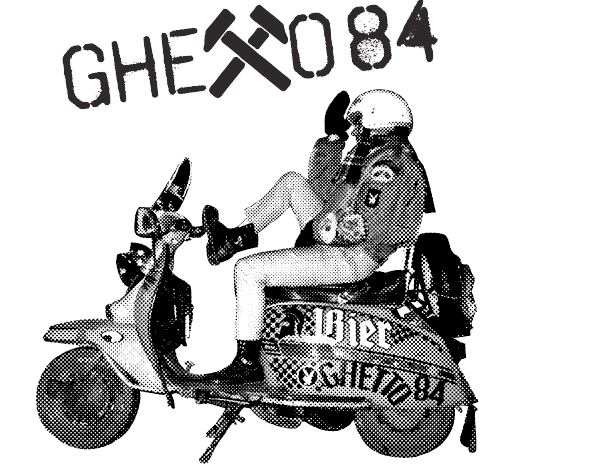
The Italian town of Bologna has a population of less than 400,000, but the density of local Oi and punk combos has always been incredibly high. Nabat (arguably continental Europe’s most influential Oi band) hails from the San Donato quarter, while the nearby Bolognina neighbourhood is the historical breeding ground for groups such as Ghetto 84 and Zona Popolare. Ghetto 84 were fronted by Rude, a second-generation Bologna skinhead. He was part of the wave that ruled the latter half of the 80s and established a strong connection between skins and Bologna FC 1909 ultras.
During their initial period, Ghetto 84 recorded the 7-Song tape La Rumba!, released on Nabat’s C.A.S. Records in 1987, and a couple of tracks for the excellent 1991 compilation Oi! Siamo ancora qui!, which was curated by Klasse Kriminale’s Marco Balestrino. An album, A denti stretti, followed in 1996. After that, Ghetto 84 fans had to exercise patience – it took over 20 years for the comeback album, Ultras Rock ‘n’ Roll, to be released.
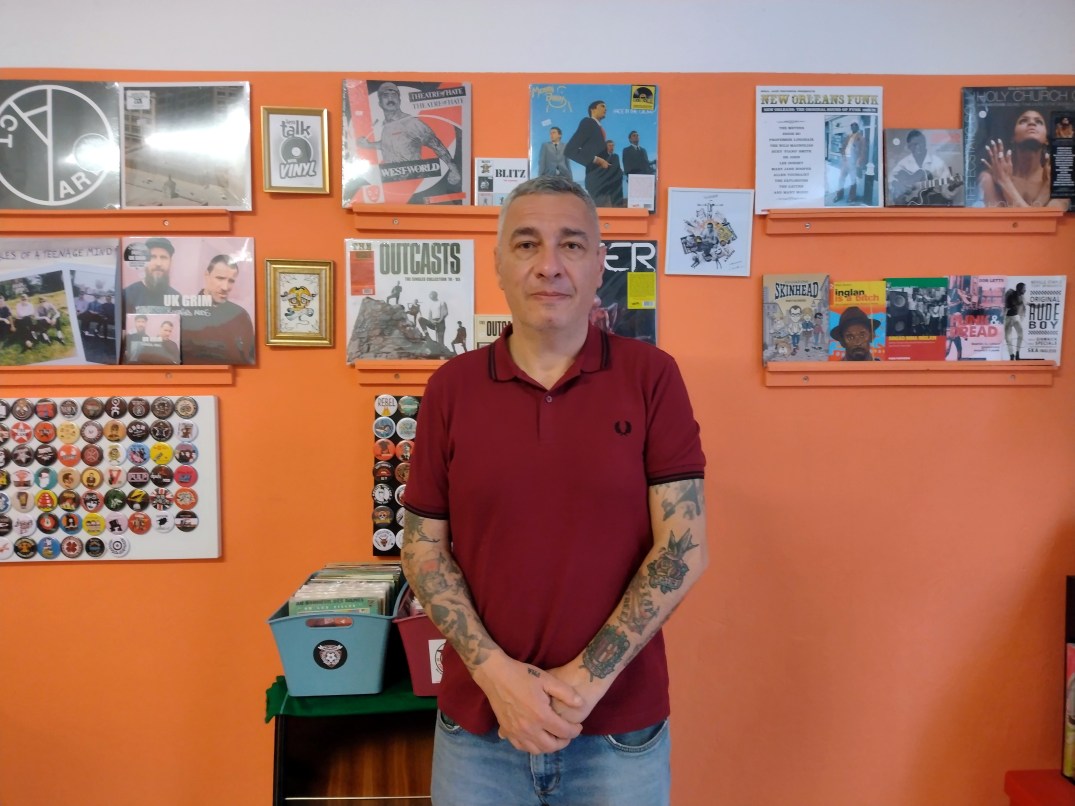
One joyous afternoon in May 2023, we met with Rude at Hellnation Records in the Bolognina quarter of Bologna. The shop is located on the very street where Rude grew up in the 70s and 80s (and right next to Black Panda Tattoo, where Bologna skins get inked). Today, Rude lives in Dresden, Germany, and he was in town for a visit. We took the opportunity to sit him down in a nearby bar and find out about skins, ultras, punks and mods in 80s Bologna, Rude’s old band Ghetto 84, his subsequent career as a musician and DJ, and his present stint with Zona Popolare.
Interview: Matt Crombieboy
Photos of Rude at Hellnation shop: Francesca Chiari
CLICK PICTURE FOR STOMPING IN BOLOGNA PART 1
CLICK PICTURE FOR STOMPING IN BOLOGNA PART 2
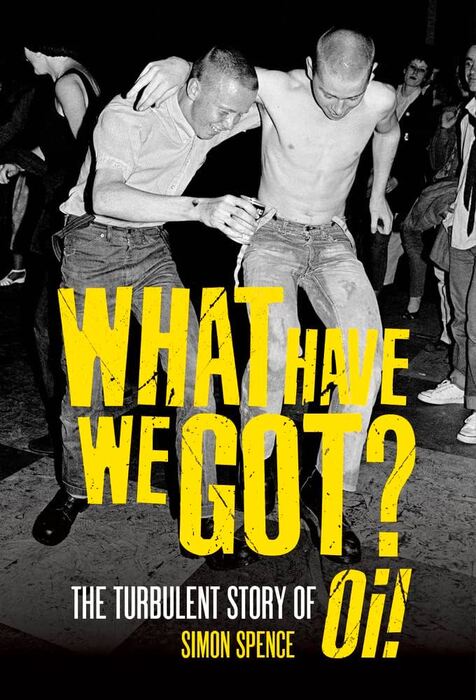
‘What Have We Got? The Turbulent Story Of Oi!’ by Simon Spence, reviewed by Stewart Home
What Have We Got? The Turbulent Story Of Oi! by Simon Spence (Omnibus Press 2023)
This is the heartwarming story of a journalist who, having written extensively about britpop, discovers and falls in love with Oi. Now Simon Spence is spreading the good news about skinhead rock to a whole new audience – and so, his book is very much pitched towards those who have discovered the genre even more recently than he did. Spence’s opening sentences are: “A definitive history of Oi!? Yes and no”. Serious historians don’t do definitive, not even a hedged definitive.[1]

There is a foreword by Cock Sparrer founder Gary Lammin, and the book concludes with a chapter on Lammin’s old band, among other things. This sets Cock Sparrer up as the founding fathers of Oi. However, Spence begins with a chapter entitled ‘The New Breed: Crown Court’. Lots of people like Crown Court, but for me the band’s name was almost enough to put me off ever listening to them. The name is shared with a really boring and thankfully now defunct TV show. That isn’t why the band took the name, but anyone my age who grew up in the UK is likely to make the association. What next? Oi bands called things like Strictly Come Dancing and Good Morning Britain? Incidentally, ‘the new breed’ is a phrase I first came across in Richard Allen skinhead novels when I was reading them in the 1970s, but there’s no mention of that here.
Moving on, there is a delve into Oi precursors, including Sham 69, Menace and Angelic Upstarts. Spence opts for a very conventional view of the bands that inspired Oi, despite the fact that genres evolve and their boundaries change. He very much works with a pre-existing template on the origins of Oi and seems uninterested in broadening this out. Nonetheless, what some early Oi musicians enjoyed musically went way beyond this narrow range of influences.
Spence doesn’t mention west London band Neat Change, who had members geared up as skinheads back in 1967![2] Or, indeed, any of the far-out bootboy glam outfits who paved the way for punk – and with this, you could go all the way back to tunes like ‘Factory Grime’ by Crushed Butler. There are some lines in the book about the influence of dystopian tales such as 1984, Brave New World and Clockwork Orange on Oi culture. From this, it could be argued that some minor league London punk bands such as The Unwanted – whose simplistic vinyl releases included ‘Freedom’ (on the first Live At The Roxy LP), ‘Secret Police’ and ‘1984’ – were also precursors to Oi.
Fight to live, live to fight: Skinheads in the Polish People’s Republic and after
Conventional wisdom suggests that prior to the emergence of SHARP, Polish skinheads were essentially boneheads – in other words, thugs with fascist sympathies and little appreciation for the finer aspects of skinhead culture. While there’s a certain truth to the stereotype, it is too simplistic to do justice to the skinhead scene of the Polish People’s Republic, which was no less contradictory than its counterparts in the western countries.
In anti-fascist accounts of the latter half of the 80s, all Polish skinheads are routinely referred to as naziskini [nazi skins]. Yet the Security Service of the Polish state had a somewhat more realistic assessment: in an internal report from 1986, it estimated that there were approximately 200 skinheads in Poland, of which it regarded 30 as “fascists”. By 1987, the overall number remained the same, but the count of “fascists” had increased to 50. This indicates a clear majority of “non-fascist” skins, although things were to change rapidly with Poland’s political transformation in 1989.

While one could argue that the emergence of skinheads in Poland was a symptom of globalisation, the politics and concerns of Polish skins often had distinctly local roots, shaped by Polish conditions and history. It wasn’t until the latter half of the 90s that neo-nazism – i.e. George Lincoln Rockwell’s fusion of German nazism with Southern U.S. white racism – became the predominant tendency. By that time, the neo-nazi faction was in competition with a traditionalist Oi revival and the budding SHARP movement.
Continue reading