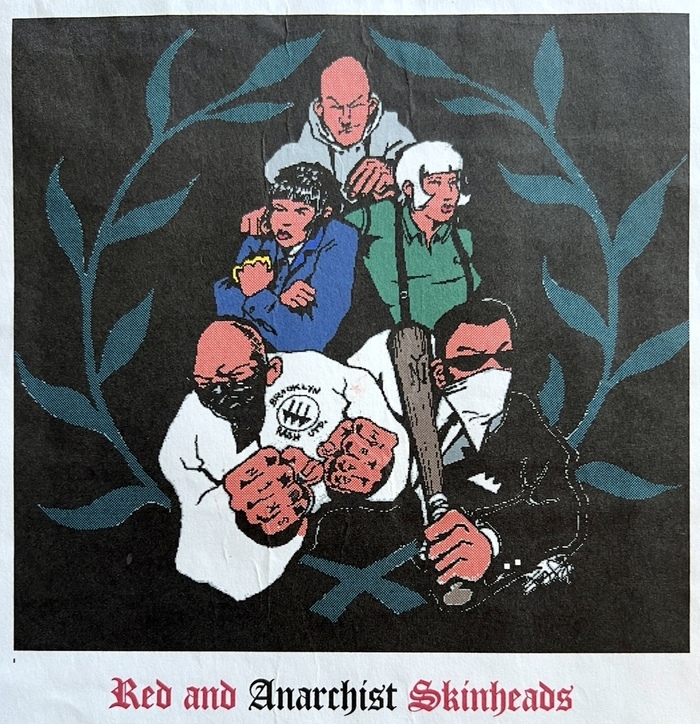
I was booking shows at ABC No Rio [an alternative community centre in Manhattan] in 1990 when I met Dan Sabater. At the time, he was a skinny anarcho-punk fresh out of high school and heavily involved with the political squatter scene on the Lower East Side. He was funny, charismatic, goofy and simultaneously deadly serious about his beliefs and told some scary tales of being chased in his Brooklyn neighborhood for looking ‘punk rock’; especially some encounters with the notorious Sunset Skins.
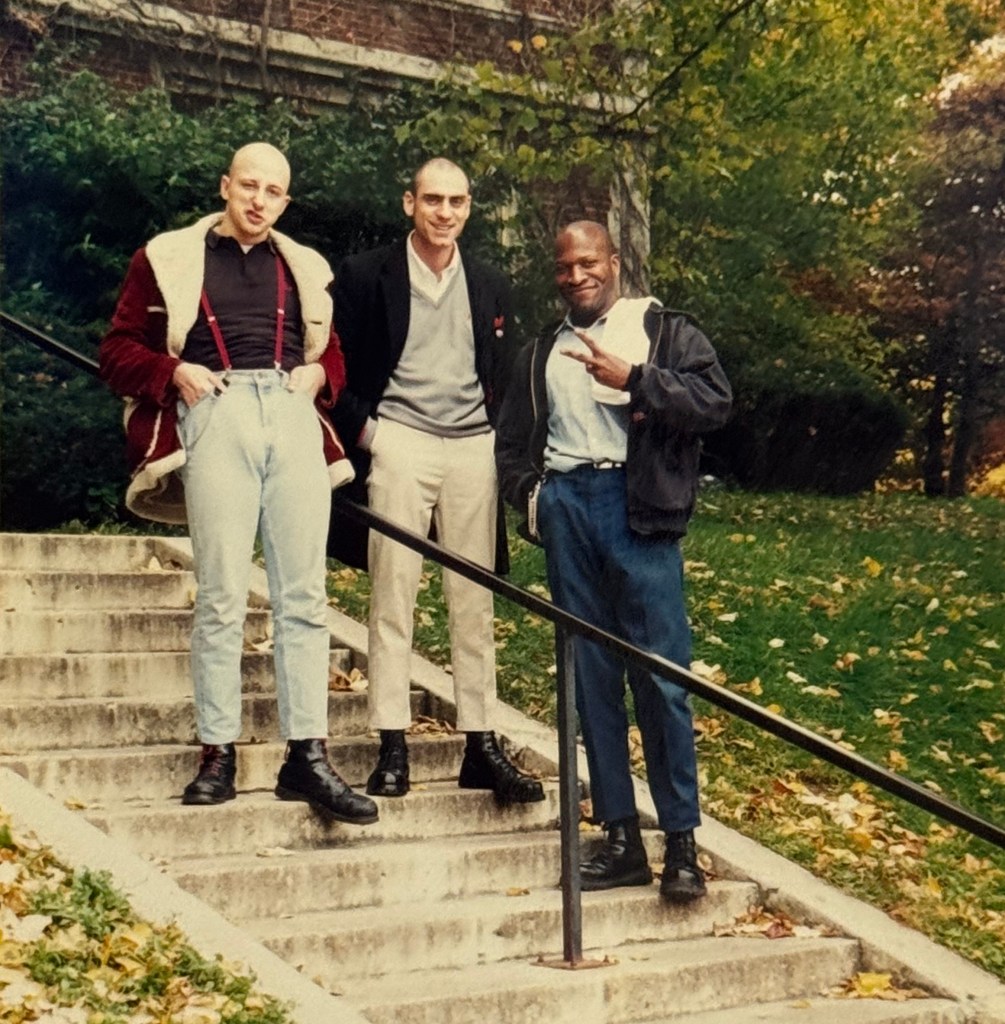
Imagine my surprise three years later when he pops up with a bald head, boots and braces, into boxing, soccer, reggae and all things related to being a traditional skinhead. I knew a lot of skins from growing up in the NYHC scene that came from different backgrounds but what made Dan stand out is him keeping his radical anarchist beliefs, combine them with socialist ideology inspired by European entities like the Redskins and start a group that synthesise these ideas, layering them onto a new skinhead identity.
This became known as RASH (Red Anarchist Skin Heads) and from the start it was controversial – some would say heretical, contrary to what skins were supposed to be. I admired Dan for having the guts to put himself out there and inspire others to take a different path on what this subculture could be: anti-racist, anti-fascist, vehemently on the extreme left of the political spectrum and unafraid to confront those who would oppose it.
I talked to the first members that helped organise and codify its core tenets. unfortunately Dan is not part of this conversation, but all the participants, while not involved with the current version of RASH, express a deep feeling of satisfaction on being a part of something that mattered and continues ‘til today. Here’s original members Abby, Terry Romero, Greg Pason, Jordan Worley and Shawn.
Freddy Alva
This article originally appeared in Oi! The Black Book 3
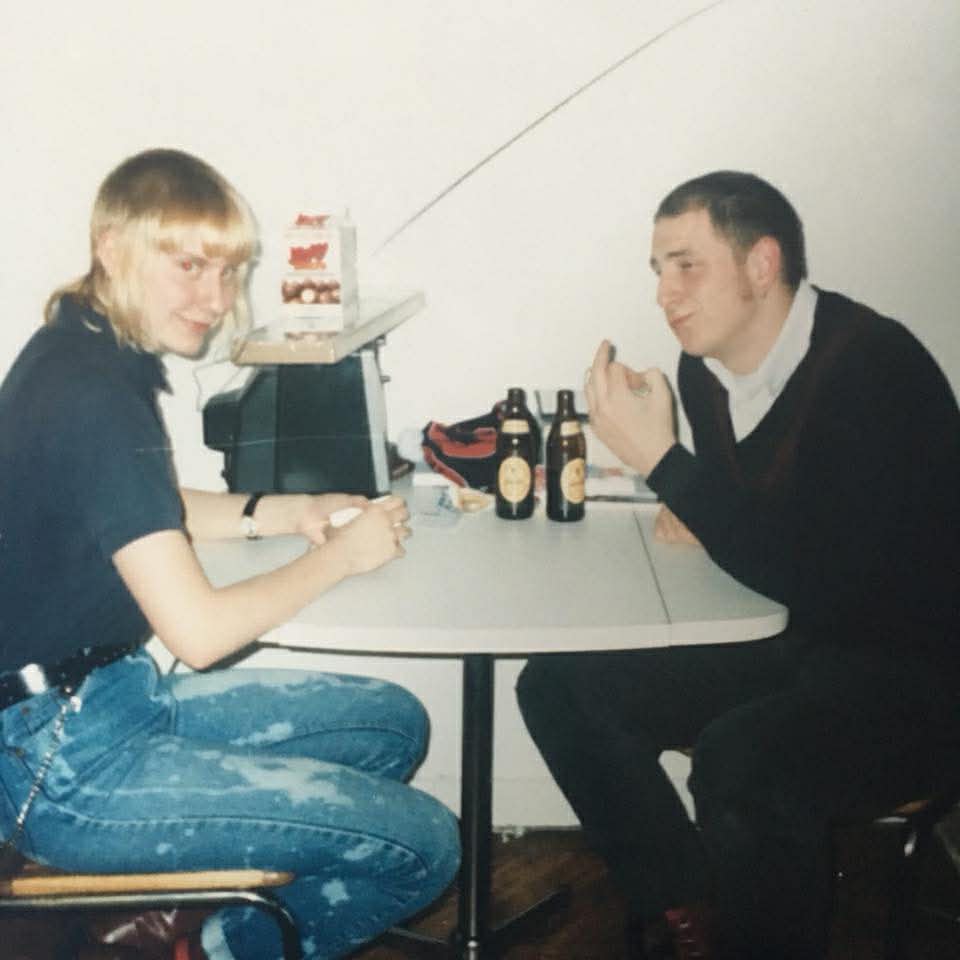
What was your background as a punk or skin, and how did RASH come to be?
Abby: I was in the AYF (Anarchist Youth Federation) when I met all these radical activist punks before they got into RASH. It was 1993 when Dan Sabater started RASH. I was living in Lawrence, Kansas, volunteering full time for the Leonard Peltier Defense Committee. Dan was already into soccer, reggae and Oi, and it was a turning point for him being bullied for being a punk, being weird and different. It was like, ‘I’m gonna shave my head now and kick your ass!’. We learnt how to fight from this guy Bob McGlynn (RIP). He did kickboxing and taught us all how to roll a newspaper into a ‘Millwall brick’. I got drawn to RASH because I had come from political movements/activism, had been jumped and physically attacked, and really didn’t like feeling like a target. Some of us had the feeling that we had to turn this around: you’re not gonna beat us up, or we’ll be so intimidating that you won’t fuck with us. We wanted to make the message loud and clear that we’re anti-racist, anti-fascists and we’re not just fashion skins, we do have an agenda to make the world a better place.
I was a third-generation red diaper baby, and what that means is that my parents are communists, my dad’s parents were communists, and I was raised to be a communist. I rejected that at a pretty young age by getting into anarchism when I became a punk while attending John Dewey High School in Coney Island, Brooklyn. That’s where I met my first SHARP skins: Anthony Baldini and Stephanie Mitchell. He was white Italian and she was half black. They defined skinhead for me at a very young age: you’re tough, you’re cool, you shave your head, wear Doc Marten boots, and are ready to throw down if something doesn’t seem right. It wasn’t machismo but more like, we’re here to make sure the scene is coming correct, and by the way we’re also anti-racists. The politics were beside the point, but that became more of a flashpoint for me.
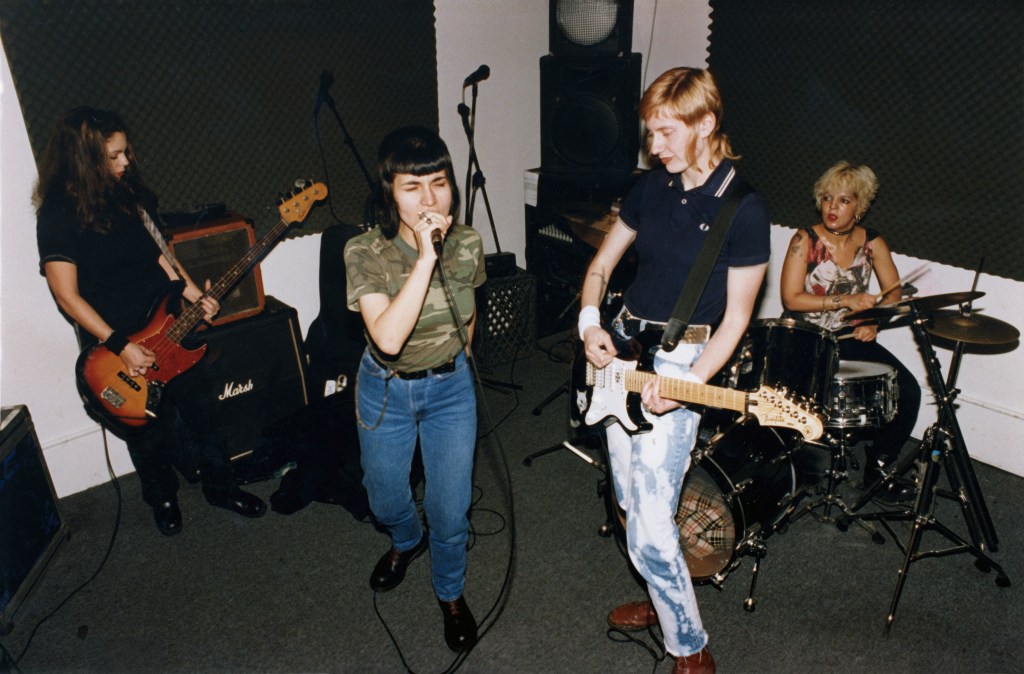
Terry Romero: I was one of the first RASH members, and Dan was the instigator. He drew a lot of like-minded people in, and it wasn’t just skins that didn’t want to wear an American flag. It was others that felt this was not the way to be, as far as how they understood skinhead and working-class culture. There were also a lot of punks that were into the aesthetic: ‘I like flight jackets and don’t want to have a mohawk’. Things were so tribal in a way that feels so dumb now, but to me it meant so much.
I was a ‘lil punk skin in Connecticut. I hated life in Connecticut; all I wanted to do was be at ABC No Rio, so I moved to the farthest part of Brooklyn and would commute one hour just to get to ABC, which was really the hub of my existence. I was an anarchist skinhead at the time, and those are two words that people cannot understand together in one sentence, including a fair amount of people at ABC.
When I mean skinhead culture I have to say, even now, it was always anti-nazi, against white power. As someone who’s Latina I was against that, keenly aware that the weirdness of NYC was so different from my skinhead anti-white power existence in New England, the skinhead scene here was truly bizarre! It blew my mind that I was surrounded by tons of non-white skins; black, Chinese/Korean skins, every flavor of Latino skins and Filipino ones. They hugged here, skinheads didn’t hug in New England, when I saw skins here they would give me a kiss on the cheek. The weird part is that when you start hanging out with them and there are black skins that love Skrewdriver. There were so many non-white skins that listened to sketchy music.
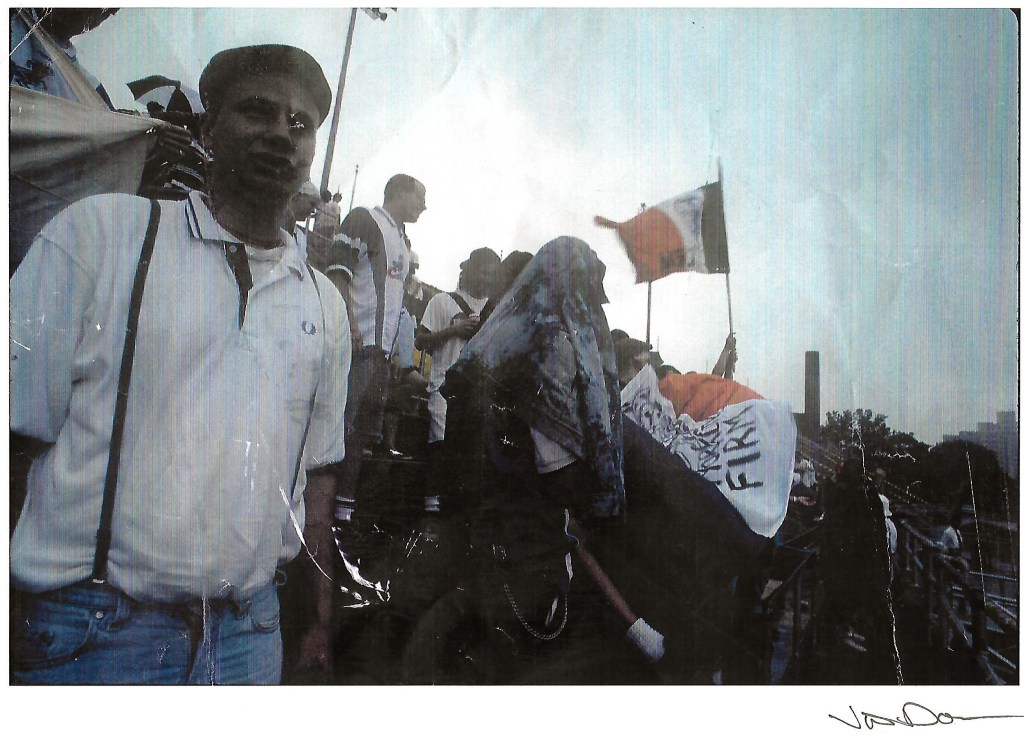
Greg Pason: I first learned about RASH in 1992–93 after I wrote an article, ‘Skinhead and socialist’, for a Socialist Party newsletter. Dan Sabater reached out to me, and I started to hang with the first generation of the May Day Crew NYC. I considered myself a ‘red’ skinhead since the late ‘80s. I moved from NYC to Phoenix in 1988, when Phoenix was knee-deep in nazis. I learned about the Baldies in Minneapolis and started corresponding with Mad Dog from the Baldies. Finding another group of leftist skins was good news for me. I first shaved my head and got a skinhead tattoo in 1985 while living in the YMCA in Passaic, NJ, and spending time between work, the YMCA, various squats, and lots of trouble.
Jordan Worley: I was working in political groups like Amanica, which was a Brazilian indigenous rights group that met at the War Resisters’ League. I kept bumping into Greg Payson. I had a shaved head at the time but was more of a hardcore kid than a skinhead. Later on, he introduced me to Abby and Dan Sabater because he had seen me hanging out with the Oxblood skins at Cherry Tavern, as I knew Paul Oxblood from art school. I joined after May Day Crew became RASH. From what I understand, it started with a PO box and a classified ad in the back of Maximum RocknRoll.
Shawn: My background comes from being a punk rock skateboarder who, in the late ‘80s, found the NYHC scene and got into skinhead that way. RASH came several years later when Dan and I met through the Anarchist Youth Federation. When I was 14–15 years old, I spent some time with a group of racist skins who did their best to recruit me. It was more about protection, drugs, women and parties for me than politics. I soon grew out of it and was wearing a SHARP patch by the time I was 16. I think it actually made me a better anti-fascist having been exposed to the workings of a hate group.
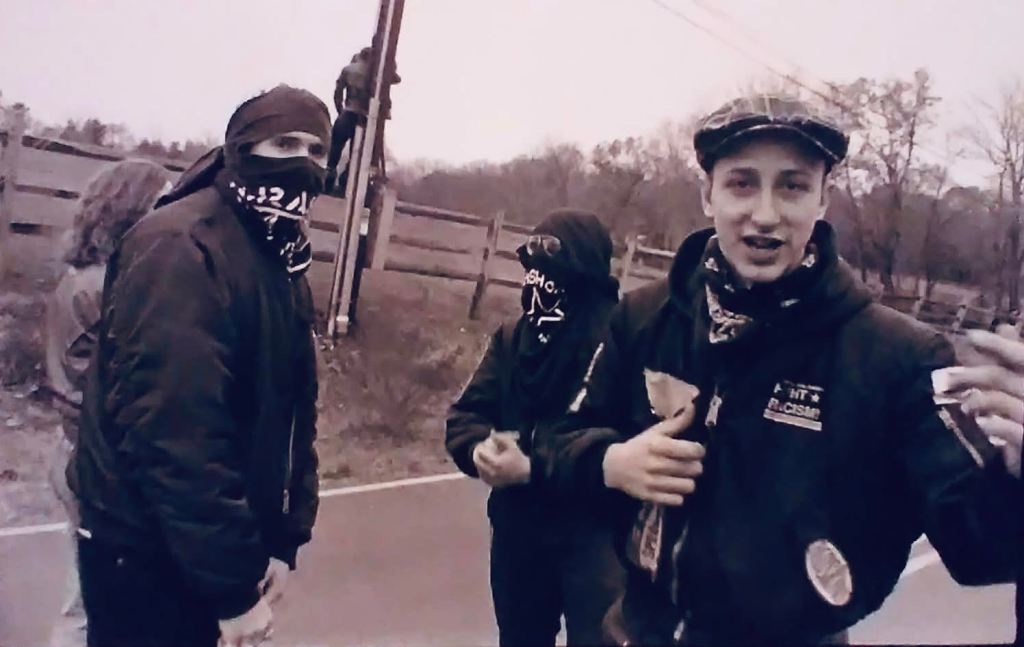
What are RASH’s main tenets?
Abby: First and foremost is anti-fascism. The saying of Anti-Fascist Action was ‘we go where they go’, and I took that very seriously. If there’s organised right-wing shit in my city I’m going to confront it. I felt justified with the use of violence because that’s how you keep nazis away. It starts theoretically but then it becomes action and practice, direct action gets the goods. These are the anarchist beliefs I grew up with and came into skinhead with that, so to me it kind of fit perfectly. My parents were working class, they organised unions and factories, my grandfather was a press man for the New York Times. We were on food stamps for a time, it really sucked, so I knew what it’s like to be poor and hungry.
The ‘let’s fight for a better world’ slogan was a big turnoff for a lot of skins because they waved the American flag, the traditional thinking that women are subservient and men are supposed to be a particular way. Maybe you’re a racist, maybe you’re not, maybe you listen to some reggae but don’t have any black friends. It was kind of a weird grey area in that scene and we were there to draw a very clear line: you’re either anti-racist or you’re a problem, which is pretty fucked up in our own scope but that was the urgency of the time. We have to confront this and make sure it doesn’t take hold here. We felt surrounded and knew that there were compounds in New Jersey, Pennsylvania and the Pacific Northwest where people were training boneheads that were recruited.
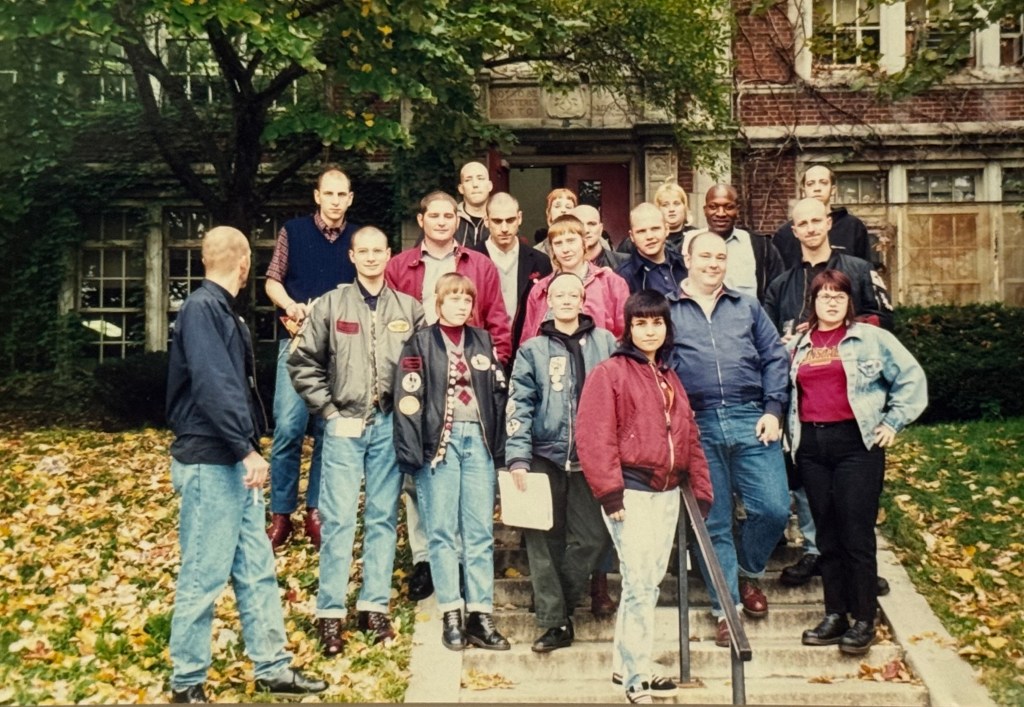
Shawn: To me the main tenets are to promote traditional culture in the scene and leftist/antifascist politics.
Greg Pason: RASH is a left-wing anti-fascist organisation, primarily organised to build a left-wing contingent (in a non-sectarian way) to the skinhead movement in the US. We used examples of groups like Red Action, Red Warriors and other anti-fascist skinhead movements across the globe as a model. We officially became RASH International in 1993.
Terry Romero: We were anarcho-syndicalists, so gotta have meetings. Kind of funny seeing these skins having anarcho-syndicalist discussions, and ABC No Rio was generous enough to let us meet upstairs. This is where we’re going to take a stand because we believe in something. There were a lot of skins that were cool but wanted to leave the politics out, just hang out and drink, talk about English soccer while wearing all the related gear. We spent time hanging out as well, but that couldn’t be the only thing. We needed to get grounded about our anarchist history of resistant culture and what so many lyrics of our favourite bands talk about—things like supporting the working class, corporations destroying the planet, how bad war is. We felt RASH would help us be the people that we wanted to be.
Jordan Worley: I met Abby and Dan when they had just transitioned from being May Day Crew to RASH. It was set up to be a more radical anti-fascist, anti-racist group than SHARP. At the time, SHARP was very homophobic and was involved with some gay-bashing incidents on the West Side. RASH was more inclusive of gay skins, and the politics were not so pro-American. It was into looking into the roots of skinhead culture, examining anarchism and socialism. It was about answering more questions.
Did you think the disparate ideologies of communism and anarchism complimented one another, and how did they coexist in RASH?
Greg Pason: I think many of us would’ve fit in the anarcho-communist tradition of Durruti, Makhno, etc. I don’t think most folks came in in a very sectarian way. I was part of the Socialist Party (called itself ‘democratic socialist’). Others came from anarcho-syndicalist, Trotskyist, etc, traditions, but we weren’t a pure ideological group. We were – and remain – anti-fascist and anti-capitalist at the core. I know there were crews who were more anarchist, some ML [Marxist–Leninist], etc. Bands like the Redskins were Trots, in Italy many were ML, South America had its own traditions, Montreal was anarchist, etc. The focus has always been anti-fascism in the movement and being open and loud about it. Inadaptats are Stalinist, Brigada Flores Magón has a member of Red Warriors in it (RIP), Los Fastidos has its own tradition, etc.
Jordan Worley: Most of the anarchists that I knew personally within RASH were anarcho-syndicalists, and the rest were socialists (Socialist Party USA and DSA). The only political issues I ran across within the group were when people tried to exert authority. The charter stated we didn’t allow Stalinists. I met with a chapter in southern France that was excluding anarchists. They had changed the name to ‘Red Army Skin Heads’. I met with them and the local SHARP chapter, which had accepted the local anarchist skins, to sort it out. I explained that we didn’t want tankies claiming to be RASH.
Shawn: As is still the case, various political ideologies found a way to coexist best, in my opinion, when we were working on projects that were specifically RASH or in some way tied to the subculture directly, and then we were working on political projects in their specific political realm outside RASH.
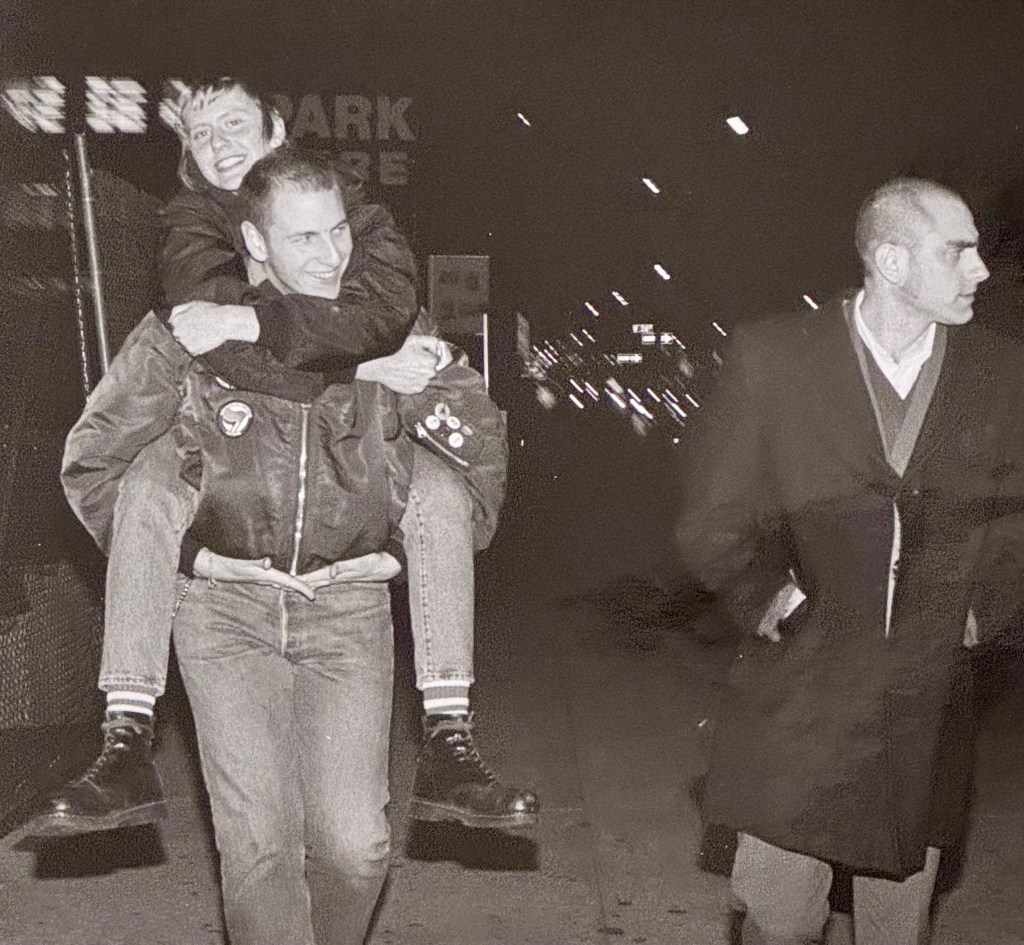
Abby: Collaboration and coalition building are key to any movement surviving and thriving. We did our best to be inclusive. We laughed off the differences for the most part. Dan and I emerged from the AYF (Anarchist Youth Federation) and NYDAC (New York Direct Action Collective), so we already had a foundation of anarcho politics. It got more coherent when we worked with the WSA and embraced anarcho-syndicalism.
Who were the first members of RASH?
Abby: Dan Sabater, Greg Pason, Terry Romero, Mike from the Philippines, Sean from Long Island, Short Paul, who went to the Culinary Institute of America and became a chef, also Aaron from Ohio, and Ali came later. The original crew was pretty small. We had a lot of skins that hung out with us because we were cool, different and funny, but there was a big dividing line between being a member or a supporter. We started to differentiate that once I got involved in 1994, when I shaved my head to identify myself as an anti-fascist skinhead. My first tattoo was a crucified lady; didn’t want no dude on my arm.
Greg Pason: May Day Crew had about eight folks in 1992–93. We started linking to other cities and folks from Canada in 1993. It was good to connect with some of the Baldies in Minneapolis, SHARP in Portland, etc.
Shawn: Originally it was Dan, Mike and me then Greg and Terry.
Did different RASH chapters start popping up?
Abby: Yeah, that was awesome and at the same time I got a job as a manager at Moon Ska Records in the East Village, so that became a place where I could organise. I got in touch with all the radical Oi, ska and punk bands, told them to bring their stuff to Moon – there’s pictures of the manager for Desorden Público (from Venezuela) and me shaving her head. Prince Buster once walked into the store – it was such a good place to be and it was such a good place to be, was there the whole time I was a skinhead from 1994 to 1999. Noah Wildman (Moon Records store manager) accused me more than once of infiltrating the store to promote RASH.
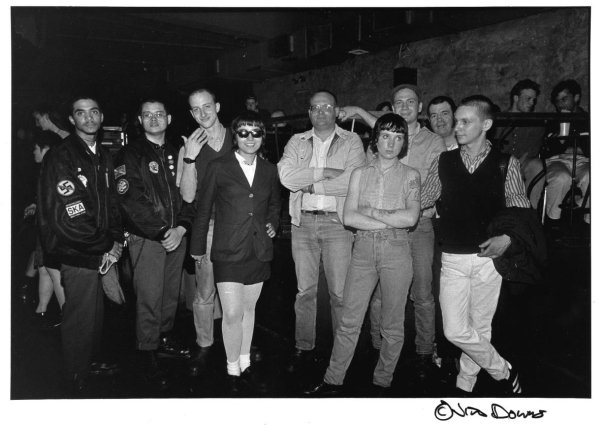
Shawn: Different chapters did start popping up around ’94 or so. Canada was crucial. Lots of political redskins up there.
Jordan Worley: Part of that is because we had a post office box on Canal Street and also classified ads in Maximum RocknRoll magazine. There were guys that would contact us from different states, and in 1997 I started to roadie for a band and would go to different towns meeting people that wanted to start chapters. I did that in the US and Europe, meeting up with different RASH groups in France, Italy and Germany. In NYC we had about a dozen members and also had people that hung around in our scene, and we started going to soccer games – first for the NY Centaurs club, then the Metrostars – so it swelled with peripheral people that maybe didn’t share our politics but shared our culture. Maybe they weren’t members but supported us, so in NY I would say two dozen, with a core group of 10 to 12 and 12 supporters. We had plenty of friends that were punks that we could call for support if we needed it. The biggest chapter that I visited was in Ohio, then there was a Florida group with like five members. There were a bunch of groups in Latin America, but I don’t know their members. Chapters that I met from Spain and France had like 20 members each.
Did you feel any affinity with SHARP or other like-minded groups?
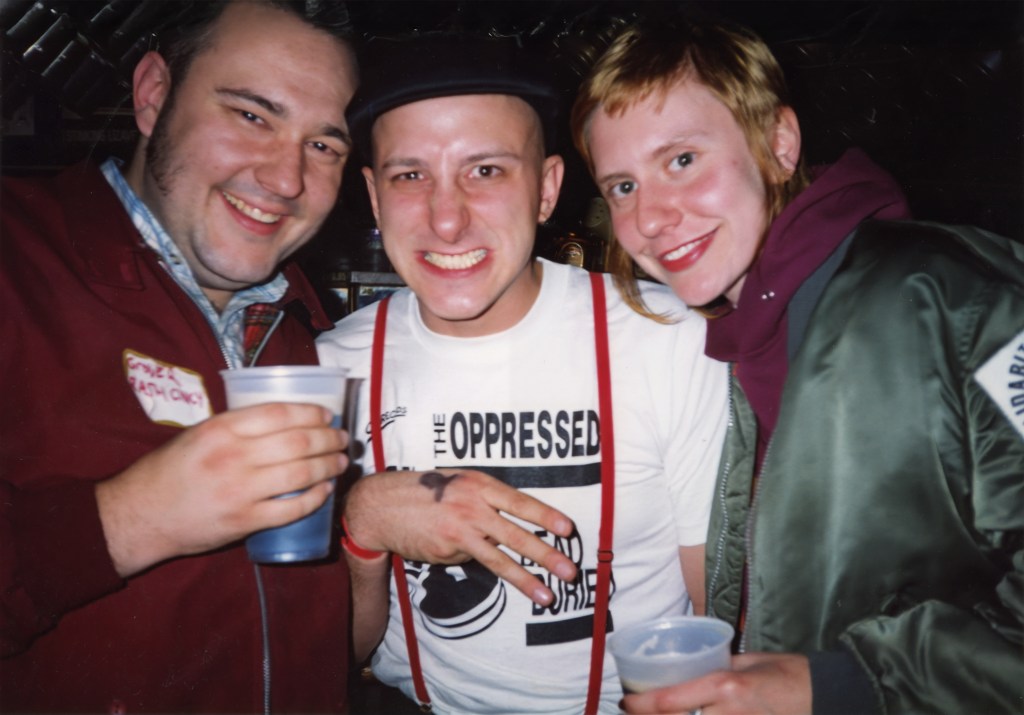
Greg Pason: SHARP had its place, but for folks like me, the punk and skinhead scene was primarily ‘political’; SHARP was not. NYC sucked in the late ’80s – boneheads everywhere, white-power skins on television, etc. Having SHARP was important to break that stereotype, but anti-racism without class-based politics, anti-fascism, opposition to homophobia, etc, didn’t go very deep. I think that’s why so many SHARP groups just ended up being multiracial right-wing crews, some of which were open to hanging with fencewalkers but not anti-fascists.
Jordan Worley: We were the New York chapter of Anti-Racist Action (ARA) and hosted visiting anti-fascist action members. SHARP was more of a name than a crew in NYC at that point; I saw it as a ‘gateway drug’ to joining RASH. When I first became a skinhead, SHARP was very important. I didn’t join up with them because a lot of them were homophobic and attacked queers in the West Village. Before I joined RASH, I didn’t affiliate with or claim anything, but I was a skinhead and active in several groups.
Abby: SHARP was nowhere to be found, and the ones that still called themselves that had gotten ultra-violent, confusingly homophobic, attacking people for looking weird or queer. We did sell SHARP patches at Moon Records, but it felt like a relic for some to identify with. At that time, RASH felt more present, organised, purposeful and political, plus the agenda was: we’re not just against racial prejudice; we’re trying to make this obsolete in society. SHARP died out, and in some RASH circles it was considered weak – you weren’t really down with us if you were putting up SHARP colours.
Shawn: There was admiration for the groups that were putting in work: baldies, Red Warriors, the folks in Portland, and a few others who were on the forefront of the ’80s scene wars.
Was there a specific hierarchy or central committee in RASH?
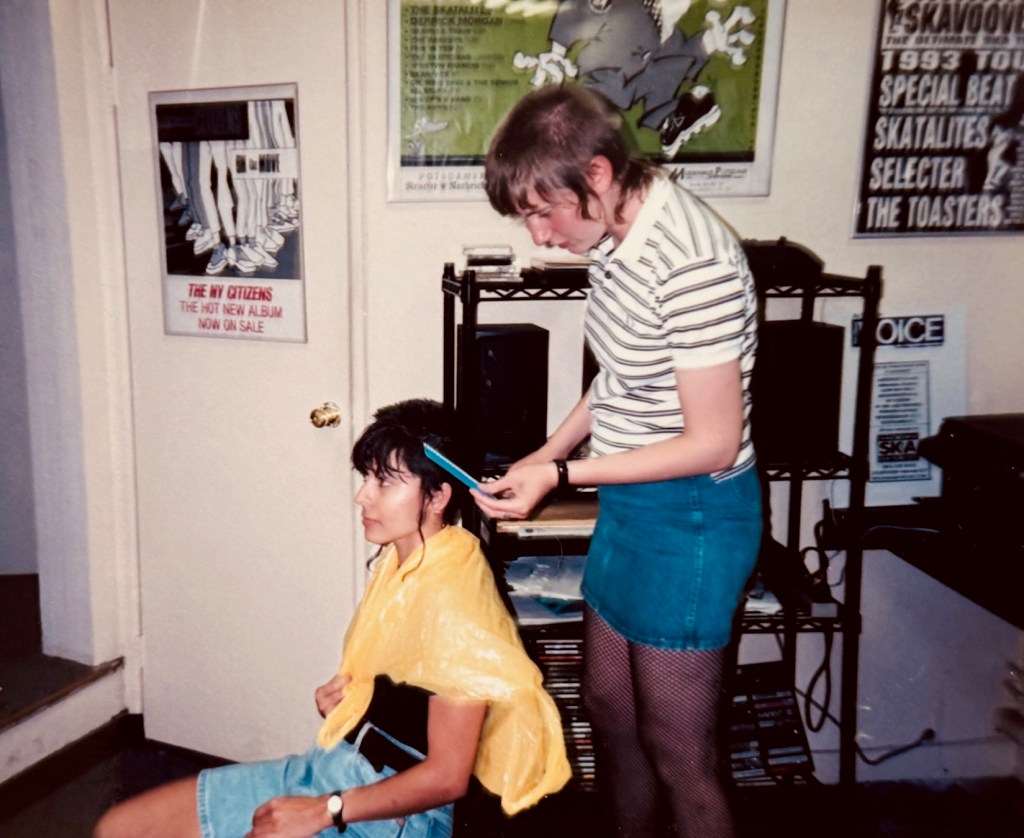
Abby: I think Dan wanted something like that, and I was really against it. There was talk of a central leadership also – who’s an ally, who’s a supporter? That shit was boring to me because I was more into community outreach, but some people are more isolationist; they had more of an uppity ‘I’m more skinhead than you’ attitude. I didn’t give a fuck – you got the look, you’re throwing down if you have read something about something besides yourself. ABC No Rio was consistently the sanctuary for me and anyone that was like-minded. I think most of the people at ABC got a kick out of us until it was a problem, with other people showing up and making it a problem.
Shawn: No, there was no established hierarchy in the group or any influences from organisations with a top-down power structure. In fact, one of our points in the founding political statement is that RASH is a democratic coalition, and if you don’t practice those ideals, you can’t be in RASH.
Jordan Worley: I don’t know if there was a charter, or at least one that I knew of. We had a statement that was used for interviews that worked as a charter, and later on we tried to put structure on the group about who’s a member. The NY and Ohio groups blew up over that because in NYC we really didn’t have to deal with nazis as much. It was a weird scene where we’d be bitching about pro-American skinheads, and they’d be bitching about us. A lot of the anti-fascist work would be outside of NYC, like in Pennsylvania. The National Alliance and the KKK were trying to organise in Staten Island, so me and another person would go over there and doxx people, get their addresses, and put up flyers so their neighbours would know what they were trying to do. We kind of stuck to ground that was fertile, and ABC No Rio was definitely fertile ground. We could go there and share ideas, do events, we could hang out, but I don’t think we went to too many Oi shows, and after a while we weren’t even welcome there.
Greg Pason: Not much hierarchy in RASH that I experienced. Many of us linked to the anarchist movement and came in with a general opposition to that, but other crews or cities might have.
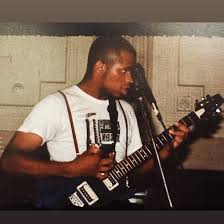
There was a huge ‘regular’ skinhead scene in NYC at that time, what did they think of you guys?
Jordan Worley: At first we were under the radar except for Dan, who was a focal point. Abby and I went freely between both groups. The only person that was really a stick on the side of the pro-American skins was Dan, and that was because he was coming from a more political punk background. I don’t know if he set himself up that way, but it seemed like that back then. He was the only one they had a problem with, and I would go to places like the Cherry Tavern where Oxblood hung out. They didn’t become hostile to RASH until there was a fight when some gay guys got jumped out front.
Abby: Hated and proud is the moniker we picked up from Iron Cross. They didn’t like RASH, and for the most part we were unwelcome in a lot of spaces. Some people were like, ‘fuck yeah,’ and others knew us from before, so they understood what we were trying to do. If they had taken the time to get to know us individually, they might have learnt something. You don’t see me rocking the hammer and sickle; I’m an anarchist. I want no gods, no masters. Guys like Sam Baker, singer for Urban Riot, were cool with us. People were cool with RASH until Mac from Oxblood shows up and gives you shit for it. What was funny is that Mac hated us, but in France who did he hang out with? The communist skinheads, the redskins. We had affiliates all over the world: Central/South America, Canada, Europe.
Shawn: Yeah, it’s safe to say we didn’t get along with a lot of the folks in the New York scene. To be fair, a lot of them have softened a bit as they aged.
Greg Pason: There were some shady folks that didn’t show their politics when they came to shows, and I felt really uncomfortable with them being at ABC, but the hardcore scene had gotten really stupid and violent at that time. There was a real division between the peace punk–type bands that played ABC and the ones that played CBGB’s. People stayed separate; there wasn’t a ton of overlap, and I think that’s why the politics of ABC was so important. This is what hardcore is, not stupid fights all the time, so it was really good to have a balance.
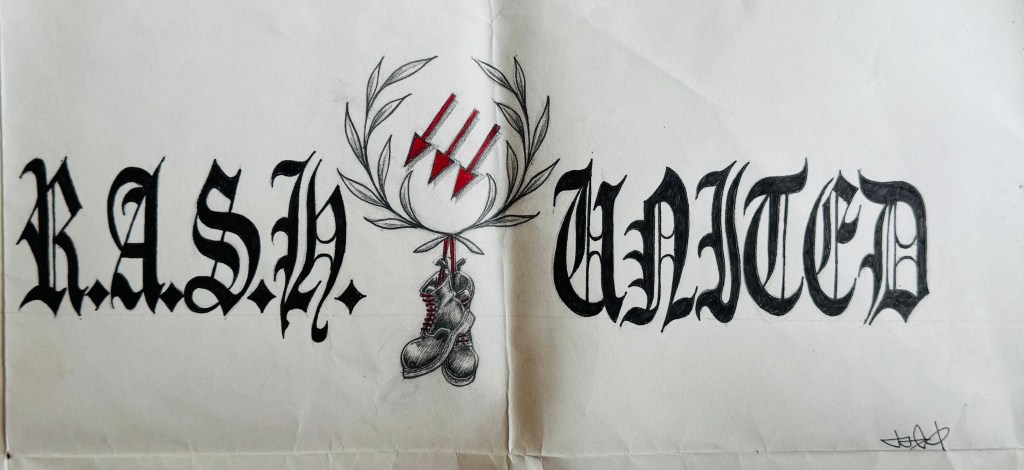
What artwork did you do for the group?
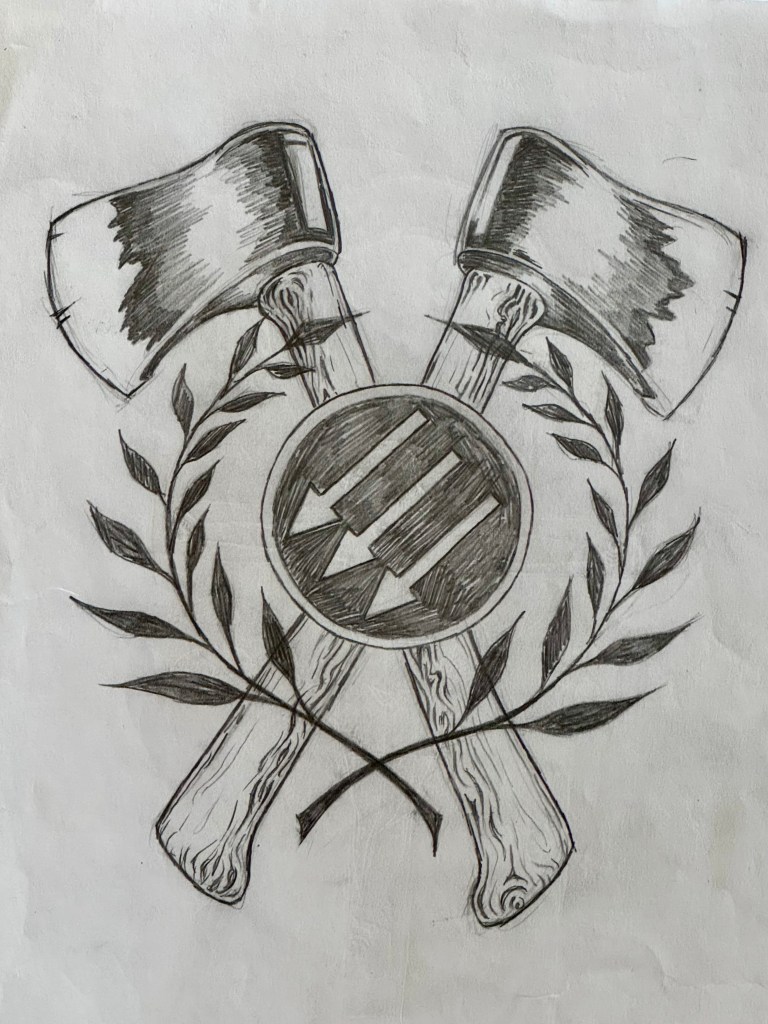
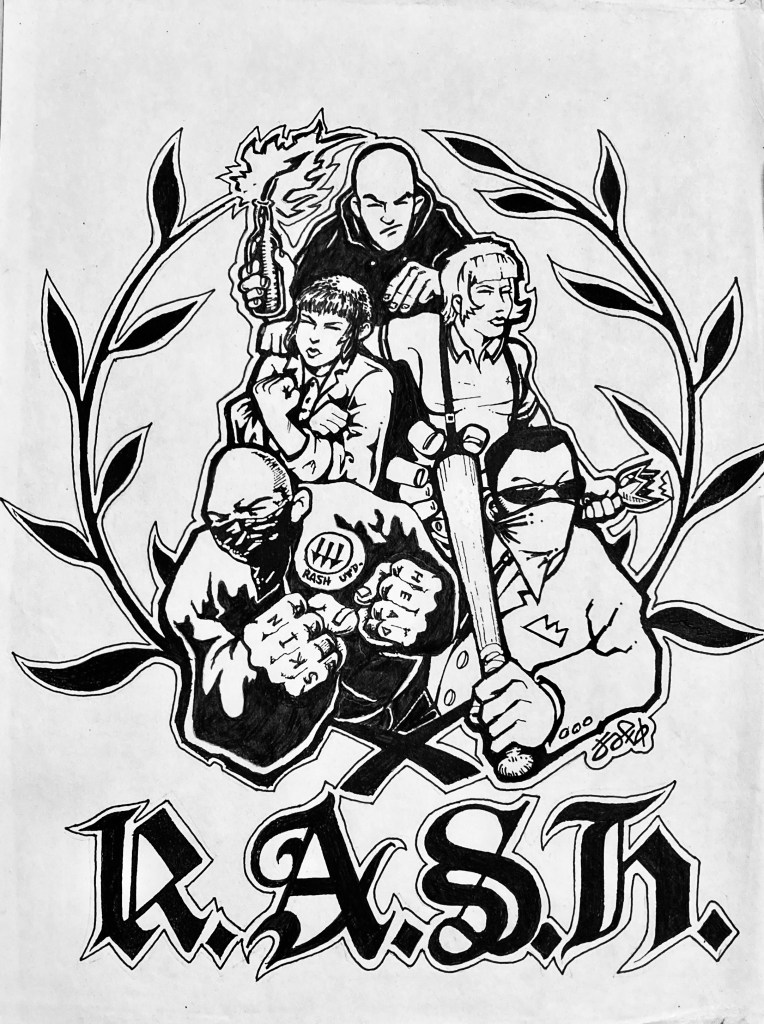
Jordan Worley: I was constantly drawing and sketching. Most of what I made went into internal newsletters and into t-shirt and sweatshirt graphics.
When and why did you drop out of being an active member?
Terry Romero: I left sometime in 1998. At that time I really needed to get out of the skin scene. The violence was getting to me, and the constant feeling of having to look over my shoulder – any of the good parts were gone for me. I took a break from ABC No Rio too, one of the tipping points being when I had my stuff stolen. I had a bag coming from work with tons of stuff, like a camera, library books; I put it in a pile along with other bags, went at the end of the night to look for it, and my bag was gone. I had my house keys in there and I was in tears, felt betrayed, but eventually got everything back. Someone called saying they had found my wallet and bag at a Starbucks and they wanted reward money. It was obviously stolen – who would do that? That really brought me down. I stepped away from punk, skinhead, hardcore stuff for many years.
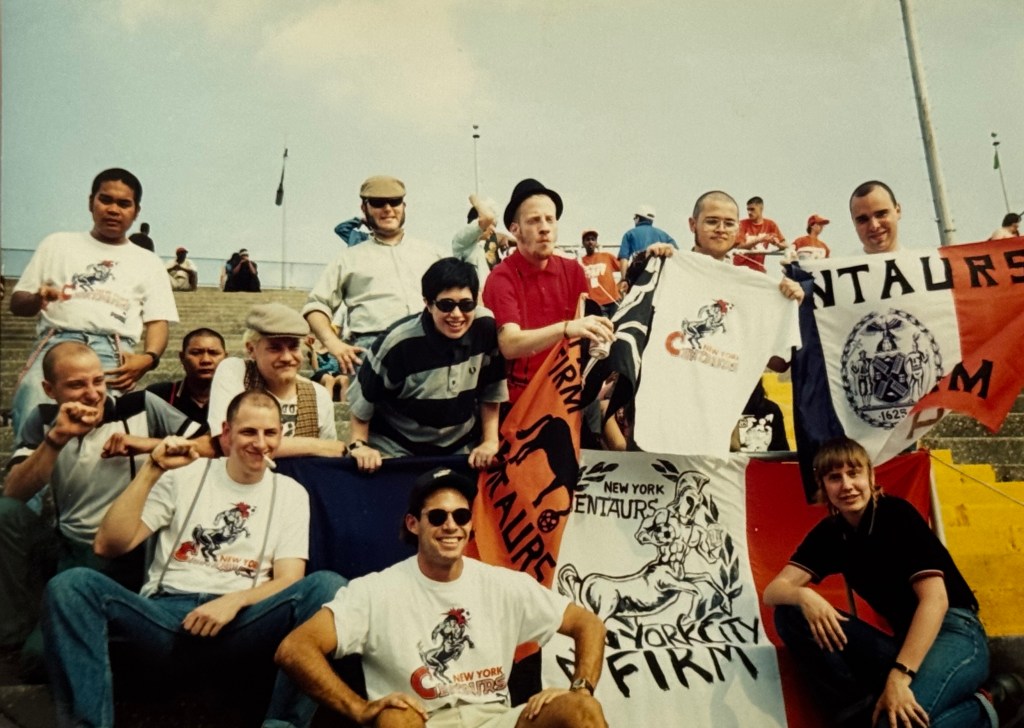
Jordan Worley: I got sick of the ‘talk’, always having to defend myself as a skinhead, explaining to people the history of skinheads, defining myself as a political skinhead. I wanted more – an easier platform to do political outreach. I also felt burned out by the NYC skinhead scene. It’s a very diverse scene; most are first- or second-generation immigrants. But it’s very pro-American and apolitical, or more often anti-political. We spent most of our energy in NY surviving in this scene and doing anti-racist, anti-fascist actions out of town or in the suburbs. I take being called a “commie-nazi-faggot” with the same feeling of honour as being called a “race-traitor.”
I was out of town a lot, as a roadie, visiting other cities and counties. I met with other RASH groups that had to deal with the Klan and Hammerskins, instead of the occasional bonehead from Long Island or nazis at a Metrostars game. There was a particular breaking point for me with the group. We were having a RASH gathering of US chapters in Cincinnati. We were throwing a show in an old warehouse. I was on point, so I was doing security and sober. There was a group of Confederate Hammerskins in town, looking for the event. They had shown up at somebody’s house during the show, but they didn’t show up at the gig.
Afterwards, I was hanging out at the local chapter’s apartment – two skins from Chicago (one African-American and the other a woman) – and I did a Taco Bell run at 2 am, Tacos in hand, heading back to the car, a pickup screeched to a stop in the parking lot and six boneheads jumped out of the back. We fought them off and they retreated before the cops showed. I called the NY crew at their motel, telling them what happened and saying we’re going to find the boneheads. They told me they had “already taken off their boots”. I was annoyed and called some local ARA punks I was staying with, then the Columbus chapter, and we went to confront the boneheads at the house where they had been spotted.
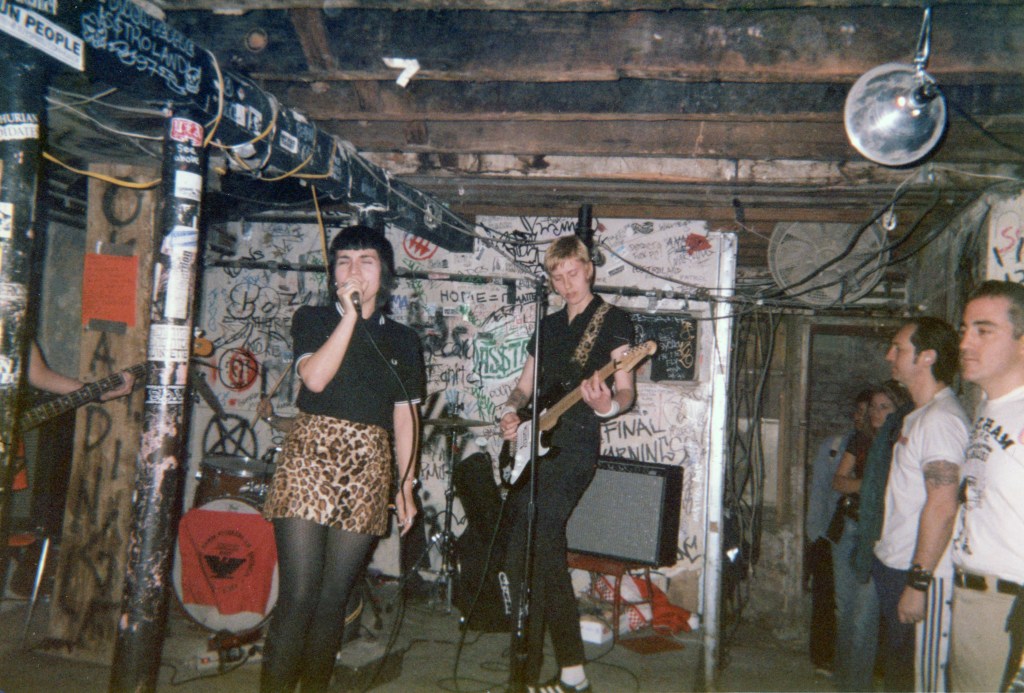
The next day, I found out the NY crew had offered my seat in the car back to NYC to somebody else, and I had to find my own way home. I was done. I still worked with RASH for a bit after that, and if anyone needs my support to this day, I will be there for them – but I decided to invest my energy elsewhere.
Shawn: As the New York crew was kinda fracturing from May Day Crew into something else, I was out in Colorado. I had a small RASH/ARA crew in Denver in the late 90s. In the 2010s, I formed a fairly substantial RASH crew in Florida that remains active. I’m now in the PNW, and we have a RASH west coast collective.
Abby: I left in 1999 because I had to get away from Dan. I knew him from age 14 to 24; we were intimately romantically involved the whole time. It didn’t matter who I was seeing or who he was dating – we were fucking, and that was pretty toxic because it was cheating. He had such a psychological hold on me that it became part of a safety issue for me to get away from him; same goes for Terry. Dan responded by showing up at my house, at my job – he did not want to be cut out. I had tried to do this prior; he was toxic, narcissistic, with an undiagnosed mental illness. He was not taking care of himself but didn’t want to hear about any mental health support. I tried helping because I loved him more than anyone on the planet at certain points in my life, kind of worshipped him because he’s so charming, so funny, and really knew how to connect with people on an individual level. I had to get away and was done with being a skinhead; the band didn’t feel fun anymore. I said that once band practices started to feel like a chore – then it was time to call it a day. It wasn’t fun, RASH wasn’t fun anymore
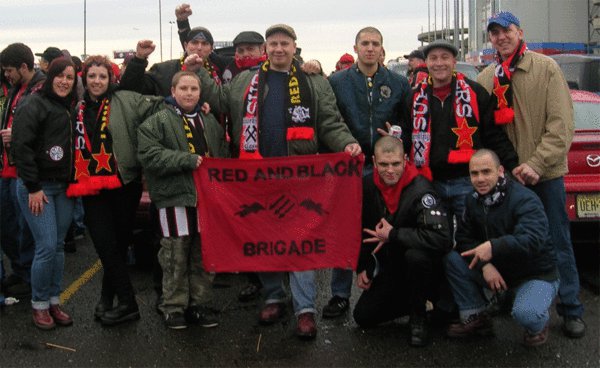
Greg Pason: The ’90s were a really fucked time for me. I dropped out from NYC RASH in the late ’90s and got involved mostly in Anti-Racist Action and other organisations.
What do you feel RASH’s legacy is and do you still follow its current activities?
Greg Pason: It’s incredible to listen to things like Oi! of the Tiger’s RASH song singing about May Day Crew. It’s incredible to see international skinhead crews who are RASH – some incredibly hardcore, some not. My kid grew up being surrounded by red and anarchist skinheads. I’ve always kept connected. I was active in soccer supporter orgs, anti-fascist orgs, Socialist Party and other groups. I still connect with RASH folks and consider them comrades. I just visited some in Portland and ran into so many RASH folks I hung with at The Oppressed show in NYC during the summer. I have many RASH comrades back, but I’m one of the old guys – let the younger folks lead.
Abby: I still support RASH wholeheartedly. It’s gotten huge internationally, but because Dan was still involved for years after I left, I didn’t want to be involved with anyone that was in touch with Dan.
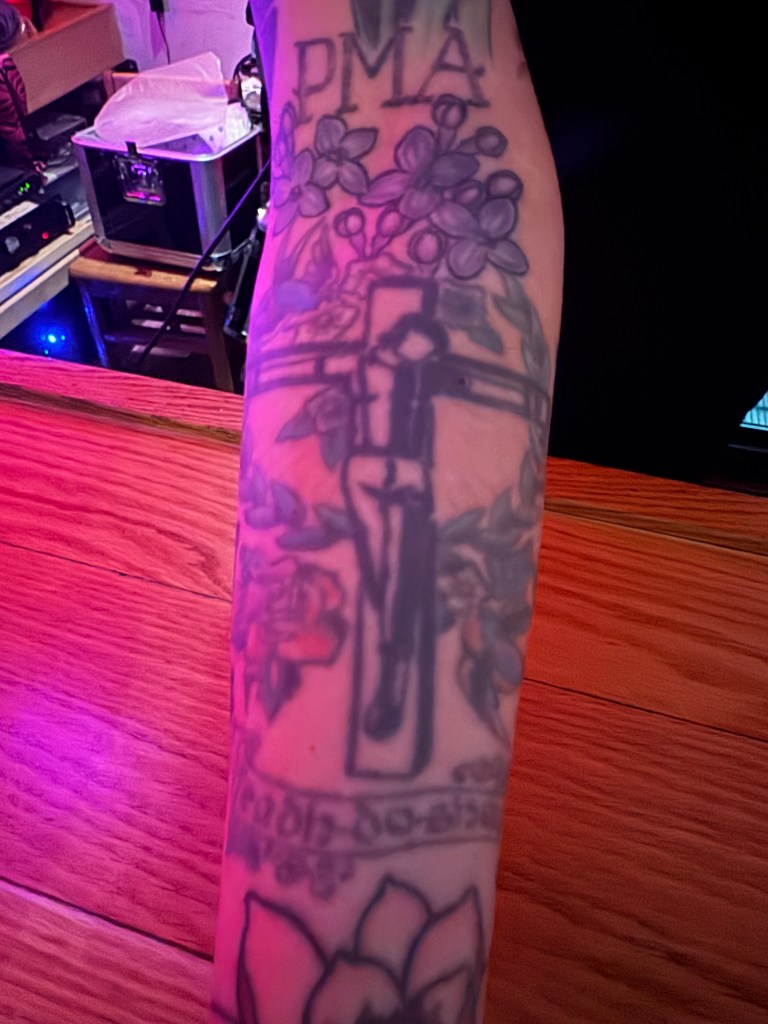
Shawn: The legacy of RASH globally is self-evident with all the crews around the world as well as the bands. I would venture to say that RASH is the largest unified anti-racist skinhead network in the world. The fact that skinheads from Bogota to Malaysia and from Germany to Australia have decided to rally around the RASH banner is amazing and makes me proud. From five in NYC to hundreds in dozens of countries – that’s the legacy.
Jordan Worley: I got to see RASH chapters in other countries – it was awesome. I hosted RASH skins from Columbia at my apartment in Brooklyn. In Barcelona, I bought a bunch of RASH merch off someone who wasn’t even affiliated with us. Like SHARP, you could just claim it to show the scene your beliefs. There were lots of RASH chapters that popped up all over. Even some bands that had been apolitical began claiming they were redskins. I keep in contact with a lot of people I knew from RASH. I mainly do political comics and organising instead of punching people these days. I hope that RASH continues to grow, and I hope that one day nazis and apolitical skinheads have to constantly explain that they aren’t red.
Interview excerpts from Sonic Dissent on Rivington St: HC Matinees Abc No Rio 1989-2016 (Shining Life Press)
Photos from Abby’s collection.
 Creases Like Knives
como siempre excelentes entrevistas en este blog sobre el movimiento.FUCK THE RASH !!!
LikeLike
The Rash. Charismatic, good looking, stylish. The polar opposite to the nazi trash boneheads
LikeLiked by 1 person
This is great. Thanks for these thoughtful details. One minor note. To my knowledge, Marty is still with us… not “RIP.” I was texting with him recently.
LikeLiked by 1 person
Thanks. You’re the second person to say so, so it must be true. I’ve removed ‘RIP’ from the caption.
LikeLike
Saludos desde el extremo sur de Sud-América, hace años tenemos activa una sección de RASH en la Patagonia Chilena y Argentina. Excelente articulo, mis respeto a quienes iniciaron esto. STAY RUDE, STAY REBEL, STAY RASH (///)
Salinas_Oi
LikeLiked by 1 person