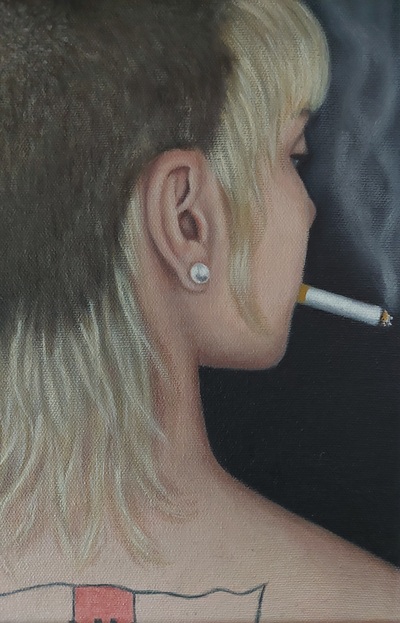
Skinhead has always been a highly visual culture, and photographs of skins from every period are plentiful – yet it has rarely been the subject of painting. Khana Evans, an English painter in her twenties, has begun to fill that gap with a growing body of portraits centred on subcultures, especially skinheads. Her figures, often female, are frequently shown from behind, or turned away from the viewer. What struck me immediately about Khana’s work, but also about her social media posts and her face in photographs, was a sense of sincerity. While it isn’t easily defined, it’s a quality you can sense at once. Her replies to my interview questions only reinforced this impression.
Matt Crombieboy
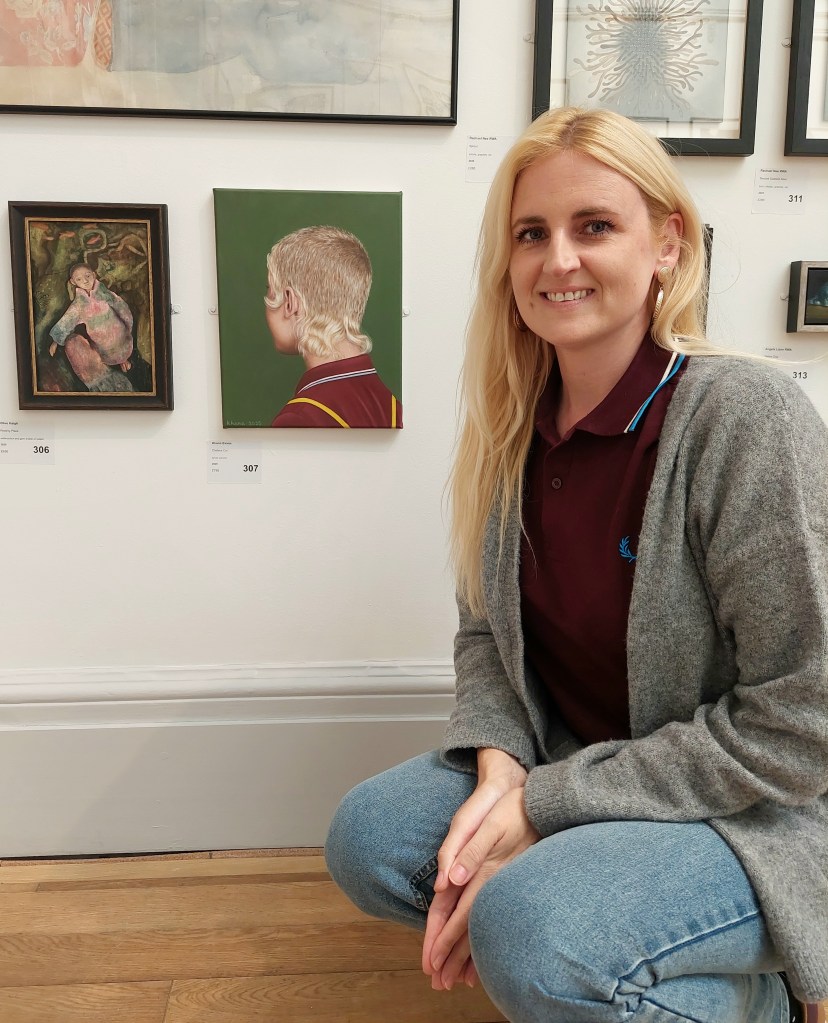
Hi Khana, could you introduce yourself to our readers?
Hi everyone, my name is Khana Evans and I’m from the seaside town of Weston-super-Mare. A couple of years ago, I left my factory job with the intention of becoming a lorry driver, but along the way I returned to my long-standing interest in art and decided to pursue it more seriously. Art has always been a passion of mine, and I’m now focused on developing my practice with the aim of making a sustainable career from it. While the future is open, my goal is to spend as much time painting as possible and see where it leads and if that doesn’t work out, there’s always a lorry waiting for me somewhere.
Currently I am working on building up a collection of paintings for my own solo exhibition, but I’m also entering my work into art competitions and national exhibitions to showcase my skinhead paintings.
How did you get into making art?
Ever since I was a kid, I’ve been drawing, painting, and generally making a mess with anything creative I could get my hands on. I rarely go a day without doing something arty, it’s basically an addiction at this point, and an expensive one. Honestly, art supplies cost so much it probably would’ve been cheaper to get into drugs.
When I left school, I went straight to art college… and hated it. Turns out painting my feelings and doing endless abstract work wasn’t really my thing. I wanted to actually learn techniques and skills, not just stare at a canvas and overthink it. So I quit and went back to painting on my own terms, which was way more fun and a lot less stressful.
My first proper commissions came from a couple of northern soul DJs, including Nige Shaw (Heavenly Blocked nights), who had played at the 100 Club in London. He asked me to paint a backdrop for the stage to hang behind him. Sadly, it was only used a few times before he passed away, but it was a huge moment for me and something I’ll always remember.
A few years later, I got more into portrait painting and even ended up appearing on a TV show created by Charles Saatchi for the Saatchi Gallery. That led to a few commissions, but after a while I took a break from painting altogether. I think I just got fed up with it all and needed to step away before I lost my mind.
Could you tell us a bit about your painting process?
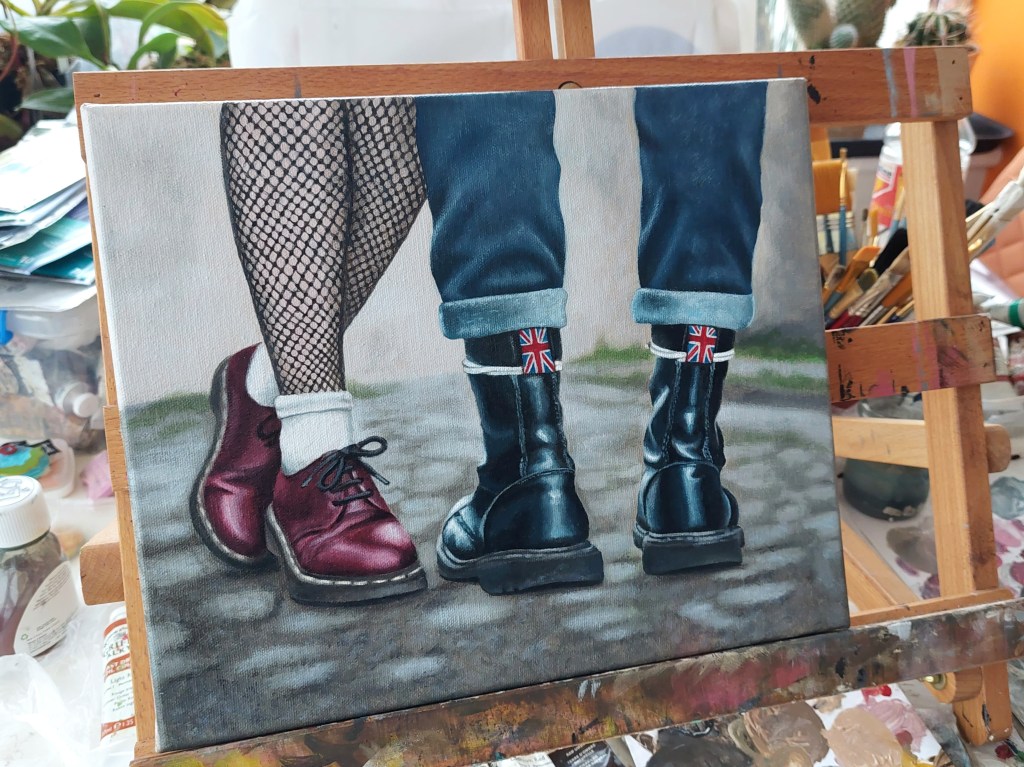
I usually begin by gathering together all the images that have inspired me and sketching out a rough idea of how I want the painting to look before I start painting. I work almost exclusively with oil paints, and I’ve found that using a limited colour palette, mixing every colour myself, helps me create more lifelike portraits.
I often repaint sections several times before deciding on the final look of an image. Once a piece is finished, I photograph it and have it professionally printed. I find it very difficult to part with my original paintings, so selling prints is a great way for me to share my work. At some point in the future, I plan to hold an exhibition where everything will be available for sale.
When you’re painting, do you imagine a particular audience – people from within the scene, people outside it, or no one in particular?
When I started painting, I wasn’t thinking about an audience at all, it was pretty selfish really. I was just making stuff I liked and not worrying about anyone else. It’s only in the last few years that I realised people were actually paying attention, so I’ve just gone with it.
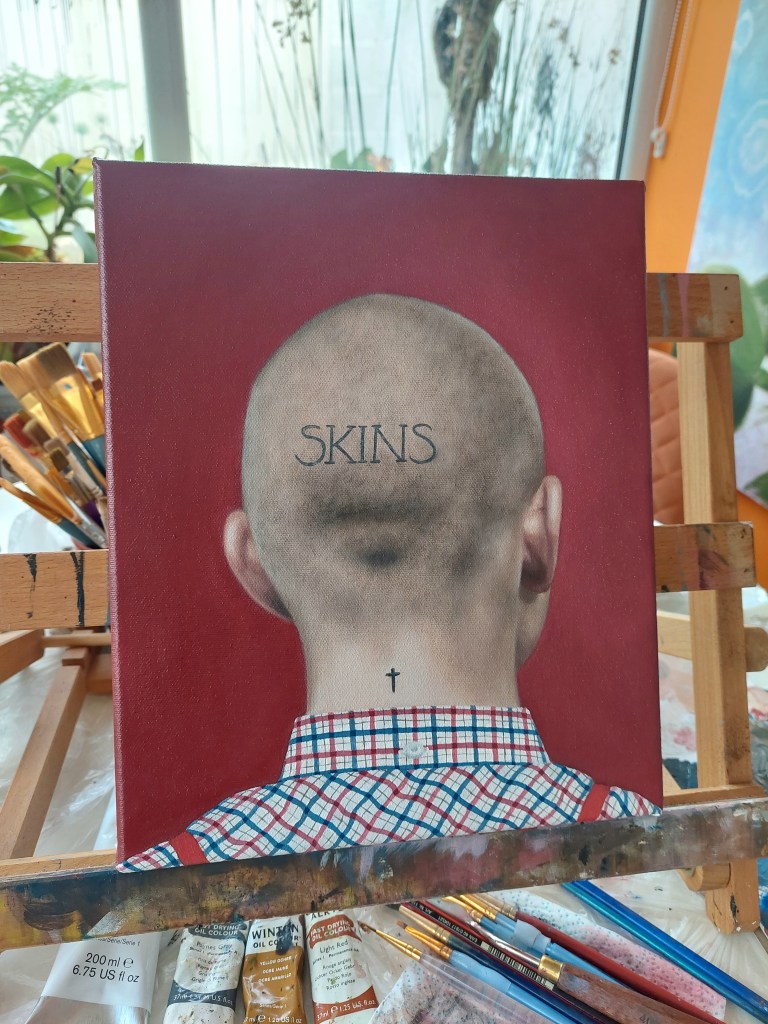
My work seems to have found a home with skinheads, punks, and mods, and I’m honestly blown away by the support from these subculture communities. They’ve been amazing, and it still feels a bit mad that anyone other than me cares about what I’m doing.
Your subculture paintings have a heavy focus on skinheads, especially skinhead girls. Why them, and what’s your personal connection to skinhead culture – are you a skin, or more of a sympathiser?
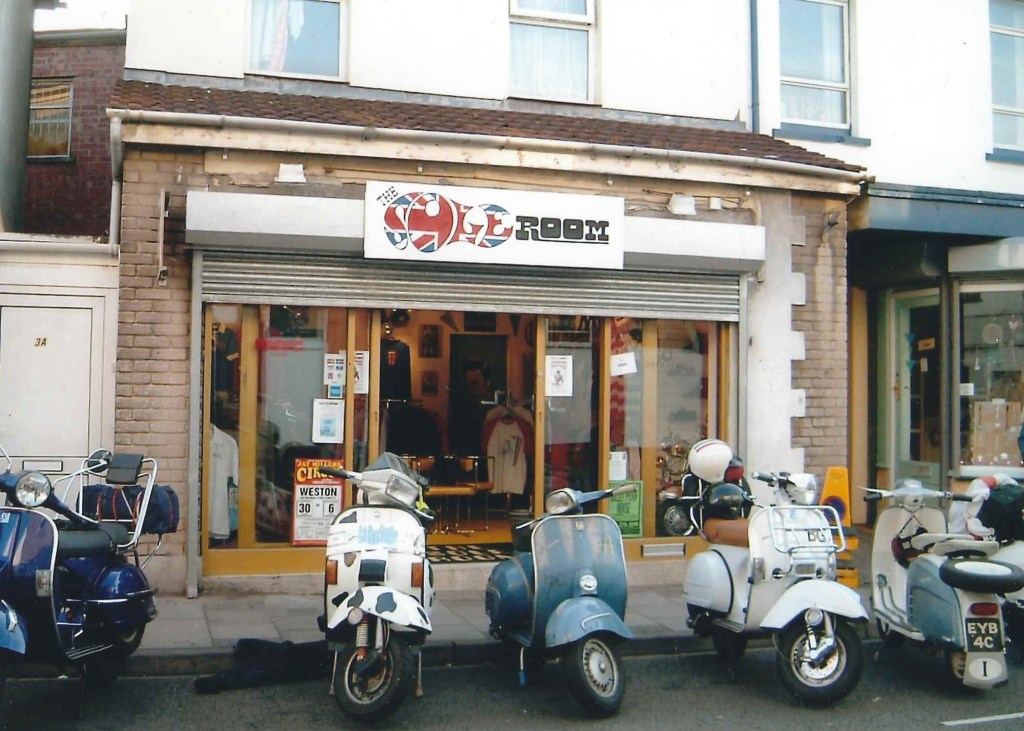
When I was a teenager, my parents opened a shop called The Sole Room, selling mod and skinhead clothes, shoes, all that stuff. That’s really how I got introduced to the scene, and I met a bunch of interesting characters, especially once my dad started DJing northern soul, ska, and reggae nights. I guess I would call myself a skinhead (I just don’t have the hairstyle). I’ve loved the style and scene for years, and it’s definitely shaped who I am. But I’m such a recluse that spends most of my time painting, so I’m more of an observer than a proper participant.
I absolutely love painting skinhead girls. They’re brilliant subjects and rarely seen in fine art, so it’s fun to bring them some attention. My style is heavily influenced by J.H. Lynch, I spotted his work when I was about seventeen. He painted glamorous women almost exclusively, and I thought, ‘Yeah, I want to do that… but with skinhead girls!’ (And, of course, I paint guys too). Lynch really showed me the power of sticking to one subject and doing it well. That was the spark for my skinhead girl portraits… and honestly, I’ve got a million more I want to paint.
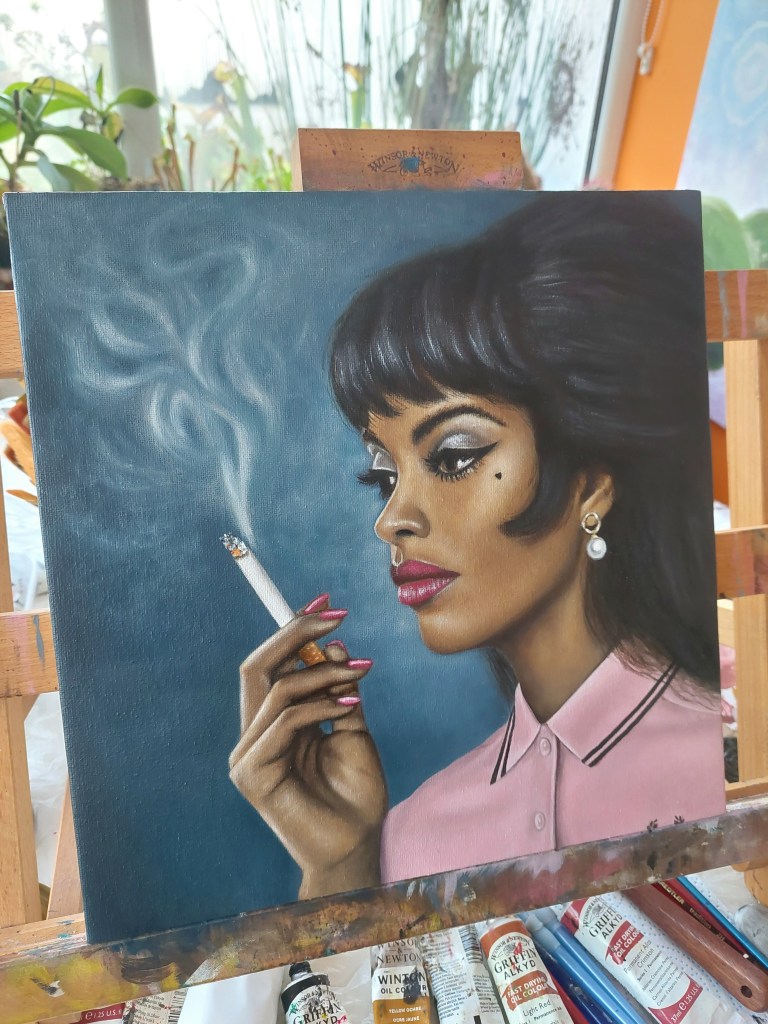
What do skinheads represent for you? Are there any values or ethics that you relate to and feel are embedded in the culture?
I’ve always been drawn to the music and captivated by the style, but above all, it’s the people who have made the biggest impression on me. As a very British scene, and coming from a working-class background myself, it feels incredibly familiar and relatable, but most of all I love embracing multicultural influences.
Are your paintings of skinheads nostalgic, or about the culture as it exists now? Put differently, do you see skinheads as belonging to a specific time and place – for example England in the 80s – or more as a timeless and international culture?
The skinhead scene is very much alive and thriving all over the world, as you can easily see on social media. I didn’t realise just how popular it still is until I started posting my work online. I’ve also noticed that quite a few younger people are getting into the scene, which is really encouraging. My art blends both old and modern influences, but since the look hasn’t changed much since the 1980s, it’s hard to tell the difference. The main thing that has changed over the years is the politics, but my focus has always been on creating work that celebrates the style and culture rather than centring on politics.
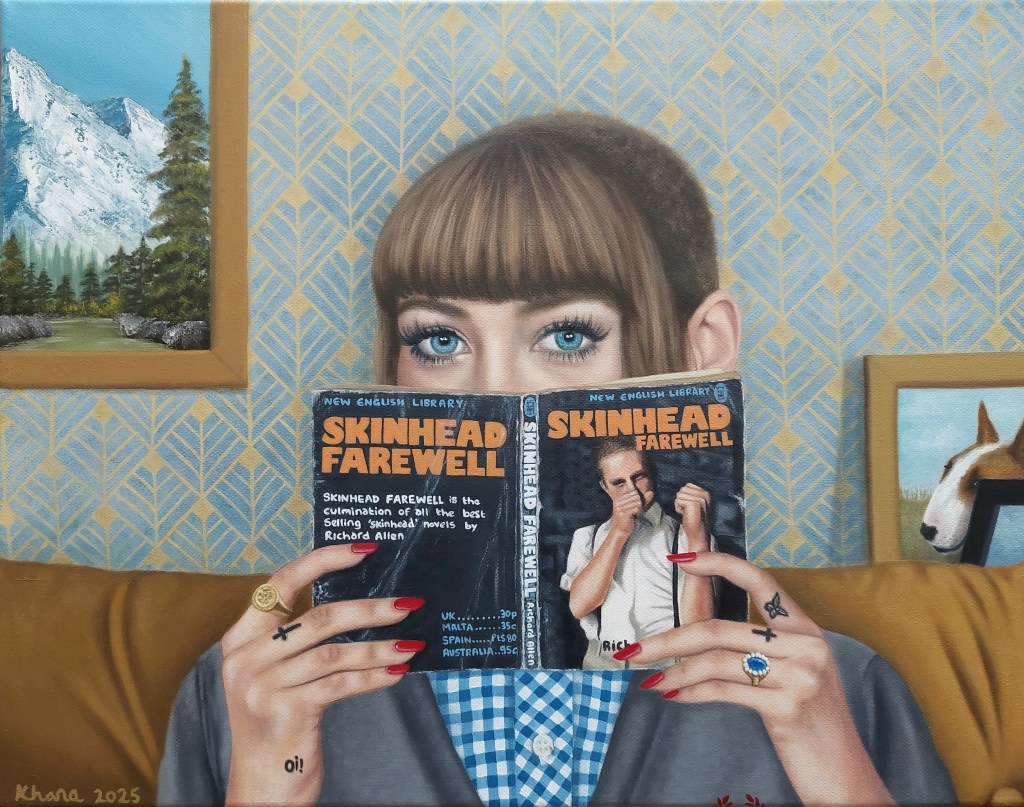
What would you say is the ‘spiritual theme’ of your pictures – the ideas or feelings you most want to communicate?
I’m not that deep, though I wish I was. My work is really a nod to the J.H. Lynch paintings I discovered when I was seventeen. At its core, it’s about an airbrushed kind of beauty with just a hint of working-class British edge. People tend to see what they want in it, and, luckily, they seem to like it. It’s a strong, relatable subject. If you grow up in a working-class town, you’ll always spot a skinhead or two. There’s something nostalgic about that.
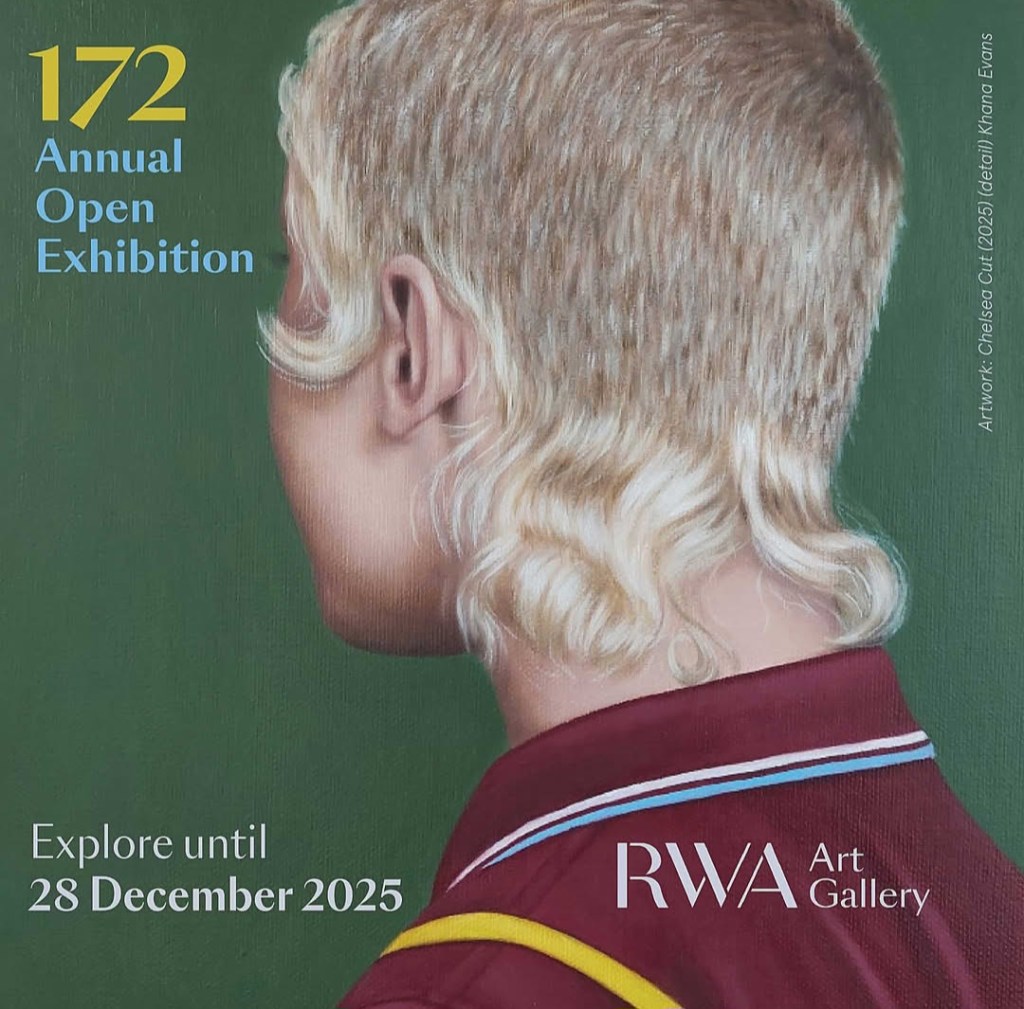
One of your skinhead girl paintings, Chelsea Cut, was recently exhibited at the RWA 172nd Annual Open Exhibition. How did that come about?
Every year, the RWA Academy in Bristol holds an open call for their Annual Exhibition. A few years ago, I entered and got rejected, but this year (2025) I tried again and was accepted. Even better, they wanted to use my work for the advertising poster. I was well chuffed. My painting was on display all around the city, which was amazing exposure.
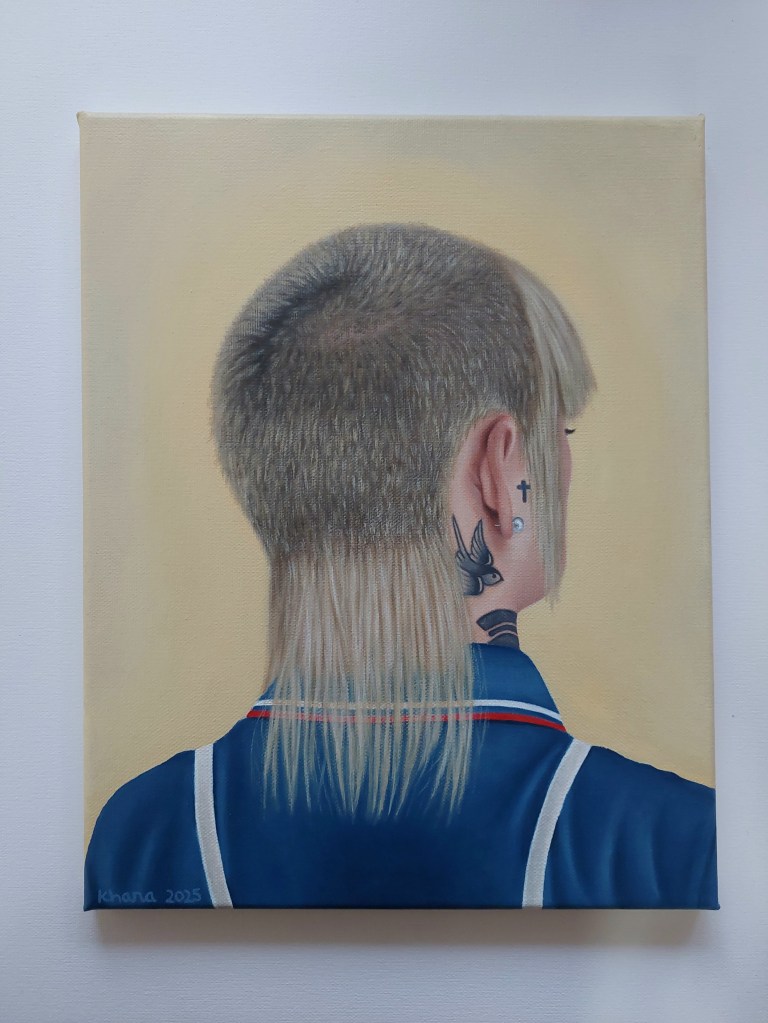
I did my best to milk the situation and draw in crowds, especially people who wouldn’t normally step foot in an art gallery. I know galleries can feel a bit pretentious and intimidating, especially the abstract ones, if you’re not a regular visitor.
The RWA exhibition is open to all styles and subjects, so I was still pretty surprised to have my work chosen. My painting sold quickly, and I’d love to know who bought it… because, well, I’m a nosy bitch.
In quite a few of your paintings the figures are turned away from the viewer. I feel those are some of your strongest works – they create a sense of mystery. But what’s the idea behind this choice?
Thank you so much. That’s pretty much what I was trying to achieve, a sense of mystery. When you can’t see someone’s face, it cuts off that instant judgment. You can’t size them up straight away. I don’t think you need to see a person’s face to get a sense of who they are and what they’re about. The back of a shaved head is more fascinating than you’d think. There are so many bumps and textures, almost as detailed as a face… sort of.
You’ve used the St George’s cross quite a bit, both in your paintings of skinhead girls and in your posts on Facebook. What does the St George’s cross mean to you?
For me, the St George’s cross is a symbol of English identity, but it’s complicated. I like using it in my work because it’s instantly recognisable. I’m interested in how its meaning can change depending on where and how it’s used. It’s kind of a symbol that people read in different ways. It’s such a shame that it’s seen in such a bad light these days. I use it just to show the English or British side of my work in a totally non-political way. It’s purely decorative.
Would you describe yourself as patriotic?
I do love the UK. It’s unique. Fair enough, it’s not perfect, but it’s what inspires me. I’d say I’m patriotic in a thoughtful way. To me, patriotism is about valuing where you come from, its culture, history, and values, while being aware of its flaws.
Finally, is there anything you’d like people to take away from your work, or understand about your perspective, that hasn’t come up yet?
I’m interested in how people are judged on appearance alone. Skinheads carry a lot of assumptions with them, and I want to push back against that. These portraits aren’t about provocation. They’re about looking properly at people who are usually misunderstood, and giving them the time and respect they’re rarely given.


I would love to see Khana tackle the ‘original’ era.
LikeLike