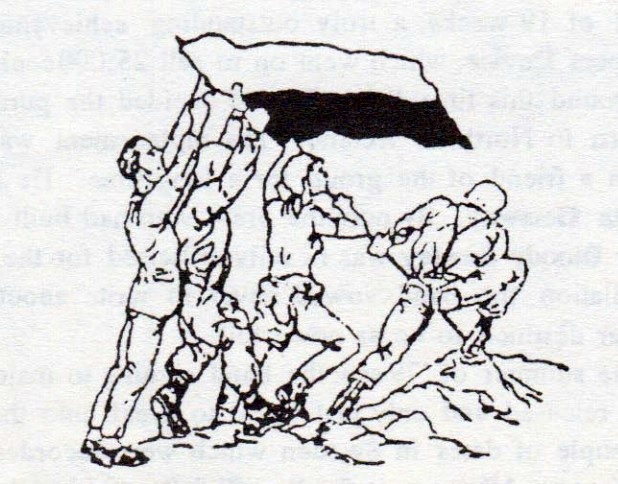
Conventional wisdom suggests that prior to the emergence of SHARP, Polish skinheads were essentially boneheads – in other words, thugs with fascist sympathies and little appreciation for the finer aspects of skinhead culture. While there’s a certain truth to the stereotype, it is too simplistic to do justice to the skinhead scene of the Polish People’s Republic, which was no less contradictory than its counterparts in the western countries.
In anti-fascist accounts of the latter half of the 80s, all Polish skinheads are routinely referred to as naziskini [nazi skins]. Yet the Security Service of the Polish state had a somewhat more realistic assessment: in an internal report from 1986, it estimated that there were approximately 200 skinheads in Poland, of which it regarded 30 as “fascists”. By 1987, the overall number remained the same, but the count of “fascists” had increased to 50. This indicates a clear majority of “non-fascist” skins, although things were to change rapidly with Poland’s political transformation in 1989.
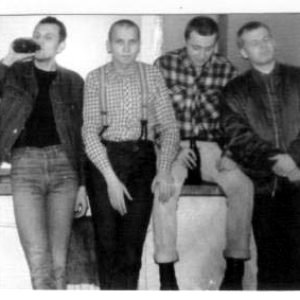
While one could argue that the emergence of skinheads in Poland was a symptom of globalisation, the politics and concerns of Polish skins often had distinctly local roots, shaped by Polish conditions and history. It wasn’t until the latter half of the 90s that neo-nazism – i.e. George Lincoln Rockwell’s fusion of German nazism with Southern U.S. white racism – became the predominant tendency. By that time, the neo-nazi faction was in competition with a traditionalist Oi revival and the budding SHARP movement.
It’s also true that before the 90s, the Polish skinhead movement was relatively monolithic, with no clear line of demarcation between “boneheads”’ and others. Any attempt to recount the history of the scene’s early days truthfully, then, involves getting your hands dirty. My purpose with this interview is not to spin myths about Polish skins, issue apologia or summary condemnations, but rather to approach the historical truth to the degree that a conversation with one individual allows: in this case, an interesting chap who was known under the moniker Trojan during his co-editorship of one of Poland’s first skinzines, Fajna Gazeta, in 1988.
This interview will not please everyone. Anti-fascists may find it inexcusable that we’re discussing Trojan’s political journey objectively and without constant howls of indignation. Right-wingers, too, will have plenty to moan about, not least the interviewer’s own political perspective. And if you think that politics has no place in the scene at all – well, go and read something else. This is an interview with a highly political individual who lived through highly political times: the final death spiral of my birth country, the Polish People’s Republic, and the period of capitalist restoration. Thinking readers will hopefully have plenty to get their teeth into.
Matt Crombieboy
CLICK PICTURE FOR PART 1: EARLY DAYS, BOOTS AND BRAWLS
CLICK PICTURE FOR PART 2: OI MUSIC, ZINES AND METALHEADS
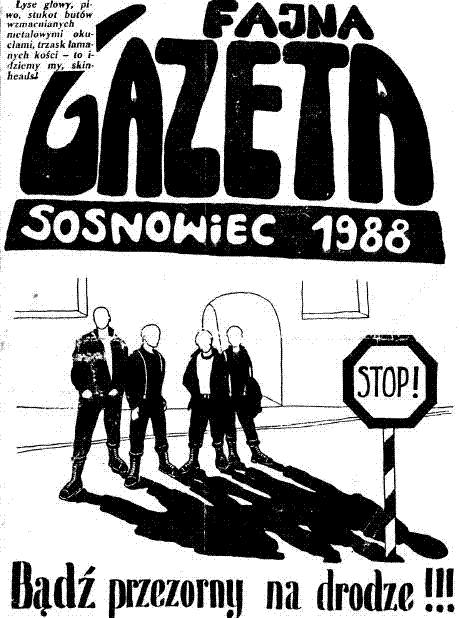
CLICK PICTURE FOR PART 3: TOUGH TIMES, TOUGHER SKINS
CLICK PICTURE FOR PART 4: CATHOLICS, NAZIS, REDS… AND THE REBIRTH OF OI
CLICK PICTURE FOR POSTSCRIPT: A COMMENTARY FROM THE SOSNOWIEC CREW (1992)
KLIKNIJ, ABY PRZECZYTAĆ POLSKĄ WERSJĘ WYWIADU!
 Creases Like Knives
great text, give thanx man and listen more reggae
LikeLike
An excellent and highly informative interview. Keep up the great work.
LikeLiked by 1 person
Good stuff
LikeLike
Remember that picture from Hard as Nails. Bloody long time ago!
LikeLike
Pingback: Where Have Warsaw’s Bootboys Gone? Echoes from the Skinzine Age – Creases Like Knives