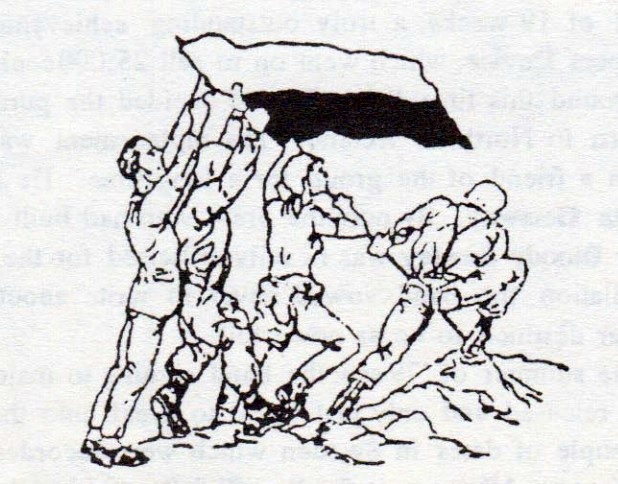
Conventional wisdom suggests that prior to the emergence of SHARP, Polish skinheads were essentially boneheads – in other words, thugs with fascist sympathies and little appreciation for the finer aspects of skinhead culture. While there’s a certain truth to the stereotype, it is too simplistic to do justice to the skinhead scene of the Polish People’s Republic, which was no less contradictory than its counterparts in the western countries.
In anti-fascist accounts of the latter half of the 80s, all Polish skinheads are routinely referred to as naziskini [nazi skins]. Yet the Security Service of the Polish state had a somewhat more realistic assessment: in an internal report from 1986, it estimated that there were approximately 200 skinheads in Poland, of which it regarded 30 as “fascists”. By 1987, the overall number remained the same, but the count of “fascists” had increased to 50. This indicates a clear majority of “non-fascist” skins, although things were to change rapidly with Poland’s political transformation in 1989.
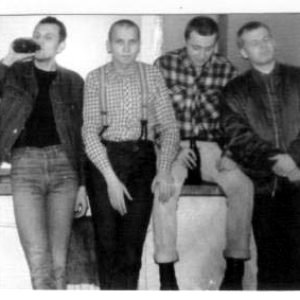
While one could argue that the emergence of skinheads in Poland was a symptom of globalisation, the politics and concerns of Polish skins often had distinctly local roots, shaped by Polish conditions and history. It wasn’t until the latter half of the 90s that neo-nazism – i.e. George Lincoln Rockwell’s fusion of German nazism with Southern U.S. white racism – became the predominant tendency. By that time, the neo-nazi faction was in competition with a traditionalist Oi revival and the budding SHARP movement.
Continue reading Creases Like Knives