It’s been a while since my last article for Creases Like Knives. Work and other matters got in the way, but I’m ready to start again, and I’ll do the best I can.
This time we go to Tuscany – Livorno, to be precise, which is located in the western part of the region. A port city overlooking the Tyrrhenian Sea, Livorno is famous for its ‘cacciucco’ (fish soup), ‘ponce’ (an alcoholic drink derived from the British punch) and ‘Farinata’ (a cake made with chickpea flour) among other dishes. Livorno is also well-known for the hospitality of its inhabitants: the Livornese are an open-minded, quintessentially seafaring people who’ll welcome anyone (or almost anyone) who happens to stop by, and they know how to make you feel right at home even if you’re hundreds of miles away.
It was 1980 in the centre of Cologne. The sign on the shop spelt ‘Rock-O-Rama: Rock ‘n’ Roll, Rhythm & Blues, Punk’. Inside, small handfuls of teds and punks were swapping suspicious glances while trying to avoid each other – not easy in a room that couldn’t hold more than 10 people. The burly man behind the counter, well into his 30s and sporting a quiff, a tache with friendly mutton chops and white ankle boots, put a record on: the first production of his very own Rock-O-Rama label, Punks Are the Old Farts of Today by Vomit Visions. For once, the bewildered teds and punks were in agreement: this racket was completely unlistenable.
Jeff Schoep was once described as ‘the most famous nazi in America’. From 1994-2019, he was the director of the National Socialist Movement, which – as names go – was one up from its forerunner organisation, the American Nazi Party (imagine a far-left organisation calling itself the ‘Commie Party of America’…). Schoep was a dedicated white supremacist for twenty-seven years.
Our writer Gareth Postans first became aware of Jeff in Deeyah Khan’s documentary ‘White Right: Meeting The Enemy‘. He saw a man who didn’t look completely convinced and came across as lost, but intelligent. It was his friendship with Khan that made him question his beliefs.
Jeff now runs Beyond Barriers, which is a non-profit organisation dedicated to a world devoid of ‘extremism’. Gareth asked him some questions via email, and he kindly replied very promptly. And because I have my issues with the catch-all term ‘extremism’ (which is why I’ve wrapped it in the most disdainful quote marks I could find), I sent him two follow-up questions to boot. Enjoy!
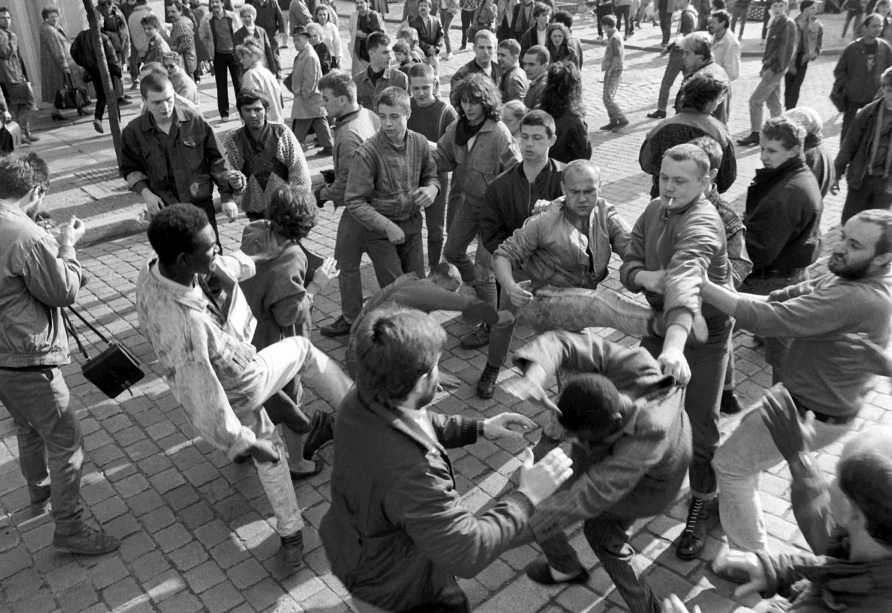
Investigating the history of Poland’s skinhead scene is tricky. Even if the mid-80s beginnings were relatively apolitical (see our article on Kortatu’s visit to Warsaw in 1987), no clear demarcation between ‘boneheads’ and other factions emerged until at least 1992. Although the information flow from Western Europe to the Polish People’s Republic was somewhat hampered in the 80s, whatever made it through the Iron Curtain in the form of zines and tapes was happily absorbed. This eclectic mix included the likes of Blitz, Kortatu, Symarip and Angelic Upstarts, all of which earned mentions in the pioneering Polish skinzine, Fajna Gazeta – but also Skrewdriver, provocative nazi posturing and ultra-violence against enemy tribes. All of these influences added up to a subculture made up of hooligan ex-punks, determined to make a name for themselves as the most fearsome youth cult of all.
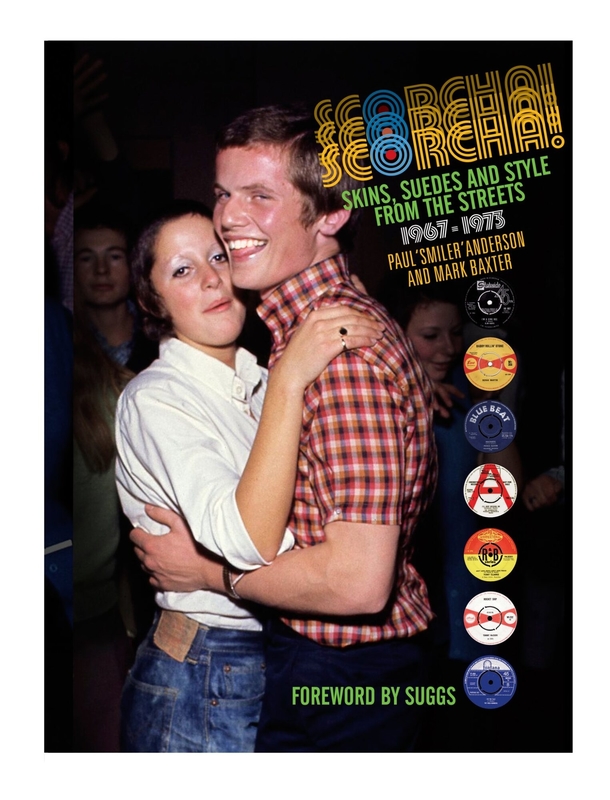
Scorcha! Skins, Suedes and Style From The Streets 1967-1973by Paul ‘Smiler’ Anderson and Mark Baxter (Omnibus Press, 2021)
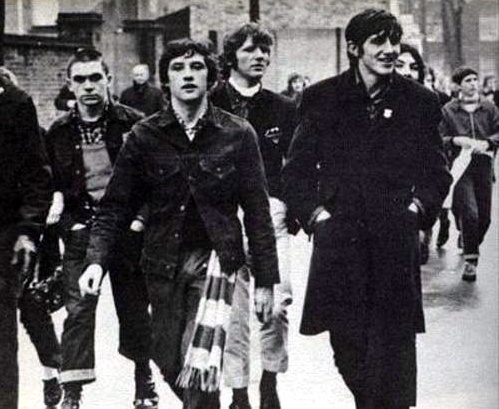
With words and images, Scorcha! sets out to document one strand of UK working class youth culture in the pre-punk era. The pictures provide a far more accurate depiction of late-sixties and early-seventies street style than slick fashion photos using models, stylists, make-up artists and professional photographers ever could. There are a slew of previously unpublished photos of ordinary kids all pilled up and with only a handful of places to go. Some of those in the pictures have also been interviewed – alongside a few pop personalities ranging from former BBC Radio One DJ Emperor Rosko to mod revivalist Paul Weller. Alongside this, there is record art and other promotional schlock I’ve seen before, but it provides needed context.
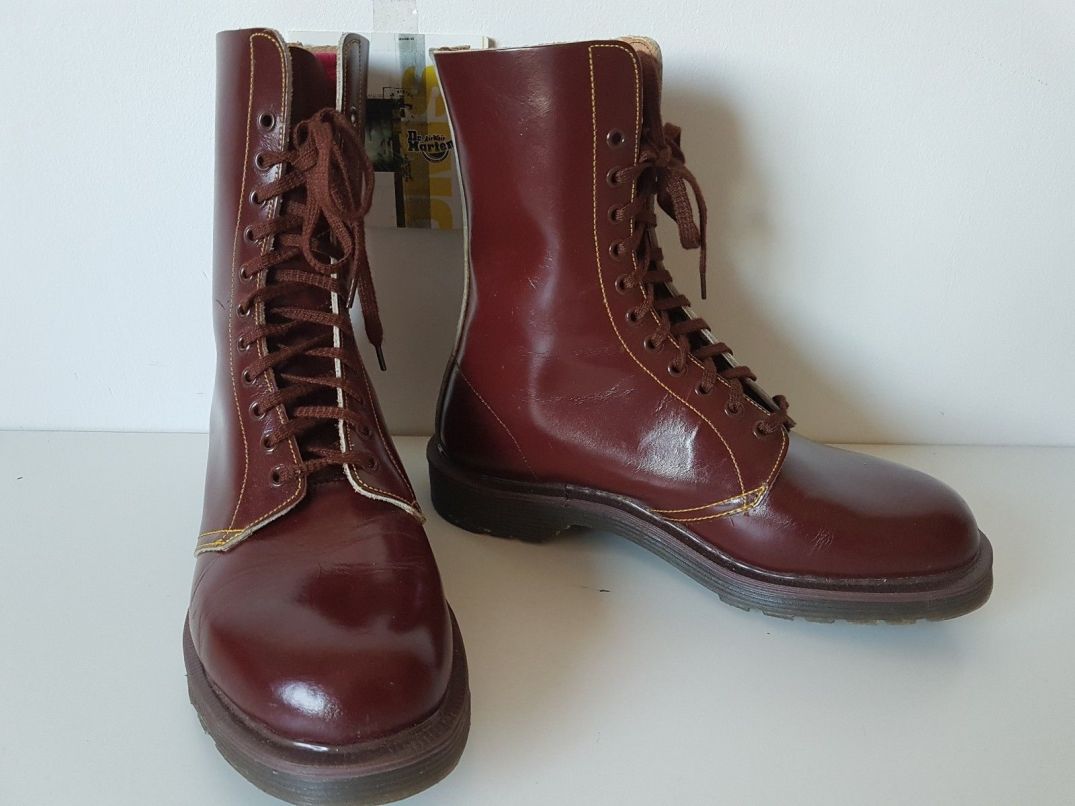
The lad who runs the Head’s Threads & Heavy Treads FB page – which I recommend – recently mentioned that someone was planning to compile a kind of database of all the different classic boot styles, brands and interactions. This, he says, would hopefully make it easier to trace back different boot models to the time periods when they were made.
I think that’s an excellent idea. To make a start, I thought I’d post some pics of various Hawkins Astronauts boots and shoes I’ve saved over the years. Most of them were listed on eBay or similar sites. You see, I have a bit of an obsession with Astronaut boots – I really appreciate their awkward, ugly beauty. But I find it impossible to establish what time period any particular pair dates back to, because there’s almost no info on Hawkins boots on the web. I can only vaguely guess the decade. Virtually the only thing I’ve ever seen written on Astros was an article on the old Skinhead Heaven website, which only mentioned in passing that Astronauts were considered the ‘skinhead apex’ back in 1969–70.
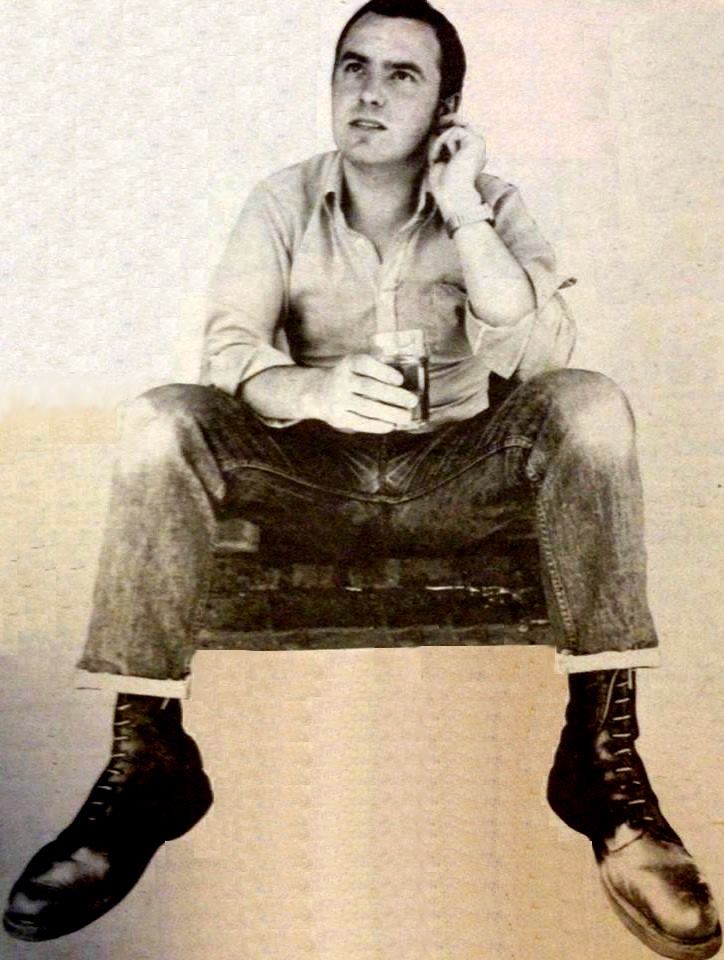
Hodges wearing Astronaut boots, 1980
Another big question is: who were Hawkins Astronaut 11-eye boots marketed at, apart from skinheads? They have a very distinct look that is definitely not ‘for everyone’ in the same way as the more universal Air Wair DMs are.
Whoever is planning to compile that database, feel free to use anything you see here, add it to your document, and build on the sparse information I’ve got. Good luck with your project!
If anyone knows more about the history of Hawkins Astronaut boots, can identify a style, or knows what year a pair might date back to, do tell us in the comments section.
Oh, one last thing: Astronauts were manufactured by G.T. Hawkins in Northampton (where Air Wair once was and Solovair is today), but came with a Dr Marten’s sole. There are more intricacies to the whole business structure, but I’d need a diagram to fully understand it, and I’m not sure I want to. Matt Crombieboy
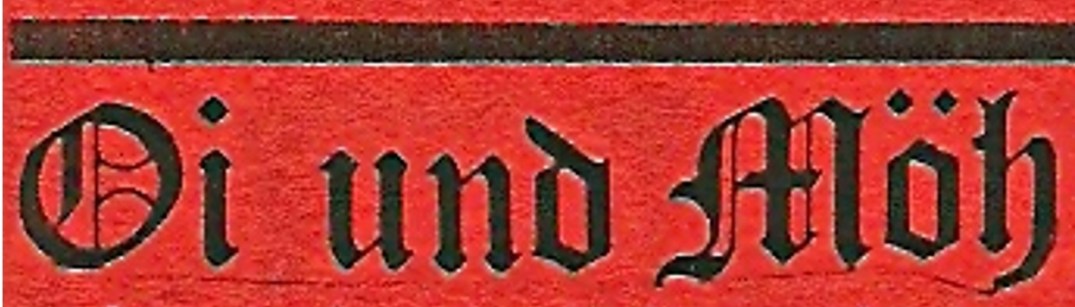
Arguably, some chapters of skinhead history are best left forgotten but, conscientious historians that we are, we talk about them anyway. Today we want to find out: what is ‘möh’? The expression was often seen in German skinzines from the 80s, usually accompanied by drawings of bulldogs or super-skins.
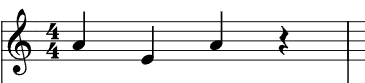
If you listen to live recordings of German skinhead bands from about ‘84 or ‘85 onward, you’ll often come across this crowd chant:
That’s Daily Terror live in Schöppenstedt ’87, an event we have described at length elsewhere – and the chant you hear is spelled “möh, möh, möh” [phonetically: mø: mø: mø:]. It follows this simple melody:
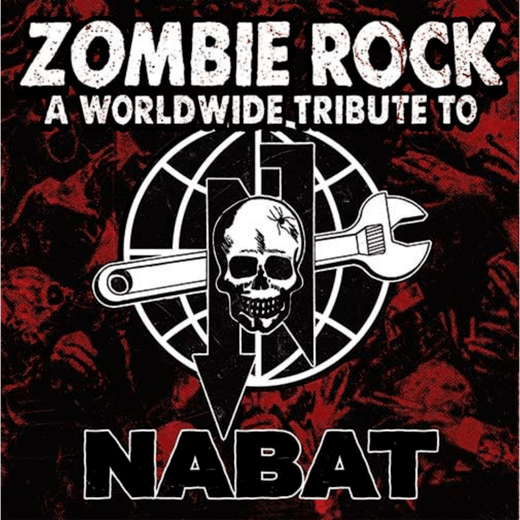
Various: Zombie Rock – A Worldwide Tribute to NabatLP (Timebomb)
This slab of wax came out in the middle of the lockdown. Things weren’t looking good for Vecchio Son, the rehearsal space and music venue in Bologna run by none less than Steno, the Italian granddaddy of Oi who’s been singing in Nabat since 1979. It seemed that the rent could no longer be paid and Steno & Co. would be forced out. But Steno isn’t one to die on his knees, so he organised all kinds of fundraising campaigns to keep this important venue open. I’m not actually sure right now if part of the proceeds of this compilation were going to said cause, but I seem to remember so.
In any case, it’s only appropriate that this is an international tribute. Nabat are not just a local band, after all – their incredibly powerful Oi and borderline-hardcore punk was internationally influential and continues to be so today: in the 80s, you were as likely to see their name printed in British skinzines (which were notoriously insular) as on homemade patches worn by skins in Poland. Behold, for example, this picture sent to me by an old skinhead from the southern Polish industrial town of Sosnowiec. “A friend made this patch for me”, he tells me, “and I wore it on my camouflage army jacket. That was before I started wearing a denim jacket, so definitely before 1987”.
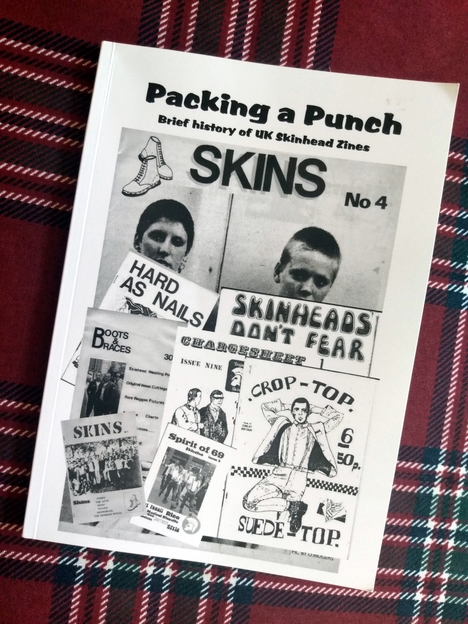
Packing a Punch is that rare thing: a documentation of 80s British skinzines completely without celtic crosses or crude drawings of glue-addled ‘super skins’. And it isn’t a coffee-table book either. Instead, it’s brogues, Jaytex and razor partings all over – the focus is on what the author considered the rightful heir of the original skinhead, namely the ‘sussed skin’ of the 1980s. This scene, from which George Marshall also emerged, was based around zines such as Spy Kids, The Bovver Boot, Tighten Up and The Suedehead Times. And the little book at hand that guides us through their evolution is a kind of zine too, written by someone who was part of it all. He’s still around today and as committed as ever.
The history kicks off with Skins, the original croptop zine edited by a Chelsea FC and Sham Army skin named John Smith from late ‘79 or early ‘80 – the exact date is hard to establish – and printed by the Last Resort shop in the East End. While reporting on contemporary stuff such as the Southall ‘81 riot, Skins also had an acute sense of tradition: there was always room for Motown, reggae and original skinhead history in its pages. Skins ran for five issues, the contents of which are all listed individually – a treatment awarded to all zines discussed in Packing a Punch.

 Creases Like Knives