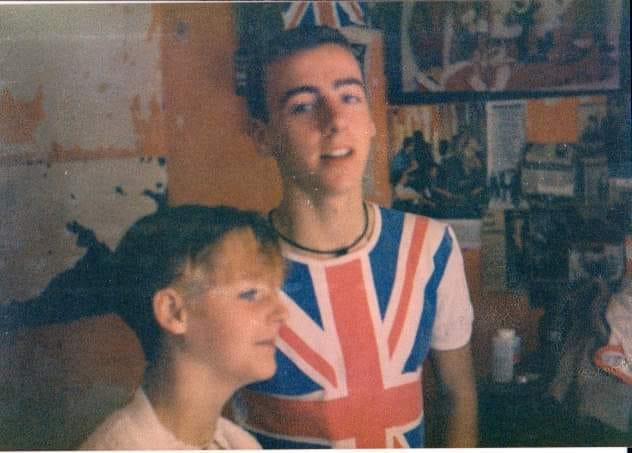
Symond Lawes on skinhead girls

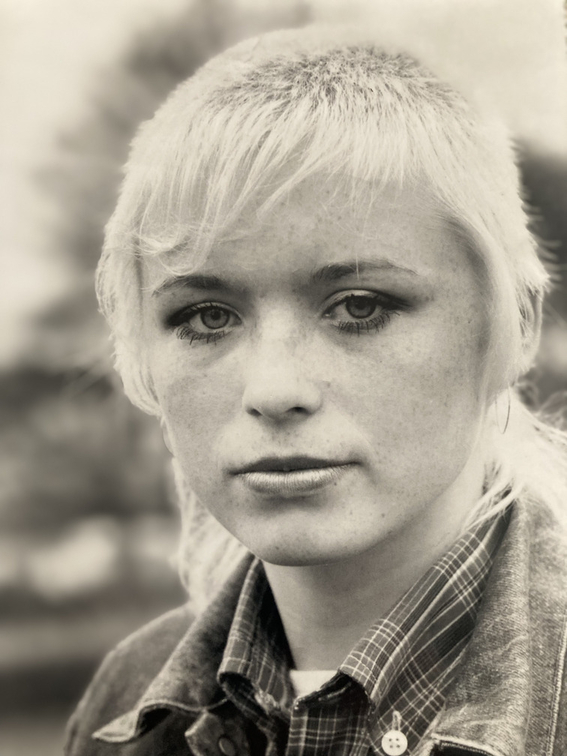
I read on these various groups, often run by Americans who don’t seem to have any connection or vague identity as skinheads talking about ‘skinhead birds’ in some sort of sexual demeanour, as easy meat or some sort of fetish. I’m not quite sure really, it’s the same lot that are constantly screaming about racism, but they don’t have any more knowledge than what they’ve read on some toilet paper.

As for me, coming from a family of three sisters I’ve always 100% put girls on an equal platter to boys, or in fact I have more respect for women than men in many ways, the hardship of being a working class girl on a council estate with the only expectations of becoming a cleaner, typist or if you’re really successful a school teacher or nurse.

Continue reading
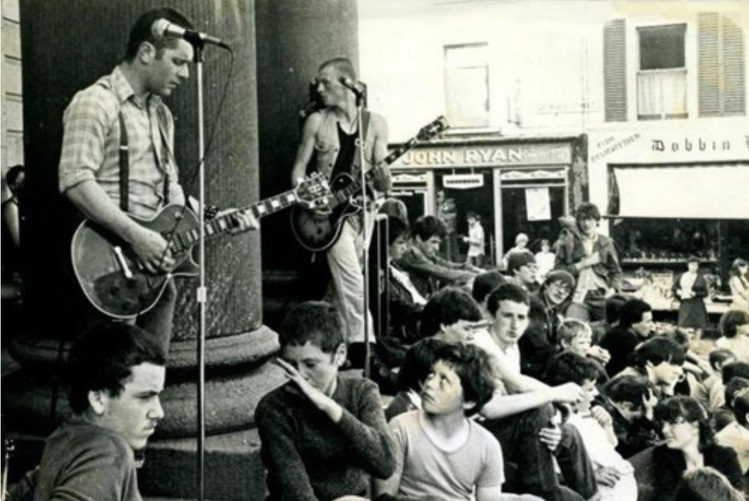
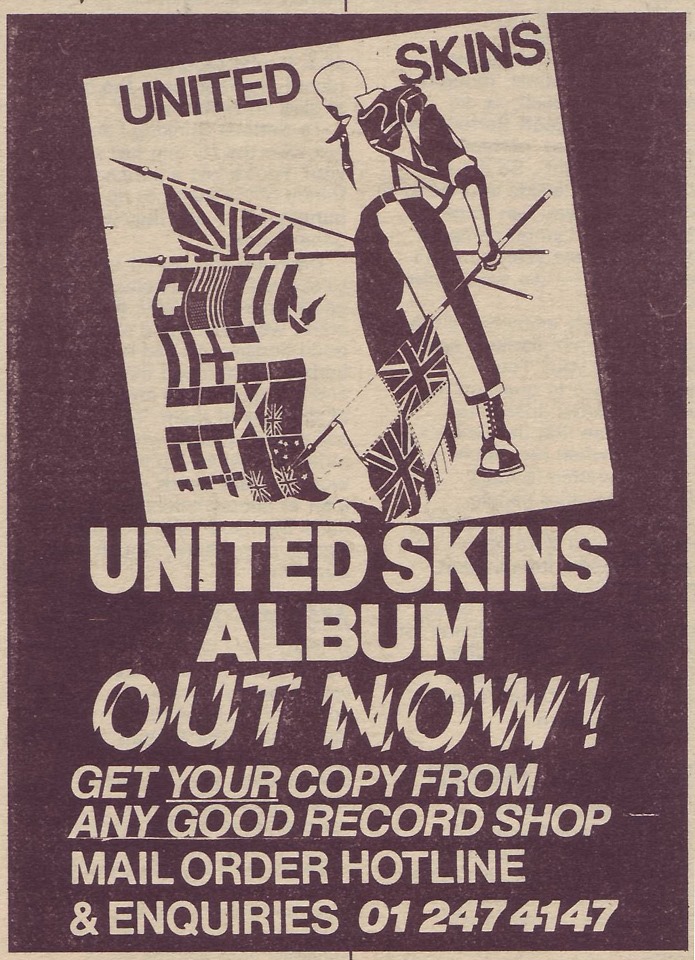
United Skins: My (non-) interview with Tony of Control Zone

Continue reading

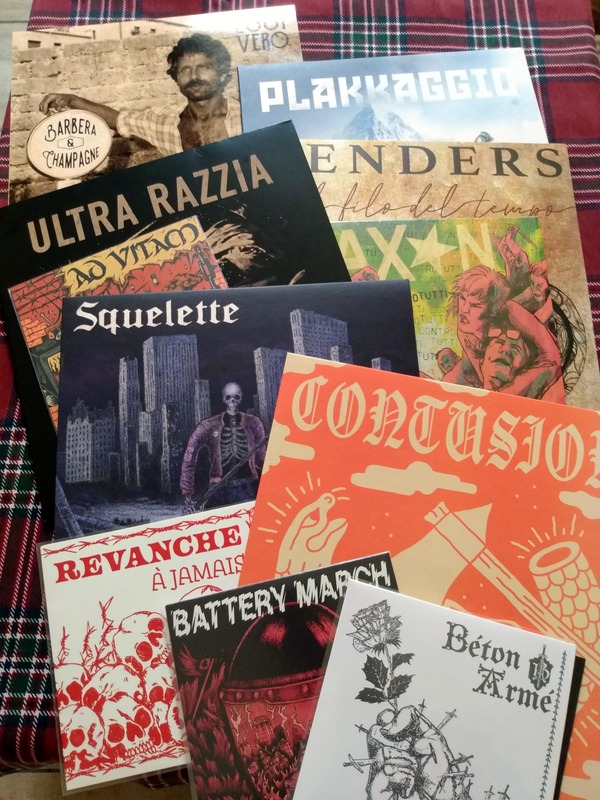
Squelette, Lenders, Ultra Razzia and others: Record Reviews

Continue reading

Dressed-down bootboy punk from Islington: Menace

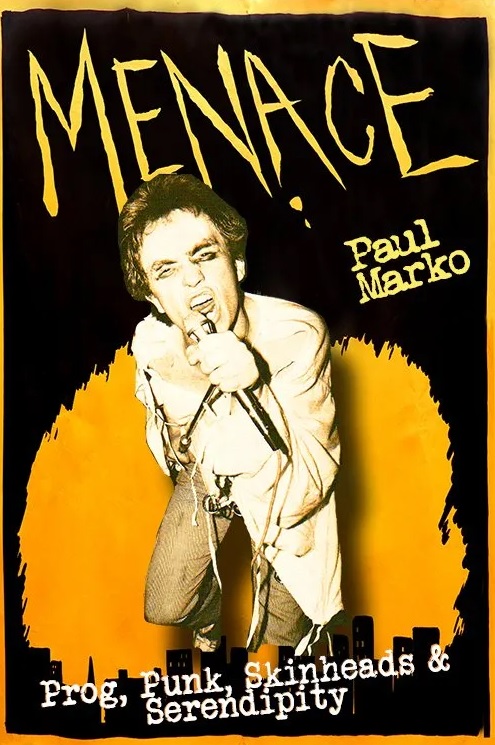
Menace: Prog, Punk, Skinheads & Serendipity by Paul Marko (Punk 77 Books)

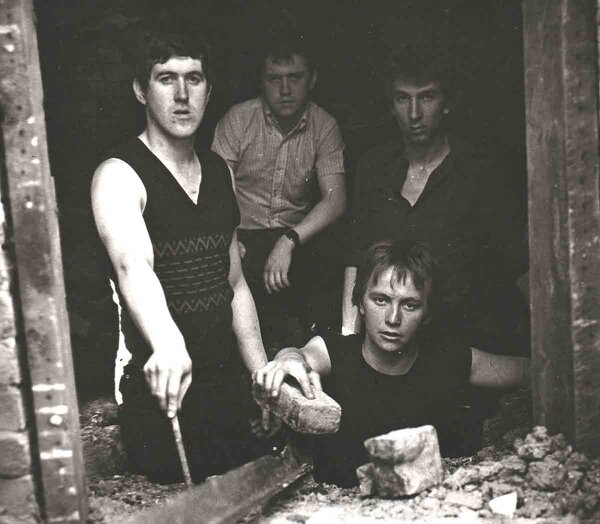
Menace were a classic four man late-seventies punk group. That said, the fact they had an Islington-based Canadian singer was slightly unusual for a London band of the time. Vocalist Morgan Webster was not only a great frontman, with his eye makeup and flamboyant dress he looked way more punk than the rest of Menace. That said, I preferred the real and ordinary dressed-down look sported by the majority of the band, although I can also understand why Paul Marko has opted to use a picture of the band’s singer on the cover of his book. The group created a great racket that was one of the earliest manifestations of what became known as street punk.

Continue reading

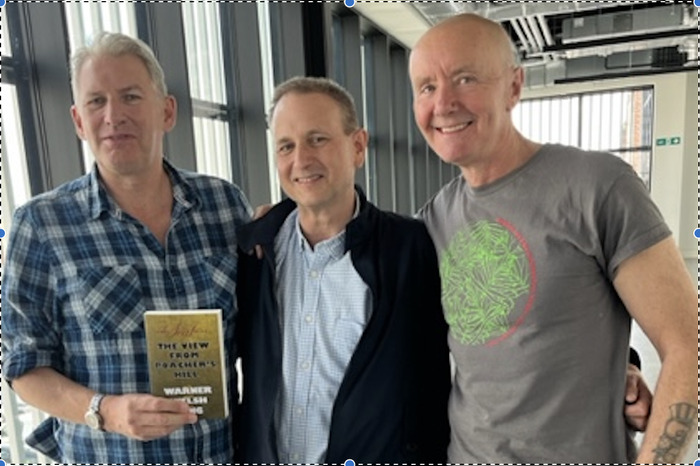
The return of Nutty Ray English: ‘Grand Union’ by John King

Continue reading

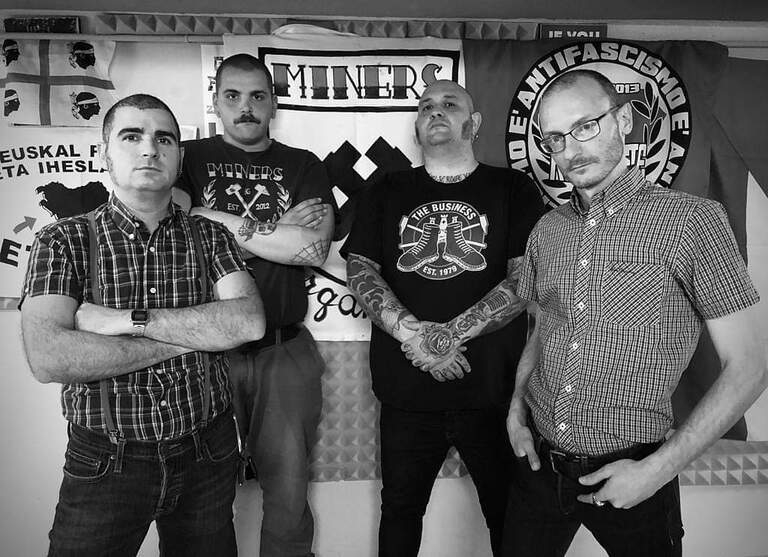
Meet the Miners: drilling into Italy’s Oi scene

Confront your average ‘progressive’ with the term “traditional values” and they’ll shudder. But in truth, “traditional values” mean different things depending where in the world you are and who you ask. For Miners, an Oi band from the town of Bergamo in north Italy’s Lombardy region, these values are “sharing, solidarity, a sense of belonging, dignity, fun and a sense of humour” – the traditional values of the Italian working class back when it was among the strongest in Europe. Today, after three decades of Italy’s complete political liberalisation, these values have all but evaporated, they say, replaced by self-seeking individualism and resentment.

Miners were formed about a decade ago and are a powerful live proposition, but they only have two releases under their belt. Valentina Infrangibile asked them why that was, also probing on topics such as Italian vs English lyrics, clobber and being an outsider. Miners are: Albe (vocals), Fil (guitar), Tiziano (bass), Beppe (drums).

Continue reading

Dalton, proletarian subculture and rock & roll

I was tempted to let Papillon by Dalton enter our Classic Albums series, but it isn’t what you’d call a classic like Red Alert’s We’ve Got the Power or Voice of a Generation by Blitz just yet. For one, it only came out three years ago – and few people outside of Italy will have heard it.

For the Italian skinhead and ultras scene, though, the album was a game-changer and a towering achievement. Dalton, a Roman group formed by former members of Oi bands Pinta Facile and Duap, debuted in 2015 with Come stai?, an album with packed with melodic but robust bovver rock hits. As I have written here before, they’re “very Italian, musically too their music is pub-rock and glam-rock based, but it has the atmosphere of Italian working-class bars. They sound authentically like where they’re from, mixed with what they’re into”.

Continue reading

Decibelios in the Re(a)d Zone

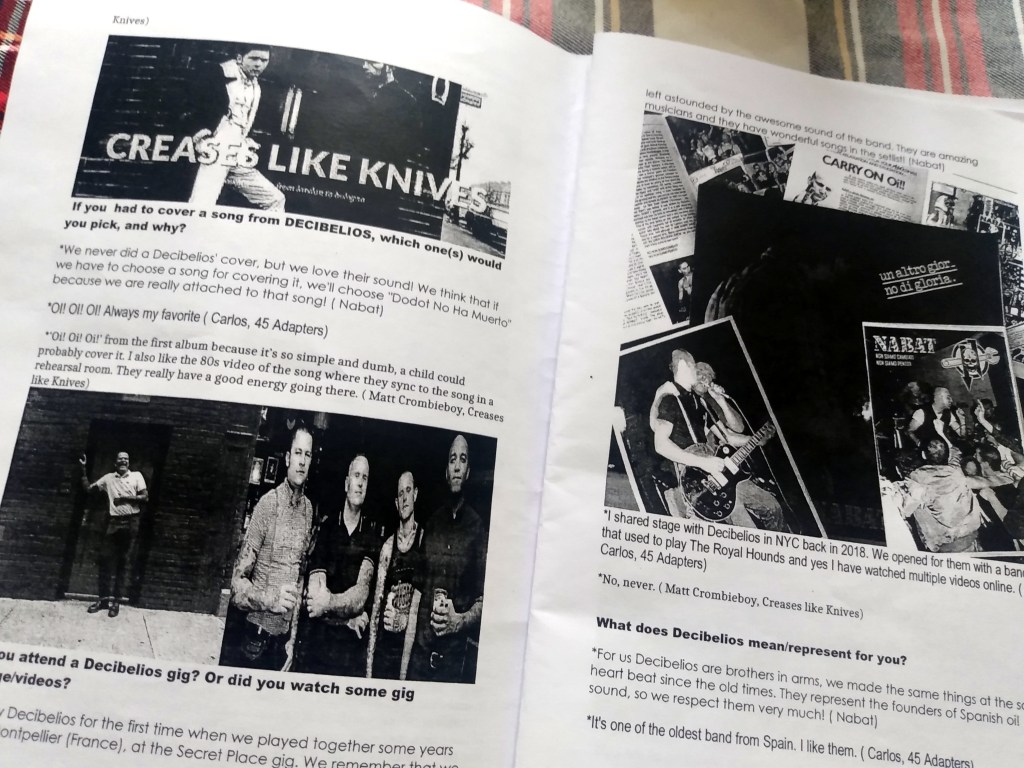
There’s a French zine called The Re(a)d Zone that has been specialising in the legendary Spanish Oi band Decibelios for four issues now, and its editor, Saul Essame from Tours, says he wants to to continue the theme for at least another two or three. He originally tried to contact the band in 2007 but, due to their unresponsiveness, it took another 13 years until he finally got to interview them in 2020, on the 40th birthday of the band. Once he had that under his belt, he decided he wouldn’t leave it at that.

The Re(a)d Zone has been going since 2008. In the past, special issues have included one about Paris skinhead rock ‘n’ roll legends La Souris Déglinguée, but the zine has also dealt with rap, funk, reggae, movies, history and politics. It’s also linked to the Saul’s radio show, Maggot Brain.

For the latest issue, number 43, he approached the legendary Bologna Oi band Nabat, NYC Oi band 45 Adapters as well as us, asking everyone questions about Decibelios.

Continue reading

Only a haircut? An excerpt from Steve Piper’s novel ‘Feathers’

‘It was only a haircut.’

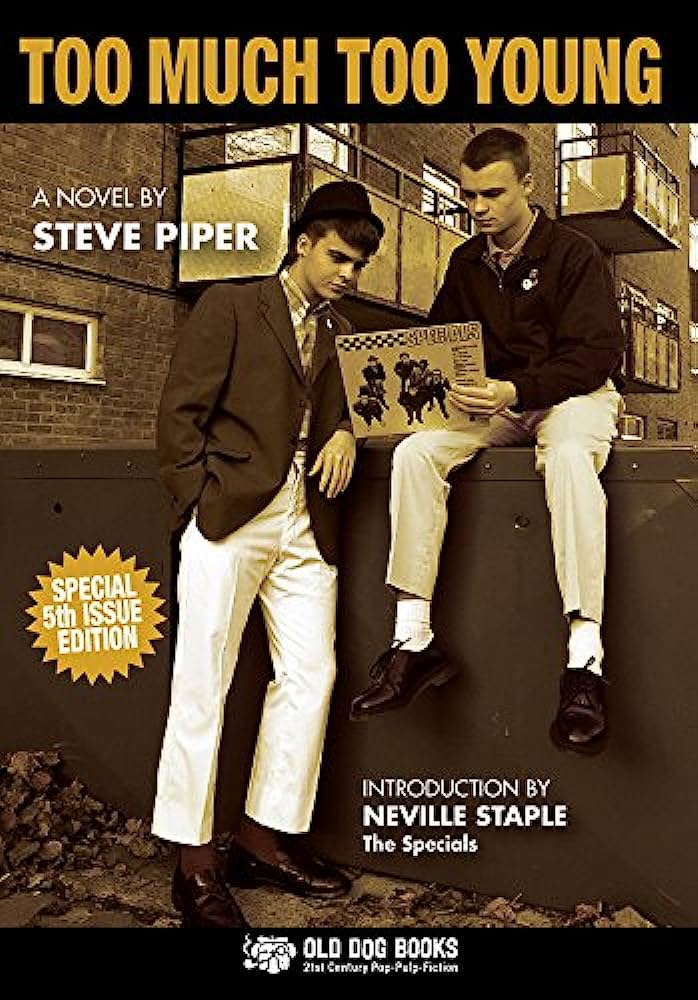
And to some, it was – but to many, myself included, choosing your own haircut was a rite of passage. I was around 11 years old when I begged my mum to let me go to the barbers and get a crop. Up until then she had cut my hair herself, most certainly through necessity rather than any penny-pinching. She was a single mum bringing up two kids in a flat above a row of shops. My clothes came from jumble sales. It took a lot of pleading and whining, but she eventually relented and off I went to the barbers expecting to be transformed in to Suggs’s lovechild, but that’s a whole other story.

It is easy to forget that in the late 1970s, early 80s, you could still be sent home from school for daring to turn up with hair shorn too short. A mohican or dyed hair would almost certainly have got you suspended until you agreed to comply with school dress code. Yet in some weird way, it is exactly because these boundaries and rules were in place and enforced that this period of time is so memorable. I have been asked why my novels, Too Much Too Young and Feathers, are set in the period that they are. It’s really simple. It’s a time I am familiar with and one that, rightly or wrongly, I am very fond of. For myself and many, this period was our first dipping of our wicks in to the exciting world of music, fashion, social freedoms and autonomy.

Continue reading

Let’s talk about war: Güerra album review and interview

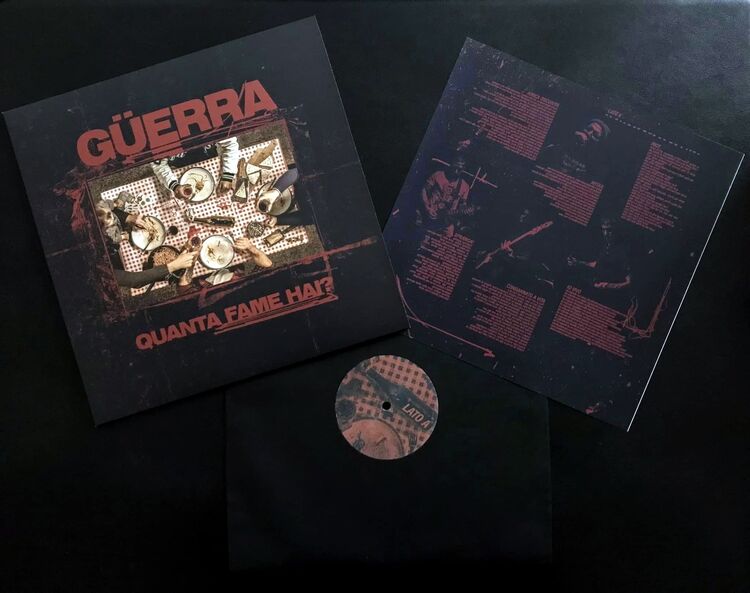
Güerra: Quanta fame hai? LP
(Hellnation/Radio Punk)

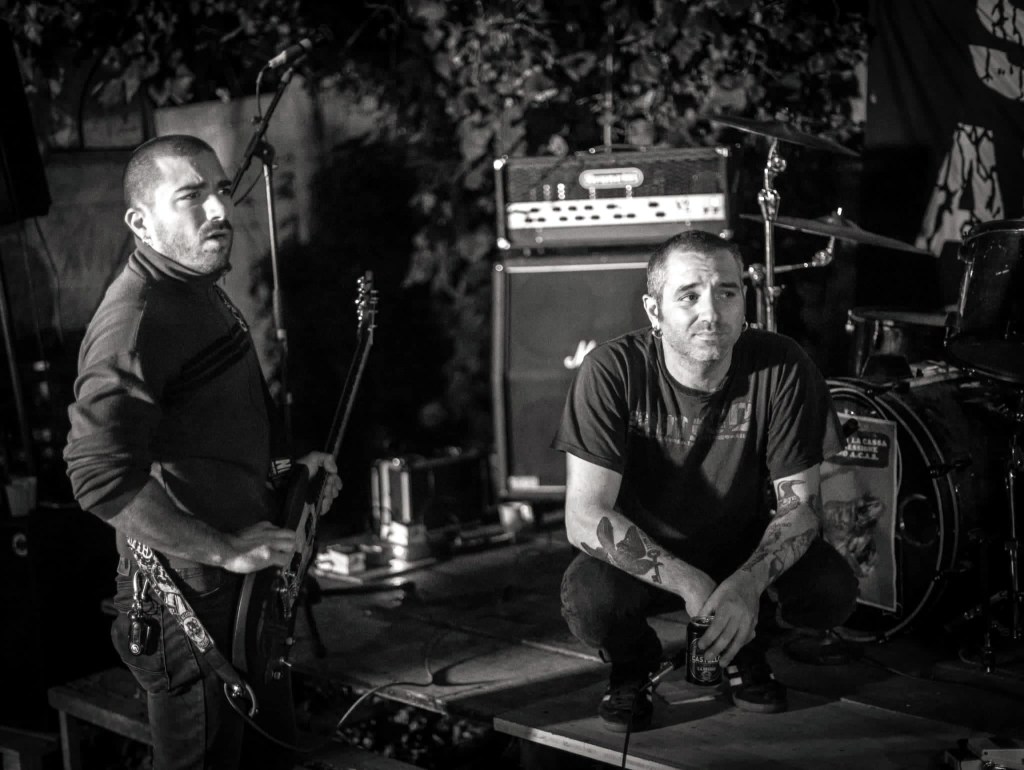
Photo: Gabriele Nastro

The first time I heard about the band Güerra (the Italian word for war, but with an extra Motörhead umlaut) was when my tattooist was inking something that contained the word ‘war’ into my skin. This prompted him to tell me about a “great band from Romagna called Güerra that sounds like Blitz”. I downloaded their first, pre-pandemic album off Bandcamp, but was only partially convinced. While it contained a few catchy tunes, many songs were sung in English and the vocalist’s accent was so strong as to be grating. I also had the impression that perhaps the band had rushed into the studio too early, i.e. before it had enough songs from which to compile a truly strong and consistent album.

Continue reading