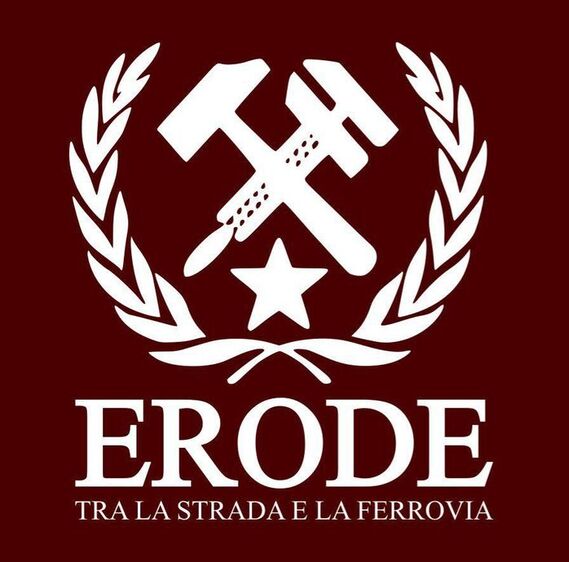
Erode: Demo ’95 & Tra la strada e la ferrovia LPs
(self-released)
Erode are one of those groups that truly deserve the label ‘cult band’ in Italy. Formed in the mid-1990s by a bunch of football ultras in the northern Italian city of Como, they combined a dark, abrasive take on Oi with Soviet-centric political leanings – Marxist-Leninist to kindred spirits, ‘red-brown’ to the squeamish.
Their fellow townsman Andrea Napoli of Avant Records, in his guest article ‘The Oi! Wave That Could Have Been’, captured the sound vividly: “The oppressive-sounding bass and cawing guitars had an ominous feeling that reflected both the bleakness of the streets of a small provincial town in those days and the kind of gloom one might just as well attribute to a goth or post-punk band”.
Yet despite the status of their singles and demo tape, widely regarded down here as among the finest material Italian Oi has produced, the recordings remained unavailable for three decades, whether on vinyl or in any other format. No compilation ever appeared, although it would have been the most obvious course. I once wondered why no one had even attempted to bootleg the material. The answer was simple: in what is a small world, the culprits would be easily identified – and nobody, I was credibly assured, would want to fuck with Erode.
Last year, they finally self-reissued their early work in two instalments. Demo ’95 presents exactly that – the band’s first demo tape, recorded with their original vocalist – while Tra la strada e la ferrovia brings together the self-released singles Orgoglio proletario and Al Volga non si arriva. All of this material is devastatingly forceful, dark, and hard-as-nails Oi punk. Yet two tracks stand out above the rest. The first is ‘Frana la Curva’, arguably the definitive football hooligan anthem – so good it has even been covered by adversaries from the other end of the political spectrum, and easily the equal of any similarly-themed number from the homeland of la malaise anglaise. The second is the anti-imperialist ‘Europa’:
Europe punished: proletarian Europe
United Europe, revolutionary Europe
It’s not a question of left or right,
it’s not a question of ideology,
it’s not a question of colours and flags
It’s just pure opposition
Out with NATO, out of the way, Uncle Sam
Our dear buyers, our dear allies who have bought up the country must go
Out with NATO! Western vultures!
Out with the Americans!
Europe punished: proletarian Europe
United Europe, revolutionary Europe
Americans out!
The original lyrics are, of course, in Italian. Few things give me goosebumps quite like the opening guitar riff, and if your band covers this track live, your singer will be sharing their microphone with me, whether they like it or not.
In 1997, before calling it a day, Erode recorded the album Tempo che non ritorna. It remains a very strong – even classic – record, though its sound leans somewhat towards US punk and never quite reaches the level of the material collected here. These two LPs are every bit as essential to your Italian Oi collection as the key releases by Klasse Kriminale and Nabat – though, given their strictly limited runs of 300 each, you may have trouble locating them by now.
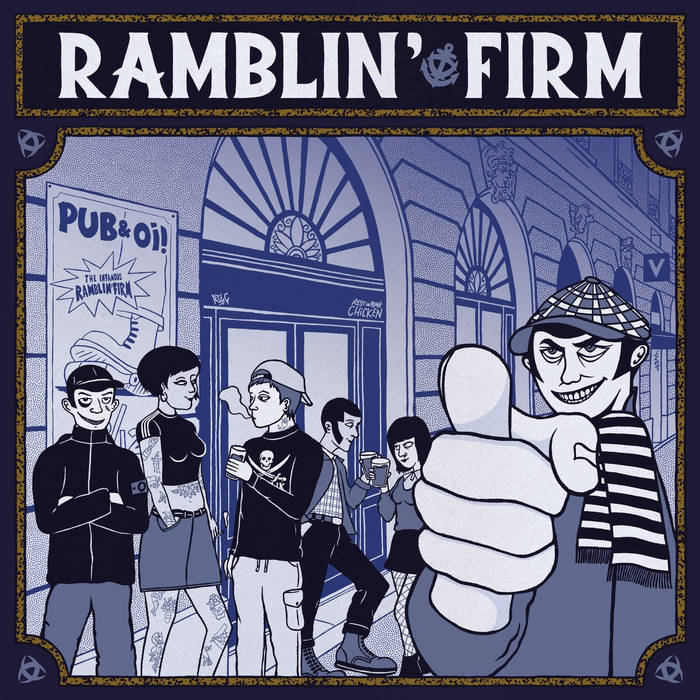
Ramblin’ Firm: Ramblin’ Firm LP
(Renees Records, Rumagna Sgroza, Rusty Knife, Crom, Cendres et Soleil, Kick Your Asso)
This unexpectedly impressive vinyl debut by a band that suddenly emerged out of nowhere pulls together some of the sharpest elements of my favourite French music. It pairs clean, hook-driven vocals with a pop sensibility in the vein of Warrior Kids and West Side Boys, while tapping into the anthemic force of Komintern Sect and shifting, at points, into the loose rock ’n’ roll swagger of early La Souris Déglinguée. All of this rests on the work of a guitarist who clearly knows exactly what he is doing, note for note, without ever showing off, alongside arrangements and production handled with real care and attention to detail. The result is a record built to last rather than simply capture a run-through of the live set in the studio.
This self-titled long-player is co-published by Renees Records, a new Italian label entirely run by skingirls, and marks its first vinyl release. Of the bands I have mentioned, the overall vibe is perhaps closest to West Side Boys, a group I’ve always loved for their ability to sound smart and tough and very ‘skinhead’, yet melodic and without falling back on cliches. This is great stuff, and if someone asked what French Oi sounds like, what it offers compared to the British original, and why it rules, it’s the kind of record you could play as a concise answer.
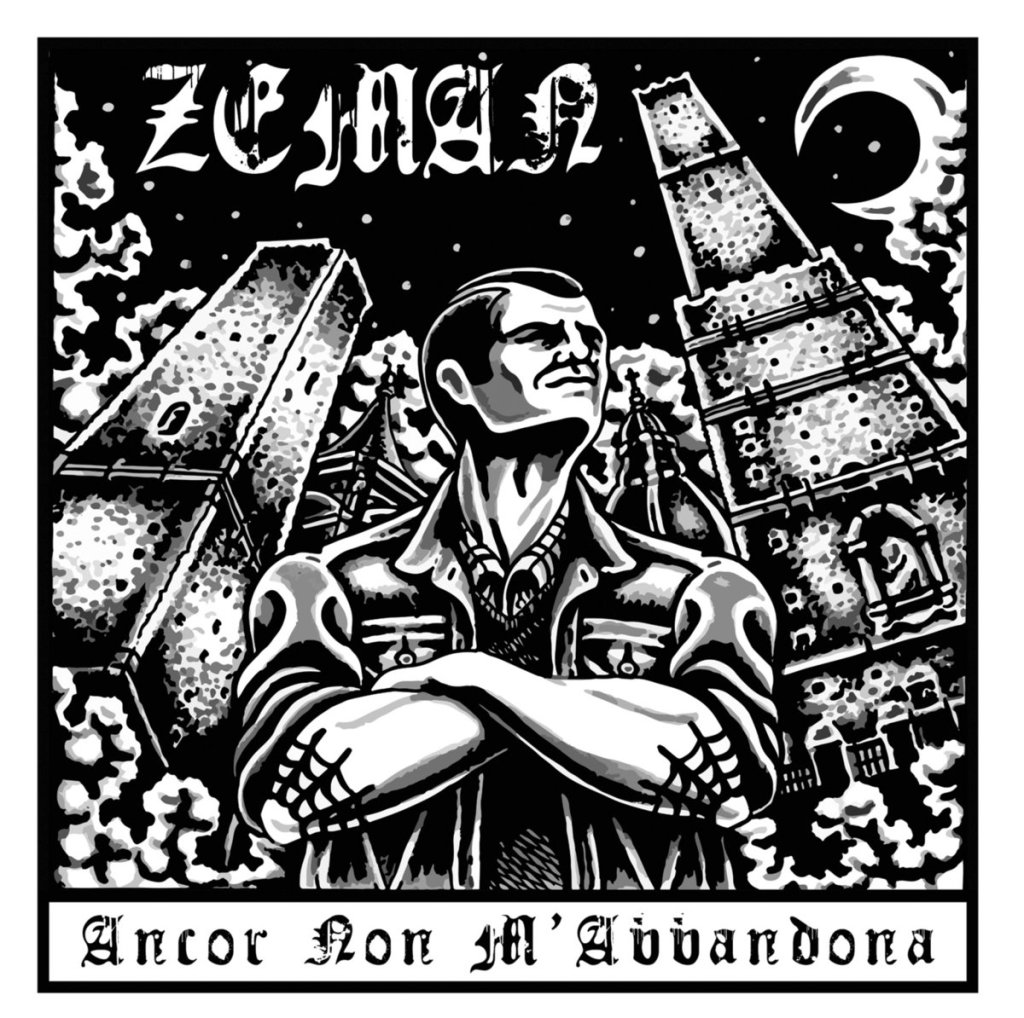
Zeman: Ancor Non M’Abbandona LP
(Hellnation, Rusty Knife, Relax-O-Matic, Tough Ain’t Enough, Vibrator)
Zeman, out of Bologna, are good mates, which makes their new album hard to approach as a detached listener encountering a fresh release, rather than hearing something finally solidify into a finished record after years of forming part of the background, a constant soundtrack over the last stretch of time. Even trickier to write about it objectively.
Formed over a decade ago by a group of proletarian migrants from various Sardinian towns to Bologna – in Italy, labour migration remains to a large extent internal – Zeman made their studio debut with Attitudine Offensiva. Its rapid-fire ‘antifa football core’, as the band themselves dubbed it, was, as the name suggests, very much of its time and place. By the time of the follow-up, Sunday Boys – a title referring not to the band’s Catholicism but to the fact that football matches in Italy are played on Sundays – their sound had shifted closer to a faster Business, and, to my ears, all the better for it.
Now, with Ancor Non M’Abbandona, they take another turn. For much of its running time, the album adopts a more ‘modern’ approach while, paradoxically, circling back to the roots of European Oi. The songs are often stripped down to a minimal, bare-bones style, recalling contemporary acts such as Rixe, Iena and Beton Armé, but ultimately tracing a line back to the rougher edges of the Chaos en France compilations and to Bologna’s own Nabat, still arguably the most influential Oi band on the continent. As is par for the course with Zeman, the gang vocals are big and plentiful.
The boys handle this sound well, and they can be reasonably proud of the results. That said, there is still room for the songs to breathe a little more, and the strongest moments are those where they step outside the formula. My favourite track on the album, ‘Incurrutibile’, stands out for its more anthemic character. It’s dedicated to the “incorruptible” Maximilian Robespierre, leader of the most radical Jacobin faction during the French Revolution, associated with the Terror and its grounding in the pressures of the urban poor. Likewise, tracks such as ‘Mai arrendersi’ benefit from more dramatic guitar lines that add a sense of tension. There is clearly scope here for the band to develop further in this more atmospheric direction.
Overall, it’s a strong third album, with timely anti-imperialist and anti-Zionist sentiments voiced in ‘Enemy’. Naturally, there are also one or two football tunes included: vocalist Davide is active in the ‘livelier’ sections of Bologna’s stadium, and this is an element you cannot take out of Zeman, no matter the direction they are heading in.
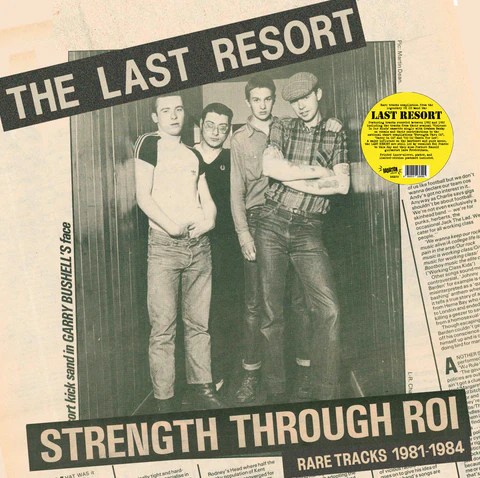
The Last Resort: Strength Thru Roi – Rare Tracks 1981-1984 LP
(Radiation Reissues)
This Italian LP gathers together all the tracks The Last Resort recorded in the 1980s outside A Way of Life – Skinhead Anthems. It includes the demo tape featuring Graham Saxby on vocals, originally sold through the Last Resort shop on Goulston Street, alongside contributions to compilations such as Strength Thru Oi!, a handful of Roi-era recordings, and two tracks issued under the name The Warriors.
The Roi material was recorded in Folkestone on an eight-track during the late summer and autumn of 1981, as part of the same sessions that produced A Way of Life. One of these tracks, ‘Stormtroopers in Sta-Press’, underwent lyrical softening during the sessions – for example, “get the bastards” became “cut the taxes” – and was retitled ‘Skinheads in Sta-Press’ on French’s advice. At the time, most punk and skinhead bands were still chasing the dream of becoming the next Sex Pistols, and in the aftermath of Southall the removal of ambiguous terms like ‘stormtroopers’ probably seemed prudent. Saxby notes that swearing was also removed at French’s insistence, apparently in pursuit of ‘radio-friendliness’…
By the time Micky French released A Way of Life in its toned-down in 1982, the band had already changed its name to The Warriors and severed ties with him. The more forthright original ‘Stormtroopers’ version heard here first appeared on Link Records’ Death or Glory split release with Combat 84 in 1989.
There is little to add about the music itself that has not already been said. This is essential Last Resort, and ‘Stormtroopers in Sta-Press’ is vastly preferable with its more aggressive and insurrectionary original lyrics.
Frustration/8°6 Crew: Hommage à Camera Silens 7-inch
(Une Vie Pour Rien)
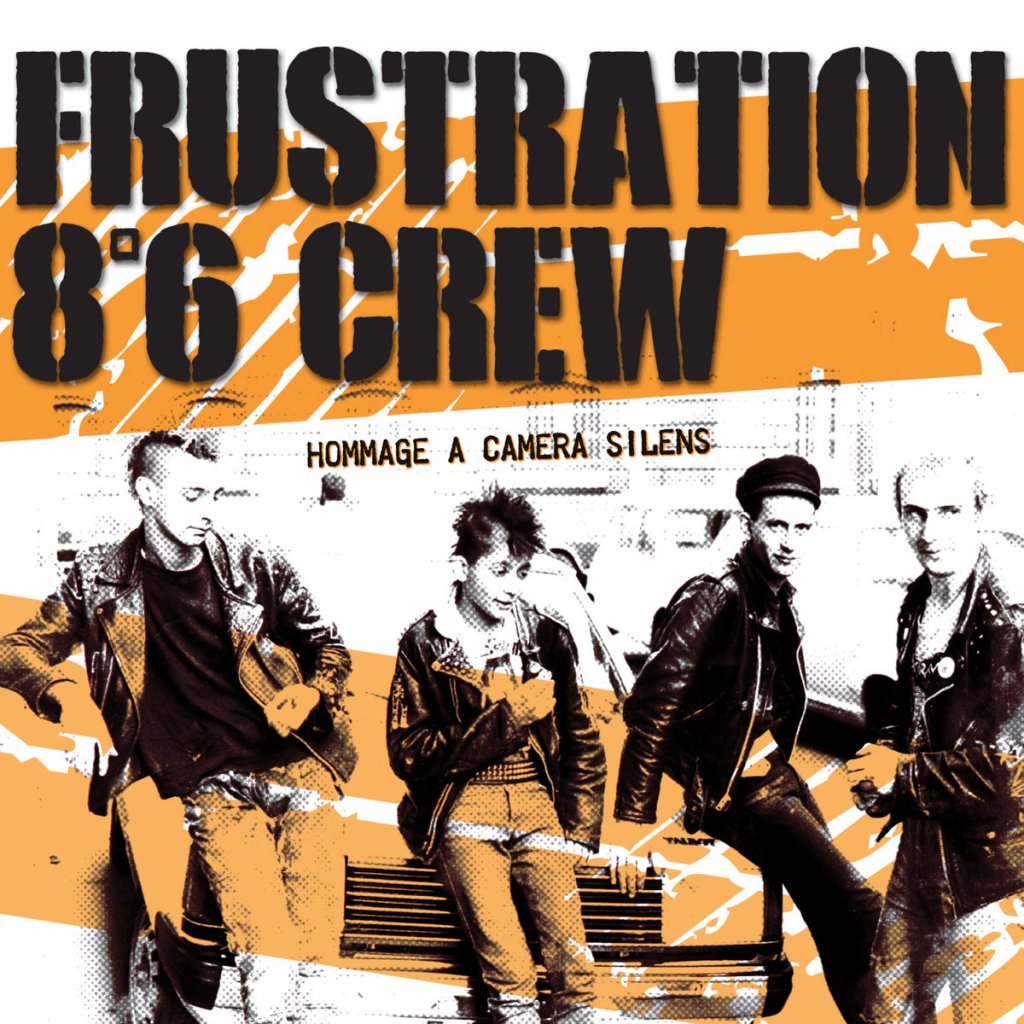
This is a great little release, bringing together two bands from the French scene to cover an unreleased Camera Silens track each. As far as I am aware, the originals only survive in live bootleg form. 8°6 Crew take a rudimentary, somewhat rigid reggae-punk track and expand it into something more full-bodied and colourful, with calypso overtones. The result sits closer to the Clash cover of ‘Revolution Rock’ than to their skeletal version of ‘Police and Thieves’. Even better is Frustration’s take on ‘Histore d’un soir’, which, beyond giving a raw punk track the cold Oi treatment really fleshes out the military-song undercurrent that runs through early Camera Silens. In both cases, the raw material is milked to the max.
Columbia Triste: s/t 12’’ EP + En Feu 7-inch single
(Une Vie Pour Rien)
When Karott and Ben from Une Vie Pour Rien visited Bologna, they had no shortage of intriguing, often bizarre stories drawn from the vaults of French skinhead and Oi history. Yet the one thing that surprised me most came when Ben stated, point blank, that he doesn’t like cold wave. That’s right: the co-owner of the French label most closely associated with what we now call ‘cold Oi’ doesn’t actually care for what is supposed to be a defining component of the style. Well, my chin dropped.
I am not enough of an expert on French cold wave – and, I suspect, neither are many readers – to say how far the genre has genuinely shaped the moody, skinhead- and punk-adjacent French bands that have been steadily emerging over the past decade. It may be that the atmosphere associated with this music owes as much to geography as to anything else: Brittany and Normandy, where the weather tends towards grey and rain-soaked, seem to lend themselves naturally to a certain sonic bleakness. From there, mimetic impulse may have done the rest.
As if to pinpoint the actual roots of cold Oi, Columbia Triste are looking elsewhere entirely, closer perhaps to Traitre – the band that subsequently became Kronstadt – and a harder, more stripped-back punk tradition.
The lyrics sit somewhere between social observation and bleak introspection. A sample will give you a sense of their tone:
Punks who attack
In Nike trainers all torn up
Cans in the bag
A life annihilated
The past catches up with us
The future we don’t care about
Two only inheritances
Memory and love
The gang no longer believes in anything
Can it still hurt?
We’re the good ones
For how much longer?
Too many bourgeois in sambas
Too many bourgeois bars
Too many police in the streets
Too many poor people smoking crack
Obviously no money at all
Even less desire to work
To your parents we’re scroungers
For us it’s a radical mentality
We come out of the local
Kebab house all year round
Once the stomach is full
We knock back the booze in apnoea
Our ideals, our moods
To the sound of guitars that weep
Today you live
Tomorrow you die
We’ll stay good for nothing
Because we like it that way
Always on the front line
Smash everything! Smash everything!
Radical mentality!
Radical mentality!
Radical mentality!
Radical mentality!
Obviously no money at all
Even less desire to work
To your parents we’re scroungers
For us it’s a radical mentality
Overall, the music and lyrics capture a ‘disillusioned but still fighting’ stance. Columbia Triste have nailed the Cold Oi sound to perfection, and there is much to enjoy here, especially on rainy days. That said, one should not expect a great deal of variety across these releases. Rather than distinct songs standing apart, they tend to unfold as variations on a single theme. The difference between the EP and the En feu single is subtle. They added a bit more punch on the title tune of the latter, while the flip side edges closer to something The Cure might have included on Faith.

Teenage Hearts: Didn’t Get Invited LP
(Primator Crew, Tough Ain’t Enough, Insurgence Records)
For some reason, these guys are promoted as resembling Sham 69, but I don’t hear that at all. To me, they sound like distinctly continental ’77 punk in the grand tradition of Hubble Bubble, The Kids, Big Balls and a host of other Killed by Death bands. The idea, I think, is to market them as somehow skinhead- or ultras-adjacent – what with their Adidas tops – much as, in the late ’90s, another French band, the No-Talents, were billed as ‘garage’ and aesthetically aligned themselves with that scene, while really they were ’77 Euro punk in much the same vein as this lot. If anything non-continental, there’s a whiff of the first Clash album in the production, but as I said, this is primitive ’77 Eurotrash punk performed in dodgy Frenglish. And it’s pretty cool.
Razzapparte: Il etrusco uccide ancora Mini-LP
(Crombie Media)
Razzapparte were an important band in the ’90s and 2000s, carrying the banner of Oi high around the period when the Italian skinhead scene entered the left-wing community centres and, despite occasional tensions due to prejudices on both sides, found a new home for the scene, one that helped it persist and thrive through the decade. Vocalist Flavio is one of those people who, whether as skinhead historian (Skinheads Italia book), subculture magazine editor (Garageland magazine) or Oi shouter is a key activist who has helped to document and sustain the scene for three decades – indeed, some of his articles have graced our pages. That said, I have to admit I have not really explored their discography in any depth. This is largely due to a track on the Caos in Italia compilation, which featured an especially grating “nah nah nah nah nah, Oi Oi Oi” chorus that, to my ears, sounded like Germany’s happy-hardcore nuisances Scooter playing Oi. It simply put me off investigating the band any further.
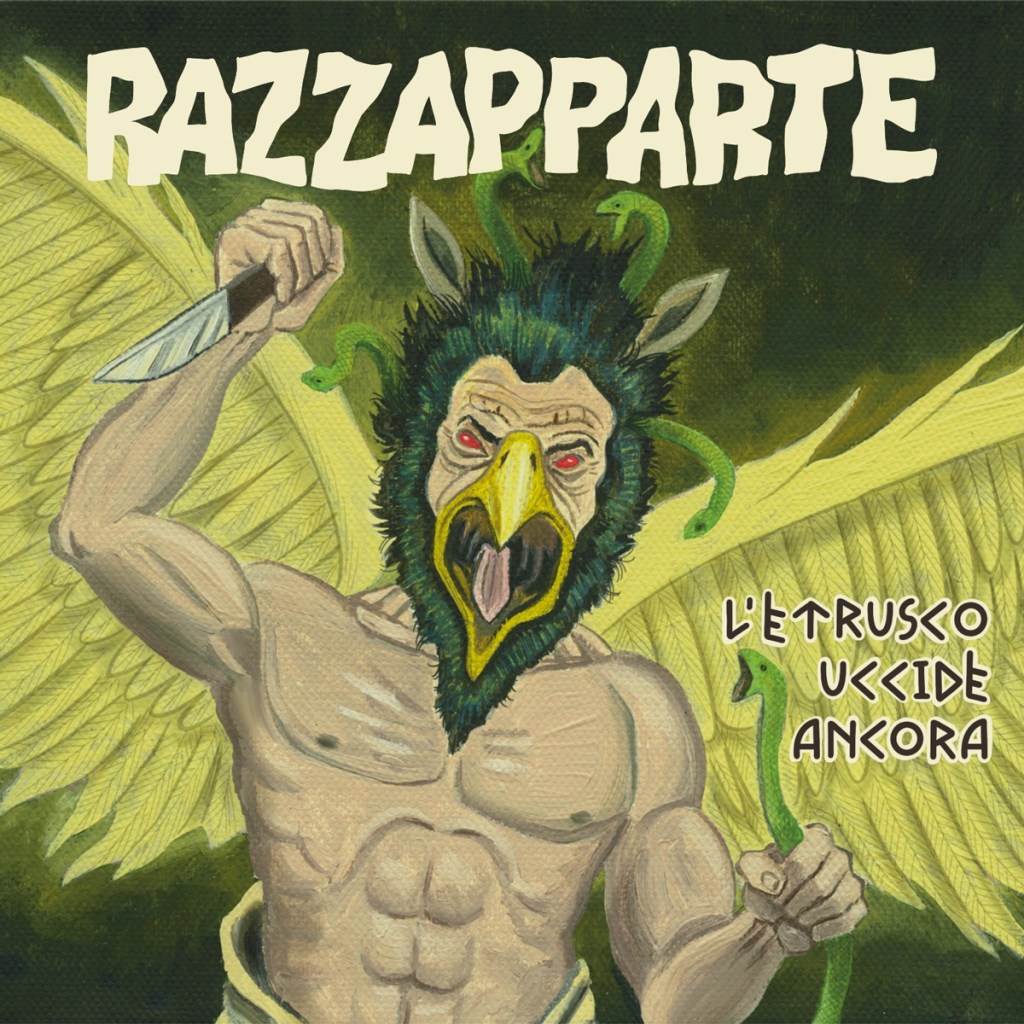
This was probably unfair, because it turns out they’re rather good. The present platter contains well-crafted, well-arranged material that in its best moments sounds like a mix of ’80s French Oi and ’90s Italian Oi. While Flavio largely shouts just one muscular note, the guitar work and chord progressions give the songs a strong melodic pull. I’m particularly fond of ‘Vinnute mae’, contained here in two mixes, of which I prefer the one with the catchily neofolk-tinged accordion line. The alternative ‘Oi mix’ leans more directly into raw, Erode-like energy, and it works well in its own right. ‘Vinnute mae’ is the real hit here that I found myself returning to.
I share with Flavio a love of European horror, exploitation and B-movies, and the title track and album title (‘The Etruscan Kills Again’) is lifted from the 1972 Italian-Yugoslavian-German horror thriller of the same name. The film revolves around an Etruscan demon of the underworld and is soundtracked by Riz Ortolani of Cannibal Holocaust fame. As for the Etruscans themselves, in roughly 700–400 BCE, much of what is now central Italy was Etruscan territory, before being absorbed into the Roman state. Seen from a Roman-Greek perspective, Etruscan society had some fairly socially advanced features (especially with regard to women), and in the 2000s Flavio and others tried to create a kind of Etruscan-inspired regional skinhead identity, using Etruscan rather than Trojan symbols. Maybe an idea worth revisiting.
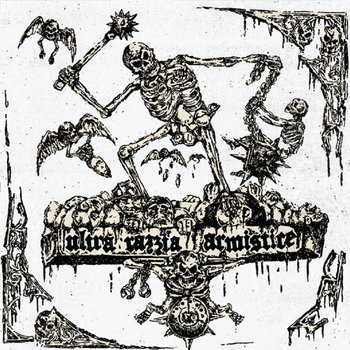
Ultra Razzia / Armistice split EP
(Primator Crew)
A split mini-album chuck full of infernal rama-lama. Ultra Razzia kick off in a ‘French’ vein, with saxophone and the semblance of a melody, before commencing their familiar descent into hell. Armistice, on the other hand, sound more thuggish. Open a can and play it loud.
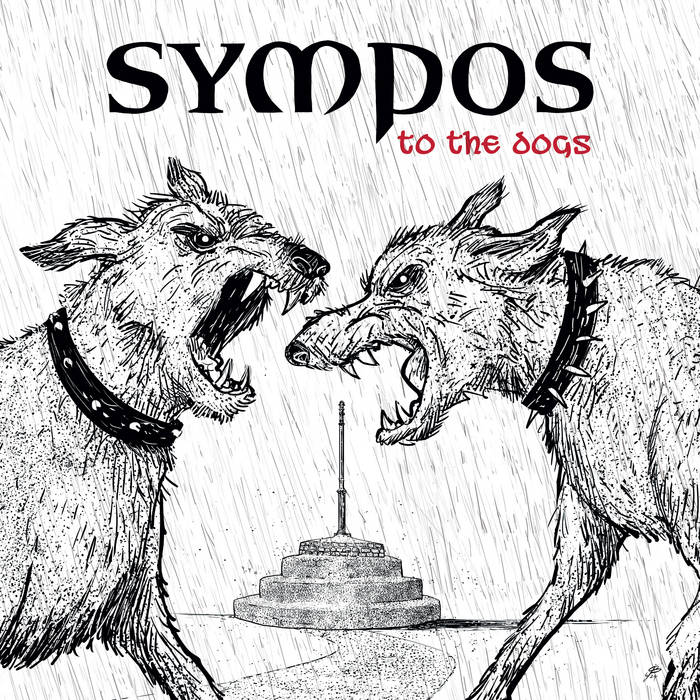
Sympos: To The Dogs LP
(Primator Crew, Tough Ain’t Enough, Mister Face Records, Distro-Y Records)
These aren’t skins, punks or ultras, just football-top-wearing lads from Ireland who like a drink, much as the vastly underrated Serious Drinking were ordinary lads from Norwich who liked a drink, and football too. I think I reviewed something by Sympos a while ago and struggled to get a handle on their peculiar sense of humour, but they’re growing on me. This is down-to-earth and very drunk punk rock with the odd tune, ‘Soft Society’ being the stand-out. The vibe puts me in mind of the chaotic Celtics after-match party I stewarded in Bologna a few months back: the lads drank, the lads fought, the lads kissed and made up. All good clean fun.

Over the Hill: Older not wiser LP
(Une Vie Pour Rien)
I was going to write: how come they pass for the “most English-sounding French Oi band”? To me they sound American through and through. Their Oi is fast and hard-driving, along the lines of Anti-Heros, Stars and Stripes and Fatskins, but there’s also Agnostic Front-style breaks, pushing the whole thing towards Oi-core at times. Upon closer inspection, I realised I had actually confused them with a French band called Gonna Get Some. These guys are Canadian, which makes a lot more sense. They’ve got a highly energetic sound and are clearly tight as a unit in terms of playing. From a songwriting point of view, not much really sticks once the record is over. That seems to be a general issue these days: in the old days, people wrote proper songs – who could forget ‘Chaos’ by 4 Skins or ‘Megalomania’ by The Blood after a single listen? Today people seem content to nail a particular sound and deliver it with energy. That said, there’s certainly no lack of energy here, and I’m sure the band are a force live.
The band’s name is very much a running theme: like most skinheads these days, these lads are no spring chickens, and much of the lyrical content leans into a self-ironic take on that fact, which makes them very likable. There’s mention of male pattern baldness, and “geriatric skins” on the pavement not being able to run away quick enough due to recent knee surgery as the riot cops close in. It’s all delivered with tongue firmly in cheek, and fair play for still being out there at all. Age aside, if you can’t remember the last time you had a water cannon aimed your way, you’re hardly street, and you’re probably spending too much time taking Instagram selfies in carefully curated outfits.
NEWS, VIEWS & GOSSIP
+++ Having freshly absolved the 40th year of their existence, Klasse Kriminale have just published Prole Rock Exhibition, an album featuring re-recordings drawn from their back catalogue – including one of my absolute faves, ‘La nostra terra’, which I wish they’d bring back into their live set. Published alongside the LP is the Singles & Rarities cassette, a very collectable companion release that gathers early single tracks and demos, lining up hit after hit.
+++ Giuda and Booze & Glory were invited to play at Conne Island, a supposed ‘left-wing space’ in Leipzig. A couple of days before the gig, both bands cancelled their participation. Presumably, it was brought to their attention that Conne Island is actually one of many German Zionist cesspits, having previously gone so far as to publish an article that promoted volunteering for Israel’s occupation army (see ‘Support Israel – in the IDF!’ HERE). Giuda vaguely referred to “values that clash with ours” in their social media, while Booze & Glory used similarly euphemistic language in theirs (“certain social and political matters”).
Their cancellations, however, were enough to provoke the ire of the Spanish Inquisition – or rather, a bunch of Zionist losers calling themselves ‘Skinheads’ Leipzig. On their Facebook page, these clowns demanded that both bands “explain” why they deny Israel the “right to exist”. They went on to associate Giuda and Booze & Glory with “calls for the annihilation of a state” (shock, horror), while also speculating that the bands might be “caving in to outside pressure” from “assholes” trying to silence them, which only proved that they were “spineless”. According to ‘Skinheads’ Leipzig, both bands’ unwillingness to contribute to Conne Island’s Zionist grooming project amounted to “abandoning the values” that the “punk and skinhead scene” was supposedly “built on”! The bands had “exposed themselves”, they thundered, before reaching for a tissue and declaring the cancellations “heartbreaking”.
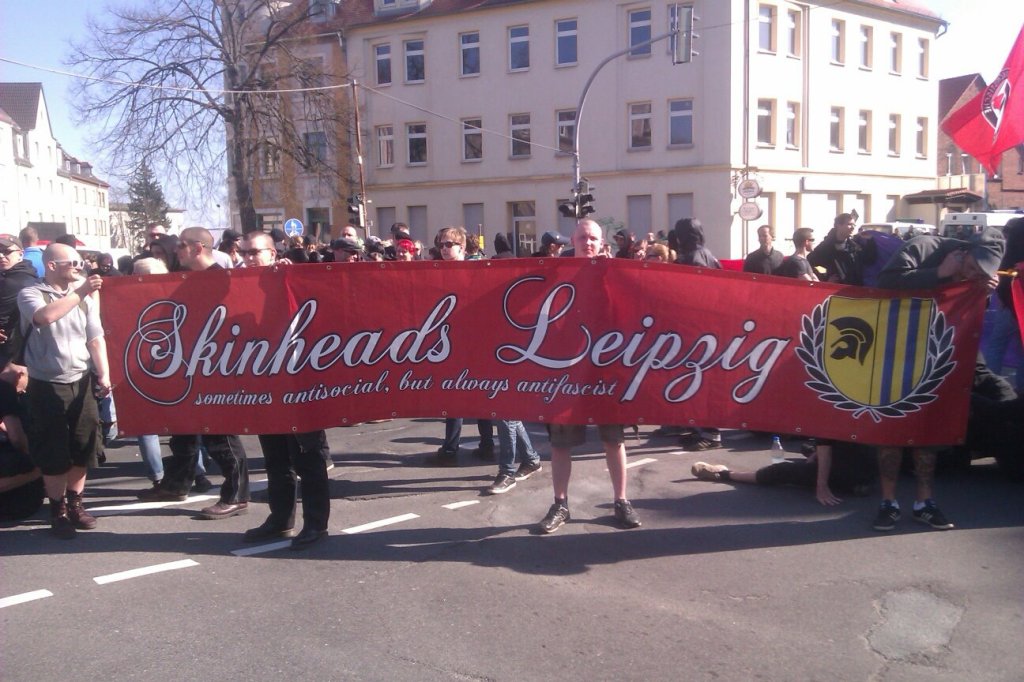
Alas, my compatriot Mark of Booze & Glory let himself be drawn into their Facebook thread, displaying good intentions but also quite a bit of naivety. Of course, Israel “absolutely” has a right to exist, he insisted, just as Palestine does. One might just as well have argued in the 1940s that, while Poland had a “right to exist”, the General Government “absolutely” did too.
But let’s not dwell on this – or on the broader point that states do not have a god-given “right to exist” (indeed, a number of them have been “annihilated” within living memory). For now, let’s just note with satisfaction that the German Zionist scene is losing ground and becoming more internationally isolated. Bands from abroad are increasingly cancelling their gigs at places such as Conne Island, making their continued operation difficult – a development that the skunks running the venue recently whined about to the press.
It remains to be seen when the first German bands will find the decency and courage in themselves to take a stand.
+++ 1980s Bologna Oi pioneers Rip Off, whose original vocalist Sceriffo we interviewed HERE, have reunited with a new line-up and already absolved a few shows. But, ahead of their first official reunion show at the Bologna City Rockers festival, the band found themselves the target of an anonymous leaflet warning of the band’s supposed far-right links. Anyone who knows any the band members personally is aware that Rip Off are very far from being ‘far-right’, and the same goes for their lyrics. As Sceriffo explained in the interview linked above, the confusion stems from a period in 1983, when a short-lived new line-up featuring a different vocalist drew negative attention to themselves by posing as fascists, before calling it quits. This came a year after the original line-up had recorded their recently reissued demo, released at the time as a split tape with Nabat. None of the current members have any connection to Rip Off’s pseudo-fascist swan song of 1983 – Sceriffo is the band’s original singer.
Our interview had already been online for a year at that point, more than enough time for anyone genuinely interested to familiarise themselves with Sceriffo, his views, and the band’s history. Indeed, I believe the interview was widely circulated and by all accounts known to the band’s critics. Yet, seemingly undeterred, they chose to press ahead. The leaflet’s argument rested on the idea that the Rip Off name, having once attracted notoriety through far-right posturing, could now not be reclaimed. On that basis, it concluded that allowing the band to perform amounted to crossing a ‘line’.
The question arises: what, exactly, did these anonymous admonishers think a Rip Off performance would lead to? Would it fuel the rise of ‘fascism’? Would it boost Giorgia Meloni’s vote share at the next election? Would it draw nazi hordes to famously red Bologna, to a festival organised by Bologna City Rockers, whose very logo bears a red star? Would the supernatural force of Rip Off’s music transform the audience into an army of nazi zombies, ready to spill into the city centre on the rampage once the show was over?
Of course, no one seriously believed anything was going to happen – beyond the notion of some imaginary ‘line’ being crossed in people’s heads. But, presumably for lack of anything better to do, our nameless busybodies decided to issue the leaflet anyway. It’s a small scene, though, and it didn’t take much to work out who was behind it. I understand that some harsh words have since been exchanged in person, but there’s little to be gained from adding fuel to the fire here. All I’ll say is that our ever-vigilant friends would do better to turn their attention to more important political issues than this nonsense. In fact, I consider it a joke that I even mention their little leaflet.
Matt Crombieboy

