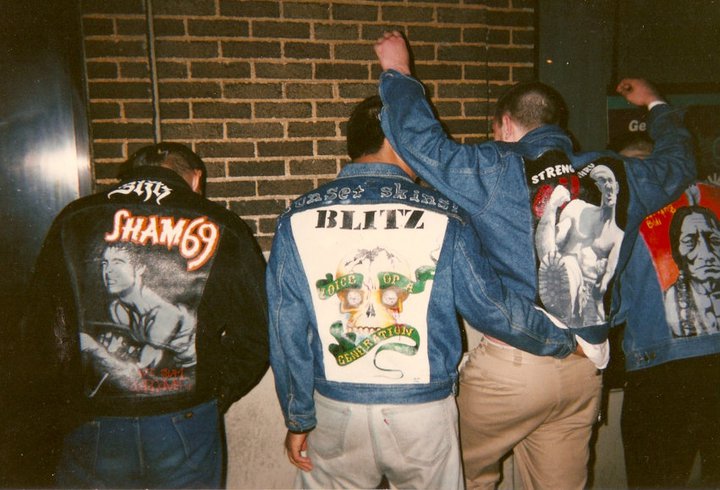
I met Lou Morales in 1988 while hanging out at the CBGB’s matinees. At the time, I didn’t realise he was only 14, as he was always mature for his age and seemed more level-headed than the rest of the crew he hung out with: the notorious Sunset Skins, a predominantly Puerto Rican group of skinheads from Sunset Park in Brooklyn.
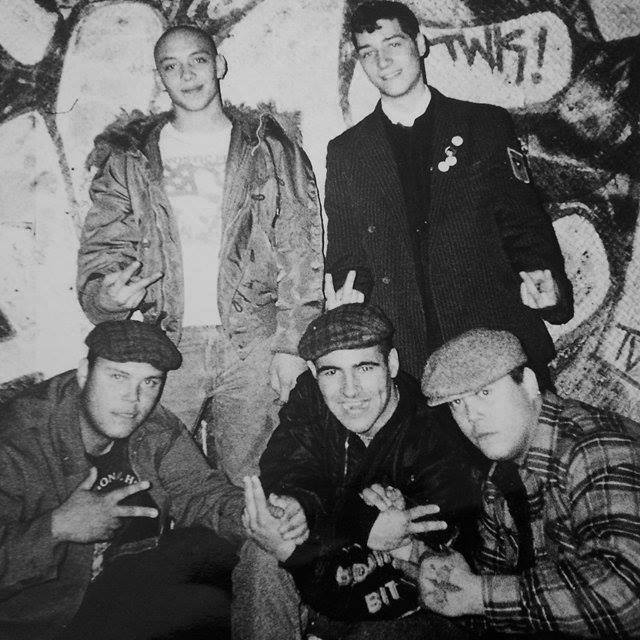
I lost touch with him over the decades, but we reconnected thanks to social media, and I found out he’d been through quite a journey. From clinging to the last vestiges of NYC skinhead gangs from the 80s to being ‘born again’ and becoming a missionary in Eastern Europe, Africa, and other far-flung places, his story needed to be told. Luckily enough, his new autobiography captures in explicit detail the highs and lows of gang culture, along with eventual redemption. It’s a fascinating snapshot of a particular time and place.
I recently spoke with him, and you can pick up the book here. He’ll also be doing a book signing at Generation Records in NYC on 21 September.
Freddy Alva
Lou! Congrats on the book coming out. Let’s break the title down into two parts: tell us about your Brooklyn background and what it was like being a skinhead.
I grew up in Sunset Park in the mid to late 1980s. We were surrounded by gangs in the neighbourhood, but by the time I turned 12, many of them were gone – either locked up or moved on. When I was 13 and hanging out with a group of older boys, my childhood friend Sob (from Merauder fame) came up to see us. We were all aspiring metalheads, and Sob had just become a skinhead. He walked up 43rd Street, the block we both grew up on, wearing black Docs, black army pants, and a black flight jacket, with his head freshly shaved. The moment we saw him, we were immediately hooked. He looked cool. And different. So, the next week, we all shaved our heads and started the Sunset Skinhead gang.
We got introduced to the scene little by little. First, it was a show in Brooklyn at a biker joint called Animal Hall. Then we went down to a hardcore matinee on a Sunday. It was awesome to be in a place in the city where only people like us hung out. Everyone was part of the subculture – some with mohawks, some skinheads, some skaters, and hardcore kids. From then on, the East Village became our second home. Our Sundays were spent going to hardcore matinees, and on other days, we’d go to punk and Oi shows whenever we could.
Soon, we started hanging out with kids from all over the city. There were skinheads from Park Slope, Jackson Heights, Westchester, and Long Island. All the separate crews would become one crew on the weekends. I was in the skinhead scene for close to seven years, actively participating in various forms and friendships. When one club would close down, another would open up. There were gaps in the music scene, but they didn’t last long. Then new crews would come down, like the crew from Washington Heights.
Where did the idea come rom for writing your story?
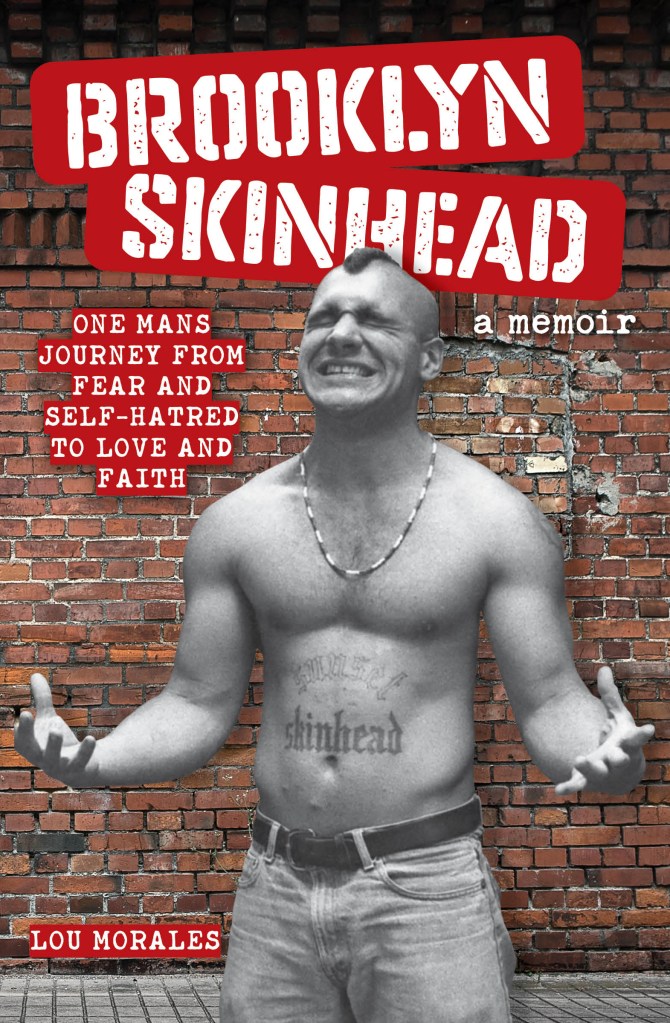
Around 2013, I read A Guide to Recognizing Your Saints, and it took me back to a place I hadn’t thought about in a long time. That’s when I began reflecting on those days and all that happened. Then in 2014, you published that article that received so many warm comments, haha. I thought I’d share a little of that journey from my perspective, being the youngest member of the Sunset Skinhead crew.
I did a profile of you and the Sunset Skins some years back, have any of them read the book and if so; what’s their reaction been so far?
So far, I’ve only received a reaction from Karate Chris, who said it conjured up some memories for him. I’ve just sent a copy to Hector, but I don’t know how he’ll react. We had a falling out after I confessed something that happened back then, which led to some tension. As a result, Hector didn’t want him and Edwin to be mentioned by name in the book.
What are some of the more memorable shows you remember from back in the day?
Probably my very first show at Animal Hall in Park Slope stands out. It was a biker joint, and I was so scared when I got there. The venue was filled with big, burly bikers and Nazi flags. I think the lineup was Breakdown, Sheer Terror, and Outburst. But when the music started, I thought, “This is awesome”.
Another memorable show was seeing Warzone at CBGB’s on a Sunday. Raybeez came out looking like an IRA soldier, complete with camouflage and a ski mask. It was an epic show. But honestly, I went to so many matinees and shows at places like the Ritz.
You talk about it in the book but recount a couple of the craziest skinhead related fight stories you witnessed/were a part of
I think the craziest incident was when some white power kids showed up at Lamour’s, a Brooklyn club, one night. They got stomped pretty badly; one guy ended up on the floor with blood everywhere. He was the biggest, and I remember he was wearing a denim jacket with a Skrewdriver album cover painted on the back. Lamour’s was considered a neutral area because it was located in a predominantly Italian neighbourhood, but it was also within walking distance of Sunset Park – so that night, it became fair game.
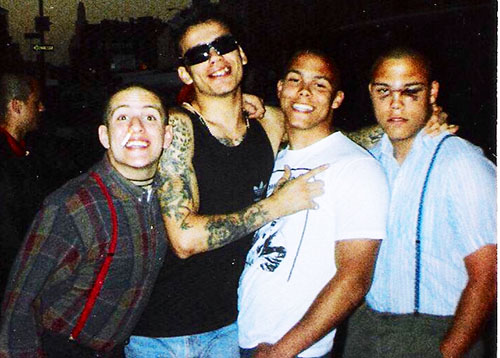
Our mutual friend Edwin, half of the infamous Sunset Skin twins, recently passed away. Do you have any lasting memories of him?
Edwin was really cool. He always looked out for me. We used to do silly things all the time and laugh about stuff we had seen in movies and TV shows. He was always goofing off. I’m really sad we never got to reconnect.
There are some hairy situations you described in the book when you were a missionary in places like Serbia; do you think growing up, like we did in 1980’s NYC, prepared you psychologically for those tense moments?
I think because of how I grew up in the city, I wasn’t as hesitant to go to different places. Kosova/Serbia was a bit of a stretch for me, but I was always the one ready to do anything if everyone was on board. Growing up how we did and spending time down in the Lower East Side, I developed some street smarts, just like all of us. So going to “sketchy” places overseas didn’t seem like that big of a deal. But still, nothing can prepare you for near-death experiences, like being held at gunpoint. I never expected that; I thought I might step on a landmine or something like that, not get caught up in a church robbery.
You asked me when I proposed this interview if non-Christians would be interested in a tale from a believer, do you consider this book as part of your mission outreach?
I do see this book as part of my outreach. I keep seeing posts on Instagram and Facebook about mutual friends passing away in their early fifties, and my desire is to share my story in the hopes that it might help someone, anyone. Many friends have gone on to do some cool stuff, while others have really struggled. I wanted to say, “Hey, this is what happened to me. This is why it happened. And this is where I’m at now.” It’s a book about an imperfect guy living in an imperfect world and how God has changed the way I see myself, the world, and my future in it.
I see that living in Africa profoundly affected your worldview. Are you planning on doing missionary work in other lands anytime soon?
No, nothing at the moment. I see the US as a mission field now. We have such high rates of depression and anxiety among our young people and in society as a whole. The church is also going through a deconstruction phase. But I also see that people are hungry for something meaningful, different, and bigger than themselves.
What does your church congregation think of the book?
My congregation has been very supportive. I attend a church of over 3,000 people in the middle of Hell’s Kitchen, and I serve on a security team made up of people from various backgrounds. One of my closest friends was involved with the Aryan Nation in Fresno, and another woman on the team used to be a drug dealer. We’ve all got our own stories. Mine just happens to be one that went through the difficult process of being put down on paper.
I recently saw you at an Agnostic Front show. Is it a bit surreal coming back to the scene and seeing old faces, as well as meeting some of the current people involved?
Being at that AF show was a homecoming. Getting to see you and hang out with Minus again after 30 years was such a good thing for me. And seeing bands like Agnostic Front play was awesome. Oh, and seeing Dmize with Chiqui and Johnny Rosado, who was my former roommate, was awesome. It felt like a full-circle moment.
We met as teenagers – did you ever think that decades later we’d be talking and writing about things that happened back then?
I didn’t think that this would become such a cultural and historical thing all these years later. But it’s fitting. What happened back then made an impression on my life that I still feel today. I met so many amazing people, and it’s great to reconnect with them – and you – on social media.
Any further writing endeavours in the near future?
I’m thinking about doing a devotional or cultural bridge type project that connects punk song lyrics with the Gospel.
Changing gears a bit: what are your top 5 Oi! songs and why?
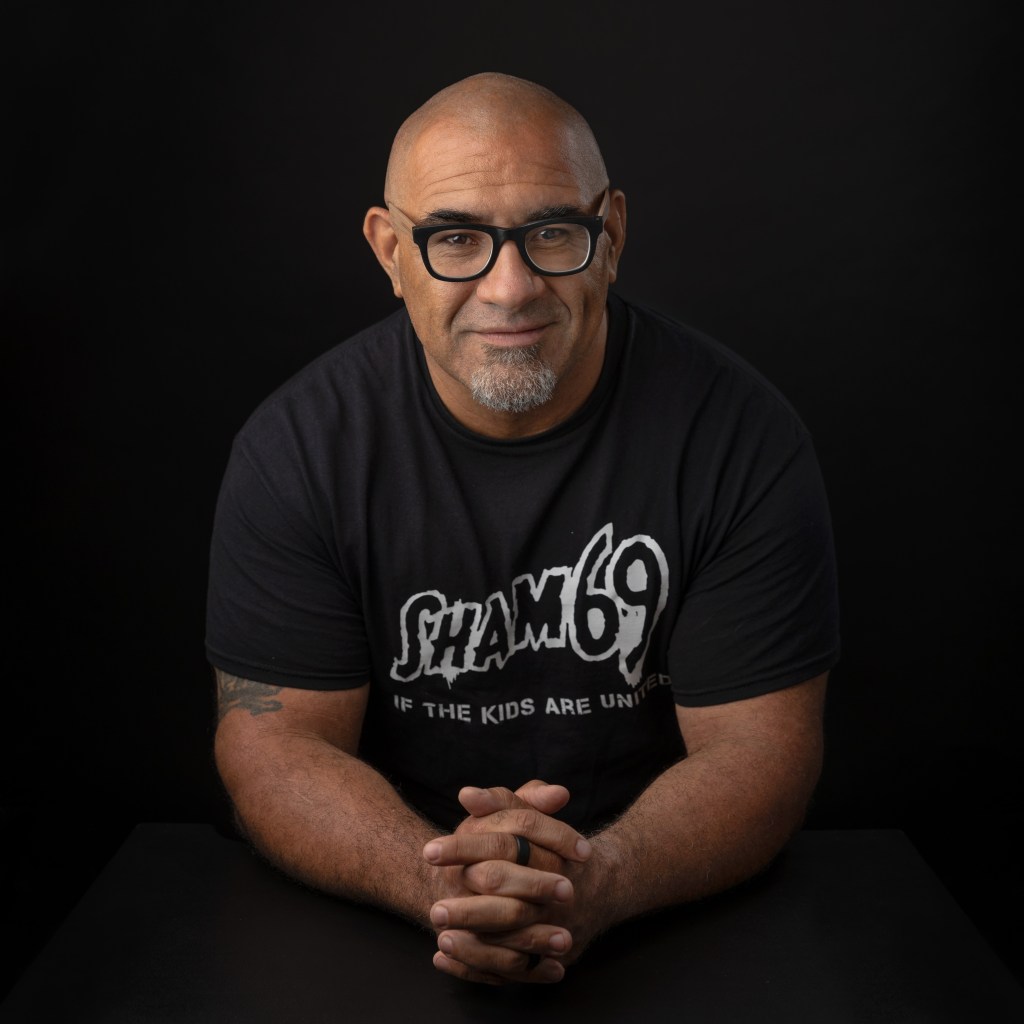
- ‘If The Kids Are United’ – Sham 69: Nothing says family like a song about crazy street kids coming together. That’s what it was every weekend in the city.
- ‘Out of the Ashes’ – Brute Force: This song was written by our crew, for our crew. We saw ourselves as a new breed, and Brute Force was the Sunset Skinhead band, so it became our anthem.
- ‘Warriors’ – Blitz: Blitz was my favourite because they they were rough and raw sounding. I also loved the Voice of a Generation album cover.
- ‘Matar O Morir’ – Decibelios: It was so good to hear Oi music in our language for the first time.
- ‘Shot Heard Around the World’ – The Press: I remember seeing The Press and the Scofflaws at Downtown Beirut or some club down on Houston. This song really brought the house down, and it was my first real Oi and ska show live, since everything else was mostly hardcore.
Favorite NYHC-related memory?
My favourite hardcore memory is from when we’d all line up for Sunday matinees and just mingle with everybody. Hanging out between sets across the street in front of the bodega that used to be there was also cool. I met some great people back then. Then getting some food at the Dominican restaurant a block away. We’d pool our money together to get rice, beans, plantains, and whatever meat we could afford.
Who do you prefer: Sham 69 or Cockney Rejects?
Sham 69. The Cockney Rejects were good, but to me, they felt a bit goofy. I was very serious as a young person, and I liked the urgency of Jimmy Pursey’s voice and singing style.
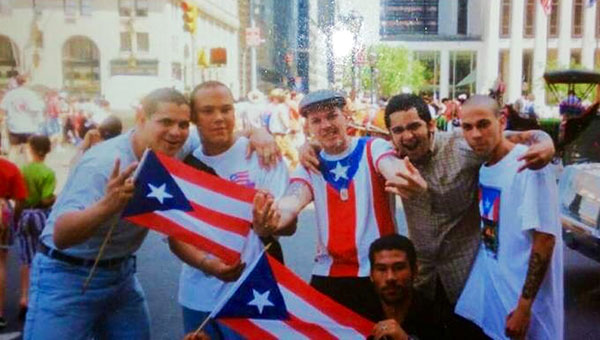
Thanks so much, Lou. It’s awesome to still be friends. Any last comments?
Thanks, Freddy, for supporting and advertising the book. It’s been great reconnecting, and Lord willing, I hope to see you at a show again sometime soon. Maybe we’ll connect at Generation Records. The book signing is tentatively set for Saturday, September 21st.
 Creases Like Knives
Nice interview. Too bad Brute Force were right-wing!
LikeLike
How exactly do you determine that Brute Force was right-wing? Songs like “Join the boys”, “Out of the ashes” or “Unsung Heroes”? I don’t think that Brute Force with singer Big Rich were actually a right-wing band. But it is true that from 1990, after Big Rich left and then with a new singer, they can be classified as RAC, i.e. right-wing. However, generalizations are rather stupid, because there are definitely two versions of the band, one until 1990 as an Oi! band (which only released deos) and one from 1990 as a RAC band, which then released an EP on Sunwheel in 1995.
LikeLike
Cool interview with one of the legendary crew. Cool that you’ve gone on to do such good in the world. Only really knew about the ’90s iteration of Brute Force. Gotta check that book.
Pax tibi!
LikeLike
Let’s not forget the two skinhead girls, Sharon and Staci who started the sunset skins with Hector and Edwin after meeting the at the Ritz – Thanksgiving weekend right after their sister died. Sharon died in a car accident and Staci is gone from the scene but I remember hanging out with this crew many times at lamours in Brooklyn. Why no mention? Was there a falling out? Remember American Eagle? Brooklyn Area Skin Heads? That’s the sunset I remember.
LikeLike