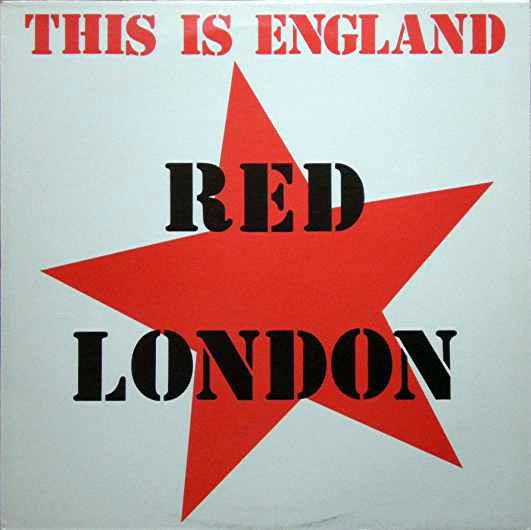
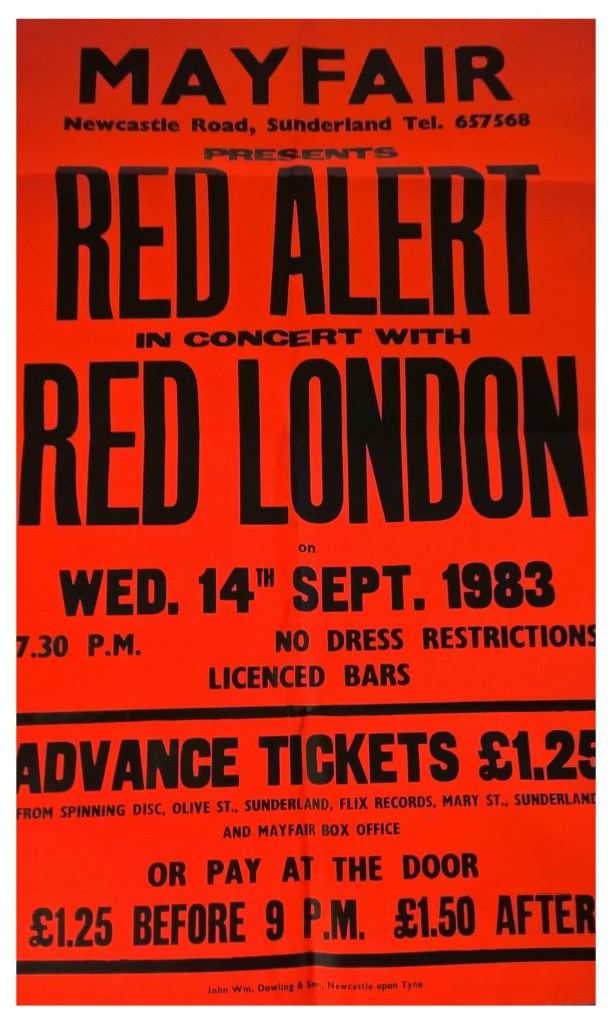
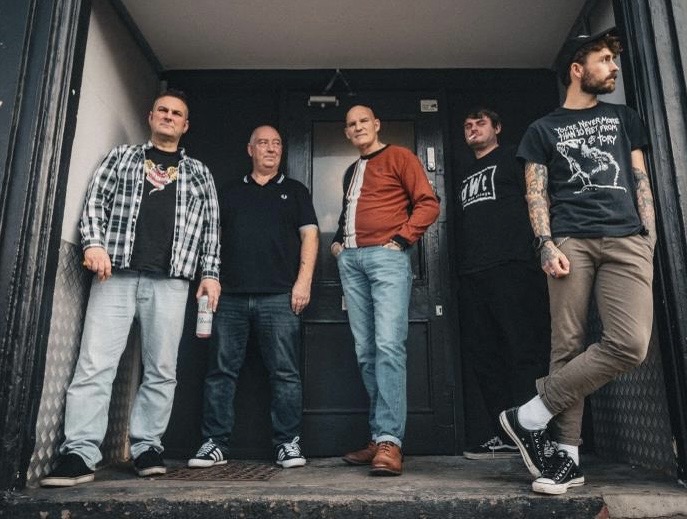
Having already done Red Alert’s We’ve Got Power with the late Steve Smith in this series, it seemed entirely natural and would be remiss not to extend the same treatment to Red London’s This Is England. Thankfully bassist (and occasional Angelic Upstart) Gaz Stoker and mainstay frontman Patty Smith were quite game and dusted off 40 years of memories since the release of their still urgent debut. Matt and Andrew Stevens heard all about regicide on Wearside, life inside Durham Prison, urban riots, the Falklands, nightclub brawls and the bomb, so just the usual for an Oi album from 1984 then.
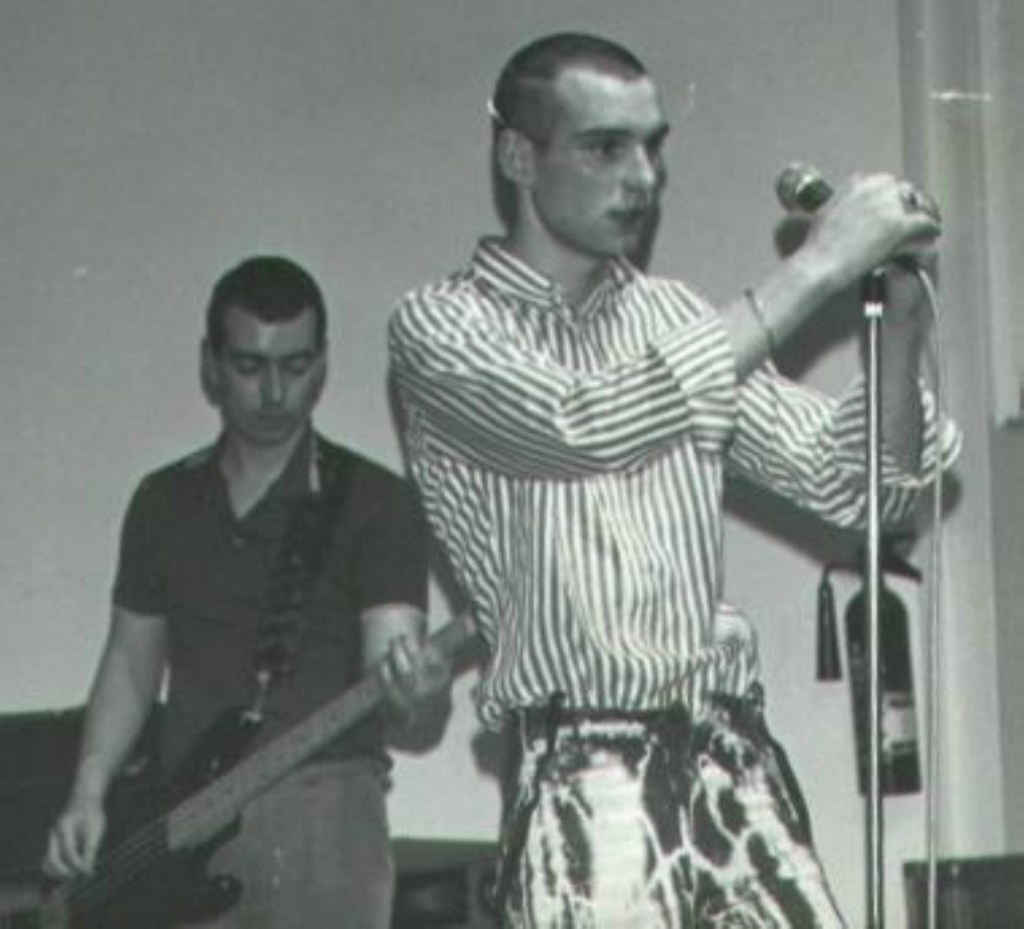
Let’s start with the band’s very un-Mackem name. Why a Sham song?
GAZ – I was playing guitar in Sunderland’s first ever punk band The Rebels from 1977 until early 1980 when we split. Kid (Stoker, my brother) and Patty had formed a punk band called Street Boys. That didn’t last long, and they were looking at putting another band together but with a different name. Kid asked me if I had any ideas of a good name for a band and I said Red London. I’d heard the Sham 69 song, but just thought the song title ‘Red London’ sounded like a good band name. It was as simple as that. He liked it as well, so decided to call the new band Red London. Later on the ‘red’ in the title became more focused as a left-wing thing as the band were all working-class socialist kids, but originally it was just because it sounded like a good band name.
To those outside the UK in Europe it’s been said that the existence of ‘Red London’ and ‘Red Alert’, good socialists all, suggested Sunderland (or the North East) as a hotbed of left-wing Oi, but how true was that?
GAZ – We’ve always been working-class socialist lads. Red Alert were the same, but maybe not quite as political as Red London. With the Angelic Upstarts coming from South Shields which is only a few miles from Sunderland and who were even more political than we were, a lot of people from outside the UK were amazed that these bands all from roughly the same area of the UK existed and started at roughly the same time. The Toy Dolls (although not political) were another great band around at that time as well. It’s hard to explain how it all happened together but we just took it for granted. Maybe it’s just that Sunderland and surrounding areas have always been working-class places and we all just did what we believed in.
PATTY – The reason why people would say we’re a hotbed of left-wing socialists is due to the fact we hold a strong Labour seat in the North East, especially in Sunderland, and we stand firmly by our beliefs, as expressed in our lyrics. Ever since I can remember, Sunderland and mainly the Northeast had political strongholds due to the fact we’re built on a working-class undertow of shipbuilding, steel makers, coal mining and glass making. When I was a kid, I used to watch the ships on the river wear in Sunderland being launched – what a spectacular sight that was! As was seeing the glass bottles blown up at Hartley Wood and Co Ltd glass manufacturers. Everyone was either related to a coal miner, shipbuilder, steel maker or glass blower in Sunderland at one time. These were the foundations and the beating heart of both Sunderland and the Northeast. How proud we are to be born and bred in Sunderland!
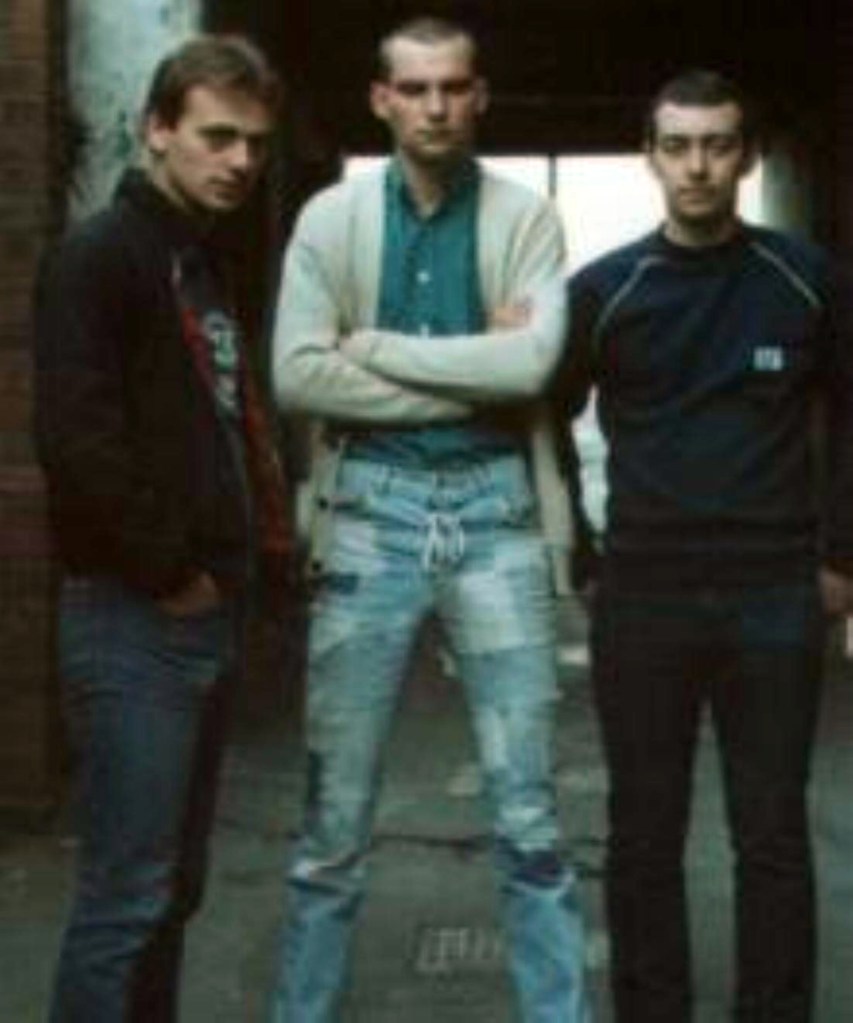
What kinds of people were coming to gigs for yous and Red Alert at the beginning, the UK82 era?
GAZ – We obviously had a similar audience. There’s always been a mixed crowd at Red London gigs but it was mostly punks and skins, especially back then. There were a lot more skins around in the early 80’s, so that was reflected in the number of skins coming to the gigs.
PATTY – Yeah, in that period of 1982, it was mainly punks and skins attending our gigs. These were mostly our mates who used to follow us far and wide, even as far as London and into Europe. We used to hire a Luton van and get one of our mates to drive it – legally of course – and everyone else would pile in the back with sleeping bags, tents, and crates of beer. My youngest brother at that time had a pub called Mr Smith’s in Sunderland, and everyone used to meet there. We would all be pissed when we climbed on board and off. We went down to Dover ferry port to catch a ferry to Calais (France). Those were unforgettable times – we had such a laugh.
The early-mid period of the band was quite tuneful and, let’s say, soulful compared to more abrasive punk and Oi. I’m thinking songs such as ‘Revolution Times’, ‘This is England’, ‘Once a Friend’, ‘Autumn Victory’ – what influences were at play there?
GAZ – We were influenced by the early punk bands, who were really tuneful and wrote great songs. Bands like The Clash, Chelsea, SLF, The Jam, The Ruts, Angelic Upstarts etc. All these bands had something to say and lyrics we could relate to. A lot of later punk and Oi became who can play the fastest or shout the loudest, and the message (if any) just got lost. We loved the earlier punk bands and stuck with the style of songs we grew up with. A good tuneful, powerful punk song with a message is much better than who can play the fastest or shout the loudest. Also, bands like the Clash and The Jam weren’t afraid to try different styles and influences, and we had a similar attitude. We’d always liked guitar music from back in the early 70s glam rock days. Bands like Slade, T-Rex, Sweet, Mott the Hoople –they were great, but we were too young to pick up guitars until the late 70s and early 80s. In that respect, punk was made for us.
PATTY – My influences were Chelsea, The Clash and The Jam. Songs like ‘Revolution Times’, ‘This is England’ and ‘Autumn Victory’ were very much inspired by the state of the UK at that time under a Tory Thatcher government. Thatcher angered me personally when she introduced competitive tendering to outsource ancillary services, including porters, kitchens, and cleaning to private companies, which eventually led to increased levels of infection in hospitals. She also reduced access to NHS care by bringing in charges for services which we heavily relied on.
Now I am a little older and more mature I like a variety of different bands and a range of different types of music such as High-Flying Birds, Liam Gallagher & John Squire, Rival Sons, and classical music, which chills me right out after a stressful day at work.
Your ex-drummer Raish Carter’s stint in Skullhead has also drawn attention, including in past interviews on our site. What was the story there, and has it caused you any particular problems?
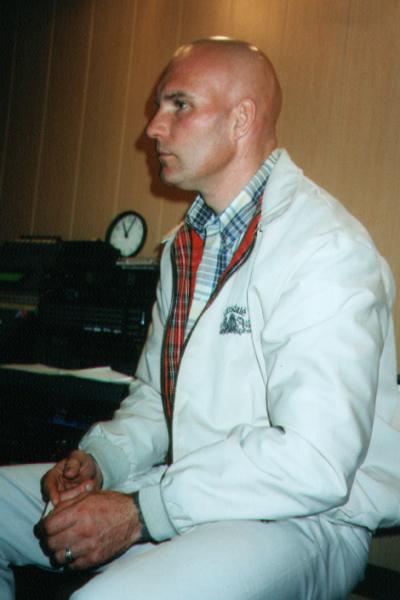
GAZ – Raish was a very mixed up lad who always got himself into trouble in his early days. We parted company with him shortly after he’d played on our first EP. He was jailed twice in a short period of time. We’d let him back in the band after his first stint in jail, but when it happened again there was no way we could keep putting up with that, and that was the final straw for us. During his second stretch, he met Kev Turner in jail and was asked to join his band Skullhead.
I honestly think Raish was so naive that he didn’t fully realise what he was getting himself involved in. He wasn’t a bad lad but very easily led, and he fell in with the wrong people for a short time.
PATTY – The only attention that brought was to himself. Everyone who knows us know we do not tolerate any of that right-wing SHITE in our ranks. We pride ourselves as working-class left-wing skinheads who are cut from a different cloth and sing about our beliefs and what makes us tick. That business with Raish Carter was a learning curve and a sign of the times at that period in the band’s history. Sometimes in life you’re given choices. He chose his, we chose ours. That was the beginning of the end for him, as we advanced looking for a brighter sky.
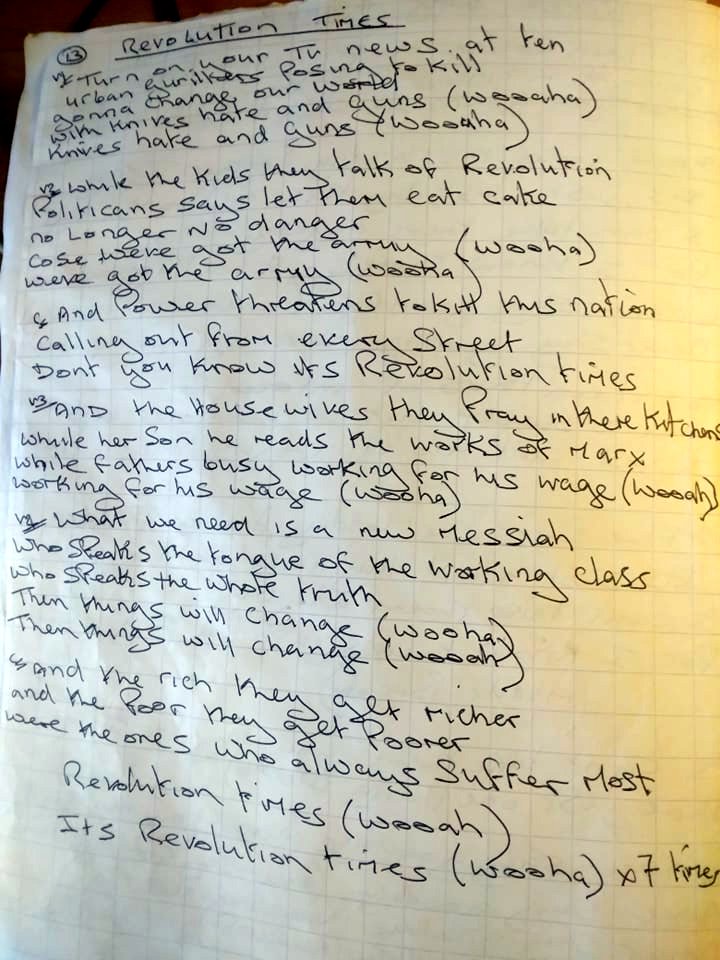
We’re a bit curious about the line “While her son reads the works of Marx” in ‘Revolution Times’ from your first EP. Is this for or against Marx?
PATTY – ‘Revolution Times’ has very powerful content regarding our working-class roots. “While her son he reads the works of Marx” expresses planning for a revolution within the working classes. Yes, it’s for.
What was with the funky bass line on ‘Soul Train’?
GAZ – I love the bass line in ‘Soul Train’ but I can’t take any credit for it. One day I was at Kid’s flat and he said he had an idea for a soul-style song and he asked me to play the bass line which he had worked out as he wanted to play his guitar over it to see how it all sounded at the same time. I was a bit sceptical when he mentioned a soul song. Don’t get me wrong, I like soul music, but never thought we’d be trying it out in a punk band!
Anyway, he showed me the bass riff which I picked up pretty quickly, and when he put the guitar over the top and sang the melody line it sounded great and we knew it would be a great song to record. That’s how it came about, and when Patty got to sing the song it really suited his voice and turned into a great song. It’s been in and out of the live set over the years and has stood the test of time.
You’re one of the biggest acts on Mad Butcher, why do you think you have so much appeal still in Europe? That awareness obviously comes across on tracks like ‘Once Upon a Generation’. Where do you stand internationally now in this more polarised era?
GAZ – We first played outside the UK (France) in 1985 and it was amazing. It really opened up our eyes to see how far reaching the scene had become. Shortly after that we played countries like Switzerland and Germany. Then it was Poland, and the tours and the different countries just kept coming. It was great to play the UK as well, but bands were treated much better outside the UK.
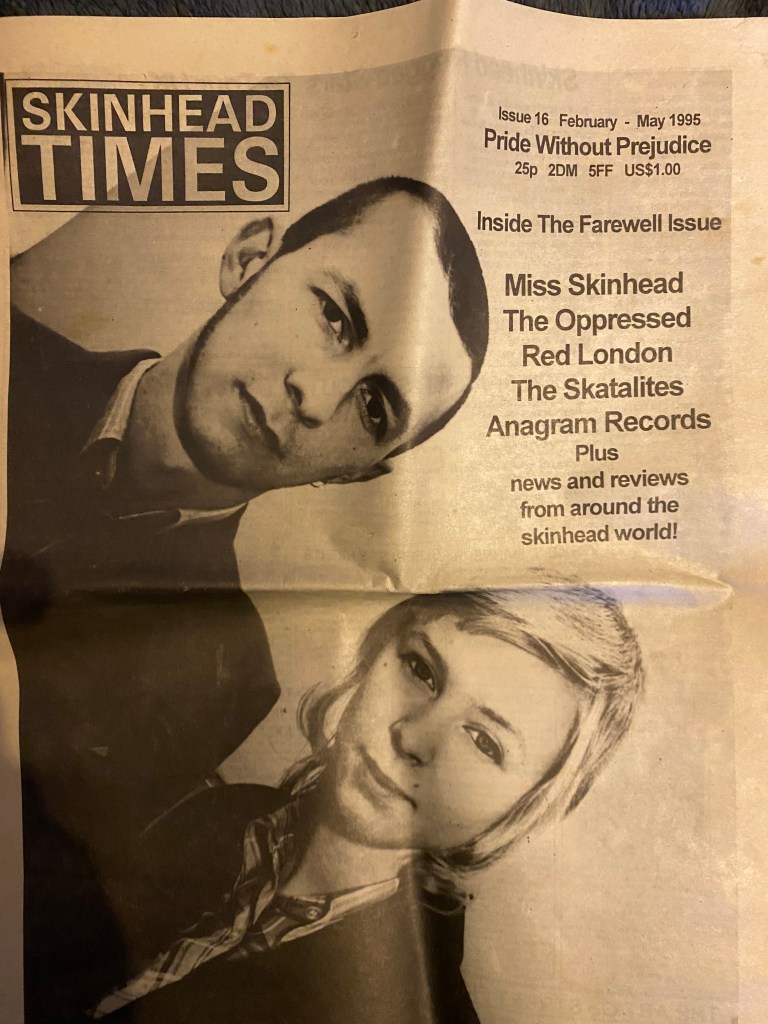
We were at our best touring around different countries and meeting some amazing people and making some long-term friends who we still keep in touch with in some cases. That for me has been the most enjoyable thing about being in a band. We still play festivals and the occasional gig in places like Germany, Spain etc, and it still means the world to us.
PATTY – I agree we’re one of the main acts on Mad Butcher’s label, and rightly so – we have worked very hard to earn that title. Our appeal in Europe has always been great ever since day one. I think it stems from the honesty in our lyrics and tuneful melodies, which drives us forward, and we’re never afraid to express our feelings. We’re together on and off stage, which most bands don’t have. The Germans took to us first, then the French in the early days, now we are everywhere – but the Germans keep knocking on our door wanting more, Mad Butcher has always been a fan and has been very supportive of us for many years, so we’re very lucky in that respect.
You recently did the Organised Chaos documentary and like the Toy Dolls you’re still going strong even after all the lineups (though not as many as Olga got through!). Did you think you still would be in 2024?
GAZ – It was great to do the Organised Chaos documentary, as the more the facts get put on record the better. The downside is everyone is getting older, and we’ve lost a lot of amazing musicians and friends over the years.
PATTY – When we set out on our journey way back when, I never envisaged that we would still be performing in 2024. However, I am pleased we are because I feel more alive now with the music than I ever have at any time of the early stages in the band. We have matured as a band, which makes me very proud to still be a part of the machine and hungry for more. Yes, we’ve had a few line up changes since we reformed in 2019, but the song remains the same for us. As long as we’re all able to deliver we’re always going to be around.
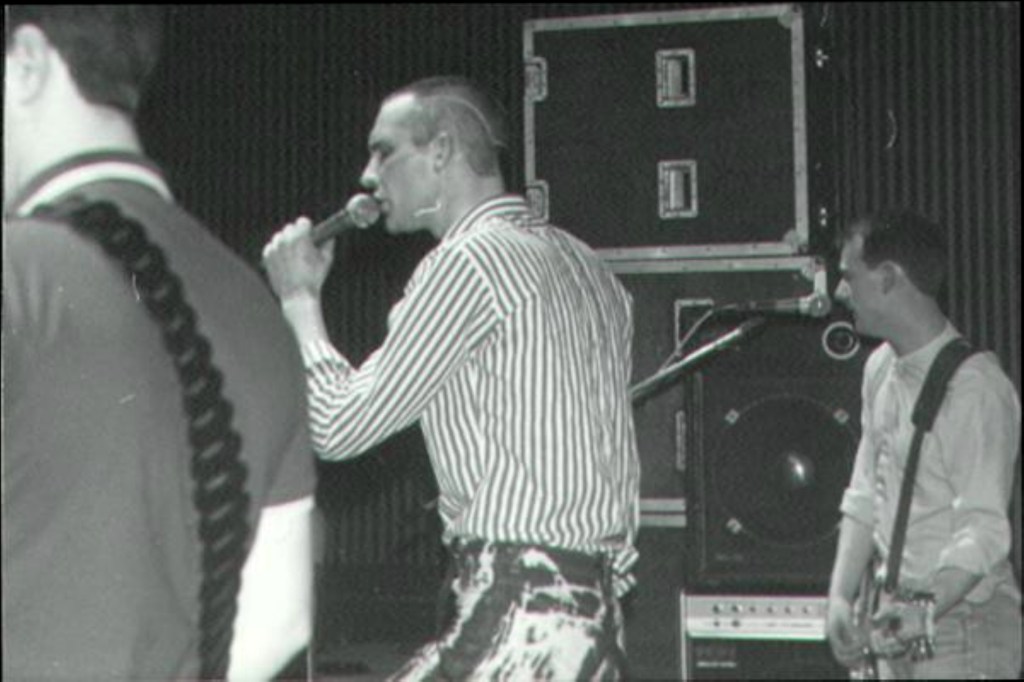
The album is a snapshot of Wearside in the early 80s. What are you writing about as lyrical themes today, and how important is that identity to you 40 years on?
GAZ – We’re still writing about our way of thinking. I know we tend to look back with some of our newer songs, but that can’t really be helped. Deep down, we’re still the same people with the same beliefs. We’ve all gotten older, but our beliefs haven’t changed that much. You can listen to any Red London album and feel the emotion in the music and hear our lyrics to understand what we’re about.
PATTY – Today we are singing about what is important to us, just like we have been doing for the last 40 years. Nothing has changed. Time moves on obviously, together with people, but our focus remains true to ourselves and to the people who buy our music. We’re on the cusp of recording a new studio album, Now We’re Back On the Streets. It’s going to blow everyone away – every song is brilliant and comes from the heart and is played with such passion and energy.
OK, talk us through your debut album This Is England then…
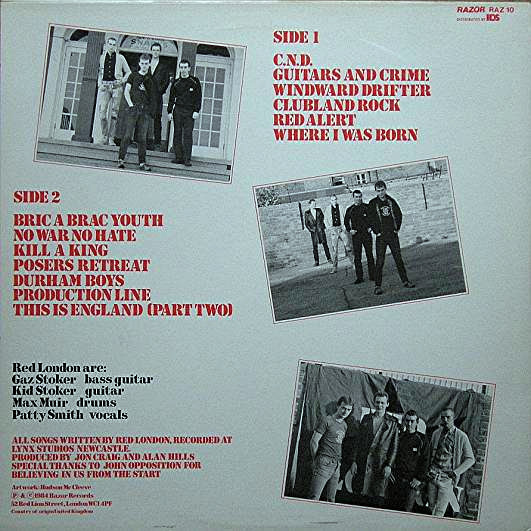
CND:
P – Written about the Campaign for Nuclear Disarmament and to scrap nuclear weapons and create genuine security for future generations.
G – We were all against spending billions of pounds on missiles when it could have been spent on the NHS for hospitals and vital equipment and creating jobs in all sorts of ways. The song seems very dated now because of the title but it’s a really good song and was the obvious choice to open the album.
Guitars & Crime:
P – Written about our then drummer Raish Carter, who was continually in trouble with the police. It came to a stage where we chose guitars, and he chose crime – so we had to let him go.
Windward Drifter:
P – Written about the Falklands war. The conflict lasted 74 days and ended up with Argentina surrendering on 14 June 1982. We felt strongly about this war because we had friends our age out there fighting.
Clubland Rock:
P – Written about those pricks who we knew, who played in the clubland scene across Sunderland thinking they were better than us with their shit music.
G – Great riff and I love the lyrics. They’re actually really funny and a great put-down of those Sunderland bands who thought that they were really something because they played the clubs. They looked down on the likes of us, but they were playing other people’s songs and they couldn’t write a good original song to save their lives. I’ve always thought ‘Don’t play the jukebox, be ON the jukebox’
Red Alert:
P – Written by The G Man about troops on the streets across the UK.
G – This was a song I wrote back in The Rebels days. It’s a song that was written about what might happen if riots broke out across the UK and it was so bad the army had to be called in to try to deal with it.
Where I Was Born:
P – A simple little song about our birthplace in Sunderland, inspired by the local people of the east end of Sunderland.
Bric a Brac Youth:
P – Written about the kids on the streets who we knew and hung around with who followed us.
G – This was the first Red London song I ever learned to play. I love this song and the lyrics are about youths being treated as virtually worthless, sort of like Bric a Brac. If they were given a chance, they could prove they were far from being Bric a Brac youth.
No War No Hate:
P – Written about many different aspects of war, racism, and how we treat each other in society.
G – Another track I really love and the first reggae track we played. I think the lyrics of this song are up there with any great lyrics I’ve ever heard. It’s an anti-racist song and a call for peace, harmony and respect. As valid today as the day it was written. The song regularly comes in and out of our live set and we actually re-recorded it for the ‘Kings of the Streets’ E.P.
Kill A King:
P – Written about taking down the British government.
G – The title isn’t to be taken literally. It’s a song about using your vote to bring down rulers, governments, prime ministers, ministers or whoever isn’t serving the people and is abusing their position of power and acting like they are a king. Hence ‘Kill a King’. Democracy and the ballot box can be a very powerful thing to bring about change if people stood up for themselves more. A sort of ‘the pen is mightier than the sword’ thing. Still in the live set after all these years.
Posers Retreat:
P – Story about the night I was refused admission to every nightclub and some bars/pubs in Sunderland.
G – Another of my favourite Red London songs. Written about Patty being refused entry to nightclubs for being a skinhead. A great tune coupled with very emotive, heartfelt lyrics.
Durham Boys:
P – Written about our ex-drummer doing time in Durham Prison.
G – The tune was very inspired by ‘Something That I Said’ by The Ruts. Lyrics about what it must be like being inside Durham Prison.
Production Line:
P – Inspired by the 9 to 5 hero, Monday to Friday working week, stuck in a factory day in day out.
G – A very Rolling Stones type of tune and it actually sounds like a production line in many ways. About the grind of working and therefore living on the production line. Patty used to play tambourine on this when we played it live in the early days.
This Is England (Part 2):
P – Not specific to anyone as such, more of a generic subject about how I felt at that time in my life.
G – Hardly any lyrics in this one and a very short and different type of song to ‘This is England’ but a great tune that is very English-sounding.
 Creases Like Knives
This is a great interview. Thanks
LikeLike