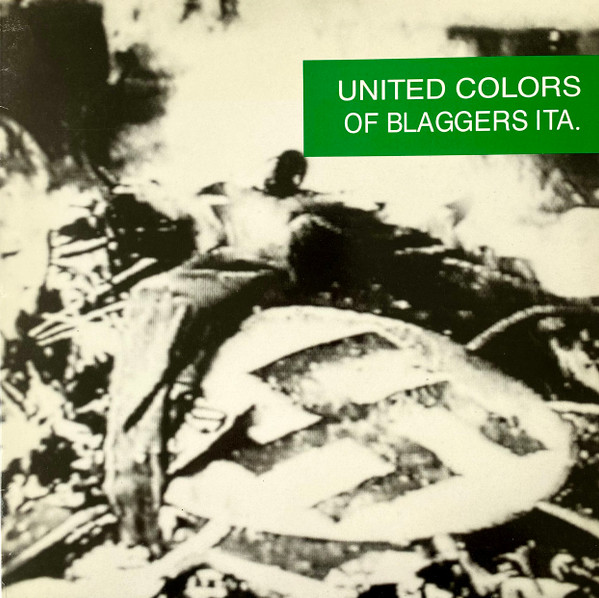
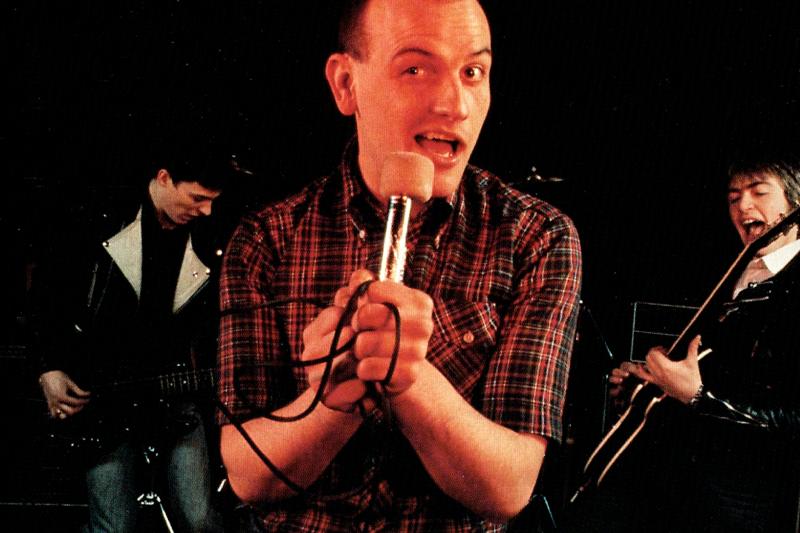
At first glance ‘Classic album’ may appear a little overblown or erratic for this series of classic Oi albums here at Creases Like Knives, but hear us out. The Blaggers ITA (originally sans the dub-styled ITA as just The Blaggers) emerged out of the band Complete Control, signed to Roddy Moreno’s Oi Records and frontman Matty Roberts (later Matty Blag) appeared in a 1980 BBC documentary about skinheads in the Shropshire new town of Telford.
Recorded and mixed over the space of a weekend in Wood Green’s Southern Studios, the album on Words of Warning celebrates its 30th anniversary this year and remains in print through Mad Butcher Records. When you consider what was actually happening in the early nineties – council estate riots across the country, shopping centres divested of sports and designer wear using stolen Cosworths, LA burning after Rodney King, cut-price privatisations of our energy and water, the British far right getting their first taste of electoral success in East London (and a kicking in South London) and the IRA casually shelling Downing Street with mortars from the back of a Ford Transit – then it’s all on here, a document, almost.
A subsequent major deal with Parlophone (then part of the arms-selling EMI conglomerate) saw them dubbed the Blaggers EMI, Blaggers Inc. or, even worse, a ‘student band’ among some quarters of punk merit arbitration. Though you at least could now source their records from the 99p bin at HMV rather than sending soapy stamps to some anarcho-crusty distro.
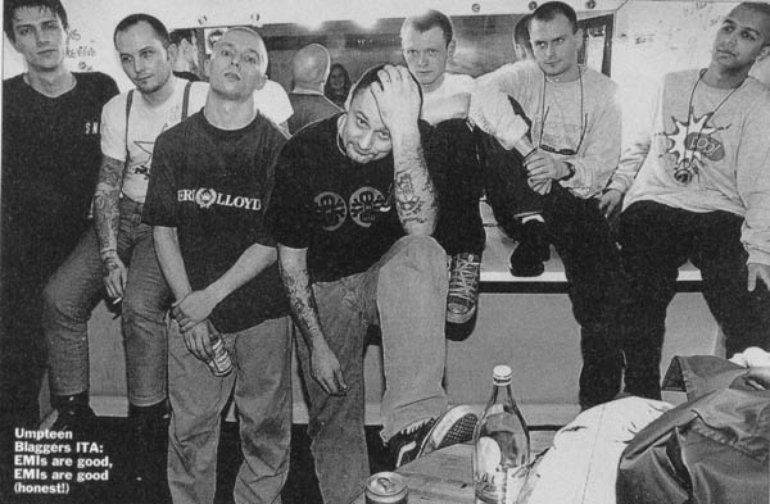
Andrew Stevens sat down with founder member and guitarist Steve, saxophonist Olaf, and hornsman Brendan to find out more. Together with vocalist Christy, who joined later, they talked him through the album track-by-track.
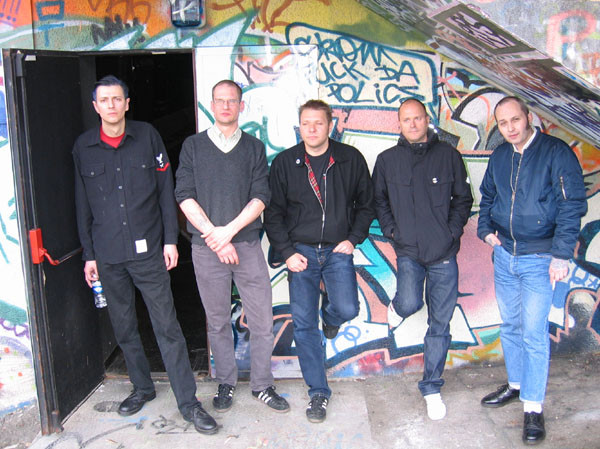
What are The Blaggers up to these days?
BRENDAN – As a band, the Blaggers are defunct. Our last gig was at the amazing Boomtown festival back in 2017. For various personal reasons, there is no appetite for the band to continue at the moment.
Personally, I have a relatively young family, with my oldest teenage son starting to get into DJing and producing drum and bass. I work in property development; part of a team delivering affordable housing across London.
Of course, Matty and Paul died young – in 2000 and 2019 respectively (RIP brothers). Christy’s still living the dream as a much-in-demand chef up north. Jason’s involved in various 60’s retro music projects in Bristol and Carlos is a teacher in the west of England. Matt Vinyl and I are the only Blaggers still living in London.
STEVE – I played in the band from the beginning up to when we split in 1995. I never got involved in the re-formed band but I am still in contact with them. I am now working for an organisation that works with people who have learning difficulties and/or autism. I still enjoy writing songs and have just started working on recording them this month. Nothing like Blaggers ITA though.
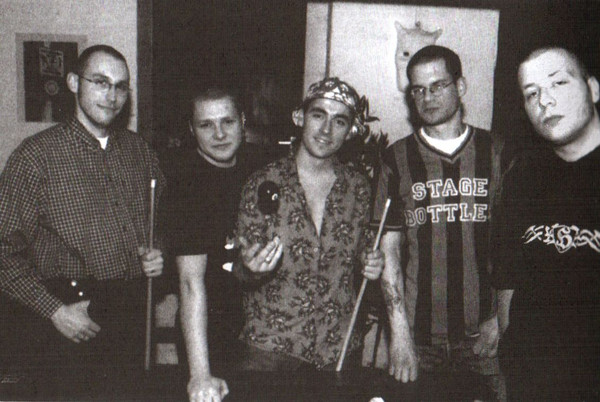
OLAF – I played the sax on United Colors. After re-forming the Blaggers to raise money for political actions, between 2001 and 2017 I replaced Matty Blag on vocals and I also play sax. I’m still active in my German Band Stage Bottles. We keep the spirit of the Blaggers alive and continue what they stood for. A new album will be released this year.
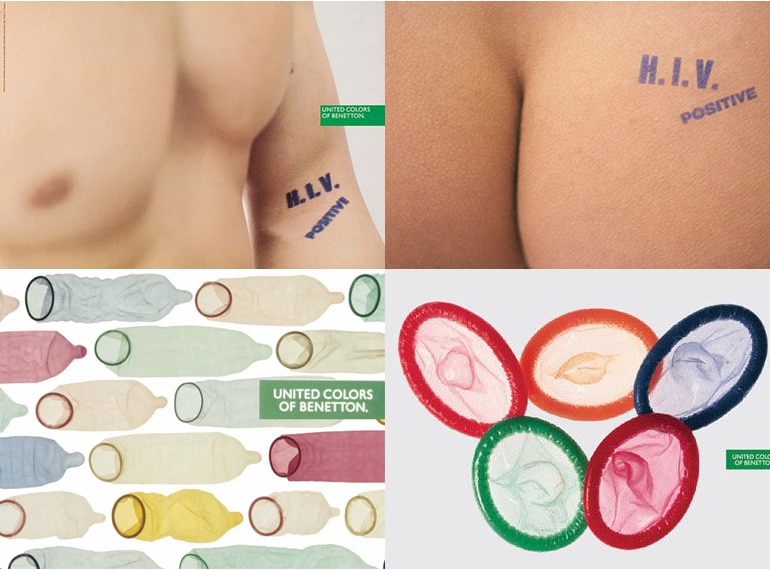
What was the concept behind the ‘Benetton’ album cover? Brandalism?
BRENDAN – I conceived and designed the cover. It wasn’t my first idea. I had two original concepts. One was based on the ‘black power’ protest at the 1968 Olympics when African-American runners Tommie Smith and John Carlos each raised a black-gloved fist during their medal ceremony. The other involved a wrecked cop car (it would have looked a bit like the brilliant Panacea album Low Profile Darkness released five years later). These were to be painted/collaged by Gee Vaucher (Crass) in her distinctive, black and white gauche style which I massively admired (still do!). I can’t remember why that didn’t happen – but it was probably because we decided not to sign to Southern Records who originally wanted to release the album. That meant we lost our contact with Gee and at the last minute I had to conceive, design and paste up a different album cover.
Unusually for a punk band, some of us read The Face and iD and bought our threads at Chipie, Soviet, Henry Lloyd, Stone Island and, of course, Benetton – who had embarked on a highly controversial marketing campaign that brought social issues to the fore in the generally vacuous fashion world. Their AIDS billboard poster was particularly hard-hitting and they also tackled other issues that we were active in, including race and sexuality.
Our sleeve was more of an homage to Benetton than brandalism. I hoped it might appeal to ravers and casuals beyond the punk constituency. As well as providing a strong, contemporary image, it also gave us the album title.
The grainy picture on the front is a photo I took from a TV documentary about the Allied victory in Berlin – kids had built a bonfire and were throwing swastika flags and plaques on it. A burning swastika – a bit obvious perhaps – but it was what we were all about.
It caused us problems in Germany, where images of the swastika are banned. First batches of the album were impounded before they reached the shops. We had to cover part of the image with a sticker saying ‘This is an anti-fascist product’ before EFA could distribute it.
OLAF – The cover represents the strong anti-fascist attitude and activism of the band in those days. The exploding swastika (on the back) is a symbol of what the band was fighting for: destroying any element heading toward fascism. For me personally, it also represented the fight of AFA and Red Action in the early 1990s. And it always brings back memories of great times with great people.
STEVE – Brandalism – that’s a great word! Brendan designed the cover for United Colors and I personally consider it to be one of my favourite album covers of all time. Politically, it represented the politics of the band so accurately and caused a degree of controversy. Its not just an album cover, it is a work of art.
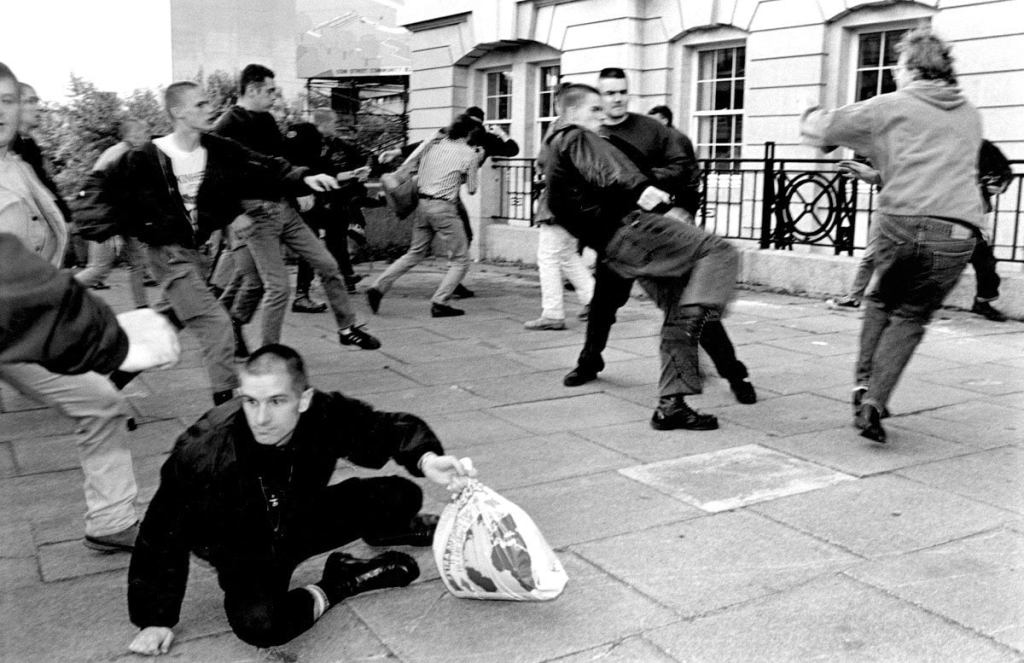
To what extent were the band committed in their daily lives to that, as in specific involvement in AFA and Red Action, as mentioned? ‘Hardcore leftist streetfighting’? Any specific incidents with the fash at gigs?
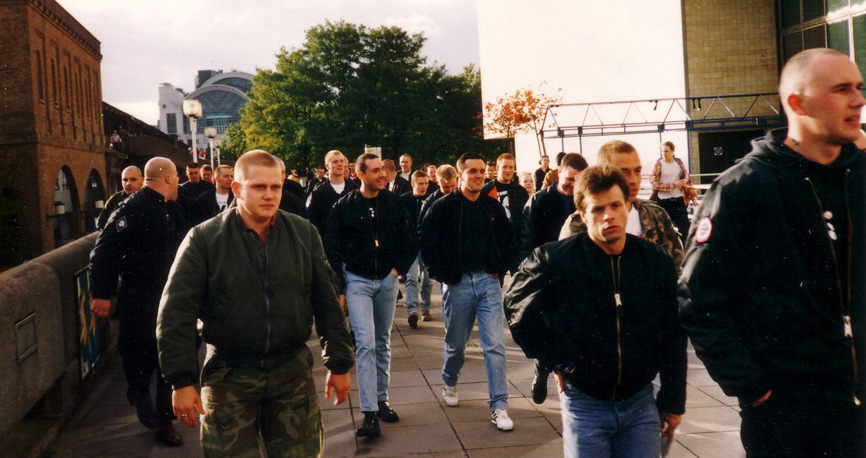
STEVE – We were very committed to the fight against fascist/neo-Nazi ideology and took to the streets as well as the stage. It certainly wasn’t just lip service. Some members of the band were involved in the setting up of Cable Street Beat, the ‘cultural wing’ of AFA (Anti Fascist Action) if you like. One of the most important gigs we played came early on in our career with a gig at The Sir George Robey in Finsbury Park supporting the Angelic Upstarts. This was a Cable Street Beat gig in direct response to the attack on an Upstarts gig at the Astoria by Blood and Honour. The fascists stated that the Upstarts would never be able to play in London again but were proven wrong. The gig was heavily stewarded by AFA but the fascists were most definitely conspicuous by their absence. I can’t recall any gigs being subject to an organised attack other than the failed hit on our New Cross gig.
BRENDAN – Anti-fascism brought us all together. I personally first met Steve and Matts Vinyl and Blag through involvement with Cable Street Beat. I was active in AFA. In the early 90s, I lived on an estate in Stepney, East London, in a block next door to where Derek Beackon lived [high profile BNP activist and their first elected local councillor]. So it was a daily thing for me. Because of the band, we were all targets; Matty’s answer phone was always full of death threats. But our gigs were relatively free of any trouble – the opposition were aware that we (and our audience) would fight back if they made an appearance. I only recall one properly organised attack on one of our gigs. Newly formed Combat 18 (C18) got a hit-squad together to attack us before the doors opened at our ‘warm-up’ gig at The Venue in New Cross on the night before we joined the Manic Street Preachers’ Gold Against the Soul tour. They were easily beaten back by our crew at the door and retreated back across Fordham Park. No damage done. Nick Lowles mentions this failed attack in his book White Riot: The Violent Story of C18.
OLAF – I’d already been involved in anti-fascist actions in Germany before I moved to London in 1992 to join The Blaggers. I organised gigs as far back as 1989 for The Blaggers in Germany. We became friends and me and my anti-fascist skinhead gang followed The Blaggers to many gigs. We were fans of the band due to the great music and – just as important – their political message and the influence they started to have in the scene. The politics of the band and the music were a complete package for me. It fitted in exactly with what I was into. This spirit was the basis for my current band Stage Bottles, which I formed later in 1992 after I moved back to Germany.

The album was a departure in the sense of being more sample-laden than the earlier ‘punkier’ material – was this a conscious desire to go more mainstream or at least NME-cover friendly? Even by 91, Matty and others disavowed their earlier “Oi” roots in interviews. The same interview claims the band were Red Action, anarchists and one Kinnockite. Where are you three at now politically?
BRENDAN – The dance-edge and samples initially arose from Christy and me joining the band. We were both into dance music and raving more than punk and Oi. Other band members got into that side of the music to varying degrees. Fuck, we even got Matt Vinyl along to raves occasionally! We never made any conscious effort to go more mainstream on United Colors; it just reflected the music and styles we liked at the time. That side was further strengthened when Carlos joined the band.
I wasn’t the Kinnockite back in 1991, but I am relatively close to that now I suppose. I consider myself to be a democratic socialist. A realist, not a utopian. I would rather have an elected Labour government than a dysfunctional Party providing no opposition to the Tories.
STEVE – I don’t think there was a conscious decision to go more mainstream – it was more an evolution and development of our musical style. I was never a big fan of ‘Oi’ myself – even though I played on those early recordings. We definitely absorbed different musical influences as other people became involved in the band – Brendan, Carlos and Christy in particular.
OLAF – To be honest, I wasn’t that much involved in the concept of the album. But the samples, the cross-over of punk, Oi and hip-hop seemed very modern to me. I think it fitted to the style many people wanted to listen to in the nineties. It was an important element to reach more people and spread the political message.
For me, nothing has really changed. I am still an active anti-fascist and I’m still connected to the international anti-racist skinhead scene. But the identity ‘skinhead’ is not really important for me anymore. Life and people are very diverse and so am I.
You used to use an armoured ‘RUC-style’ van supplied by Mensi – his death hit us all hard. How did he come to be on the album?
STEVE – I remember us buying that van. It was an old Securicor van rather than an RUC van. Built like a tank and very heavy to drive. We only used it a few times before getting rid of it – I suppose we saw it as being a bit of a gimmick. The amusing thing about that van was that Matty used to park it on the estate he lived on and the next day it would be in a different place to where he had parked it. Kids on his estate were breaking into it and driving it around and parking it in different places. Not very secure for a Securicor van!
Mensi’s death was/still is hard to take. We became friends and comrades, played gigs together, toured together, took to the streets together. The Angelic Upstarts were a huge influence and inspiration for me and the band. I had not seen Mensi for many years but was still in contact with him. A while ago I was discussing with him the possibility of doing some music together. He had asked me if I was still writing and then asked if I was up for doing a collaboration. But, then COVID happened and, well, you know the rest sadly.
BRENDAN – We knew Mensi through politics and playing gigs together and we all became friends to varying degrees. He and Matty were particularly close. At one time there were rumours within the far right that Christy (a fellow Geordie) was his ‘bastard son’ (hilarious and obviously not true!).
His speech on the album was not recorded specially. It was taken from the Fighting Talk documentary AFA made with the BBC as part of the ‘Open Space’ series. Mensi was more than happy for us to use it.
OK, talk us through the album then…
When the Gun is Cocked:
B – The album kicks off with a recording of US Republican R. Budd Dwyer committing suicide during a televised press conference following his conviction for (surprise, surprise) accepting a bribe to award a contract. Perhaps passé in the internet age, back in the early 90s his fatal shooting was hard-hitting and grabbed listeners’ attention. My friend, the author/artist Stewart Home, sourced it for us.
O – The intro was shocking. The song was a banger live on stage. I always loved it.
C – Brendan and me were into dancehall and at the time it was all about the fastest rapper. Daddy Freddy was the best. I came from Newcastle and those things came out in a bit of a unique and naïve way.
It’s Up to You Part II – Battle of Waterloo:
B – A song that encapsulates what it means to be an anti-fascist. This reworks a track we’d released on an EP back in 1990. The updated lyrics reflected our experiences of fighting Blood & Honour at and around Waterloo Station the previous year.
S – I like this version so much better than the initial recording. Starts with a real punch and became a bit of an anthem live.
O – A classic of anti-fascist songs for me. It exactly reflected the situation in Europe with the rising right-wing activities everywhere.
C – It will live long after us.
Search and Destroy:
B – This is the classic ‘filler’. We realised that we didn’t have enough tracks for a full-length album so wrote it as a pure instrumental while Matty and Christy were recording their vocals. Paul the Pig was the prime mover on this one and I love his duelling with Steve.
C – People forget how loud and powerful we were as a band when we clicked. Great musicians. Rehearsing sometimes isn’t great but when the band gets it perfect and you’re not singing but just listening, it’s the best feeling!
Wildside (Ram-Ravers mix):
S – I love Paul’s guitar on this track. He got some truly remarkable sounds out of his guitar – the ending just veers on the edge of chaos. Brilliant.
B – File under ‘Sleng Teng’.
C – It was all getting out of control. I was off my head raving and constantly involved in anti-fascist fighting. I physically destroyed myself with ‘that song’.
That’s Where It Ends:
O – My first real sax solo on a proper album. I remember that Matty said after a couple of takes that I could do it better. After that, I also believed I could do it better, and I still like the result. The story behind the song is important as well, of course. That Mensi was on the song made me feel that I was part of something even more special than the Blaggers were anyway. I was 21 years old, from Germany and I was on the same album as Mensi. Wow!
B – A lament written in response to the racist murder of Rolan Adams in Thamesmead, south-east London in 1991. A horrific crime which hit us all hard.
S – A sad song. Nice saxophone from Olaf throughout. And of course, the use of Mensi’s spoken word taken from an AFA documentary is inspired – I think that was Matty’s idea.
C – Not our greatest tune but possibly the most important message.
The Way We Operate (X-Tatic Mix):
B – A response to the police beating of Rodney King and the consequent LA riots. The anger and influence of Malcolm X is evident throughout Matty’s lyrics. Sadly, still very relevant today. RIP George Floyd.
O – This was the first song of the live set for a long time. The gigs always started with the sample. It was great how the song built up tension. And it was a worthy song to deal with the things that happened in Los Angeles.
Here’s Johnny (Post Election mix):
B – A remix of our 1992 election single.
Before I Hang (Double Deckers mix):
B – ‘Here Come the Double Deckers’ was one of my favourite TV programmes as a kid; only second to Dr Who.
The Way to Die:
O – Still a classic. I was surprised how much I liked the hip-hop style in this song. But to be honest, we play a faster version when we do it live and I prefer that.
B – A very rough version of the track we re-recorded for Parlophone. Another song about the fight against fascism.
C – This was my thing. I’m not very musical, so before smartphones etc. it was quite difficult to explain ideas. I think I had to bring a turntable to the studio to play Happy Mondays and LL Cool J. It didn’t turn out anything like that but we got there when we re-recorded it for Parlophone.

United States of Devastation:
S – This is my favourite track from United Colors. The trumpet intro is great. It was a good song to end the album with and linked directly back to the opening song ‘When the Gun is Cocked’ with the use of the “American gulag” sample.
O – I loved how Matty sang the verse: a bit melancholic. Great brass part. A special song. When I visited the Blaggers in 1991 I went to a rehearsal just to listen and watch. I remember when Paul arrived and told the others that he’d got a new idea for a song. When I heard what he played I thought The Blaggers might become a heavy metal band. But the result at the end was completely different to when you just listen to the basic guitar riffs first.
C – I had no involvement in this track but it’s my favourite. It’s the sheer power of the band. Paul the Pig was a guitar genius, a very flawed person but a genius. He played incredible things on this record but he couldn’t play them again. This, along with ‘The Way to Die’, is probably my favourite Blaggers song.
 Creases Like Knives
Fantastic, thanks! Sadly never saw the original incarnation of the band but did manage to catch The Blaggers AKA near the turn of the century. Their music wasn’t always my cup of tea but when they were on, they were ON! (Think “Stress” and “The Way we operate”). To me they managed to be “street” and tough while being diverse and thought provoking and to this day you don’t get that combination a lot.
LikeLiked by 1 person