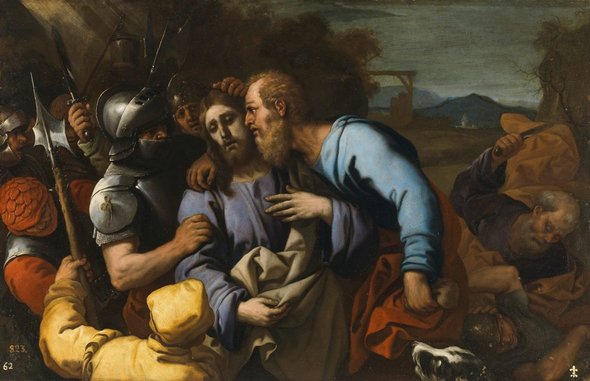
“I love betrayal, but I hate the traitor” – these words are attributed to Julius Caesar. Whether he really uttered them or not, who could disagree? Nobody respects a traitor, even if the information they provide is useful, thank you very much.
I’ve read that German antifa expects repentant ex-nazis to hand over personal information, addresses, and whatever else they know about their former comrades to anti-fascist organisations. Only in this way can they ‘prove’ that they’re serious about changing their ways.
Even if I were the most repentant ex-nazi on earth, I would spit in anyone’s face for making such a request. And even if I were the most militant anti-fascist, I could still only feel abject contempt for anyone prepared to rat out their former friends.
It is no act of betrayal, on the other hand, to stop being a nazi, communist, skinhead, punk, etc. You probably no longer ‘feel it’ or believe in it, and you’ve simply moved in another direction. Clinging to what you once were would only mean being untrue to yourself.

Provided, of course, you haven’t made your choice out of base motives: money, cheap popularity, cowardice, a desire to be on the winning side, and other forms of opportunism spring to mind. To act against your innermost beliefs is betrayal.
I noticed the other day that Germans use the word Verrat for both betrayal and treason. English speakers, helpfully, make a distinction. To betray your monarch, state, or government is treason; to betray your friends, comrades, fellow conspirators or combatants is betrayal.
The former is excusable – you probably never signed up to these institutions in the first place; they were imposed on you. In the latter case, you’ve betrayed the trust of a voluntary alliance you chose to enter. And if you’re a snitch, rat, weasel, or Judas, you deserve everything that’s coming to you.
I accept that the difference is probably not so clear-cut: in which category does the quisling who collaborates with occupying forces belong? And what about the scab? Neither has chosen the country or class into which they were born. And yet…

A bloke called Nachman Ben-Yehuda, whom I’d never heard of until yesterday, wrote a book called Betrayals and Treason: Violations of Trust and Loyalty. From the looks of it, the book covers both varieties of Verrat, recounting historical examples. It’s now on my to-read list.
Oi music isn’t short of songs about traitors, either. Alas, most of them aren’t that good, usually culminating in the word “traitor” shouted over a couple of chords. I’ll release you from these late-night musings with a song about weasels, snitches and traitors that is really good, though: ‘Das Signum des Verrats’ by Böhse Onkelz, which I’ve translated below.
The band’s youthful rightward drift in the ’80s, though nowhere near as bad as people later made it out to be, remains controversial to some. The sentiment of the lyric, however, is universal – and I sincerely hope it is shared by most readers of this webzine.
Matt Crombieboy
It is no ordinary mark,
not a brand burned into skin.
You notice it, but you cannot see it,
and it sets you apart like nothing else.
You think nobody sees your intrigues,
but the imprint of your slimy nature shows.
The mark of the traitor is stamped across your face.
You betray your friends for coin,
your words carry no weight.
The side you chose has sealed your fate.
You think nobody sees your intrigues,
but the imprint of your slimy nature shows.
The mark of the traitor is stamped across your face.
 Creases Like Knives
So much to argue about here, but I cowardly clicked ‘like’. 😀
LikeLiked by 1 person
I’m sure there is, it’s very off the cuff. I just wanted to post the translated song, but then it became something else.
LikeLike
Okay, I’ll run this by you. Let’s say a member of the Gestapo in occupied France had an epiphany, decided Hitler was wrong, and defected to the Resistance. Let’s say the Resistance said to him “Prove you’re genuine by naming all the Gestapo agents you know about.”
LikeLike
I hear you, and in fact I was just thinking about similar situations where betrayal is a matter of life and death.
Your example makes moral judgement difficult, but here’s how I would proceed in practice: I would take all the names of Gestapo agents, then discard the traitor. The man is obviously a liability and cannot be trusted as a Resistance member, lest he suffers another ‘epiphany’. In other words, I would stick to the phrase attributed to Caesar.
Women know: what he did to her, he will do to you too.
LikeLike
… and you’ve invented a third way. Now, how many more scenarios will it take for you to realise you’re coming up with a different judgment for each one?
LikeLike
I have what?
Let’s recapture: I kicked off with a quote attributed to Caesar: “I love treason, but hate a traitor”. What does it mean? The way I understand it, if someone defects from the enemy camp and leaks information to me, I love what they’re doing because it puts me at an advantage. But I don’t respect the traitor: they’ve already proven they’re prepared to stab ‘friends’ in the back, so I’d be a fool to trust them.
You offer a hypothetical example of a Gestapo member who has a great epiphany. I say yes, in the grand scheme of things, his betrayal might be difficult to judge morally (maybe his act prevented countless deaths, etc). But my attitude to him remains the same: I lap up all the valuable info he’s prepared to leak, then I discard him lest he has another epiphany and betrays me too. I “love treason, but hate a traitor”.
So where is the third way you say I have invented?
LikeLike
I put it badly. What I meant was that you had opened the door to a different solution for each new set of circumstances. That makes sense, when you stop and think about it, much more than saying a -turncoat-should-never-rat.
LikeLike
There are words for treason in German, Dutch and Nordic speaking countries:
Verrat – betrayal
Landesverrat – treason
Hochverrat – high treason
And there’s the betrayal of once people: Volksverrat
LikeLiked by 1 person
*ones
Sorry.
LikeLike