
Matt: Hi Björn – you’re the drummer of the German hardcore punk band Recharge, and now you’ve written your first book: Rock-O-Rama – Als die Deutschen kamen (“Rock-O-Rama: When the Germans came”) is all about Herbert Egoldt and his infamous Rock-O-Rama label, which first milked the German punk scene and later the international RAC scene for profit. What fascinated you about Rock-O-Rama enough to write a book?
Björn: In fact, Recharge was quite a long time ago – at the moment I play drums for Tank Shot. My musical spectrum is quite broad, and I’ve also played in Oi bands before.
I was already fascinated by Rock-O-Rama in the early 80s. I was living in a village, and we’d listen to punk records by bands such as Cotzbrocken, Chaos Z, Die Alliierten and OHL non-stop. We were also excited when the first Finnish hardcore releases by Appendix, Riistetyt and Terveet Kädet hit the shelves. But by then, punk zines would print more and more negative things about the label – especially statements from bands who felt ripped off and didn’t have anything else positive to say about the owner. Unfortunately, it was impossible to verify any of it, since Cologne was far away and the networks of the scene were nowhere near as developed as they are today.
All those strange stories you’d hear about the slightly older rockabilly veteran Egoldt didn’t quite match the usual picture, which was one of young, politically clearly left-wing owners of labels such as Aggressive Rock Produktionen, Mülleimer Records and Weird System. These guys treated their bands as mates, didn’t mind spending a little more on studio recordings, and tended to be constantly present during production – even if this meant staying a few nights in squats.
Over the following decades, rumours and strange stories about the Rock-O-Rama label continued to circulate, and younger generations seemed very interested in them. So in May 2020, I decided to get to the bottom of these stories and ask as many people as possible about their experience with the label. I never imagined the result would be over 400 pages strong. By the way, the subtitle of the book refers to the groundbreaking compilation LP Die Deutschen kommen (“The Germans are coming”), which was released on Rock-O-Rama in 1982. It contains tracks by OHL, Cotzbrocken, Der Fluch, Fasaga and Stosstrupp, all of which were recorded exclusively for the album.

I’d be curious to hear more about these strange stories. The advertising blurb for your book speaks of “incredible anecdotes”, “cut-off ears” and such?
One story, for instance, involves Egoldt’s spontaneous visit to East Germany in the 90s with his Mercedes 600 SL and 10,000 deutschmarks in small, used bank notes – a story that has only been known to very few people to date. In any case, there are many strange anecdotes and rumours, but I don’t want to reveal more just yet.
In 2000, a two-part Rock-O-Rama story appeared in the German skinzine Moloko Plus. Did you find it useful?
Yes, in terms of the author’s general assessment, definitely. And you could tell from the many reactions to the article that a lot of people were still interested in the subject. However, the piece hardly mentions the later stages of the label, the legal trouble, the house searches, confiscations, and so on. These seemed very important to me in order to understand how a small punk label went on to become the biggest far-right rock distributor in the world.
Let’s start from the beginning, though. Rock-O-Rama was founded in 1977 by the former teddy boy Herbert Egoldt – initially as a rock ‘n’ roll/rockabilly record shop and mail order company, which then branched out into the punk scene. Tell us a bit about these early days.
Herbert Egoldt was born in 1947 and therefore didn’t grow up with punk, but with original rock ‘n’ roll music. He was a big fan of this genre, and he was placing classified ads in the German Sounds music magazine as early as 1977, offering rock ‘n’ roll singles, EPs and LPs by Elvis, Eddie Cochran, Little Richard, Chuck Berry and Ricky Nelson, as well as records by The Damned, Skrewdriver and Cortinas. Like some other music obsessives from neighbouring Düsseldorf, he regularly crossed the channel to Britain to stock up on the latest releases.
Shortly before setting up his punk label, Egoldt released twelve bootleg LP compilations of early rock ‘n’ roll/rockabilly songs in 1979 under the series title Vintage Rock ‘n’ Roll Collector Items. He chose the pseudonym Big-H as producer of this series. These albums didn’t consist of the usual song repertoire by well-known performers, but featured recordings by artists who were rather less well-known in Germany, such as Lee Denson, Wayne Haas and Webb Dixon. They had originally been released in the late 50s as singles on US labels such as Kent, Choice and Astro and were virtually unavailable in Europe.
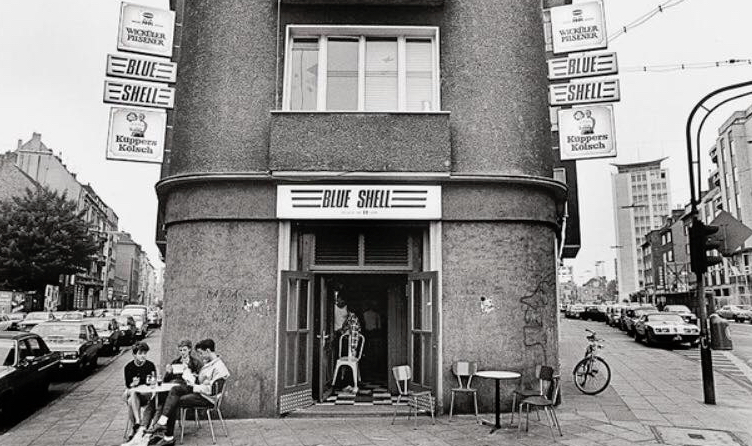
Didn’t things sometimes get a bit rough around his shop? After all, punks and teds weren’t friends in the late 70s.
Yes, according to the stories people tell there was of course some trouble between the subcultures, but more in the evenings when they ran into each other at Cologne’s Blue Shell nightclub…
What significance did ROR have as a record distributor in the German punk scene before it became a label?
Herbert Egoldt was selling seven-inch singles out of a suitcase at the Ratinger Hof [an important early punk venue in Düsseldorf – Editor] as early as 1978, and a little later he started as a wholesaler of British records, especially singles imported directly from the UK. He used to ship very quickly, his prices were reasonable, and he was very reliable. All the new releases heard on John Peel’s radio show on the BFBS station for British soldiers were available from Egoldt the following week. Record shops would receive a wholesale list from him by mail on a weekly basis. At that time, many shops weren’t ordering directly in the UK via Rough Trade yet.
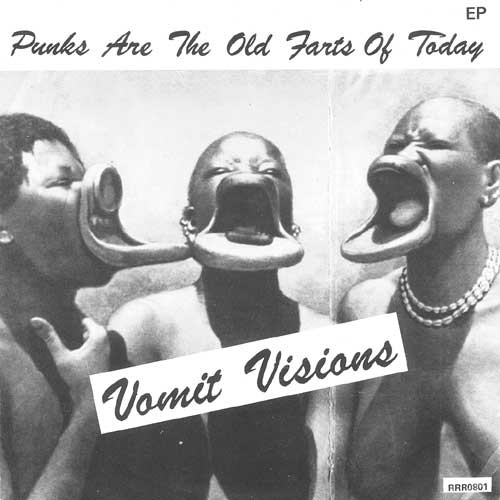
The first release on the Rock-O-Rama label was the bizarre trash punk EP Punks are the Old Farts of Today by Vomit Visions (1980). What was the deal with this band?
Vomit Visions were purely a studio project by music fans from Frankfurt’s newly emerging punk scene. By way of their visits to London, they managed to acquire the guitarist of the Australian punk band The Last Words. Then they persuaded Herbert Egoldt to set up a punk label just to put out their EP – this was the beginning of ROR as a label. Because the band was fairly well-connected, a few copies even made their way overseas.
In Germany, Vomit Visions were mostly seen as an oddity because of the cover of the EP – none of my friends owned the record. A few years later, some of the members formed the band Der Durstige Mann, whose songs revolved around drinking. They released a few seven-inch records, as well as an LP licensed for Rock-O-Rama called Bier 4 Tot, which had nonsense lyrics such as ‘Wo Geht’s Hier Zum Bahnhof’ (“Which way to the train station”).
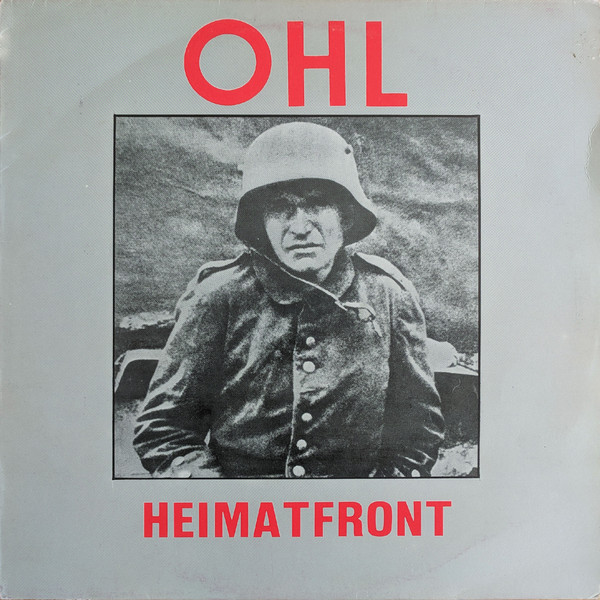
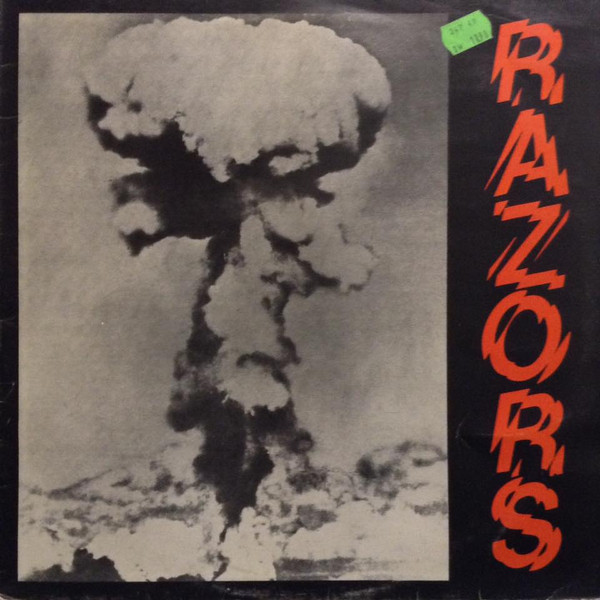
In 1981, releases by local punk bands OHL and Cotzbrocken followed, and then things really took off with groups such as Stosstrupp, Stress, B. Trug and Vorkriegsphase. These records are legendary not least because the production is truly dreadful and the music often amateurish even by the standards of German punk at the time. How come that ROR punk tended to sound a lot lousier than stuff published by labels such as Aggressive Rock Produktionen (AGR), Weird System and Mülleimer?
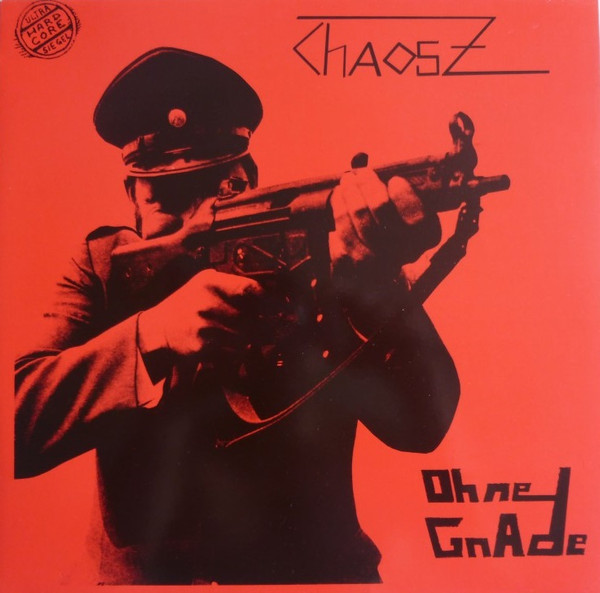
Some bands that weren’t playing live as much as Slime, Razzia and Daily Terror were certainly very lucky to end up on Berlin’s AGR, because the Music Lab studios and the brilliant sound engineer Harris Johns guaranteed a powerful studio sound. Back then, there weren’t nearly as many punk bands as there are nowadays, and sometimes it was a coincidence which label you signed to. Chaos Z from Stuttgart, for instance, had their deal with Rock-O-Rama brokered by Mülleimer Records boss Thomas Ziegler, who simply had no money to produce an album at the time. Contrary to many claims, the studio for the Chaos Z album Ohne Gnade wasn’t chosen by Egoldt, although the recording does sound very tinny compared to the band’s Music Lab recordings for the Underground Hits 1 compilation, which were produced a little later. And had Boskops, who had an offer from Rock-O-Rama, really ended up signing with Egoldt, their debut LP SOL 12 certainly wouldn’t have turned out so powerful.
The ‘Studio am Dom’ in Cologne, where bands such as OHL, B. Trug, Vorkriegsphase and even Skeptix from Britain recorded their albums for ROR, had good technical equipment. But the sound engineer wasn’t very well-versed in punk music – he specialised more in brass band productions, Andean music and pop. Then again, some bands didn’t prepare themselves particularly well for their recordings and were more interested in getting wasted. Some of their early demos had a better sound, as did some demo tapes of other, lesser-known bands.
Did Egoldt actually like punk music – i.e. could he tell a good punk band from a bad one?
He was definitely clued-up about the music – you can tell that easily from the well-informed comments in his distribution lists. He mainly gave local bands a chance, who he knew from their visits to his shop. Like other labels, he also got demo recordings sent by groups from other places and made them an offer. He paid the studio expenses and offered the bands a 10 percent cut on album sales. Essentially, that wasn’t a bad deal for the bands. Most labels had similar conditions at the time.
Another thing that distinguished German punk bands on Rock-O-Rama were their emphatically anti-communist (OHL) or politically confused (Cotzbrocken) attitudes. Compared to the popular German hardcore punk bands such as Slime and Razzia, who were leaning very far to the left, ROR bands tended to be ‘politically incorrect’ to dubious. Did Egoldt deliberately sign acts that were atypical, or were such viewpoints more widespread among German punk bands than is commonly assumed today?
OHL and Cotzbrocken lyrics were rather exceptions. The majority of German punk bands at the time had words along the lines of Slime and Razzia. In the case of OHL it was deliberate provocation, whereas with Cotzbrocken it was their affinity with football and the street attitude that went with it: just get off your chest whatever bothers you – no more, no less.
So nobody took notice that Egoldt’s bands were ‘a bit different’, and it was coincidence that Cotzbrocken and OHL ended up with Rock-O-Rama and not with AGR?
Apart from Rock-O-Rama and AGR, there were hardly any comparable labels that would have signed such bands. AGR were well-equipped with bands thanks to their Soundtracks zum Untergang 1 compilation, so the owner Karl Walterbach could even afford to turn down a combo such as Nikoteens from Ingolstadt, who later ended up with ROR, because of their song ‘Bomben Über Russland’ (Bombs Over Russia). This was despite the fact that they had recorded it in Berlin and at his expense.
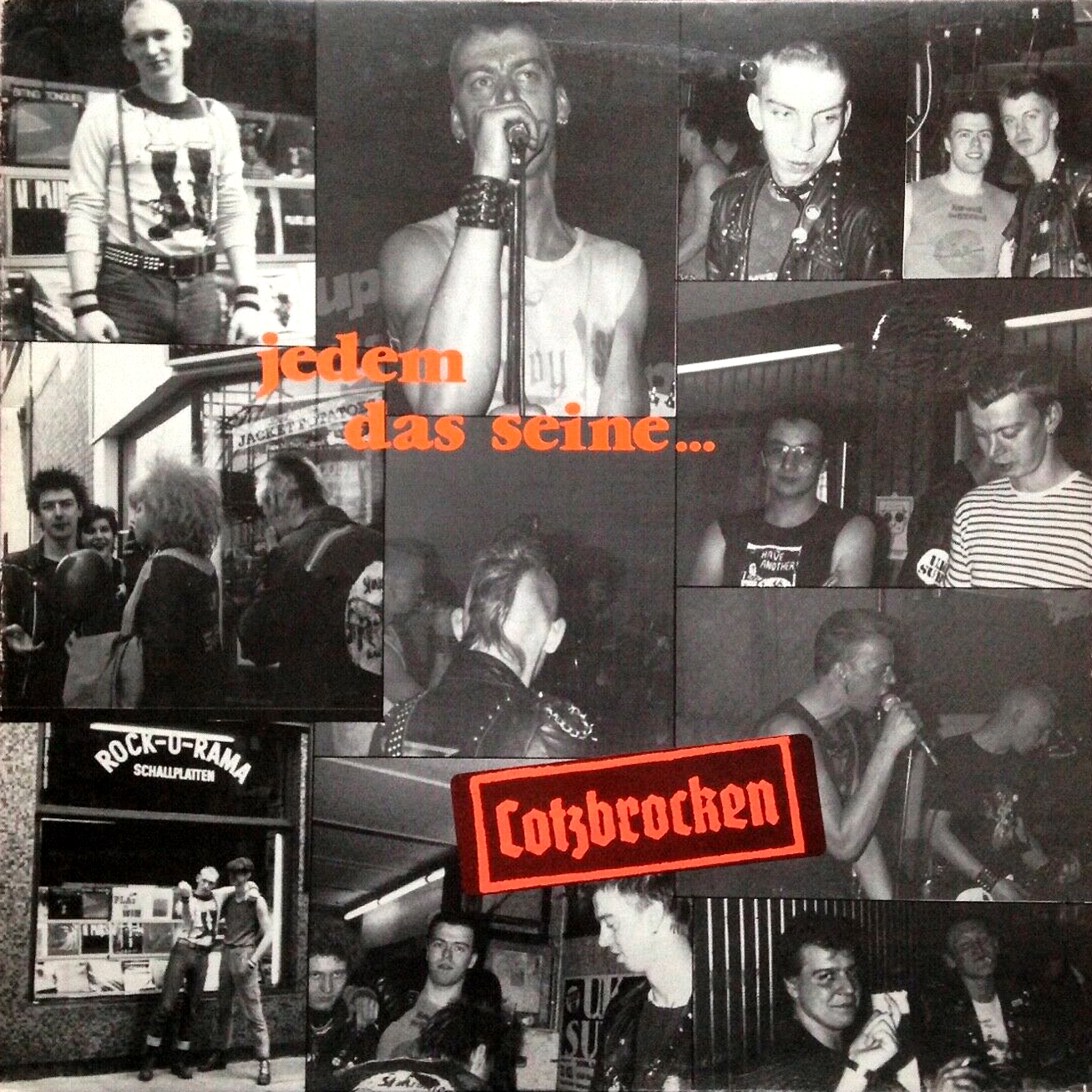

The Cotzbrocken LP Jedem das seine (1981) is probably the ultimate symbol of Rock-O-Rama punk at its ‘finest’… In Germany, the band enjoys a certain cult status – often ridiculed, but perceived by others as particularly authentic. What makes them so special?
Cotzbrocken weren’t students or graduates, but unemployed teenagers. However, they weren’t work-shy either, and they filled their time with football, alcohol and punk music – they had the typical ‘working class’ attitude. Their singer was always drunk at band rehearsals and even when recording in the studio. He would just shout out whatever pissed him off, and he wasn’t too precise about his cues either – he just came in whenever he liked. When Oi spilled over from the UK in the early 80s, Cotzbrocken were naturally the first in line. And if their crew ran into punks or skins from out of town at a gig or somewhere else, sparks would fly. It wasn’t for nothing that many punks from other cities of the Ruhr region gave Cologne a wide berth.
Cotzbrocken were certainly authentic, but their lyrics were far from politically correct. In their song RAF, they demanded that the Red Army Faction join forces with the far-right hard core, which was met with complete incomprehension by many listeners even then. Later, in the 90s, their old song ‘Saufen, saufen, jeden Tag nur saufen!’ (“Getting pissed, getting pissed, just getting pissed every day”) would become the election slogan of the resurgent Anarchist Pogo Party of Germany. Cotzbrocken were suddenly regarded as the initiators of German street punk. And nowadays the band is even appreciated by trendy indie pop bands such as Tocotronic.
That’s surprising. Why would a band like Tocotronic express their fondness of Cotzbrocken?
I guess some of them listened to German punk when they were young and venerated the likes of Cotzbrocken for their crude lyrics. The fact that Tocotronic called their own label ‘Rock-O-Tronic Records’ complete with the original ROR font isn’t, I think, an earnest salute to the label or to Cotzbrocken lyrics, but rather a small nod to Tocotronic’s own teenage years.
The Cotzbrocken singer appeared with his girlfriend in a TV documentary on youth subcultures in Cologne, Randale und Liebe (1981). Do you know what became of him later? According to the book Neue Soundtracks für den Volksempfänger, which came out in 1994, he was by then a “well-known nazi skin prowling Cologne always with a gas pistol in his jacket”.
The author probably confused the singer with the guitarist, about whom many rumours were circulating at the time. Vocalist Lutz disappeared without a trace a long time ago, and unfortunately I couldn’t find him either.
It’s possible that I confused the two, as it’s been a very long time since I read that. So, who did you get to interview for the book – were Deutscher W of OHL, Vortex, or the reunited Brutal Verschimmelt happy to talk, for instance?
Mainly I interviewed all the punk bands that were on ROR in detail and divided the whole thing into separate chapters according to the chronology of the releases. Apart from the OHL vocalist Deutscher W, I was lucky enough to be able to interview other former band members. As a result, the overall picture that emerged within the different chapters was sometimes very ambivalent. I also let people like Thomas of Vortex [a pioneering German skinhead/Oi band – Editor] have their say in the statement section.
You’re saying all punk bands – so you did get hold of Cotzbrocken members, after all?
Yes, I talked to the guitarist and the drummer. It took well over a year until I had all the bands together. Besides all the Finnish groups, there were also Our Neighbors Suck from the US, after all, who could only be found with a lot of effort.
What about your research in the far-right camp – did you talk to RAC types too?
The very extensive chapter ‘Change of Direction’ describes chronologically the development of ROR into a right-wing rock label. I mainly interviewed people who were part of the RAC scene as band members or as businessmen, but who are no longer part of it today. My own aim here was not to provide an exhaustive account, but rather an examination of the phenomenon based on examples.
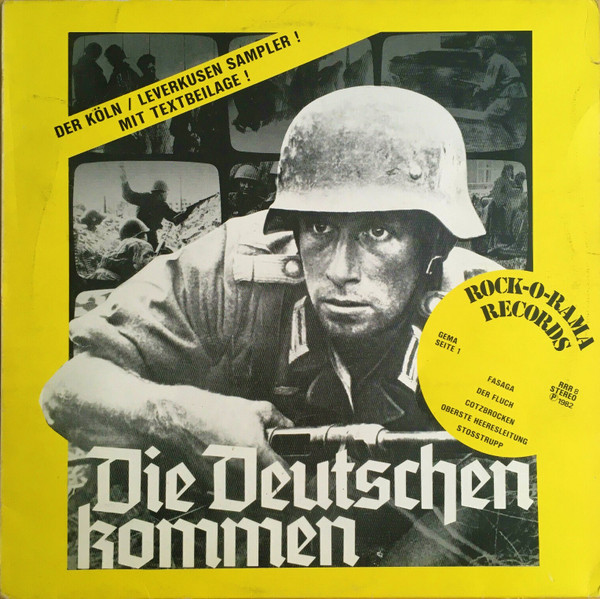
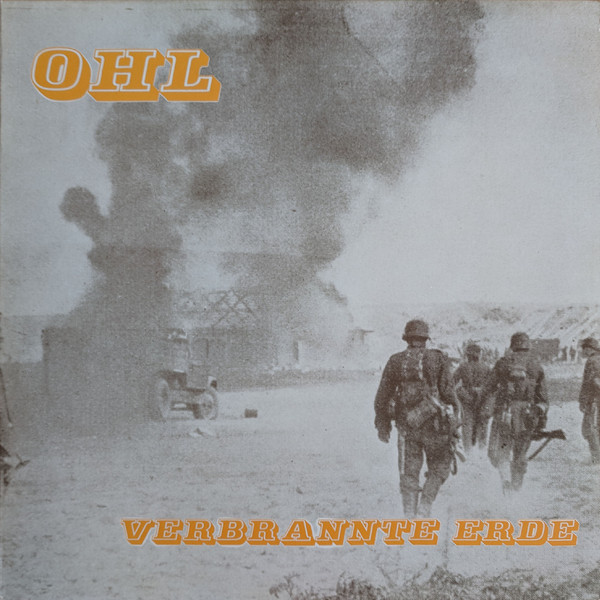
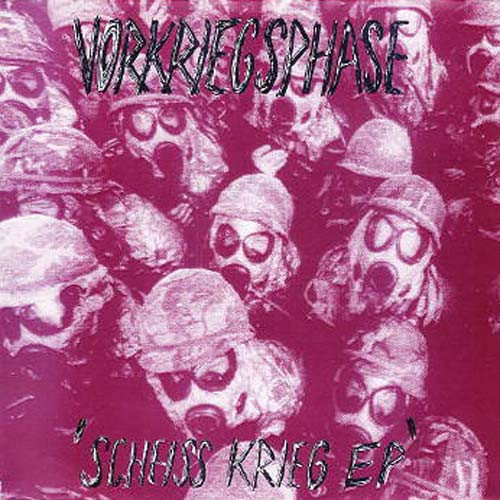
The Prussian-militaristic cover artwork was already striking during Rock-O-Rama’s punk period: even when the bands had vaguely anti-authoritarian or anti-war lyrics, the visuals seemed to point to the contrary – the prime example being the compilation Die Deutschen Kommen (“The Germans Are Coming”), which was later confiscated probably just because of the cover. Why these aesthetics?
Well, the cover is taken from the September 1981 issue of Der Spiegel news magazine. Egoldt himself explained to Spex magazine at the time that the soldier stood for the aggressiveness of the music. Provocation was important to him, which is probably why he was so taken with his house band OHL. By the way, the album was not confiscated because of its cover, but because of certain sections in the lyrics. This is discussed in more detail in the book.
So, was Egoldt political or just a businessman? The blurb for your book says something about “infiltration of the punk scene by the National-Democratic Party” [a German far-right outfit roughly equivalent to the British National Front] – what’s that all about?
There are different opinions on this – but I don’t want to reveal too much in advance.
Just to stay with Die Deutschen kommen for a moment, you said earlier that the compilation was ‘groundbreaking’ – how so?
You see, apart from the 1980 punk compilation LP In die Zukunft and of course the first Soundtracks zum Untergang comp, there hadn’t been much groundbreaking stuff along these lines till then. Underground Hits 1 came out a bit later. It was groundbreaking for the striking cover artwork alone. We didn’t see it as glorifying war at the time, but as a catchphrase: after the British punks, here come the German punks – and they make a bloody racket!
Click HERE for PART 2: BAD UNCLES AND NASTY STUFF

 Creases Like Knives