
Matt: Hi Rude. Tell us about your childhood and the places where you lived. Like myself, you seem to be a bit of a nomad?
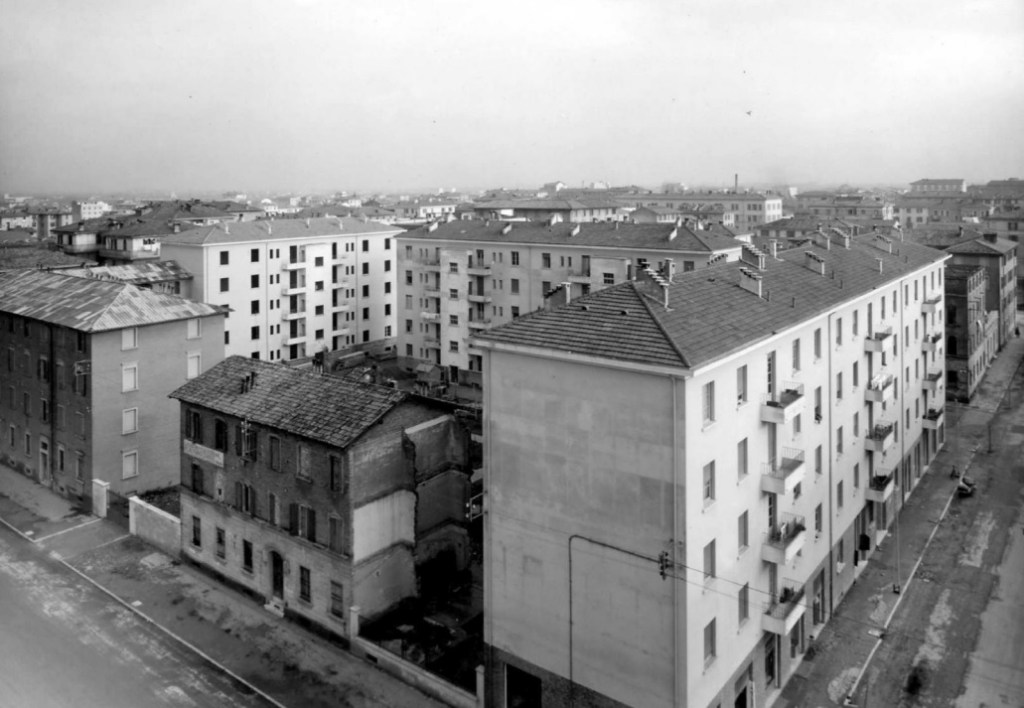
Rude: I was born in Bologna in 1964, but at the age of two we emigrated to Pforzheim near Stuttgart, south-west Germany. My parents were Gastarbeiter, which was the German term for working-class immigrants: ‘guest workers’. I attended school there for the first three levels. But in 1974, when I was 10, my mother brought my brother and me back to Bologna. Even though I’m Italian, when I first moved here, I spoke nothing but German. I had to carry around a German-Italian dictionary just to get by in school, so I had a pretty rough time in the beginning. I spent my early years right here in Zampieri Street, and I called Bologna home until 2006.
What was the Bolognina quarter like in the 70s and 80s compared to now?
Completely different. Bolognina was a traditional working-class neighbourhood and one hundred percent Communist. You’d find Communist Party sections and Communist-run circoli [social clubs revolving around Italian culture] all over Bolognina. In the evenings, folks would gather outside their homes to play cards or bocce [Italian bowling]. There was no immigration then, so the vibe was different. Bolognina wasn’t affluent, but it wasn’t struggling either – you could call it a ‘solid working class area’. There was even a song, possibly by Skiantos, that went something like this: “Where the bridge from Bolognina ends and the town centre begins, all the people suddently look more beautiful, dress better, act less crazy” (laughs).
So you would have seen the early Bologna punk scene?
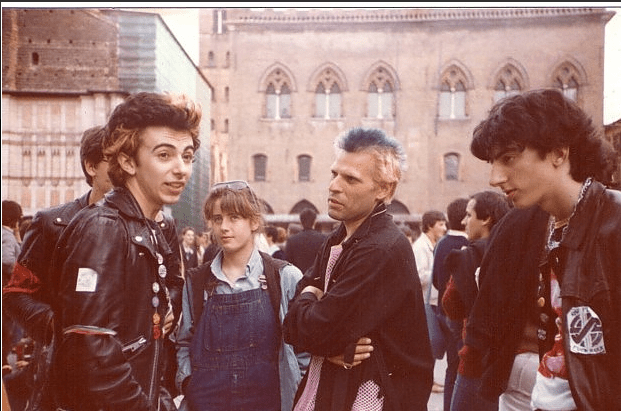
I was a bit too young when it all started. My first exposure to the scene was at the free open-air concert by The Clash in Piazza Maggiore in 1980. That’s where I saw punks for the first time.
You’re lucky – the Clash concert here was a historical event.
It was indeed. In my view, it not only changed the music scene but also the history of Bologna. Everybody had been talking for days that British bands would play in Piazza Maggiore, and ‘Red Ronnie’, who today is an insane conspiracy theorist, was playing their music on the radio. Seeing as it was a free concert by an important British band, literally everyone wanted to be there. [‘Red Ronnie’ = Gabriele Ansaloni, an influential DJ who was part of the ultra-left/autonomist Radio Alice pirate radio in Bologna and helped introducing punk and new wave to the Italian public – MC].

Where did the Bologna punks hang out back then?
I started noticing them hanging around outside the Disco d’Oro record shop in Via Marconi. That place was a real hotspot for punks and later on, it became a magnet for skins from all across the north of Italy too [Disco d’Oro, then a punk/new wave haven linked to Radio Alice, moved to Via Galleria in 1981, where it is still located today – MC].
And you became a punk too?
Nah, I’ve never been a punk. There were some punk kids at my school, but I couldn’t really relate to them. I was already getting into some reggae, rock ‘n’ roll, and a bit of punk rock, but I didn’t like their look. I was about 16 at the time.
What about skinheads?
I’ll tell you what: the first time I ever laid eyes on a ‘skinhead’ was when Paul Simonon played with The Clash in Piazza Maggiore. He appeared in a skinhead outfit, sporting a crop with a razor parting just like yours. I couldn’t help but notice that the girls went absolutely wild for him. Granted, it was Paul Simonon, so his appeal was more about who he was rather than his skinhead look. But I was well impressed and took a mental note.
The Clash concert didn’t go over without controversy. Can you explain the background a bit?
There was a bunch of anarcho-punks distributing leaflets accusing The Clash of selling out. Why? Well, because The Clash had agreed to perform at a concert organised by the Bologna town council, which was under the rule of the Communist Party. Now, tensions had been simmering between the council and the extra-parliamentary left since way back in ’77 when Francesco Lorusso, a militant from Lotta Continua [an ultra-left ‘workerist’ group], was shot by a policeman during a student demonstration. Then, in ’80, the council tried to win back the rebellious youth by organising a week of music, featuring all the early Italian punk and new wave acts like Skiantos and Jo Squillo. The Clash were main band playing on the weekend. They earned 4000 US Dollars for the gig, which was free for all to attend.
The band RAF Punk and their crew were the anarcho-punks of Bologna back then. For them, this whole thing was just plain unacceptable, so they went to Piazza Maggiore to stage their protest, shouting at Joe Strummer that he was a sell-out. What often goes unmentioned in their retellings of the story: quite a few punters didn’t take kindly to their protest, hitting and spitting at them.
Did you see any of the confrontation?
I saw some of that stuff going down, but I was too young to understand who these people were and what was going on. It wasn’t until years later that I fully grasped the context. Looking back, I thought that some of the audience had been right to spit at them. The anarcho-punks considered us, the skinheads, ‘fascists’ and we wanted nothing to do with them. The first generation of skins had a better rapport with those anarcho-punks. We, the second generation, were fine with the left-wing community centres [centri sociale] and we had friends in the squats – but we didn’t like the anarcho-punk collectives.
The Clash also played a role in introducing people to reggae, covering songs like ‘Pressure Drop’ – and Paul Simonon is an ex-skinhead anyway.
Absolutely. The Clash made it easier to jump from punk to skinhead because The Clash led to The Specials, and I was drawn to their style and the whole 2-Tone movement more than punk. Later on, I met Riccardo Pedrini, who you saw in the shop today. He was the original bassist of Nabat, and I’ve got to say, he deserves credit more than anyone else for bringing the skinhead culture to Bologna. He introduced me to a bunch of amazing music: Cockney Rejects, ‘Skinhead Moonstomp’, The Business… I started listening to Desmond Dekker more than the Sex Pistols. Cesare Ferioli, who was also at the shop today [Cesare aka Skinino, drummer of early Bologna Oi band Urban Fight], was the first skinhead I knew. And then there was Antonio, aka Il Tato. He was this hilarious scooter enthusiast with South American parents. Later on, he became the drummer for my band, Ghetto 84. He’s the one who introduced me to ska and reggae. Back in school, my closest mate was Ui Ui, who became the original drummer for Nabat.
So when did the skinhead style first take off in Bologna – about ’81?
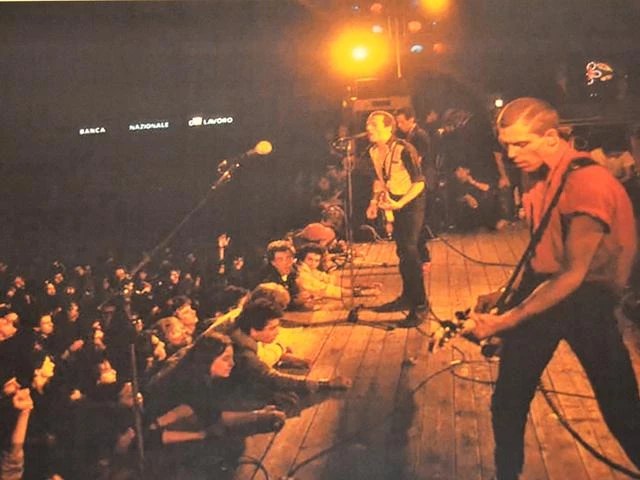
Yes, that first wave took off in ‘81 with the scene around Nabat. They were at most 20 people. Many of them were basically punks with short hair, decked out in combat trousers, bleachers and whatnot. The one who had proper style then was Riccardo: he had brogues and a Baracuta jacket, and he went to London to buy records. He was on a completely different level compared to everyone else.
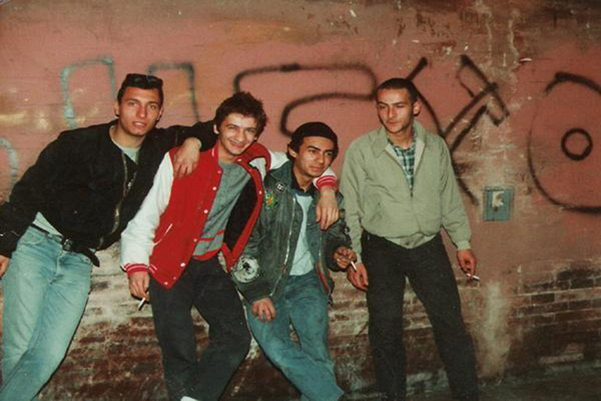
These were the first skins that we encountered, but we didn’t know them well because we were younger. I was part of the second skinhead wave, which emerged in Bologna around 1984-1985, and I’m very proud of that. The Stab were part of that scene (though they were more ’77 punk), and us, Ghetto 84, the real gangsters of the second wave of Italian skins. We thought of most of the earlier guys as punks rather than skins, but they probably didn’t consider us real skins either.
With Ghetto 84, we were clearly influenced by Nabat and by Steno’s vocal style, but beside Oi we were also into reggae, The Specials, Dexy’s Midnight Runners and Latin music, partly because our drummer was South American. People thought of us as troublemakers, but we were always up for a laugh, whereas the punks and the new wavers always seemed gloomy. That’s why our scene started to take off, and it really picked up momentum pretty fast back then.

Our rehearsals were like an open house for anyone who wanted to attend. Ghetto 84 got off the ground in 1984, but it wasn’t until 1986 that we hit the stage for a proper gig, not just an open rehearsal. We all began attending Bologna FC matches together, and that’s when our numbers really started to swell. In about a year, we were around 100 strong, and our crew didn’t just hail from Bologna – folks were coming from all over the region, including Liguria and Toscana.
When you became a skinhead, was that scene still part of the punk scene?
No, we had decided to split from the punks.
How pronounced was the split? Did it escalate to the level of, say, Germany, Poland, or France, where skins and punks became outright enemies around 1984?
Nah, Bologna was too small for that. There was some teasing – you’d look at them and laugh, “Look at you, mate”. But no violent clashes. Some of them, you’d recognise from school or from the squats anyway. I mean, we had friends who were into the squatting scene – punks and hardcore kids, including the ones who later formed Sangue Misto, Italy’s first and most famous hip-hop group. There might have been some issues between skins and punks in cities like Milan, but it was nowhere near the level of Germany or France.
In any case, we definitely built our own scene from scratch, all by ourselves, without the punks and without seeking approval from the old guard.
Your scene wasn’t the same as that around Nabat?
Of course there were overlaps, but Nabat had stopped playing by that point.
Didn’t they record their first album in ‘86?
Yes, but they split around the time when the album was released. During those early years of Ghetto 84, Nabat wasn’t playing. Some of the same people attended our gigs, but our scene was more mixed. Nabat gigs mainly attracted skins and punks, while Ghetto 84 shows had skins, metalheads, ultras, hooligans, scooterists and regular people. Maybe that’s because our gigs were apolitical and focused on having fun.
Apart from Nabat, I can think of two other early Oi bands from Bologna: Rip Off and Urban Fight. Were they still going when you lot came around?
Urban Fight were still around, yes – they were playing punk metal by that point and they were good pals of ours. Rip Off sucked as far as I’m concerned. I knew Pugnaro, the bass player – he was a very decent chap who passed away many years ago. May he rest in peace. But I wasn’t a fan of the band.
Wasn’t it Rip Off and their entourage who stirred up trouble at the Oi festival in Certaldo back in ‘83?
Yes, it was them who kicked off with the sieg-heiling nonsense. I knew their singer Rozzi pretty well myself. Everybody seemed scared of him, but to us second-wave kids he was just an arsehole. I could never figure out why people took Rip Off seriously. He wasn’t even a real nazi, just a massive joke. The truth is, we didn’t give much consideration to those far-right folks. We were getting into the Bologna hooligan and ultras scene, and nobody fucked with us.
Let’s do a bit of Bologna psychogeography. What were the skinhead hangouts around 1984?
For our second-wave crew, the main hangout initially was Disco d’Oro. Kids from the entire region would gather outside the shop every Saturday afternoon and later usually head to a gig – or a reggae/soul party. Do you know Via Inferno in the former Jewish ghetto? That’s where we’d hang out and sniff glue… sometimes 40 of us.
Later, the Casalone in the San Donnino quarter, where the Covo Club is now, became the main hangout. Many foreign acts like Henry Rollins, The Meteors or New Model Army played there, but also all the Italian punk, garage, and hardcore bands: Negazione, Cheetah Chrome Motherfuckers, Nabat… Another important venue was Isola nel Kantiere over in Piazetta San Giuseppe in the town centre. Punks had squatted it, and it became a hub for hardcore shows like Gorilla Biscuits and Bad Brains. Not only that, but it played a crucial role in the birth of Italian hip-hop.
Wasn’t there anything in Bolognina?
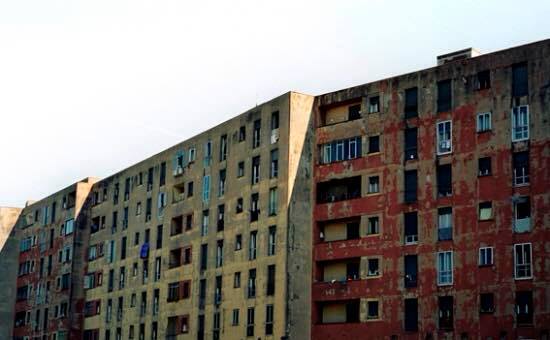
In Bolognina not particularly. It was a bit of shit place back then, really. Just lots of junkies, working class families and churches. But the basketball grounds were the best in town.
What neighbourhoods did Bologna skins usually hail from?
Most of us were from San Donato and Bolognina, which were the traditional working-class areas. Then you had Pilastro, which was a bit rougher and had a reputation for crime. It may not have had as many skinheads, but Pilastro skins were the toughest. Bolognina had more of a cool, easy-going working class vibe, while Pilastro was feared and had its fair share of hardened characters. Barca also had a decent-sized skinhead presence. But truth be told, Bologna wasn’t about neighbourhoods – we didn’t have separate crews. Our common bond was our support for Bologna FC 1909. And when match day came around, you’d see folks from all over at the Renato Dall’Ara stadium, not just locals.
Were Bologna skins generally also Bologna FC ultras at the time?
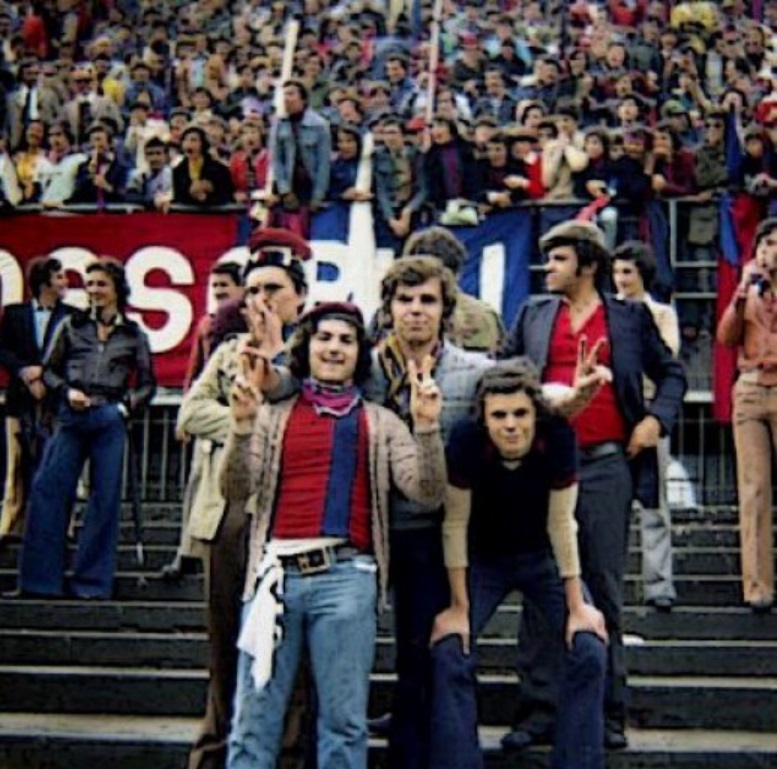
It was a quick evolution. We always admired the Bologna ultras, but we were a bit apprehensive about approaching them at first because they were older and had quite the reputation. As they began to notice our growing numbers and our commitment to the team – we’d wear our blue and red scarves even when we weren’t at the stadium – they started to warm up to us. Our style definitely caught their eye too: we sported short hair – not shaved, but closely cropped – Harringtons, polos (Fred Perrys were a bit pricey, so we went for second-hand Lacoste or whatever we could find), Dr Martens boots, and flight jackets. We were the ones who introduced flight jackets to the Bologna stadium, and it really changed the ultras’ look.
What had the ultras’ look been before?
Jean jackets, checked shirts and mullets, basically.
A bit like the German ones in the 70s and early 80s, then – they were called ‘football rockers’ before the more ‘casual’, label-obsessed hooligans came along. The ‘football rockers’ wore loads of patches on their jean jackets/cut-offs and basically looked like Saxon fans.
The Bologna ones didn’t go heavy on patches, but they had the jean jackets. Or parkas. They had a close tie to the ultra-left movement of ’77 and had the same look – absolutely uncool.
What made a real difference was this all-women ultras gang in Bologna, the URB Girls [short for ‘Ultra Rosso Blu girls’ – the red-blue ultra girls]. They were into our style, and they told the bigwigs at Forever Ultras that they should get in touch with us. So, we got an invite to the stadium, where they’d introduce us to various ultras groups. But we had to pass a test.
What was the test?
We had to launch an attack on the ultras of an opposing team. The older Bologna ultras kept a close eye on us to see how we’d handle it. If things went really bad, they said they’d step in to help us, but otherwise they just wanted to gauge our performance. It felt like a military drill.
Who were the opposing team?
They were the fans of Triestina, which made things somewhat easier for us, because Triestina fans were known for their far-right affiliations. We weren’t lefties, but we still didn’t like the far right. The main reason was the fascist bombing of Bologna train station on 2 August 1980 – the worst tragedy that we’d ever witnessed in this city. Whatever people said about us, we naturally didn’t like fascism since then.
And we performed well on that day. We introduced ourselves to everyone. We fought. Since many of us had Vespa or Lambretta scooters, we had our helmets with us. The fight was fierce, with some of the Triestina mob wielding bottles and others carrying knives. Yet, we held our own, with about 50 or 60 of us present. It’s a memory that still gives me goosebumps.
Was the violence a regular occurrence at the Renato Dall’Ara stadium back then or more of an occasional thing?
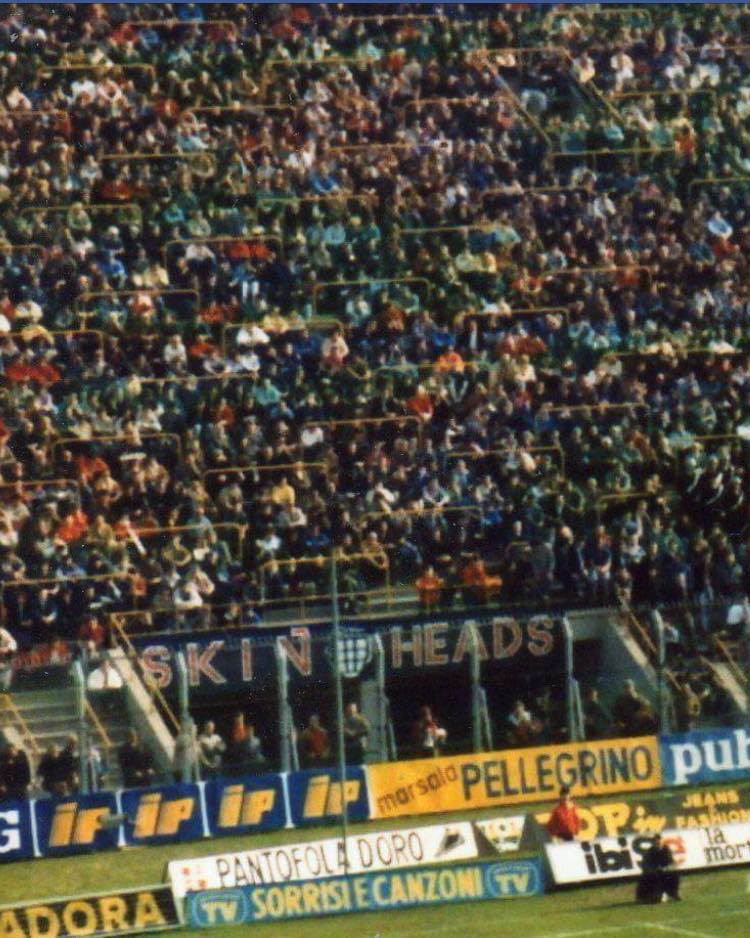
In 1987, it was very frequent at the Renato Dall’Ara stadium because there were very many of us and we were well-organised. We could confront other teams, including Milan, Inter, Lazio, and Napoli, without difficulty. We certainly did make a name for ourselves as a firm, both in the city and in the whole country. It sure left an impression on the older ultras, like Forever Ultras and Mods Bologna, which were the top firms back in the day. They took a liking for us, and we became good friends.
You said the older ultras were linked to the far left?
They were. But a couple of years after we had really became part of the Bologna fans, there was a left/right split. The Skinheads, Forever Ultras, Freak Boys and some other groups went with the left, whereas the Mods sided with the right and later even far right. But this division didn’t severe certain friendships. Bologna is a fairly small city, and many people knew each other personally. For example, I had close relationships with the leaders of the right-wing firm because we had gone to school together. Whenever we got together, we never spoke about politics. Both our group and theirs understood that it would lead to trouble. We made a point to keep politics out of the ultras scene in Bologna for a good few years.
It’s strange, but I think the same alignment persists today. There’s still a bunch of mods in the stadium who are right-wing, at least from what people say. Bologna skins still lean left.
Yes, that’s true – it’s still the same. The Mods were generally right-leaning, though of course there were also some lefties among them. But again, Bologna is quite small, and at football left and right would drink together. Possibly things are different now, but I’m talking about those years when we were heavily involved.
Maybe it was similar with the punk vs skin war in other European countries: it was often confined to the bigger cities, where each group had the space to carve out their own territories. In smaller towns, such issues were less common because people had to coexist somehow.
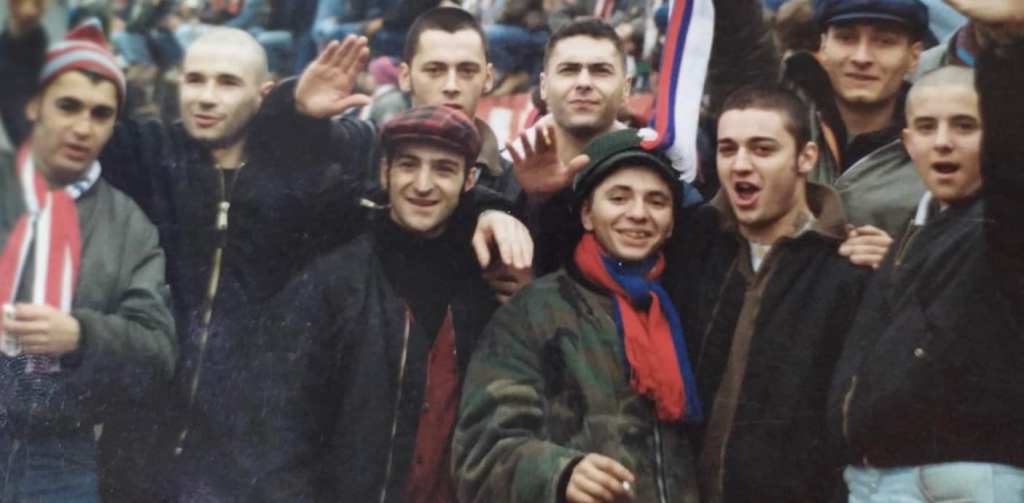
Yeah, and I don’t regret that it was like this, because you only stand a chance against the opposing team if you stick together. If the left and the right go separate, it can be difficult. But if there’s 200 of you sticking together, no one fucks with you. Let me show you a photo that someone sent me the other day [fiddles with his phone] This was our firm at the stadium:
Ah yeah, I saw that – it was making the rounds a couple of days ago.
Yeah, someone said that we’re sieg-heiling in it. But I recall the moment very vividly, and we were actually singing. When you sing at football you wave your arms about and all. You can believe me or not, I don’t care in the end. I was there, and I was considered an alpha male rude boy, which essentially meant I was a sort of chief or boss of our firm. If someone had dared to make nazi salutes in my presence, I’d have kicked their arse. It might come across as arrogant, and yes, I was an arrogant and at times a violent bastard. But I was also intelligent, open-minded, and aware, so I could speak out, and my crew would pay attention.
OK.
That being said, there are two right-wing guys in the photo – but they aren’t sieg-heiling (laughs). From left to right: Vinicio (who lives in Mexico today and I think has gone underground or is working for the narcos; Cicci (RIP); Cucchi; Michelangelo (originally from Taranto, south Italy and another well-respected bloke); Riccardo from Nabat; Davidino (who used to do drugs but now lives in a Krishna community in Mexico); Morbido (has a Skrewdriver and a celtic cross tattoo, but is married to a black woman today – funny how things work out); this is me; and Carlo, today a tango musician working with famous artists.
They told me that you were a key figure for bringing skinhead reggae to Italy. Is that true?
No idea if I was a key figure, but I like to think that I did my bit. In Bologna, we were certainly among the first to organize what we called “original reggae parties” at the Casalone, where we’d play reggae, northern soul, ska, all the real skinhead and rudeboy music. We started DJing in the same year as Ghetto 84 began playing. Riccardo Pedrini of Nabat and me were the first DJ to play soul, funk and skinhead reggae at parties… I really ought to introduce him to you, he’s an interesting guy: he’s also been a member of the Luther Blissett and Wu Ming 5 author collectives, who wrote the novel Q.
Good on him that he played funk too – I love 70s funk.
As kids we hated it. I’m ok with it now, but I’m more of a northern soul guy. Anyway, Riccardo inspired the rest of us to DJ. At first, we’d only play skinhead reggae – Desmond Dekker etc. We didn’t even have singles back then and only played LPs. I got my records from London because I had an uncle in Croydon, whom my father took me to visit every now and then – the first time in 1987, I think. I took a train to Camden Town and got a shitload of records there – really cheap Trojan releases, the whole Tighten Up series. Back home, the people thought the stuff we were playing was cool, so then we began to mix it with Tamla Motown, Stax and such.
Was that a regular night that you had at the Casalone?
Not that regular – every now and again. There was a crew of mods back then who were putting on gigs at the Casalone and we’d spin discs afterwards. In that period, we had closer ties with the scooterist and mod scenes than the punk scene. Then I started doing a lot of things, like bringing Laurel Aitken to Bologna for the first time or putting on reggae and ska parties.
 Creases Like Knives