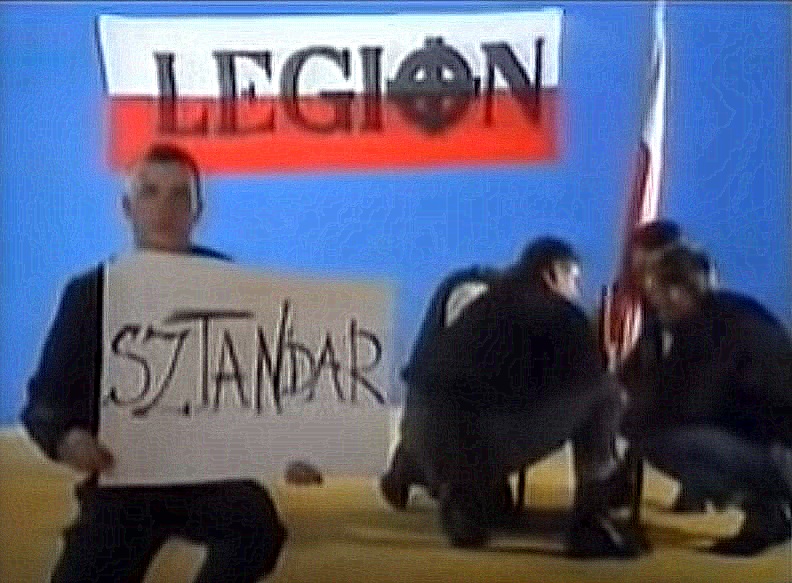
Let’s turn to the National-Catholic faction of Polish political skins. The leading band in that camp was Legion from Wroclaw, fronted by Tomasz Kostyła, who in the 80s had probably been Wroclaw’s first skin. Were there any other bands?
Apparently, a band called Chrobry Orzeł was formed in 1990, but I never heard their music. There were actually more bands from that camp in the second half of the 90s – e.g. Rzeczpospolita Polska Oi!, Kresowiec, Sarmatia, NaRa, Batalion, Głos Prawdy, Szwadron 97, Twierdza. But by that time I was no longer in the scene and only read about these bands.
Would it be fair to say that in the late 80s Szczerbiec were a precursor of the National-Catholic tendency?
Szczerbiec were certainly the first to make positive references to the National Armed Forces (Narodowe Sily Zbrojne). They also had a song about the pre-war National Radical Camp party, the ONR.
Pious Catholic skinheads are something that many of our readers will find hard to imagine – though not necessarily in France, where a similar trend has some support – but it was the dominant tendency on the Polish right-wing skinhead scene in about 1992–95.
As for piety, that varied. There was often quite a gap between professed religiousness and actual personal attitudes. It was, in any case, a specific kind of Catholicism, born of the spirit of the crusades and the Inquisition, understood as a ‘doctrine of struggle’. The Catholic traditionalism of archbishop Marcel Lefebvres was of particular interest for these circles.
Politically, they drew on pre-war National Democracy and National Radicalism. The parties they were most closely associated with were the National Rebirth of Poland (NOP), which you briefly mentioned earlier, with its Czas Młodych zine; the National Party ‘Szczerbiec’ (Skinhead Sarmata zine) and the Polish National Front.
It seems to me that the National-Catholic tendency was the most organically Polish of these factions, seeing as it had genuine roots in Poland’s historical right-wing tradition. It’s odd that it lost momentum so rapidly after the band Legion split up. What’s even more astonishing is that that so many skins switched to nazism, which is ultimately very ‘un-Polish’ (in the modern Americanised version), or even anti-Polish (in the original German context). Why the shift?

Well, being rooted in the National-Catholic tradition carried both strengths and weaknesses. The custodians of this tradition were seasoned veterans from the nationalist movements of the 1930s and 40s, originating from the pre-war intelligentsia. They had managed to survive the Communist era but remained somewhat relics of a bygone era, struggling to comprehend contemporary society. On the flip side, the individuals recruited by the National Catholics came from a younger generation, their own grandchildren’s peers, and hailed from a different social class. These two groups seemed like entirely different species, regarding each other with bewilderment. This dissonance was vividly illustrated by a protest against German claims in Opole in the early 90s, organised by the National Party (Stronnictwo Narodowe). The organisers were a group of elderly men, while most of the attendees were skinheads. At the end of this anti-German demonstration, the skins spontaneously started chanting “Jude raus” – in German! [laughs].
But we could try to look for deeper causes too. I have a hypothesis that in contained groups (not only subcultures but also religious sects or extremist parties) a specific internal dynamic develops – a kind of ‘relay of extremisms’. Successive factions are trying to be more and more consistent, more radical, more orthodox. As examples, we could cite Daesh, the Khmer Rouge, Earth First!, crust punk, Sedevacantist Catholics etc. In this case, nazism began to appear more ‘authentic’ and ‘modern’ than old-fashioned Polish nationalism. It seems to me that the same was true in Britain, where the British nationalism (Mosleyism) of White Noise was supplanted by the outright Hitlerism of Blood & Honour. In Poland, the age-old Polish occidentalism, i.e. imitation of the west, additionally played a big role: the nazi skins found significant support, both ideologically and institutionally, from their western counterparts. Being the more ‘worldly’ faction allowed them to look down on the backward National Catholics.
One interesting figure from the neo-nazi strand is Robson – an early nazi skin from Wroclaw, leader of the AFP [Aryan Survival Front, a Polish copy of Blood & Honour] and manager of the band Konkwista 88, but later a redskin and Polish Socialist Party activist. What do you think of the interview he gave to an anti-fascist magazine in 1996? Did it strike you as a truthful account?
It’s difficult for me to comment on that interview because I knew little of what was going on in Wroclaw, Although I did know a few individuals from there, such as Robson and Jarosz, who was also part of the scene around Konkwista 88. I didn’t accept their evolution towards nazism. As a matter of fact, I still have some old correspondence in which I urged them to break with Hitlerism. I tried to convince them, for example, that since they were already fond of the number 88, they could reinterpret it as a reference to 1888 – the year when Limanowski founded the National-Socialist Commune [laughs].[1] Or that they could change the lyrics in one of their songs from “They come from foreign countries, they study at our universities” to “They come from foreign countries, they buy up our factories”. But none of this had any effect… I recall receiving a very harsh response, which I believe was authored by Robson. And on one occasion, I almost got beaten up at a Konkwista 88 gig.
One thing that has stayed with me from the time when we were still in contact is how Konkwista 88 and their entourage attached a great deal of importance to appearance. They wore original Dr Martens, Fred Perrys, etc and despised the less orthodox skins, such as appeared in large numbers in the 90s. Maybe there was a psychological basis for their nazism in their desire to set themselves up as an elite among the skins, distinct from the Polish-nationalist ‘plebs’ – a form of snobbery, perhaps.
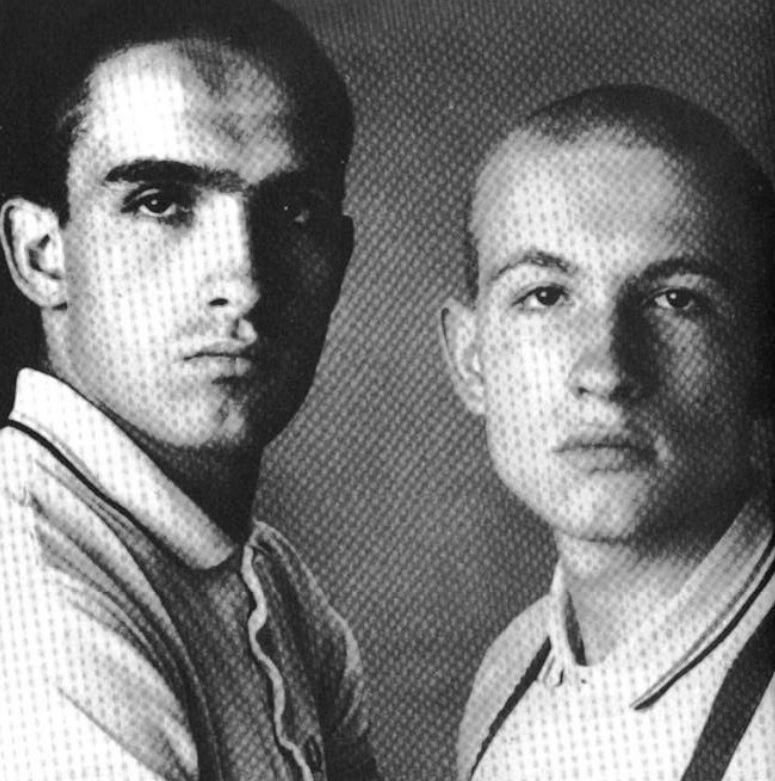
On the other hand, the brothers Pawel and Boris Kijanowski, prominent National-Catholic skins, always dressed impeccably. You can see that in a TV Polonia documentary from the mid-90s and in Ewa Wilk’s book Krucjata lysoglowych (Crusade of the baldheads, 1994), where they also make quite dismissive statements about other factions. Perhaps elitism was not limited to the neo-nazi wing?
That’s right. The Kijanowskis, with their pseudo-aristocratic Sarmatism,[2] also carried a certain air of snobbishness. It was difficult to reconcile this with the spirit of the ‘working class’. Interestingly though, it’s clear from the Krucjata łysogłowych book that they too came from a working-class background… But the belief that skins were the “elite of the working class”, to quote a song by The Gits, was quite common back then.
The sole remaining point of interest about the Polish nazi skins is the ‘German question’, especially regarding formerly German territories such as Silesia and Gdansk. Robson claimed in the interview that the nazi skins from Wroclaw considered themselves German for some time. Kostyla from Legion, meanwhile, fulminated that there were too many Volksdeutsche [ethnic Germans] on the Wroclaw scene, by which he meant the neo-nazi wing. Was there any basis for this – i.e. did many nazi skins in Silesia really originate from the German minority?
That’s quite complex. The vast majority of Polish nazi skins were 100% of Slavic Polish descent. This was particularly the case in Lower Silesia, and especially in the Wroclaw region, where a significant number of Poles had been resettled from the USSR after World War II. Their boasting about their supposed German ancestry was typically postmodernist: ‘You can be anything you want; your only limit is your imagination’. I recall a fellow from my hometown who, during his time as a nazi skinhead, regarded himself as ‘half-German’. But when he developed a strong interest in hip-hop, it occurred to him that he was actually a ‘white negro’… [laughs]
Let’s touch on something that probably affected all factions of politicised Polish skins: racist ideology. Poland, as a nation, lacks a colonial history and has never been involved in slavery or the slave trade. Non-white immigration, and therefore potential competition in the labour market, has historically been minimal (98% of Poland’s population were white Poles as recently as 2011, and around 97% in 2022). So, I’m at a loss when it comes to identifying the material basis for racism in Poland. Why did Polish skins become so heavily invested in white racism, which at any rate seems like a western import? What did Nordicism, Aryanism, the Ku Klux Klan or George Lincoln Rockwell’s post-confederate white racism – i.e. neo-nazism – have to do with the Polish situation, with Polish problems, with Polish history?

It’s true that none of the main factions of the Polish skinhead movement at the time were anti-racist. But, to be more precise, racism didn’t play an equally central role in all of them. Take Sztorm 68, for example: they didn’t address the issue in their songs, and they even had a pro-Arab tune.[3] To me personally, racism – even at that time – seemed like an abstract concept, if not outright absurd.
The truth is that in the 80s in the big cities, there was racial resentment against students from non-European countries. Their dollar-funded scholarships provided them with a financially privileged position in communist Poland, which drew the ire of the locals, especially with respect to their contacts with Polish women. You can hear an example of this bitterness in the Konkwista 88 song ‘We don’t want you here’ [Nie chcemy was tu].
But this was a marginal and at most local issue. In my opinion, the main driver behind the proliferation of racism was the occidentalism that I mentioned earlier – i.e., the tendency to imitate the west. You see, the propaganda of the Polish People’s Republic preached friendship with Third World countries and claimed that “in America they beat the blacks”, duly publicising all instances of racism in the US and in western Europe. Many people with limited access to information began to endorse racism as part of their identification with the west. In the case of skinheads, it was an obvious case of copy-paste mimicry of western blueprints. In the 21st century, Islamophobia spread in Poland in the exact same way.
In light of this, it’s perhaps ironic that Konkwista 88, one of the most ideologically westernised bands, warned in their song ‘Aryan Labour Front‘ [Aryjski Front Pracy] against a “flood of alien influences”…
Yes, but in my opinion, we’re now dealing with the opposite phenomenon, but based on the same principle of imitating the dominant trend in the west. By this, I mean the popularity of the Black Lives Matter movement. Even though there are still no race problems in this country and Poland has never had any overseas colonies, there are people who simply copy the western blueprint. When in the course of the riots following Floyd’s death the Kościuszko monument in Washington DC was vandalised (which provoked a big uproar in the Polish media), our ‘anti-racists’ vandalised the Kościuszko monument in Warsaw a few days later…[5]
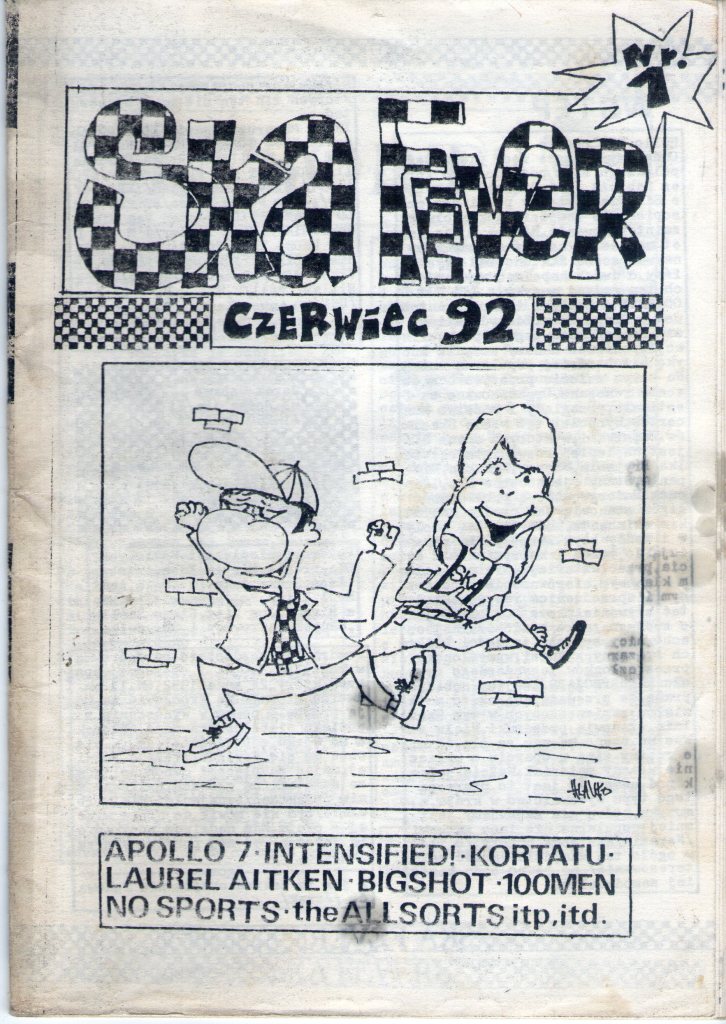
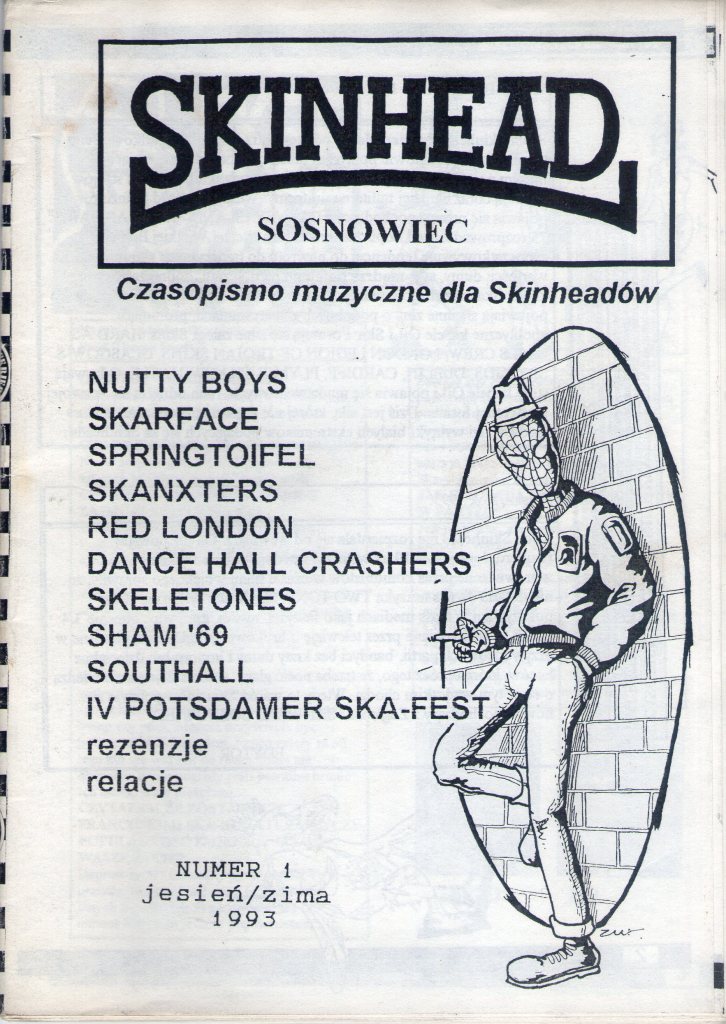
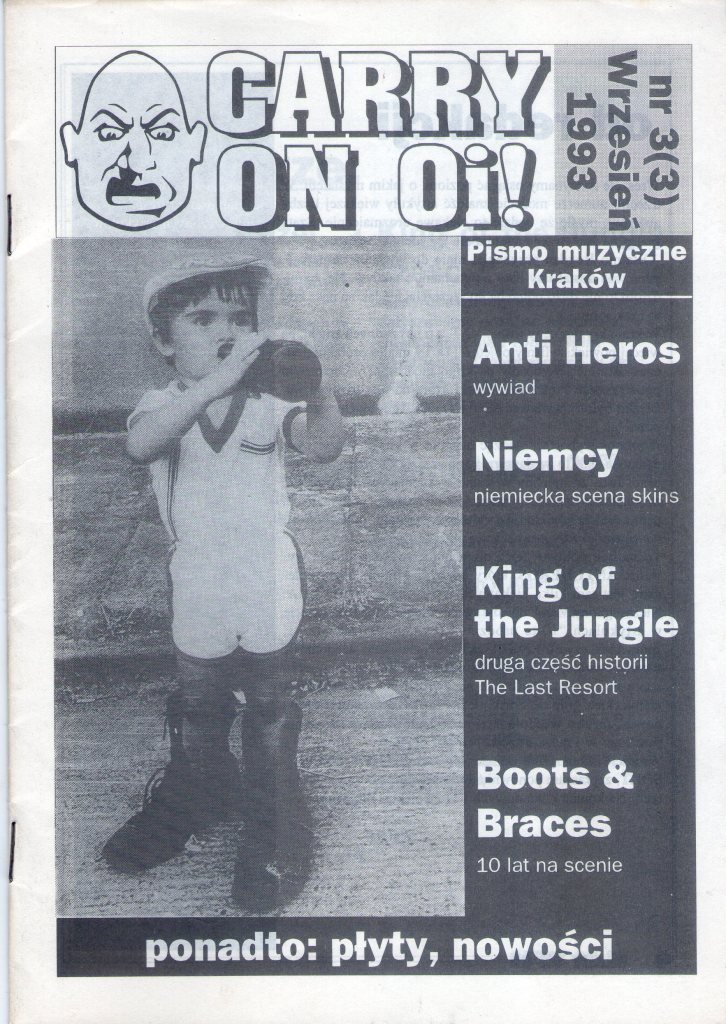
From about 1993/94 apolitical skins started to make a resurgence in Poland, concurrently with the Oi revival in countries such as Germany. Finally there were pure Oi bands like Rezystencja and Horrorshow and zines like Skinhead Sosnowiec. What are your memories of this revival?
Rezystencja are very symptomatic of this wave since they emerged from the ashes of the nationalist band Szczerbiec. Incidentally, their past followed them around for a long time: I tried to get them to perform at an anti-globalisation festival together with Manu Chao. At first the organiser agreed, but after ‘screening’ the band, he turned them down with great indignation…
Personally, I was sympathetic to the Oi renaissance, not least because it was a counterweight to the increasingly strong nazism in the scene. I collaborated with Skinhead Sosnowiec and published a few articles in that zine. But at that time, I was no longer an active skinhead attending gigs, football matches, riots and so on.
I looked through a few issues of Skinhead Sosnowiec – these guys might be worth interviewing some other time, seeing as they represented the next stage in the evolution of the Polish scene. It was an interesting zine – by its own admission inspired by the British so-called ‘sussed’ skinzines of the 80s, especially Hard As Nails. Those were also an influence on our Creases Like Knives webzine, especially in the beginning. And Rezystencja and Horrorshow were both great bands.
Yes, but I didn’t like everything about the Oi revival. Just take a look at the sleeve of the Horrorshow album…
You mean the cover artwork of Ultra Kuku [which shows Dim from A Clockwork Orange and a cop]? I don’t follow – what’s wrong with it?
I mean the cover of Ryps-Wyps. And this has nothing to do with feminist over-sensitivity on my part, on the contrary: it’s to do with my old-fashioned upbringing, which commands respect for women.

OK yeah, I’m with you on that artwork. Speaking of women, you mentioned the Sosnowiec crew earlier with their motto, “beer, girls…”– but when it comes to the Polish skinhead scene in the 80s, I don’t recall hearing much about women’s involvement. You mentioned the singer of Konwent A dating a skinhead, and in the Oi! documentary, there’s another punk girl talking about her skinhead boyfriend… But were there any proper skingirls with feathercuts, Chelsea cuts, etc?
Skinheads were mostly a male subculture, maybe 80-90%, but of course there were also skinhead girls in the mix. In Sosnowiec, I can recall a couple of them, like the blonde Mala and the dark-haired Blacha. In general, though, it was more common for skinhead girls to identify with their boyfriends than with the skinhead movement as such. When it came to their style, it took a while for a distinct dress code to develop. Back in the 80s, people had a pretty good idea of how a male skinhead dressed, but images of skinhead girls were scarce. Polish skinhead girls didn’t want to look like punk girls, yet they hadn’t quite figured out the style, so they experimented with different clothing and hairstyles. I remember one who had a buzzcut just like her boyfriend, while another might be seen wearing a flowy dress. It wasn’t until the 90s that the typical ‘skingirl’ look became more prominent.
We’ve talked for so long about anti-political, nationalist, pseudo-fascist and fascist skins…. But what about the faction that I personally feel politically closest to? Were there any Polish skinheads in the 80s who held left-wing views – such as communists, socialists, or even social democrats, adherents of the old Polish Socialist Party (PPS), and so on?
In the 80s, there were none of that kind – back then, I never even heard of anyone like that. You have to realise just how unpopular left-wing ideologies were in the late 80s and early 90s. In private conversation, activists from both the PZPR (Polish United Workers’ Party) and Trotskyist circles didn’t want to be labelled ‘communists’ anymore! Even anarchists of the time adopted the slogan “Neither left nor right”.

Worth mentioning, though, that in an intro text of Fajna Gazeta, it was stated that the zine was “open to thinking skinheads of all creeds and none: anti-political, nationalist, and socialist”. I don’t want to overstate this, but this indicates at least some level of acknowledgment and acceptance of socialist skinheads on your part, even in 1988. What was it like in the 1990s – were there any left-wing skinhead factions, zines, etc?
It was me who wrote the first article on redskins, namely for the Marxist Magazyn Antyrządowy [Anti-government Magazine] in 1992. I know it may seem strange that I was simultaneously promoting the far right and the far left – but as a ‘national revolutionary’, I was advocating an ‘alliance of extremes’ against the system. One of my friends, an orthodox leftist, described this as “political schizophrenia”. [laughs].
In the 90s there emerged a left-wing skinhead scene, perhaps on Robson’s initiative – as far as I know, they were all former punks. Apparently, the Wroclaw redskins caused a major disturbance at the Jarocin Festival when they started seizing glue bags from punks who were drugging themselves. I know that in the mid-90s they also showed up at the ‘Guevariada’ in Katowice, which was a big party for various leftist circles. I was already out of the scene by then and know very little about it. In any case, the phenomenon was short-lived. SHARP proved to be more durable, but that was more of an anarchist-leaning scene in our country.
When did you quit being a skinhead?
In 1993 I went to see a skinhead concert for the last time. I did go to another one in 1996, just before I got married, but I attended that one as an ‘outsider’.
And why did you quit?
Like with my earlier departure from the anarchist punk scene, I simply felt drained. It became obvious that nothing substantial could be built on the skins’ self-defeating aggression any more than on the punks’ nihilistic rebellion. Additionally, in 1993, the general election was won by the post-Communist left. My former fellow students, who were aligned with the anti-communist opposition and had previously treated me with disdain, underwent a serious radicalisation after being ousted from power. I became associated with a coalition of conservative right-wing groups, which later became part of the mainstream Solidarność Electoral Action, and wrote articles for newspapers such as Czas Górnośląski, Myśl Polska, Gazeta Polska and Nowe Państwo. The result of my transformation was the essay ‘Converging at a 90 degrees angle’ (Zbieżne prostopadłe), written in 1995 and published two years later in the anarchist journal Inny Świat, where I distanced myself from my earlier notion of an ‘alliance of extremes’…
Were your times as a skinhead good years, romantic years – or lost years?
Overall, they were lost romantic years… [laughs] On one hand, we always remember our youth with fondness – even the foolish things that we wouldn’t do again. Without a doubt, this troubled period played a huge role in my intellectual and personal development. I now see it from the perspective of an ornithologist who once was a bird, so to speak [laughter] On the other hand, had I chosen a more constructive path instead of running around with punks and skins for a dozen years, my social and professional standing would be very different today. I look at many things differently, and I think I could have reached certain conclusions in a more straightforward manner, without the kind of chaotic zigzags I embarked upon.
And how do you feel about your time of political activism today?
On this I have fewer positive memories. My experiences with ‘real politics’ mainly revolve around hours of fruitless debates in smoke-filled rooms, disputes over positions, intrigues hatched in corridors, and grandiose speeches that nobody really believed in… My dalliance with the moderate right ended in total disillusion. By the late 90s, I began to lean towards Andrzej Lepper’s populist Self-Defence of the Republic of Poland party. But as you’ve probably already guessed, disappointment awaited me there too. After 2006, I disengaged from political involvement entirely. In 2018 I published my last journalistic piece, and with each passing year, I find myself sinking deeper and deeper into a kind of catastrophic optimism – that is, I wait for the inevitable disaster with irony and detachment.
If you feel like it, please give us your personal Top 10 Polish skinhead songs from back in the day.
10 of them? Let’s narrow it down to two classics: ‘Nasza muzyka’ (Ramzes & The Hooligans) and ‘Koło zębate’ (Sztorm 68).
Thank you very much for the interview, Trojan.
Ramzes & The Hooligans: Nasza muzyka (Our music)
Guitars wail like hot-forged steel
Drums pound like a relentless sledge
This is the sound of the kids from the street
And this is what they want
Our fingers are too thick
To play intricate solos
Our hands are smeared with grease
They’re the hands of the lads from trade schools
Chorus:
Our music’s as simple as our lives
As plain as a factory worker’s grind
Our music’s as simple as our lives
As plain as a factory worker’s grind
The monotonous thump of machines is our sound
It’s as barren as we have been for years
We can’t change anything
We don’t have any rights
We go to matches to kill time
Shitfaced as a herd of swine
We can’t have fun at the disco
The girls don’t fancy our kind
Chorus:
Our music’s as simple as our lives…
Look at us, we’re the people
Who work hard for their daily bread
We’re like cattle bred for cash
We just have a better pigsty
Chorus:
Our music’s as simple as our lives…
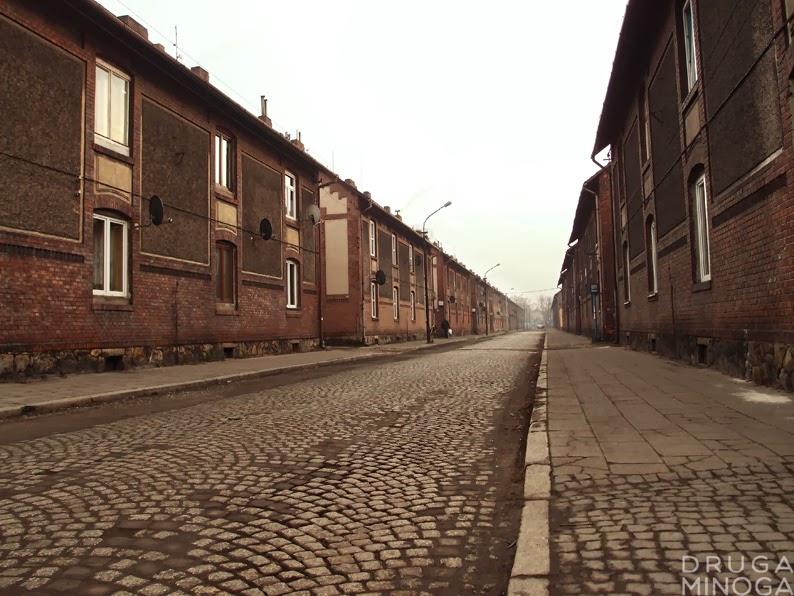
Sztorm 68: Koło zębate (Toothed wheel)
Block by block, a new building arises
The crane hoists a mighty edifice
A cityscape of concrete homes unfurls
Providing shelter for thousands of lives
From east to west, from north to south
Our bulldozer steadily pushes ahead
Following closely, a troop armed with pickaxes
Laying foundations for a burgeoning town
We forge cities of iron
Houses of steel, mass settlements
Machinery hums, jolts and tumbles
The heart of the engine pounds a steady beat
In one hand, an eleven-pound hammer
A crowbar in another comrade’s hand,
Today a hundred-storey structure ascends
By the effort of hundreds, thousands of hands
Chorus:
Hearts aflame and minds ablaze
We raise our voices in a shared refrain
A red lightning bolt pierces the sky
We follow it, forging a brighter tomorrow
Steam billows from heated engines
A colossal machine roars to life,
Toothed wheels engage in a seamless dance
Slowly, the steel carriage shifts into gear
Rails extend far into the horizon
And alongside these tracks we are marching ahead
Mastering the elements, contending with nature
To battle, we follow your lead, locomotive!
Chorus:
Hearts aflame and minds ablaze…

Interview, intro and translations: Matt Crombieboy
Special thanks are due to Artur K for providing the photo of Wroclaw/Opole skins, Wojtek K for the Razem article, and most of all Trojan for taking the time for the interview.
CLICK HERE FOR POSTSCRIPT: A COMMENTARY FROM THE SOSNOWIEC CREW (1992)
[1] Bolesław Limanowski’s National-Socialist Commune [Gmina Narodowo-Socjalistyczna], founded in 1888, was quite possibly the world’s first organisation to use the term ‘national-socialist‘, but it had nothing in common with the later movement known as National Socialism or Nazism. Rather, it was a left-socialist group with aspirations towards national liberation from both Russian and German domination, like most Polish left-wing organisations at the time.
[2] Sarmatism was the dominant ideology of the Polish-Lithuanian aristocracy in the 17th and 19th centuries. Central to this ideology was the unifying belief that the nobility of the Polish–Lithuanian Commonwealth descended from the ancient Iranian Sarmatians, whereas the common people were the descendants of the conquered Slavs.
[3] The song in question is ‘Sadam Husajn’ (1991), whose lyrics extol Saddam Hussein as a “hero of his country, pride of Iraq” and as the “standard-bearer of the Arab people” in their “struggle against global capital”.
[4] Note also Robson’s (of Konkwista 88) explanation regarding the disruption of a pro-Mandela demonstration by Wroclaw skins – they had come across a South Africa-themed song by the British neo-nazi band No Remorse: “Someone stumbled upon an announcement in a newspaper that said there was going to be a demonstration to celebrate Mandela’s release. This would have gone completely unnoticed if it hadn’t been for that No Remorse song about South Africa. We were all familiar with the song, so we arranged to meet up the next day and confront the rally”.
[5] More about the Polish 19th century military leader and statesman Tadeusz Kościuszko can be gleaned from the relevant Wikipedia article. Kościuszko was an outspoken opponent of slavery. During his time in the United States, he wrote a will stipulating that his assets be used to buy the freedom and education of US slaves.
 Creases Like Knives