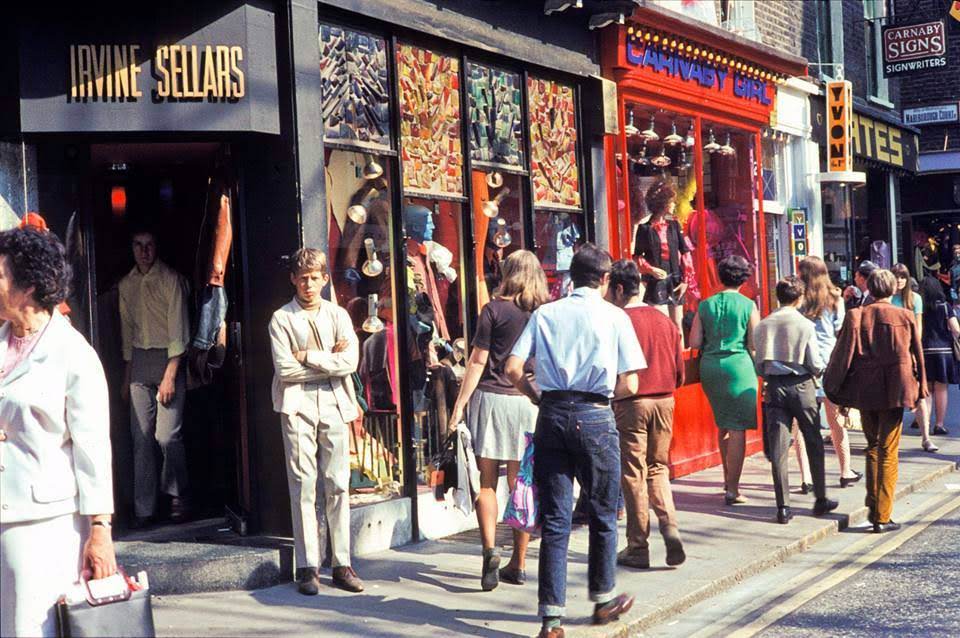
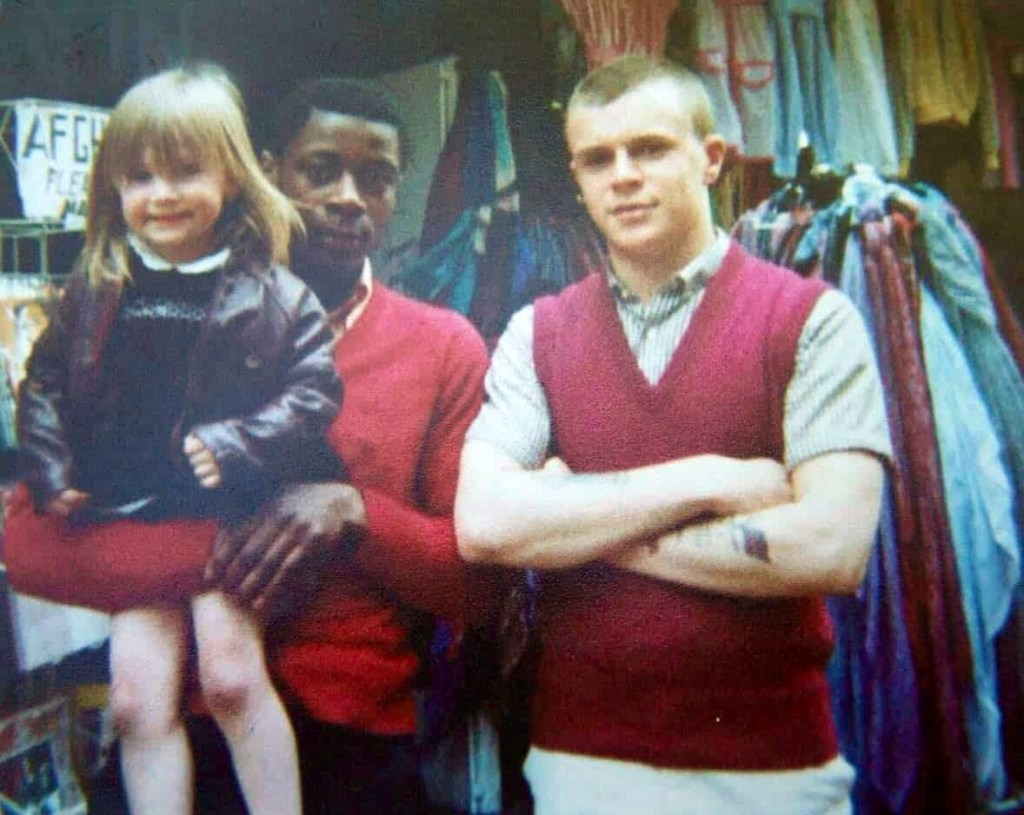
This is Carnaby Street at its prime, in 1968. Amidst all the flashy colours, note the classically cut red-tab Levi’s worn by the lad at the centre. This has got to be the 1966 cut of the 501 – or 502, as some ‘originals’ insist, since the Levi’s imported to the UK at the time had the same cut as the 501 but came with a zip fly.
When we talk about Carnaby Street, we’re really referring to a small pocket of west Soho: the street itself, along with nearby thoroughfares like Ganton Street, Kingly Street, and Newburgh Street. Locals often just call it Carnaby, though that’s not an official designation.
The story began in 1954, when physique photographer Bill ‘Vince’ Green opened the Vince boutique at 5 Newburgh Street, catering to the gay bodybuilding scene. Among his catalogue models was a then-unknown Sean Connery. Green’s assistant, John Stephen, went on to open His Clothes on Beak Street in 1957, pioneering a sharp new style for young men and earning the title ‘The King of Carnaby Street’. A couple of years later, mods began shopping in the neighbourhood.
More independent boutiques sprang up – Gear at 35 Carnaby Street, Lord John at 43, and Lady Jane at 29. Within a few years, Carnaby Street became the epicentre of youth fashion and the ultimate symbol of ‘Swinging London’. Bands including the Small Faces, The Who and the Rolling Stones would drop by to grab freebies, socialise, and occasionally remind themselves they were meant to be recording music. The original mods had moved on, leaving behind what would later be called ‘peacock mods’ – extravagant dressers who effortlessly slipped into the psychedelic age.
By the time mod got harder and the original skinhead era rolled around, Carnaby was seen by many as following fashion rather than leading it. In any case, the neighbourhood played no major role for this generation. “In the original skinhead days, Carnaby Street was a tourist destination, and that’s that”, says Paul Thompson, a skin in the Lewisham area at the time. Skinheads generally sourced their clothes from “surplus stores, local markets and shops”, he says, and from “places such as the Squire Shop when we were flush”.
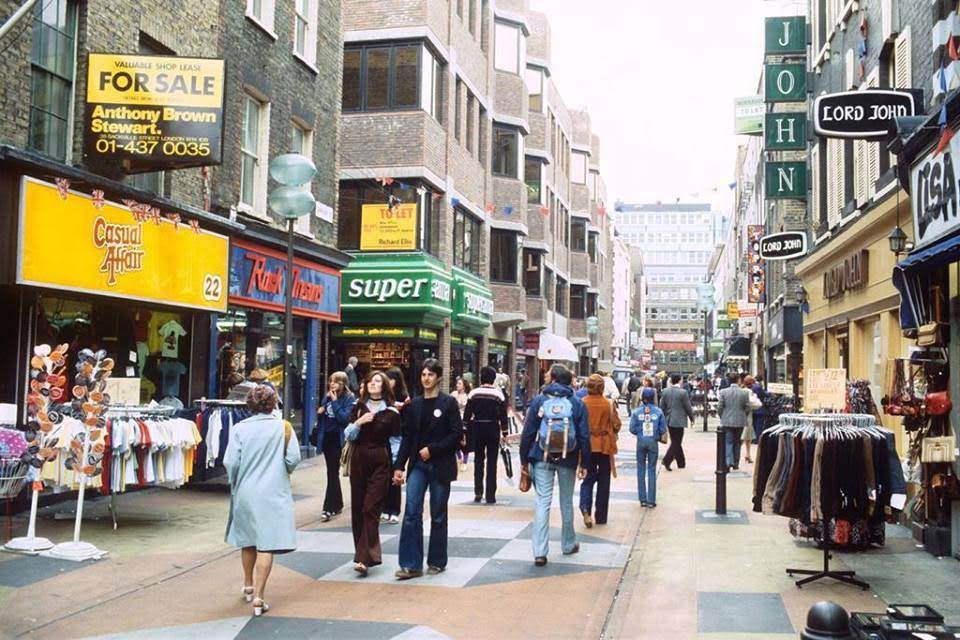
When the street was fully pedestrianised in 1973, the boutique fashion scene had already largely shifted to the Kings Road in West London – and by the late ‘70s, little of the Caraby Street’s former swing and glamour was left. As the photograph below shows, shops such as Lord John’s still stood, valiantly clinging on like ageing rock stars past their prime. But Carnaby Street had become a somewhat faded strip for tourists seeking cut-price souvenirs of a bygone era. Hippie tack was plentiful, while larger chain stores had moved in, often imitating the style of the once-independent boutiques.
In 1977, The Jam saw it fit to comment:
Take a look at the great street It don’t seem the same Remember how great it should be To think what it was The street is a mirror For our country Reflects the rise and fall Of our nation
The street that was a legend Is a mockery A part of the British tradition Gone down the drain
Carnaby Street Not what it used to be
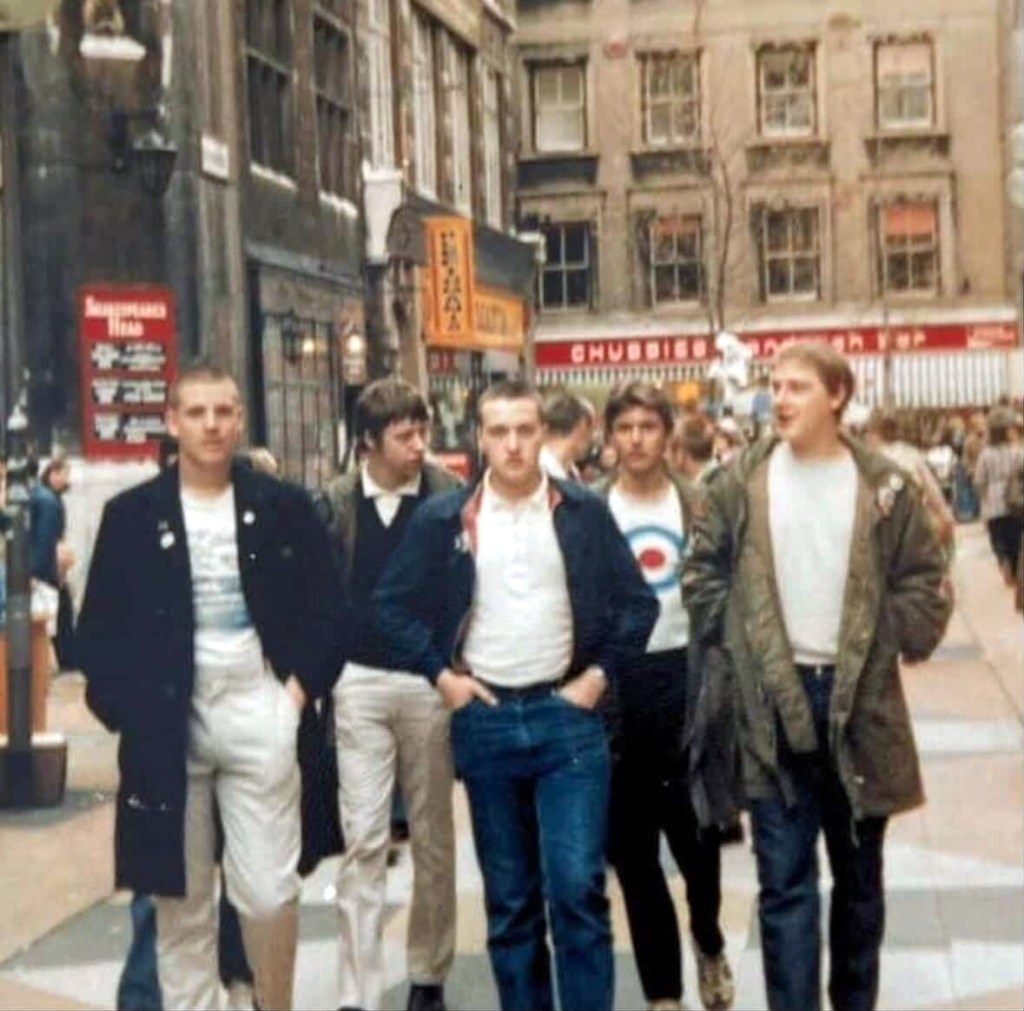
A rare sight a year or two later: skins and mods together in Carnaby Street, circa 1979/80
One man claims to have kept the faith with mod styles throughout those dark years. Javid Alavi – likely of Iranian descent – began trading in the flea market in Kingly Court and Carnaby Court in 1967, when he was 26. He called his stall Merc, and within a couple of years, the stall was supplanted by a local shop of the same name. At that time, the area was dominated by Warren Gold (alias ‘Lord John’) and John Stephen, the earlier ‘King of Carnaby Street’, who ran a chain of fifteen outlets along the street. In the early ‘70s, a period when various lawsuits were piling up against both Gold and Stephen, Alavi seized the moment and bought up several of their shops.
Quite who was buying mod gear in the ‘70s, before the revival, is another matter – but Alavi insists he never wavered. In the ‘80s and ‘90s, the ‘Merc House’ at 15–21 Ganton Street became a key hub for the mod and skinhead scenes, supplying gear not only to locals but also to customers across Europe via its mail-order catalogue. Merc carried the usual brands like Fred Perry and Ben Sherman, but from 1982 at the latest also stocked Alavi’s own Merc-branded gear.
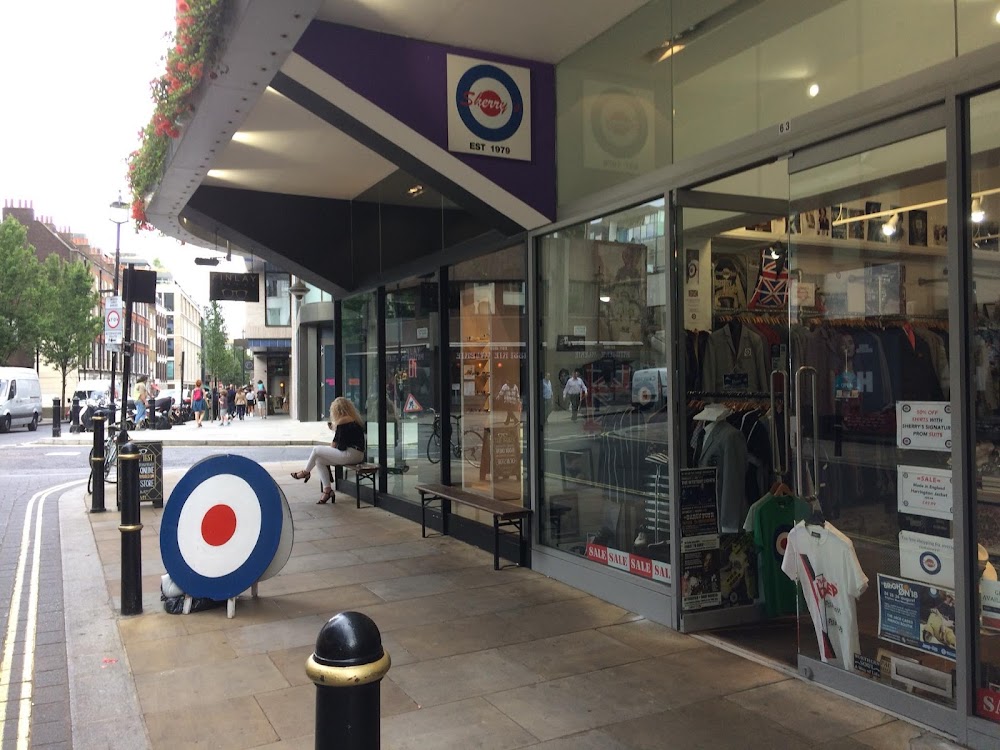
Inspired by The Jam, the release of the film Quadrophenia, and the concurrent mod revival, a similarly-themed shop, Sherry’s,opened its doors in Ganton Street in 1979. Then as now, it sold staples such as three-button suits, parkas and sta-prest trousers, often manufactured exclusively for Sherry’s. Sherry’s button-down shirts were cut like Brutus at a time when you couldn’t get Brutus. Decades later, the shop moved to Broadwick Street and eventually to its current location at 11 Poland Street, all within the wider Carnaby area. Anyone who has visited Carnaby Street in the past few decades will have met Bubbles, the shopkeeper – or at the very least seen her through the glass front of her shop.
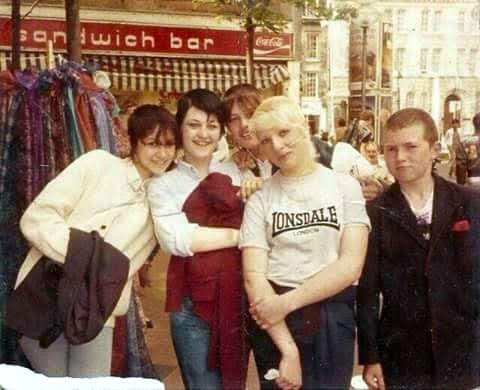
There was also a Lonsdale shop at 21 Beak Street, opened as early as 1960 by the former boxer Bernhard Hart and frequented by celebrities such as Paul McCartney. Paul Weller made the brand a mod revivalist choice when he bought a bunch of t-shirts for a Japan tour in 1979. Around the same time, the shirts caught on with proto-casual football lads like the Cockney Rejects, and from the terraces, they made their way into the skinhead wardrobe as well. In those pre-Sports Direct days, Lonsdale was still a desirable brand, and the pale-grey t-shirt with the black logo was the most popular choice for skins.
Skinhead central
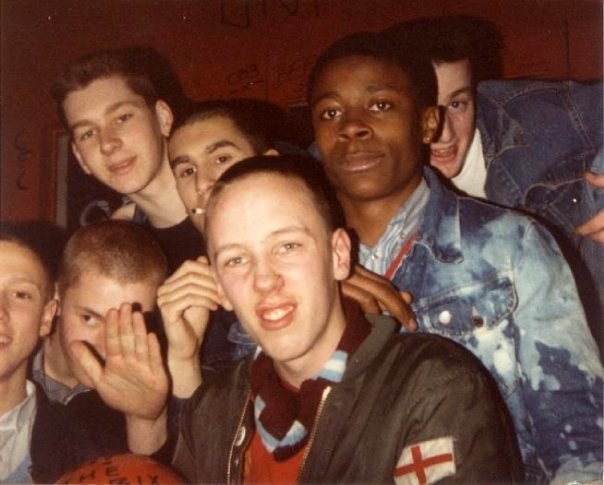
In the early ‘80s, thanks to the mod revival and the 2 Tone explosion, Carnaby Street became a magnet for kids from all over London – and within a few years, for subcultures from across Europe in the summer. On Saturdays, the area was skinhead central. Croptops from across London and the overspill towns would hang out in the street itself, at Chubbies greasy spoon on Foubert’s Place, and especially in upstairs area of the Marlborough Court ‘flea market’ – a multi-storey hall packed with small vendors selling records, badges, and assorted rock, hippy, and tourist clutter. Its walls were thick with skinhead graffiti, serving as unmistakable territorial markings. Clashes with mods were inevitable – our reader Jon Barnes-Jones admits he “loved gobbing on the mods from the top of the spiral staircase”. Another, Richard Evans, says:
I remember one of the flea market skinheads in Carnaby Street being bottled by a very well-established scooter club in the early ‘80s. I don’t know what it was about, but to this day I can remember the sound that the vodka bottle made as it hit his skull. Vicious times – a lot of mods and skinheads used to get beaten up there at that time.
Symond Lawes, then a young skinhead from High Wycombe, recalls:
Some of the skins that hung around Carnaby were horrible cunts. Mad Jock’s mob, for example – nasty fuckers. I can’t say too much, but they were the skins that gave most of us a bad rep. Still, for us from Wycombe, Carnaby Street was always our first place we went to in London. People go on about the East End, the Last Resort, and that scene. But for us west of London, Carnaby was much more our place. I remember once, around 1982 or ’83, four of us were walking from Leicester Square up Ganton Street, when suddenly we saw a bunch of mods running up Carnaby Street. Back then, mods and skins were archenemies. It’s funny looking back, but we thought of them as a bit posher than us.
We saw it kicking off outside the flea market – it was about ten skins against a lot more mods. We thought, shit, we’re going to have to join in and get a kicking. As we braced ourselves, suddenly a whole mob of skins came running from the pub at the top of Carnaby Street – now O’Neill’s, I believe called King & Queen back then [in 37–38 Great Marlborough St]. What followed was the biggest tear-up between skins and mods I ever saw. We joined in and ended up chasing the mods all the way down to Leicester Square. It was fists flying the whole way – it was brilliant. I was only 15 or 16, and it was a great experience.
Not fondly remembered by mods: Skins in the flea market, early ‘80s
Hounslow Rob from West London, who nowadays runs the indispensable A Sense Of Style pages on Instagram and on Facebook, doesn’t remember seeing a lot of violence between skins and mods in the area, though he stresses that as a skin in the late ‘70s and ‘80s he “wasn’t a regular on Carnaby Street, nor one of those skinheads that used to hang around the flea market or the street itself”. Even so, he did read about it happening, especially in the old flea market, as he tells me:
Some of the skinheads who used to hang around the West End did have a reputation for mugging people, and although I don’t suppose mods were specifically targeted, they probably fell victim on occasion. I think for the most part it was just a coexistence. In fact, there are people I know who said that in the early ‘80s the main problem tended to be groups of casuals turning up to fight both mods and skinheads. That was also the case elsewhere. Certain venues such as the Greyhound on the Fulham Palace Road often saw trouble with casuals and football firms after gigs during that period.
In general, there was little rivalry between mods and skinheads circa 1979, early 1980 – and if there was, it seemed to be based as much on area differences as subcultural rivalries. The ‘enemy’ at that time tended to be the teds and rockabillies… A skins-versus-mods rivalry did lead to trouble from about ‘81 onwards though, possibly due to a slightly younger, more Oi influenced generation of skinheads. I suppose bands like The Exploited didn’t help with their ‘Fuck a Mod’ song! It‘s also true that around 1981/82 it was pretty much a free for all. But to be honest, during that period I was probably more wary of other skinheads than members of other youth cults. There was a lot of rivalry between skinheads from different areas back then.
In any case, skinhead-versus-mod violence happened often enough in the ’80s for people to still remember it decades later. I recall my line manager in London complaining to me, with sad, accusatory eyes, that he’d been chased down Brick Lane and Carnaby Street by skins when he was a young mod in the early ’80s. That was in 2018…
Carnaby Street tack
Each subculture had its own supply in and around Carnaby Street: tourist punks, goths, and metalheads shopped at tacky stores selling pirated ‘Destroy’ t-shirts, studs, and bondage trousers. Local mods and skinheads favoured somewhat more discerning outlets like Merc, Cutdown, Sherry’s, Shellys Shoes, Melanddi (supposedly the main suppliers of The Jam) and the Cavern (it’s unclear whether this place was identical with the Carnaby St Cavern run by the eccentric Colin Wild in the ’60s, described by Rick Parfitt of Status Quo – no fashion icon himself – as “probably the most fashionable clothes store in the world at the time”).
Wycombe skins in Carnaby St circa 1984, Symond first right
One t-shirt stocked in almost every Asian-owned shop on Carnaby Street during the ‘80s–‘90s was the notorious ‘Adolf Hitler European Tour 1939–45’. It showed the moustachioed one saluting before a map of Europe, with the back listing mock ‘tour dates’ – beginning with Poland in September 1939 and ending with ‘cancelled shows’ in the Soviet Union. A couple of punks I knew owned one and somehow got away with it – as punks tend to – but when skins wore the same shirt, people assumed they meant it rather more literally. In fairness, they often did.
The curious backstory is that the original t-shirt was designed by Wayne Morris, manager of ‘80s new wave combo The Primitives (of ‘Crash’ fame), who used the profits to finance the group. “It was probably was a bit unsound”, Morris stated in an interview with the NME in 1988, “though no politics were meant to be implied. But it did make a lot of money for us, which was then pumped into the band”.
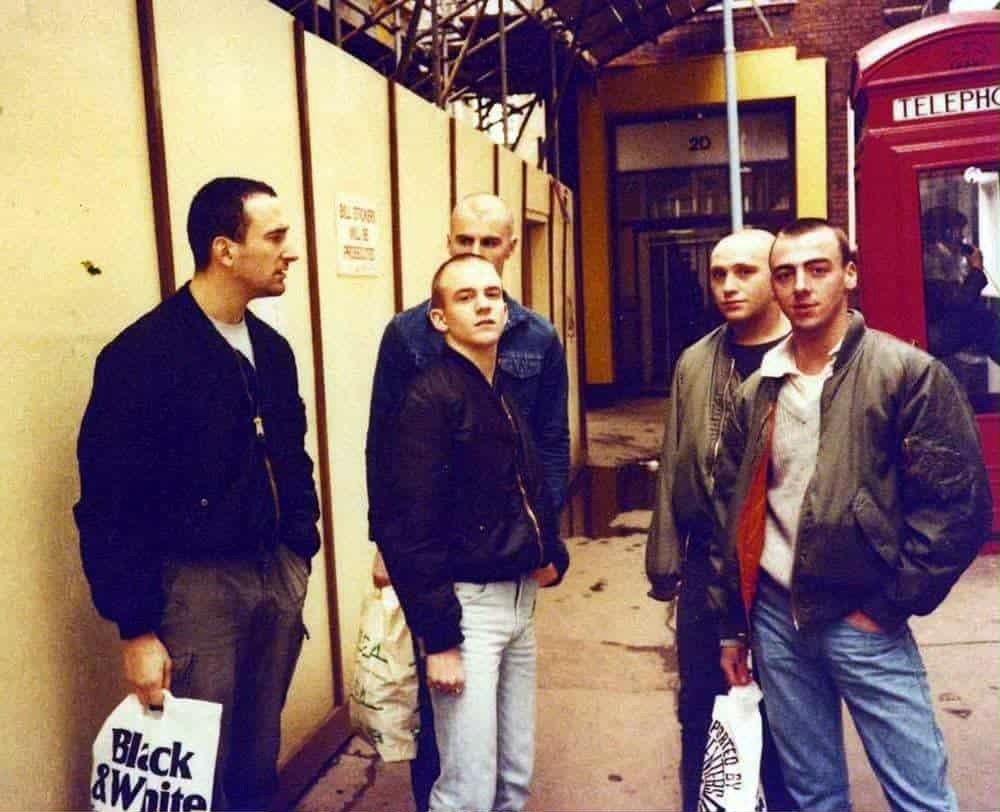
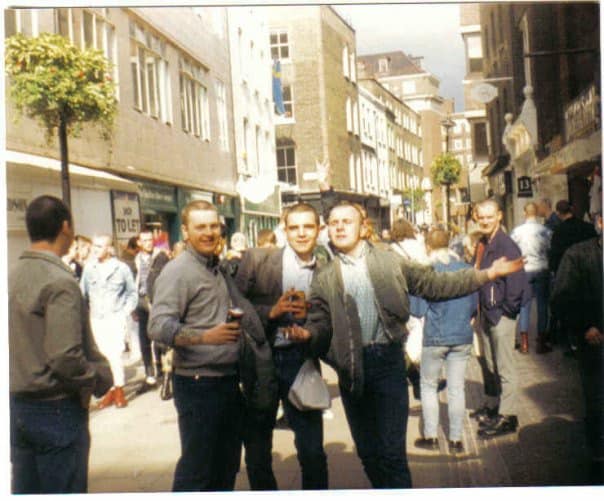
Skinhead shoppers in Carnaby Street, 1980s
Shellys had two shops in the area in the early ‘80s – one on the corner of Oxford Street and Poland Street, another in Fouberts Place – and a third on the Kings Road in Chelsea. It produced its own shoes and boots, including the horrible ‘Jam shoes’, but also Shelly’s Rangers – boots designed specifically for skinheads, though equally popular with punks and psychobillies in the ‘80s-‘90s.
I recall visiting London as a tourist long before I lived there and buying a pair of Rangers in one of the Shellys stores. As a teenager, I thought the boots were the mutt’s nuts because of their more menacing look compared with Martens, but I don’t think the style has aged that well.
The shops are long gone, but the boots remain available online. What amazes me is that vintage pairs still turn up on second-hand sites seemingly fully intact. My own experience was that after about a year, the commando sole would part company with the upper and the boots would start talking as you walked. They were literally glued together – the nails were purely for show. Though to be fair, I might be mixing them up with Get-A-Grip Rangers, of which I also had a pair.
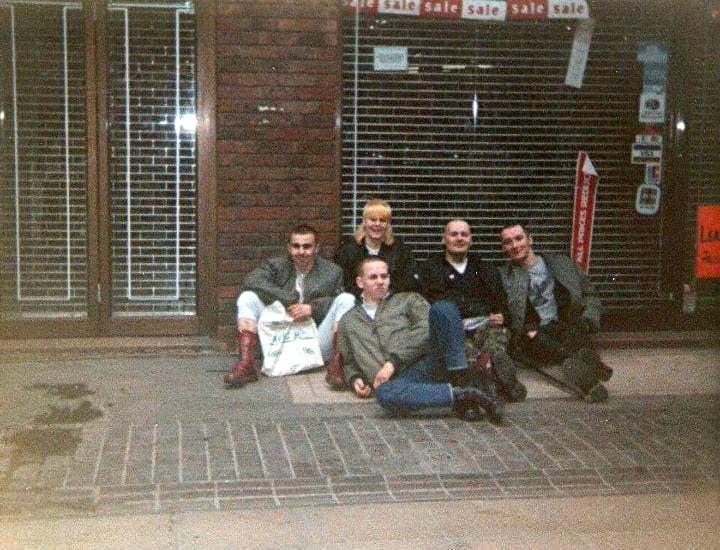
In Carnaby throughout the ‘80s, you could also witness something unthinkable in much of Europe at the time: skins and punks hanging out in the street together, beer or cider in hand. Admittedly, these tended to be the ‘Have you got 10p?’ glue-sniffer types.
Pennies from heaven: the Blood & Honour interlude
By the mid-‘80s, the skinhead scene had declined somewhat. Says Symond,
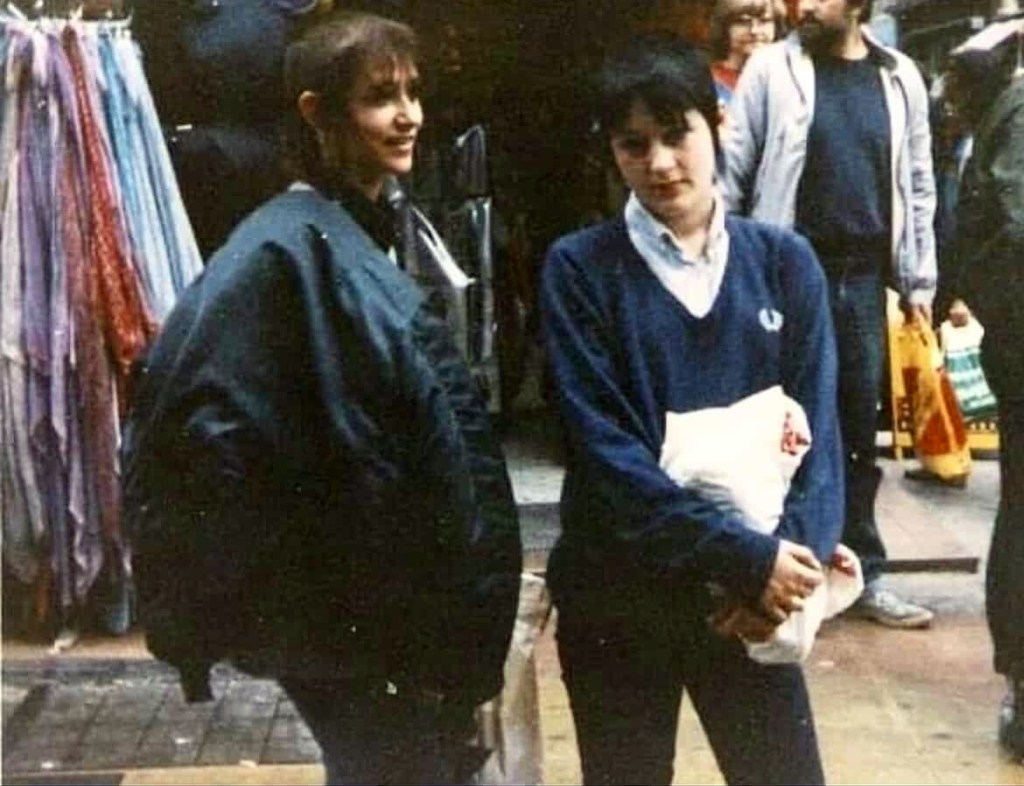
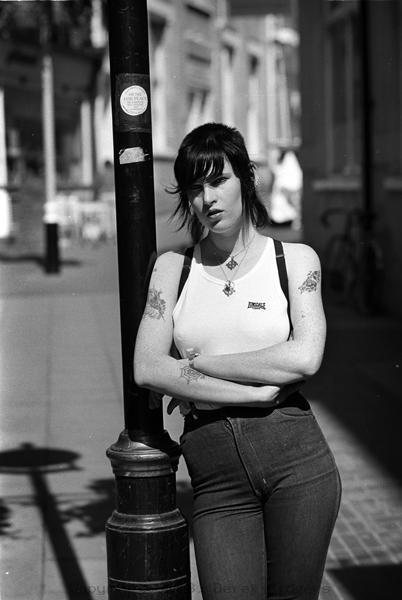
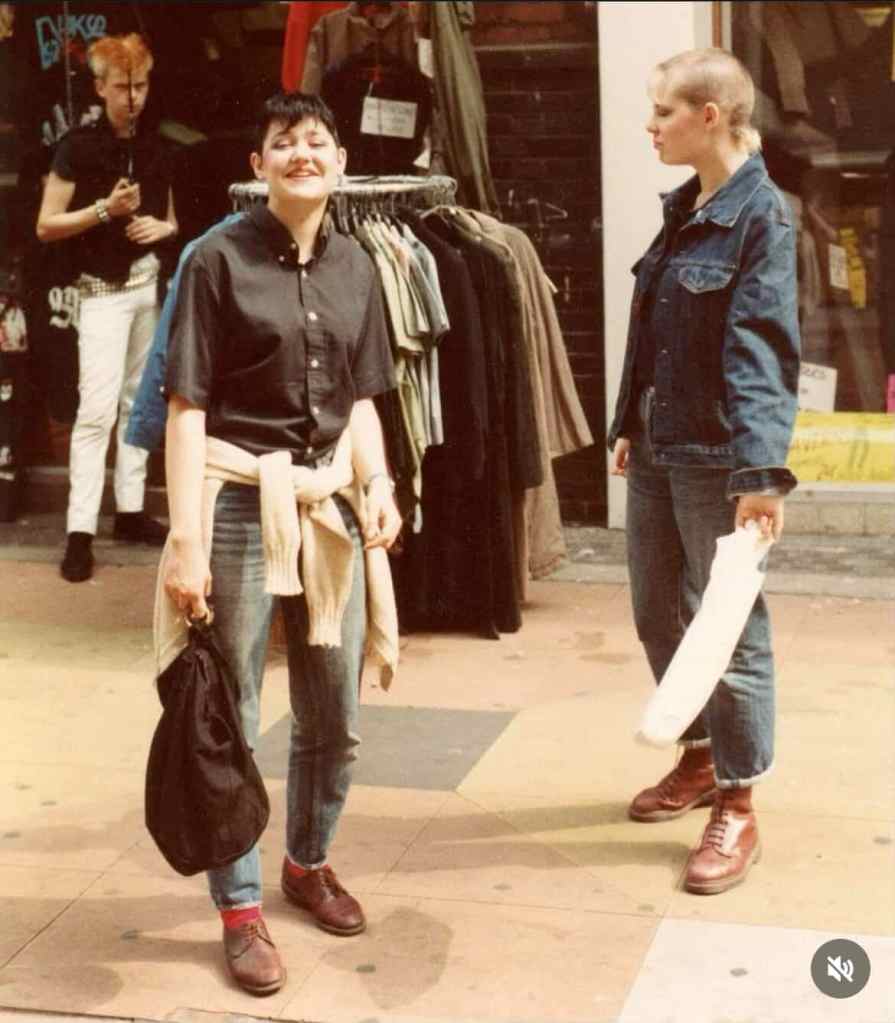
Helen in Carnaby St, 1988. Photo: Derek Ridgers
“A lot of fashion skins dropped out from about ’83. Some even before that, especially in London. Casuals became a big thing among football fans, and they saw us as a bit backward for not keeping up with fashion. But for me, being a skinhead was a lot more than just clothes”.
However, in the late ‘80s, Ian Stuart‘s newly formed Blood & Honour enterprise established a base in Carnaby Street. Once again, the streets, shops and pubs in the area were full of skins on Saturdays. Many of them leaned far right, though not all. Symond remembers:
“Skrewdriver, etc, were very popular for a time, but mostly because they filled a void. When Oi got banned everywhere and most serious Oi bands broke up, us remaining skins went to anything that would accept us. Personally, my thing was ‘70s punk. But the National Front cashed in on skinheads – nobody else would associate with us. We bought our clothes from the Merc, fanzines for gigs. Carnaby Street was the centre. Around ’86–’87, a lot of shops there started selling Skrewdriver merchandise because it was popular, especially with tourist skinheads – Germans, Belgians, and so on, all spending loads of money”.
The key shop to note here is the Cutdown, which initially operated from 19 Ganton Street for clothing and 22 Fouberts Place for records, but from spring 1988 it sold both clothes and records exclusively from its Ganton Street premises. While it also catered to the skinhead subculture more broadly, the Cutdown became the first shop in Carnaby Street to sell Blood & Honour records, merchandise, and zines. This quickly became the real moneymaker and was run in direct cooperation with Ian Stuart Donaldson, who effectively used the shop as a B&H front.
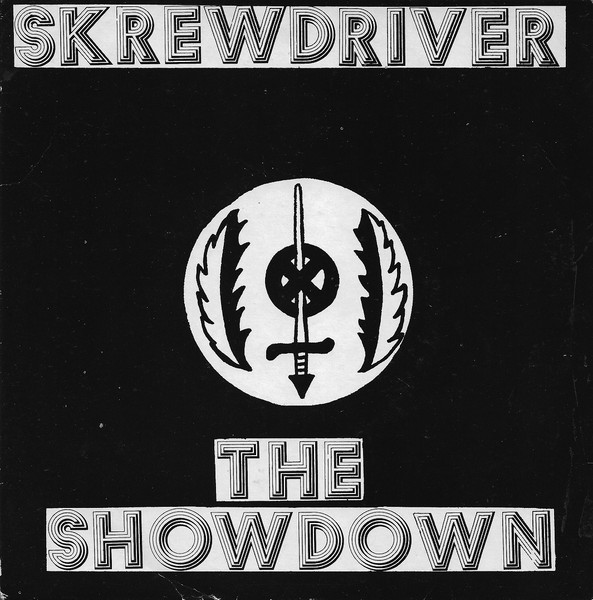
The Cutdown was owned by the Jewish entrepreneur Andrew Benjamin (alias ‘Andrew St John’), who evidently had no issues with the nature of what he was selling so long as it made money. Ian Stuart, for his part, continued to do business with Benjamin even after his background was revealed by the Jewish Chronicle. The two even launched a short-lived record label together, White Pride Records, which in 1989 released Skrewdriver’s 7-inch single The Showdown, featuring Ian Stuart’s apocalyptic premonition of “race war”.
Aryan-Jewish friendship: White Pride Records
Soon, other shops in the Carnaby area followed suit. The Merc in particular – owned, as you will recall, by the Iranian trader Javid Alavi – tried to outdo the Cutdown in RAC record sales, sometimes by cutthroat means. The mainly Asian-run tourist punk shops in Carnaby Street also began selling Skrewdriver t-shirts. It might not sit well with some, but in 1988 the distribution and retail side of the Blood & Honour operation was largely in the hands of a Jewish shopkeeper and a handful of Asian traders. Better still, a Jewish and an Iranian businessman were competing for a monopoly on nazi record sales in the area… Capitalism, after all, is fairly indifferent to ideology.
When AFA went shopping
But there were side effects to the steady money-flow. According to Sean Birchall in his book Beating the Fascists:
Outside the Cutdown, circa 1988
“Politically, Carnaby Street was fast becoming the centre of a growing Blood & Honour network, both locally and internationally. One result was that Blood & Honour supporters, emboldened by the situation on the continent, began to launch a number of attacks on bands that they considered to be legitimate targets: The Pogues (Irish), Desmond Dekker (black) and the Upstarts (socialist)“.[1]
Of these, the attack on the Upstarts at London’s Astoria in April 1988 was no doubt the tipping point. Unsurprisingly, anti-fascists concluded that the situation could not continue and decided to take measures. Beside setting up the Cable Street Beat music network, these included organising street protests, pickets, petitions, meetings, and – last but not least – issuing threats and staging physical attacks.
Besides the Cutdown shop, a pub in 15 Beak Street called The Store was a particular target. The Blood & Honour lot had a presence there, though, like the Cutdown and the Merc, the pub also functioned as a meeting point for skins in general. The same was true of other pubs in the area that were skinhead-friendly at least for a while, such as the Shakespeare’s Head (29 Great Marlborough Street) and the John Snow (39 Broadwick Street). “We’re talking London in the ’80s”, says Symond, “We were all just skinheads, nobody cared”. Or, as his old friend Gavin Watson put it in our interview, “Skinheads went where skinheads were”.
That was how many British skins saw it. But Anti-Fascist Action had little regard for such subcultural sensibilities. It viewed the matter more along the lines of ‘Sleep with dogs, wake up with fleas’. Inevitably, these divergent viewpoints led to some collateral damage in the ensuing battles.
Carnaby Street in 1989: three men embracing a legacy of defeat
Soon enough, a combination of requests, thinly veiled threats, and pickets persuaded the landlord of The Store to stop serving skins. Meanwhile, the Cutdown was forced to move its premises to 40 Riding House Street, just north of Oxford Street, and sell its wares from behind blackened windows – promising a truly exclusive shopping experience. The Green Man pub in nearby 57 Berwick Street briefly replaced The Store as the main watering hole.
This arrangement didn’t last long either. On 2 July 1989, The Sunday Telegraph reported:
“On May 27th Cutdown became a gathering point for dozens of skinheads and neo-Nazis from all over the world heading for an international concert in Gravesend. That night the shop was attacked by anti-fascists with sledgehammers. After a second attack on June 10, Mr Coigly’s insurance company said his cover would be revoked unless he installed a watchman at a cost of £100 a day“.
Skins in Carnaby Stbefore the first ‘Main Event’, 1988
The anti-fascists also destroyed much of the shop’s stock with acid, as well as ambushed would-be visitors to the Cutdown-organised Main Event: Second Chapter concert (with Skrewdriver, No Remorse, Sudden Impact et al), beating dozens of them to a pulp at the Marble Arch redirection point.
These interventions ultimately spelled the end of Blood & Honour’s tenure in the Carnaby Street area. Detailed accounts from both sides of the fence can be found in Beating the Fascists: The Untold Story of Anti-Fascist Action by Sean Birchall (from the anti-fascist perspective) and The White Nationalist Skinhead Movement by Robert Forbes and Eddie Stampton (from the fascist perspective). Both books are out of print, though a PDF of the former is available at THIS web address.
Spirit of ’69
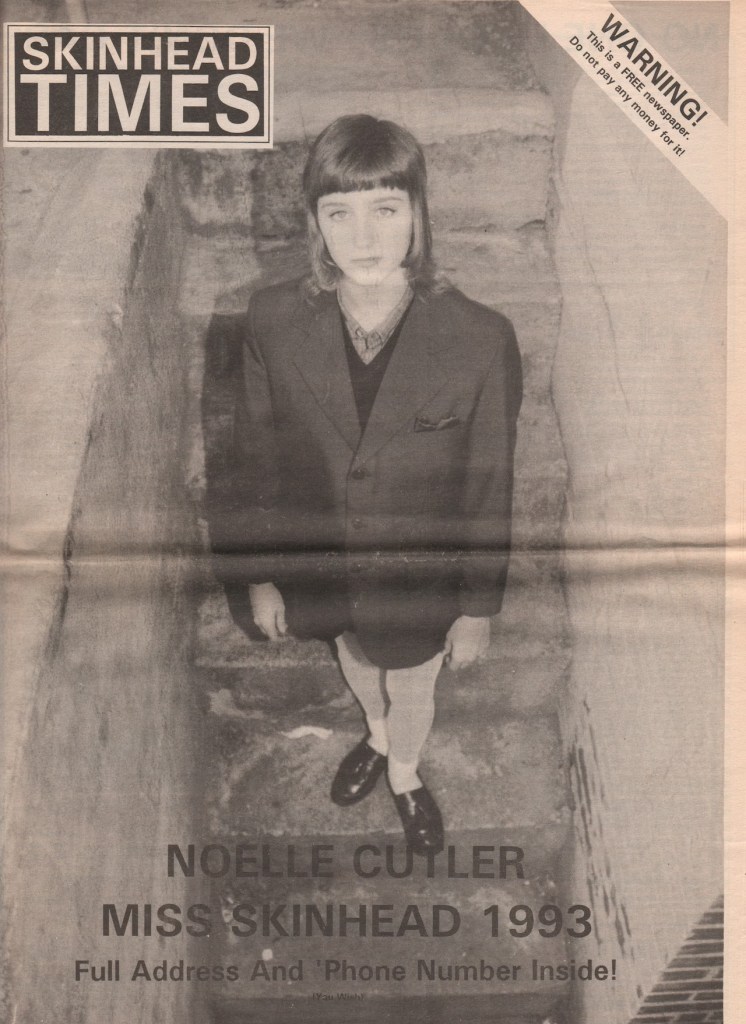
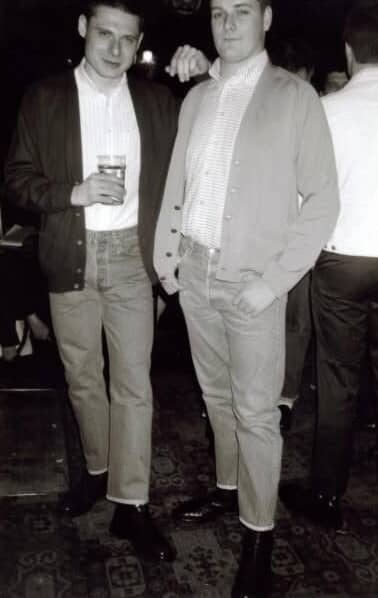
In the early ’90s, once the Blood & Honour racket had blown over, a more traditionalist breed of skinheads began to dominate the Carnaby Street area. It was the era of zines such as George Marshall’s Skinhead Times (1990–95), and it was also when Marshall’s ‘skinhead bible’, Spirit of 69, influenced a wide readership beyond the British Isles: “As soon as the ska revival of the late ’80s came along and a lot of the right-wing skins abroad started to learn about the roots of skinhead, a huge portion of those skins became traditional skinheads,” Gavin Watson remembers.
This was partly a natural and inevitable reaction to the degeneration of the skinhead image into that of a bald nazi, dressed head to toe in black and listening to poor man’s ‘evvy metal – the peak Blood & Honour variety. Far more than the early-‘80s skinhead kids dabbling in far-right politics, this faction truly earned the moniker ‘bonehead’, having by then ceased to resemble anything recognisable as the skinhead style. Symond also hints at other potential reasons for going back to the roots: “By the early ‘90s, the Oi Oi sort of extreme look had been adopted by the fetish gay scene, so many real skins distanced themselves from it”. He himself became heavily “involved in the ska explosion bands such as the The Hotknives and Riffs” and “roadied for Crunch with Chrissy Boy and Thommo from Madness” at that time.
Bands such as the northern skinhead reggae outfit 100 Men, originally from Doncaster and emerging from the ashes of Skin Deep, were part of the new Carnaby Street scene, and their frontman Mik Whitnall (later of drug casualties the Babyshambles) was a familiar face. At times, the look favoured by these Spirit of ’69 traditionalists could get a little overstated – not terrible, but pushed to the point of inventing an amplified version of 1969:
This, in turn, provoked a reaction from the more ‘down to earth’ exponents of the Oi revival taking place at the same time. Take, for example, the grumpy lyrics of ‘Cheap Imitation’ by Straw Dogs – a band formed in London in 1991 but very much in the mid-‘80s mould, complete with unreconstructed attitudes:
So where did you copy the look Joe Hawkins straight out of a book I got that suit from Carnaby Street Made by a paki, a bit too neat
Advertise for second-hand clothes Original smell of sixties BO It’s a fashion, not a way of life Those old cliches will never die
Cheap imitation, that’s what you are
Say you’re proud to be a working man Traditional values you don’t understand You won’t call a spade a spade Scared to upset dykes and gays
Got your Spirit of ’69 But no rebellion and no fight The day society accepts your type That’s the day that skinhead dies
Skinheads Don’t Fear
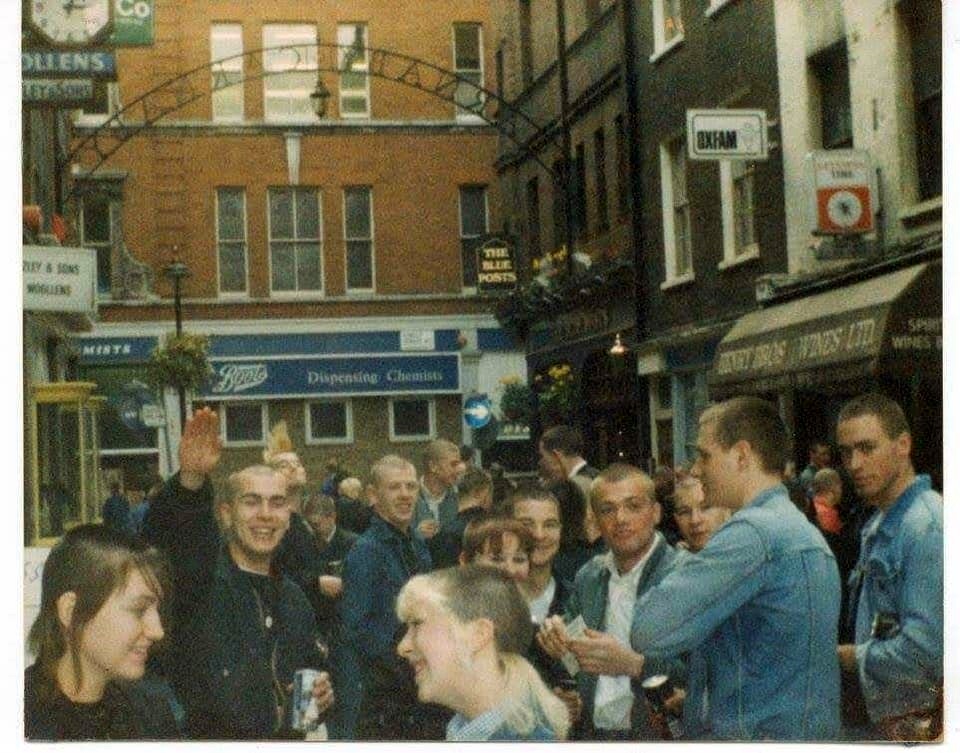
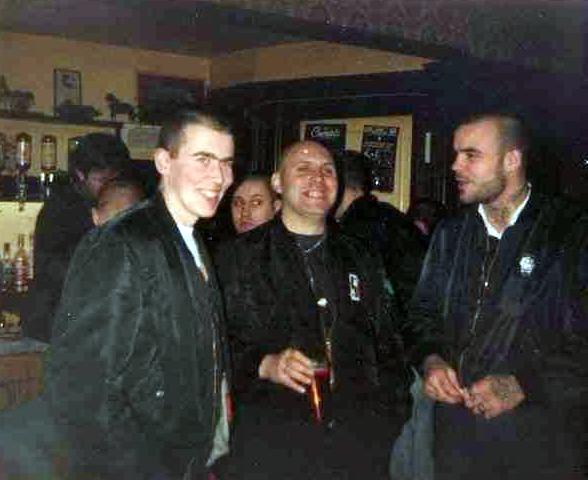
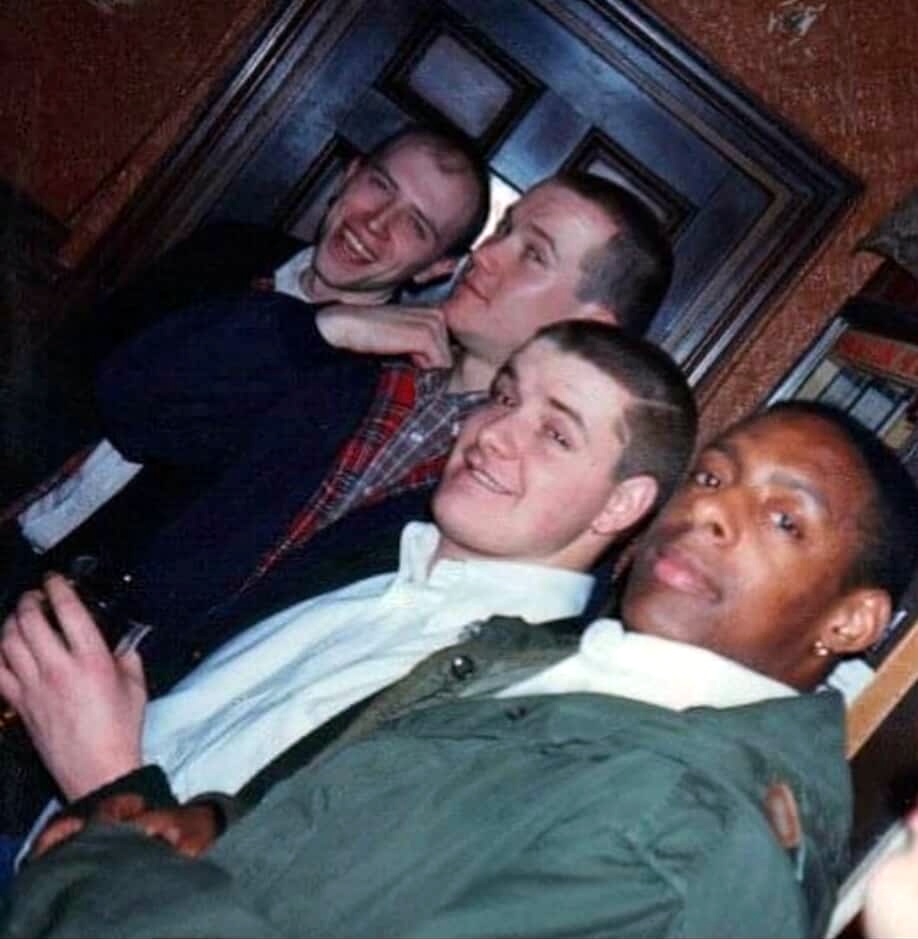
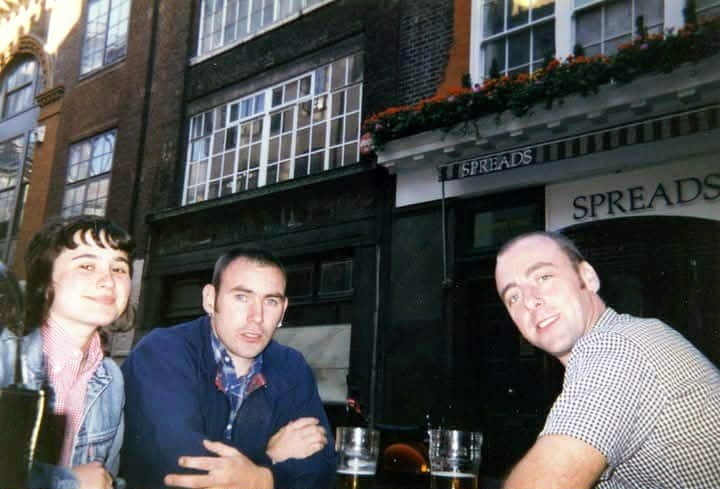
At the Blue Posts, circa 1992
If all you had to go by were the Straw Dogs, you might think that the ‘real’ skins of the ‘80s were suddenly replaced by ‘imitations’ copying their style from books. In truth, many of the traditionalists gathering on Carnaby Street in the ’90s had been around just as long. Hounslow Rob, like many of his mates, became a skin in the late ’70s. He says:
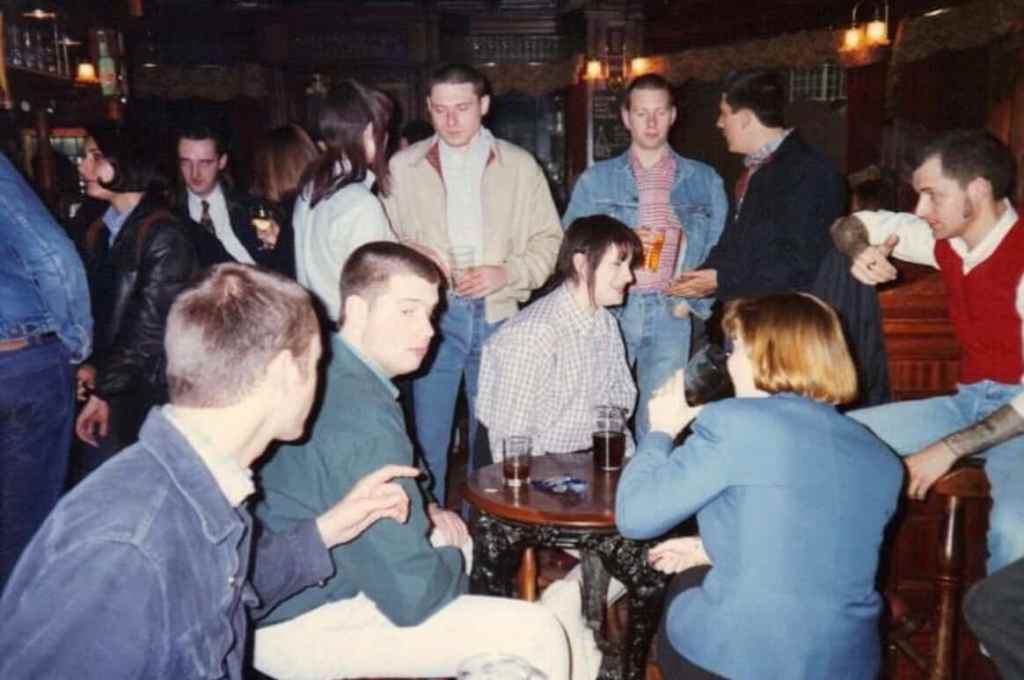
“I did make the occasional trip to the street in the early to mid ‘80s, but just to visit the shops. But into the ‘90s I started visiting Carnaby Street almost weekly. A couple of us from the Hounslow area decided to have a drink in the Blue Posts pub [in 18 Kingly Street] circa early ‘92. We got talking to few other people – I think Mik from 100 Men was in there – and started using the pub regularly on Saturday afternoons”.
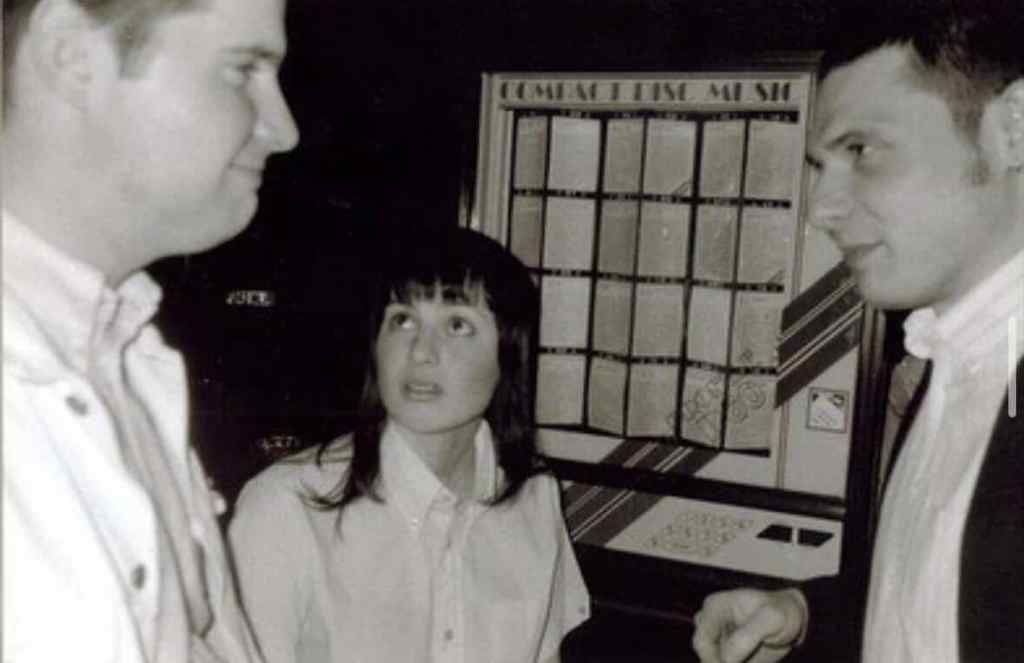
“I was also going out with Sophie, who worked in the Merc at that time. Before long, the Blue Posts became known as a meeting place, and many skins visiting the street would pop in for a drink. Most of those we would meet in Carnaby Street probably became skinheads during the 2 Tone era or the very early ‘80s Oi scene”.
Out of this core, Skinheads Don’t Fear began to take shape:
When the Skinheads Don’t Fear fanzine was created, a nucleus of skins connected with it would use the Blue Posts as home base. Saturday afternoon drinking sessions usually led to catching the tube up to Camden or anywhere else where something was going on later in the evening. There was also a basement club on the corner of Ganton St and Carnaby St called Ruby’s, and the occasional northern soul nights on in the basement of the Regents PalaceHotel near to Piccadilly Circus at that time. Northern Soul nights at the 100 Club as well of course. Looking back, this was perhaps my favourite times as a skinhead.
The Blue Posts circa ’92, Rob on the left
All of this shaped what Skinheads Don’t Fear stood for:
As an idea, the SDF had looked back to the original and early revival eras for inspiration, the original in a style sense and attitude, and the later periods for the best of the music… be it reggae, soul, punk or Oi. Football was also a focus, which by the ‘90s had generally become much less important in the skinhead scene than in earlier years.
A connection with the ‘sussed’ scene of the ’80s and zines like Hard As Nails inevitably comes to mind. Was there one?
Many of those who associated with us had probably read them, so individually they were possibly influential regarding their emphasis on the original style and dressing smart. But I don’t think anyone who drank with us in Carnaby Street was involved in producing any of them, so there was no direct lineage.
Banned from the pubs
The Blue Posts circa ’92: Sophie (middle) and Rob (right)
At the mildly more political end, traditional skins in the ’90s adopted the SHARP moniker, imported from the US in the late ’80s. Supply met demand, as ever, and the remaining shops in the Carnaby Street area – Merc, Sherry’s and the like – now stocked SHARP T-shirts and patches rather than Blood & Honour ones. But within the Skinheads Don’t Fear core, SHARP seems to have played no role. As Hounslow Rob puts it:
“Whilst we would have been aware of SHARP due to its mention in the Skinhead Times and such, it didn’t influence us in any way. Although individually we would have had opinions and views about social issues and politics, as a group we didn’t represent any political standing. In fact, I think the general opinion would have been that divides caused by politics had caused enough damage to the skinhead cult, so another label definitely wasn’t needed, regardless of the intentions behind it”.
The absence of politics did little to stop bans on skinheads. In the end, it was sheer commercial calculation that displaced the skins from Carnaby. Although the Blue Posts was perhaps the longest-running skinhead pub in the area, there came a day when the bar staff politely suggested that their regulars might want to try their luck elsewhere:
Landlords became worried that other customers wouldn’t come in if they saw a load of skinheads in their pub. To be fair, they sometimes had a point. In the summer there’d be quite a crowd of mainly skins outside the Posts, and I could imagine some people did feel a little intimidated. One Saturday, a couple of early arrivals from our side turned up, only to be refused entry.
Around this time, Rob’s girlfriend Sophie, with whom he is happily married today, appeared in a short clip on Channel Four:
While Rob cannot recall the nationwide ban Sophie mentioned – the only instance he remembers a pub ban being actually enforced by the police was on the day of a major RAC gig in or around the capital, possibly Brutal Attack – he concedes that the idea of skins being de facto banned from all pubs was “probably fairly accurate at that time”.
The upstairs bar at the Nellie Dean restaurant at 89 Dean Street served as one of several short-lived successors to the Blue Posts, until from about 1993 or ’94, it simply “became too much hassle just trying to get a drink around the West End”, as Rob recalls. Those, like Mik from 100 Men, who were happy to drink with the nascent ‘new mod’ and britpop crowd, continued to do so at the Red Lion pub on 10 Kingly Street. But that scene wasn’t everyone’s cup of tea, and the bulk moved elsewhere – mainly to Camden, with its Dublin Castle and Elephant’s Head pubs, which are still frequented by skinheads today.
And so, the Carnaby Street skinhead scene effectively came to an end, with shops such as Merc and Sherry’s remaining a mere shopping destination.
The Blue Posts circa ’92
Where are they now?
Visit Carnaby Street today, and you wouldn’t know it was once a hub for London’s subcultures – and an attraction for skins, punks, mods, goths, psychobillies, and metalheads from all over the world. Now, it’s just another fairly dull high street.
The Blue Posts, John Snow, Green Man and Shakespeare’s Head pubs are still standing and have presumably forgotten about skinheads by now – so chances are they’ll serve you.
The last Merc store was in 10 Carnaby Street – but in August 2012, the fashion press carried the sad news: Merc would close down in September when its lease expired, announcing vague “plans” to open a new flagship store elsewhere in London. Nothing came of it. Since then, Merc has traded exclusively online – still turning out excellent-quality Harringtons, arguably the best around alongside Combat (yes, I’m aware of Baracuta and Grenfell, but I prefer the cliche Royal Stewart tartan).
Last shop standing: Sherry’s in Poland Street
The same fate befell the Lambretta scooterist and mod clothing shop, which once occupied the former premises of the famous 1960s boutique Lady Jane at 29 Carnaby Street.
Sherry’s at 11 Poland Street is the last shop from the ‘golden era’ still standing – still run by Bubbles, and still selling sta-prest strides, three-button suits, and what have you. It’s all too pricey, but with premises in today’s Soho, she’s probably got no choice.
Barbers Point at 7 Kingly Street is another vestige of Carnaby’s past – and only because Sue Brady, who has been cutting mod hair for almost 50 years, is still working there on Tuesdays, Thursdays, and Saturdays. This used to be her salon for decades, but in 2022 she decided to sell it, and it’s now part of the Fella Hair chain. Probably not essential for skinheads though, unless you need a period-perfect Ivy collegeboy cut.
Drinks in Carnaby in the ’90s: Symond on the right
Other than these, Carnaby Street and the surrounding area have completely lost any subcultural connections. There was a Ben Sherman store at 50 Carnaby Street (Ben Sherman’s first showroom opened on Carnaby Street in the ’60s), but it closed in June 2020. There’s still a Dr Martens store selling inferior-quality plastic Docs, and a mainline Levi’s shop – but you’ll find these chains on any high street in the western world.
A few examples should suffice to illustrate what has become of the rest of Carnaby:
35 Carnaby Street, where the Gear boutique was once located, is now a Dickies store.
43 Carnaby Street, once home to Lord John, is now a Benefit cosmetics shop.
Kingly Court, former site of the flea market where Alavi started his Merc stall, is now an “quirky and vibrant array of bars and concept restaurants, frequented by business professionals and students alike”, according to a city guide.
21 Ganton Street, where the Merc once was, is now Cirque Le Soir – an upmarket club and bar (“Ladies get in only if they look stunning and sexy dressed-up, high heels are a must”, the website informs us).
And so on.
In short, Carnaby Street has changed beyond recognition. Like much of London, it has been gradually gentrified to death, with the city losing almost everything that once made it different. What’s left is a cultural wasteland living largely on its past. This process accelerated sharply when Boris Johnson replaced ‘Red Ken’ Livingstone as mayor in 2008. Add to that the rise of online shopping and the slow decline of the classic subcultures, who now have fewer reasons for ‘pilgrimages’ to London. Carnaby Street still “welcomes the world”, as its legendary archway sign proclaimed in the ’80s – but there’s nothing left for the world to see.
French skingirl sisters in Carnaby St, 1980s
Music: Tubby Hayes – Stella By Starlight (for early ’60s Soho mods, Hayes was the cutting edge of British jazz) The Kinks – Dedicated Follower of Fashion The Jam – Carnaby Street The Who – The Real Me 4 Skins – On the Streets Peter and the Test Tube Babies – Beat Up the Mods The Ejected – Have You Got 10p? Skrewdriver – Eyes Full of Rage The Blaggers – House of the Fascist Scum The Men They Couldn’t Hang – Ghosts of Cable Street The Hot Rod All Stars – Skinheads Don’t Fear 100 Men – Yeah Yeah Girl Straw Dogs – Cheap Imitations The Skatalites – Confucius
From Carnaby Street, we head north to Oxford Street, turn right, and walk along it until we reach the 100 CLUB(CLICK HERE).
Text: Matt Crombieboy
A distant past: Carnaby Street in the ’80s
Desmond Dekker was attacked while performing at a scooterist rally in Great Yarmouth on Easter 1986. This was actually a year before Blood & Honour was set up. In George Marshall’s Spirit of ’69, the lowlifes in question are described as “30 NF skins” carrying out what was “obviously a planned attack”. The Upstarts were later set upon by Ian Stuart and his B&H companions at the Astoria on 2 April 1988. As for The Pogues, Ian Stuart is heard ranting about them on a live recording from 1993 – i.e. four or five years after the period Birchall is referring to – and there are photos of the Pogues’ bassist Cait O’Riordan facing up to sieg-heiling German skins at The Loft in Berlin on 20 April 1985. I’m unaware of any incidents involving The Pogues and Blood & Honour, however. If you have any relevant information, let it be known. ↩
 Creases Like Knives