London Skinhead History Walk Part 7: From Tottenham Court Road to Farringdon
We leave The Angel and head west along St Giles High Street, then turn left onto Charing Cross Road and continue south towards Cambridge Circus. Today known for its theatres and bookshops, this stretch was once home to a string of influential menswear shops.
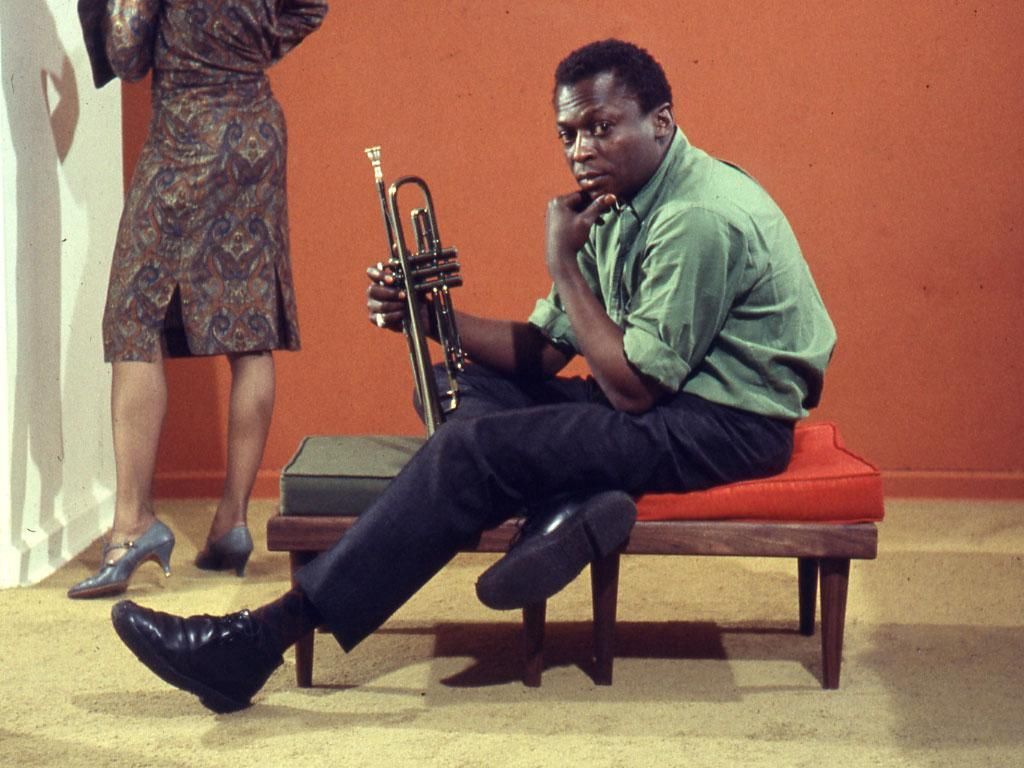
Looking like the record sleeve: Miles Davis with mint button-down shirt and cropped strides
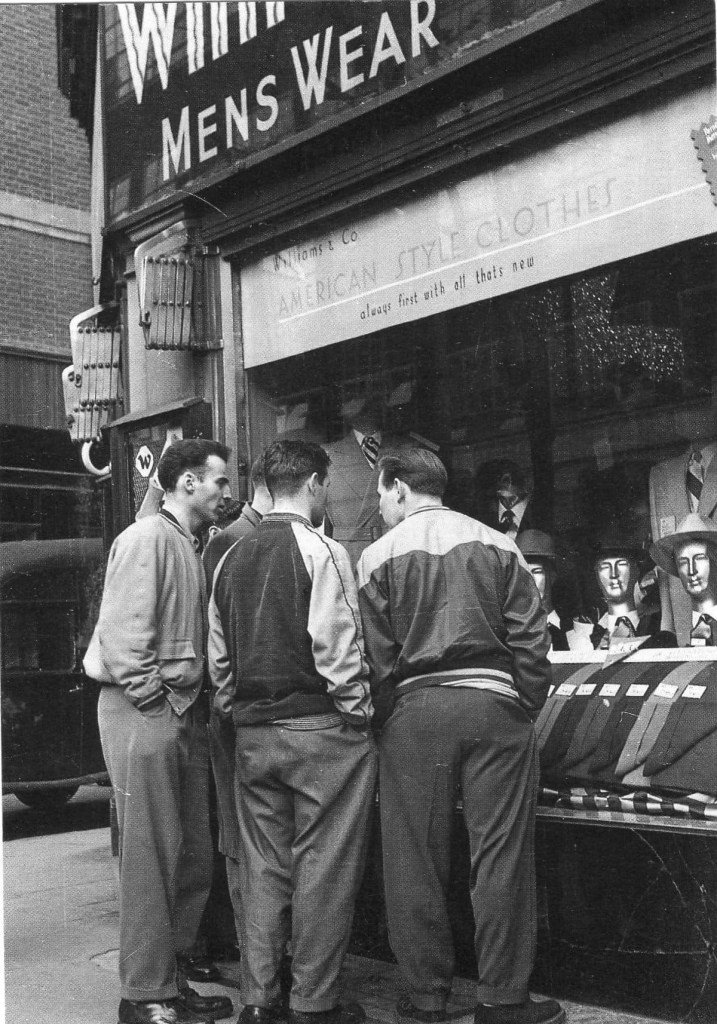
David’s was a small but hugely influential menswear shop on Charing Cross Road, just north of Cambridge Circus, run by David Silverman. Opening in the late 1940s and surviving into the mid-1960s, it was one of the first places in post-war London to specialise in imported American menswear. Long before Austin’s, and long before John Simons opened The Ivy Shop, David’s was where you came for the real thing: Arrow and Hathaway button-down shirts, McGregor windcheaters, Van Heusen, chinos and penny loafers, imported from the US at a time when they were still a rarity in Britain.
Many of the early modernists and jazz fans of the 1950s bought their first button-downs and penny loafers here, laying the sartorial foundations on which mod – and later skinhead – style would draw. The shop itself was remarkably plain, with nothing in the window or on the frontage to suggest its importance. No fashionable signage, no flashy displays – just a quiet reputation that spread by word of mouth among those who knew where to find the good stuff.
Both Richard Weight in Mods! and John Simons, in later interviews, recalled David’s alongside Austin’s and Cecil Gee as one of the shops that shaped Britain’s emerging modernist style. When Simons later opened The Ivy Shop in Richmond and, later, The Squire Shop in Covent Garden, he acknowledged the debt: “They had the real American stuff before anyone else. That was where you went if you wanted to look like the record sleeve.”
By the time skinheads appeared at the end of the 1960s, David’s had already disappeared. But the button-down shirts, loafers, cropped trousers and understated look that defined the early skinheads didn’t spring into existence overnight. Many of those clothes – and the eye for them – had first found their way into London through shops like David’s.
Music: Miles Davis – ‘Move’
Williams & Co: another American-style clothes shop in Charing Cross Road, 1950s
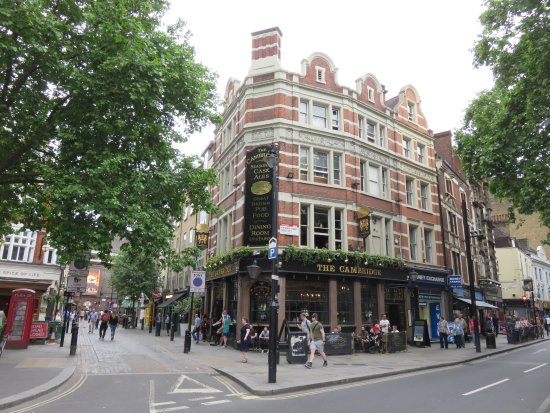
We leave David’s and continue south along Charing Cross Road, passing Cambridge Circus on our way towards Tottenham Court Road. At the junction stands The Cambridge pub, where punk history offers a small footnote.
According to Paul Burnley’s ‘Nazi Rock Star’, Ian Stuart and Joe Strummer first met here in 1977, when it was a popular and convenientlylocated pre-gig punk hangout, and knocked about together for a while afterwards. There is nothing especially remarkable about that in itself – Stuart was then simply another punk singer on the London circuit. The anecdote may well be true, but Burnley’s book appears to be the only source for the claim.
From here, we continue a few hundred yards further south along Charing Cross Road, arriving at the former site of the Astoria.
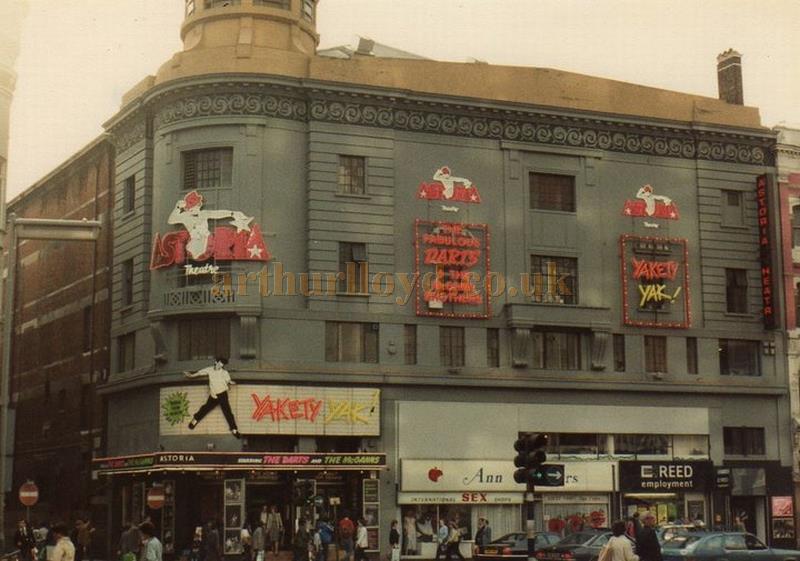
The Astoria in 1983
The Astoria, at 157 Charing Cross Road, just a minute’s walk from Tottenham Court Road Station, operated as one of London’s leading music venues from 1976 until its closure in 2009. Originally built in the 1920s as a warehouse, the building was later converted into a cinema and ballroom before becoming a theatre in the 1970s. Following further redevelopment, it reopened in the mid-1980s as a nightclub and live music venue.
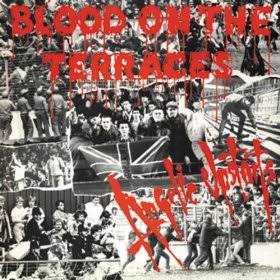
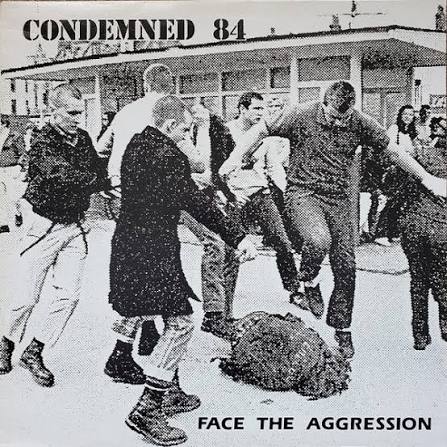
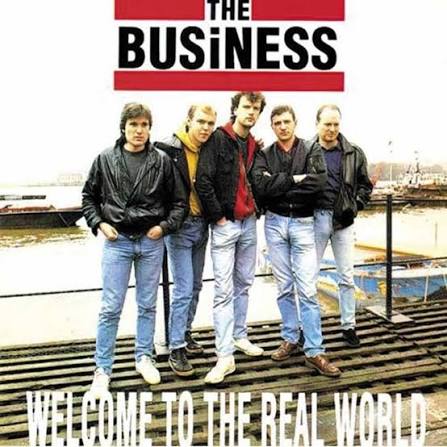
Besides providing a stage for numerous bands that would go on to become household names, it was here that Oi! The Main Event took place on 2 April 1988, featuring Angelic Upstarts, The Business, Condemned 84, Vicious Rumours, Judge Dread and others, and attended by skins from across Europe. Organised by the Cutdown shop, the event sold out its 1,500 tickets in short order, with crowds of skinheads gathering along Charing Cross Road under a heavy police presence. Find below footage of The Business and the crowds outside, filmed by a Dutch television crew.
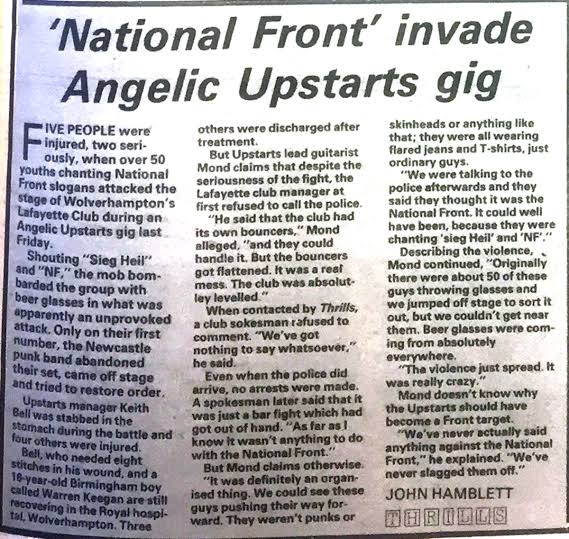
The gig proceeded smoothly – until the Upstarts, the most openly left-wing band on the bill, took to the stage. Around 100 Blood & Honour supporters, including figures such as Ian Stuart and Nicky Crane, stormed the performance, seizing the microphone stand from Mensi. Security rushed to the stage as the band retreated and barricaded themselves inside the venue’s locker rooms. Police soon arrived, but only around sixteen arrests were made.
The Upstarts had experienced occasional trouble with NF and BM supporters at their gigs as far back as the late 1970s, and on several occasions, they had stepped in personally to deal with it. But these incidents did not appear to be coordinated attacks aimed specifically at the band. Rather, they were part of the wider disruption that fascist supporters were causing at gigs back then.
This began to change as the Upstarts moved further left from their earlier outlook, which had been more traditionally ‘patriotic Labour’ (though still street-based and anti-police). Later lyrics such as “I don’t want to fight the Soviet, I don’t believe he is a threat” were unlikely to go down well with a movement operating under the banner of ‘Rock Against Communism’. Mensi’s increasingly outspoken criticism of the far right in interviews further antagonised them.
According to some, the invitation to the Upstarts to perform at the Main Event was designed as a trap by Blood & Honour from the outset. After all, the event was organised by the Cutdown shop off Carnaby Street (see Part 2 of our walk), which was run by Ian Stuart’s business partner, Andrew Benjamin aka ‘Andrew St John’.
It was this incident that pushed the Upstarts closer to Anti-Fascist Action – and, more specifically, towards Red Action, the ‘squadist’ hard core within an AFA coalition that also included less confrontational elements. Ian Stuart and Blood & Honour declared that the Upstarts would “never play in London again”. Were they proved right? Our next stop provides the answer, dear reader.
Current status: The Astoria closed in 2009 and was demolished as part of the redevelopment associated with the Crossrail project – helping yuppies get into London a little more efficiently. The site is now part of the expanded Tottenham Court Road Station complex for the Elizabeth line.
Trouble started way backin 1979
Music: Angelic Upstarts – ‘I Don’t Wanna Fight The Soviet’ Judge Dread – ‘When We Were Skins’ (a great nostalgic song about the days of ’69, but also about the only Judge Dread tune I can bear listening to at all) The Magnificent – ‘Heat of the Street’ Section 5 – ‘Every Saturday’ Condemned 84 – ‘Unite’ Vicious Rumours – ‘Moose on the Loose’ The Business – ‘Saturday’s Heroes’
Leaving the Astoria behind, our next stop is just a few doors further south along Charing Cross Road.
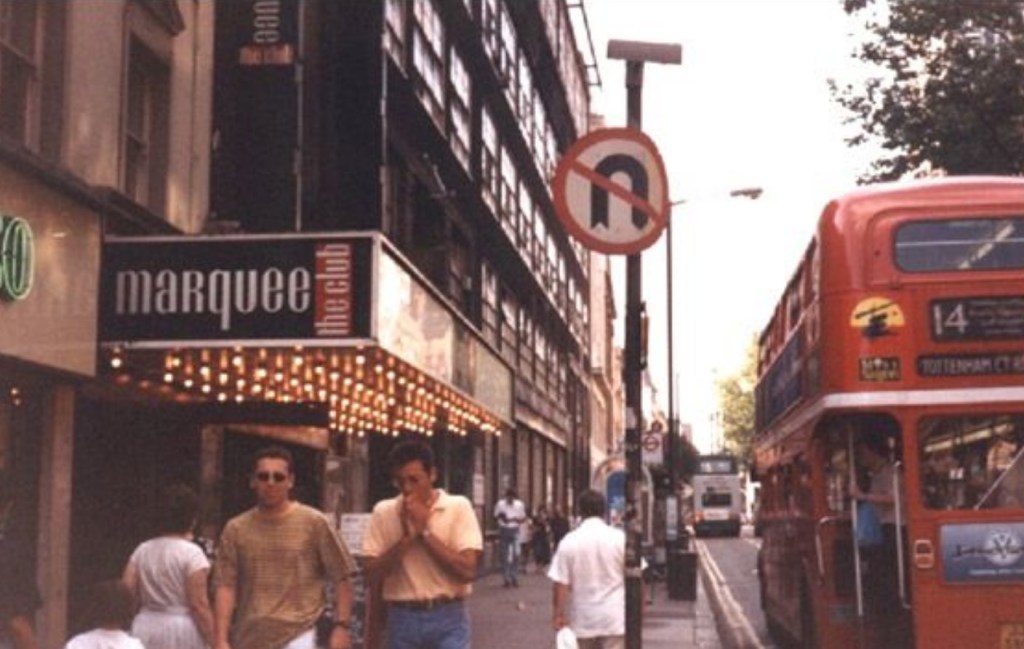
The Marquee Club, 105 Charing Cross Rd, Soho.
In 1988, the legendary Marquee Club (see Part 4 of our walk) was forced to leave its long-time home on Wardour Street and relocate to a larger venue at the former Cambridge Circus Cinematograph Theatre.
On 16 October 1989, just a year and five months after Blood & Honour had vowed that the Angelic Upstarts would “never play in London again”, the band returned to the capital – not only playing in London, but performing at one of the city’s most high-profile venues, just a few doors down from the spot where Blood & Honour supporters had stormed their stage.
The Upstarts were now close to Red Action, the ‘squadist’ hard core of AFA, and it was this street-fighting faction that provided security at the Marquee that night. Threats had been received, and there were indications that Blood & Honour might attempt to smash up the gig. AFA searched punters for weapons and checked for signs of dubious political affiliations. But the fascists never showed. Following performances by ranting poet Attila the Stockbroker and Blaggers ITA, the Upstarts reportedly delivered a blinding set and everyone had a great time. In fact, the venue eventually had to pull the plug because the band refused to leave the stage, playing encore after encore.
This was actually the Upstarts’ second London gig after the Astoria incident. Their first was at the Sir George Robey in Finsbury Park on 21 January 1989, less than a year after the Blood & Honour warning. Contrary to B&H’s prediction, the Upstarts continued to play London regularly right up until Mensi’s passing in December 2021. I missed their final London show in Camden in 2019, but caught their second-to-last, at the Islington Academy on 15 December 2018, alongside Cockney Rejects.
Angelic Upstarts in the ’80s
Meanwhile, Blood & Honour bands are reduced to playing miserable gigs in fields in the middle of nowhere, at secret locations with redirection points – if they’re lucky.
It was the right wing lot that started this particular war, and it hardly needs spelling out who lost it.
Music: Angelic Upstarts – ‘Red Till Dead’ Atilla the Stockbroker – ‘This Is Free Europe’ The Blaggers – ‘Freedom Fighter’
Current status: The venue is now the Montagu Pyke, a Wetherspoons pub, and has plenty of Marquee-era rock paraphernalia on its walls.
We leave the former site of the Astoria and head east along New Oxford Street towards Holborn. Just off our route, on High Holborn, stands the Princess Louise – one of London’s finest surviving Victorian pubs, with its wood-panelled booths, etched glass and ornate interior. It has no particular skinhead or Oi connections, apart perhaps from the fact that Football Factory author John King, who has written for Creases Like Knives before, likes to have his birthday drinks here. By now it’s getting late, and if you’re in need of another pint, this is the place to have it.
From the Princess Louise, we continue east along High Holborn before turning south into Red Lion Square. A few minutes later, we arrive at Conway Hall – a building with a long history of radical thought, debate and free expression (including of the physical kind).
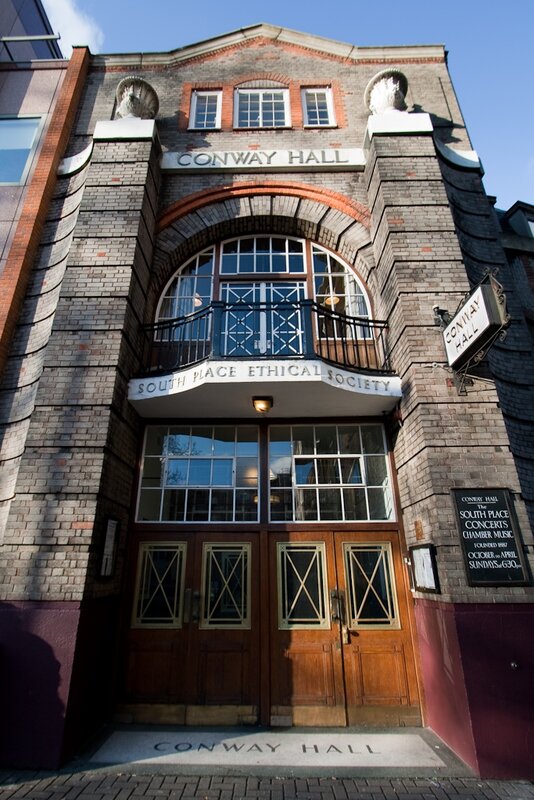
Conway Hall, 25 Red Lion Square, Holborn:
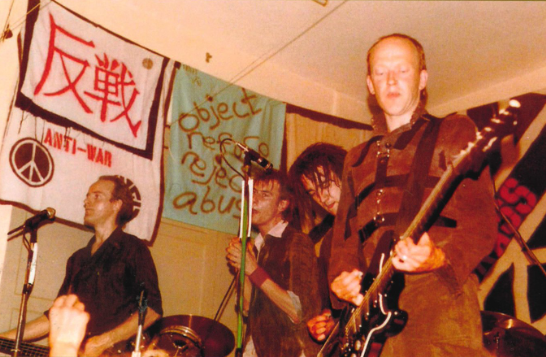
Built in 1929 as the home of the South Place Ethical Society, it continued a tradition of freethinking that stretched back to the early nineteenth century, hosting lectures, meetings and discussions on religion, politics, science and social reform. For generations, it has provided a platform for movements that might struggle to find a home elsewhere. Naturally, not all the ideas expressed here have sat comfortably with its broadly progressive tradition. On 18 August 1979, for example, the venue hosted the first openly National Front-promoted ‘Rock Against Communism’ concert.
The event was supposed to be headlined by a reformed Skrewdriver. Ian Stuart, the National Front’s Blackpool organiser, had recently abandoned the short-lived Manchester incarnation of the band and, after considerable persuasion from Young National Front leader Joe Pearce, agreed to reform Skrewdriver and play Rock Against Communism.
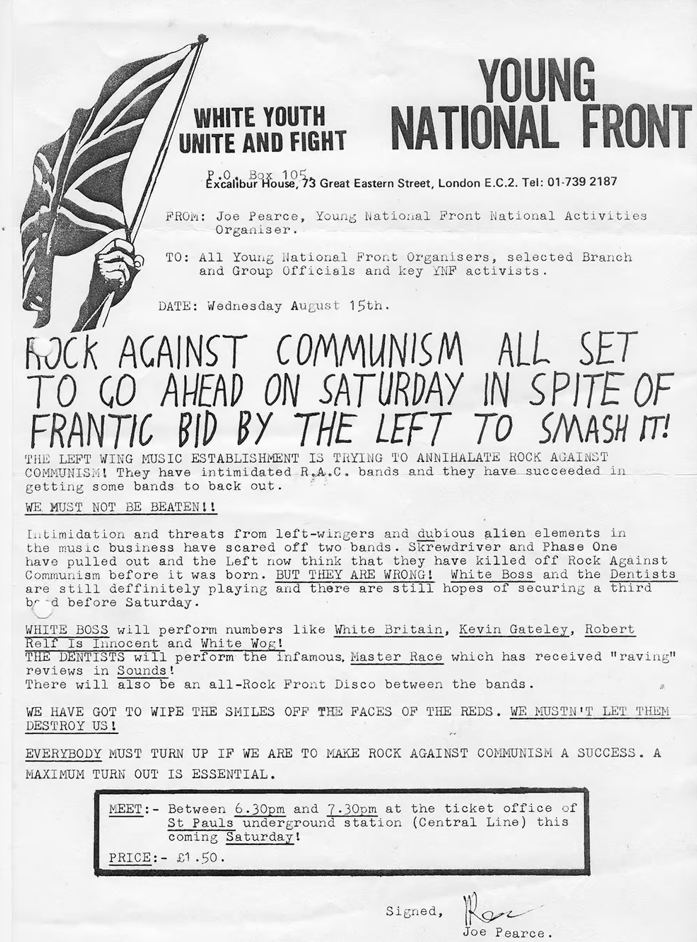
But had he actually managed to assemble a functioning band in time? An official Young NF organisers’ bulletin, written by Pearce and issued only eight days before the gig, stated that the organisation was “still trying” to get Skrewdriver onto the bill. It added that the band had “definitely” agreed to play RAC events “in the future”, but that it was not yet certain they could make this first concert. That suggests the line-up may still have been in doubt. Alternatively, did Skrewdriver withdraw because of “record company pressure”, as NME journalist Vivien Goldman reported the organisers telling her on the night? Skrewdriver, insofar as they existed at all in August 1979, had no record deal.
A second Young NF organisers’ bulletin, dated 15 August – just three days before the event – claimed that both Skrewdriver and another band, Phase One, had been scared off by “intimidation and threats from left-wingers and dubious alien [read: Jewish] elements in the music business”. This, to me, is the most likely explanation: Stuart probably assembled some makeshift version of Skrewdriver in time for the gig, only to lose his nerve when some music industry type warned him that, while he still had a decent chance of getting signed, playing that night would ensure he’d be blacklisted forever. Carrot and stick. Of course, this is pure speculation on my part. But it’s made more plausible by the fact that, when news of Stuart’s almost-participation began to circulate regerdless, he sent another of his notoriously mealy-mouthed letters to Melody Maker, insisting he was completely apolitical and describing both the far left and the far right as “threats to this country”.
Image source: Punk77 website
The night went ahead with Coventry skin/punk band White Boss (named after a brand of glue popular with solvent-sniffing kids), Leeds NF band The Dentists, whose idea of punk appears to have involved facial hair, and a teddyboy deejaying between bands.
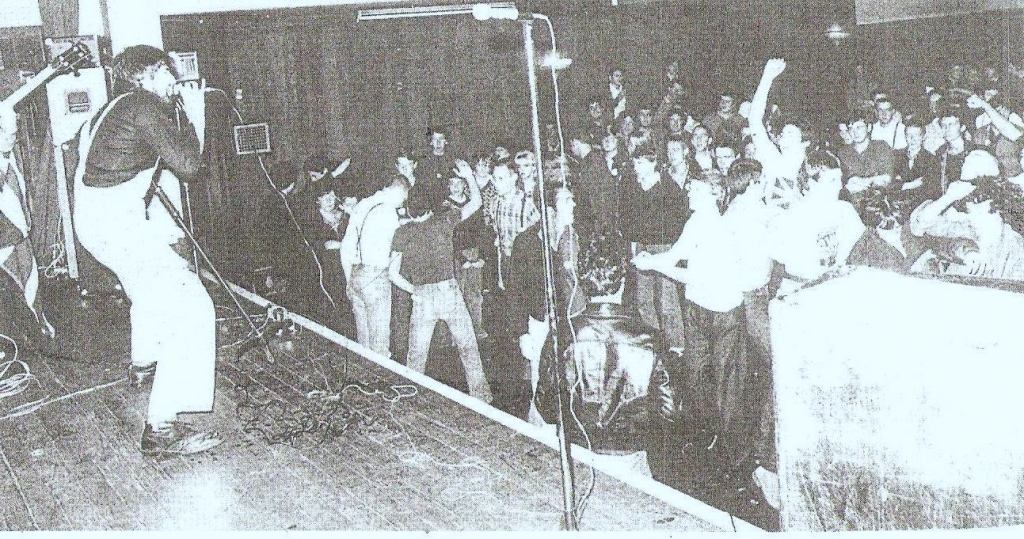
The following month, on 7 September, Crass – one of history’s most dreadful punk bands at almost every level: musical, aesthetic, political and otherwise – played a concert at the Conway Hall, supported by the equally lamentable Poison Girls. The majority of the audience consisted of black-clad punks, including many from the King’s Cross scene and nearby squats. They were easy prey for the 30 or 40 British Movement bullies who descended on the poorly stewarded event, turning yet another gig into a stage for their propaganda-of-the-deed campaign – which in practice meant stopping people from enjoying a night out. According to a report in The Leveller at the time, a black youth was surrounded and “beaten and kicked until he ran out of the hall”. Others were picked on for no apparent reason, while a group of BM members took over the men’s toilets and assaulted unsuspecting visitors.
All this led some to leave the venue and call in anti-fascist squadists – young SWP members who were soon to be expelled for their robust, hands-on approach to the far right, which was increasingly at odds with the party’s ‘broad-based’ strategy. Many of them, much like the BM and Young NF, were skins. When the sqadists showed up, the BM mob quickly discovered that the propaganda of the deed could sometimes cut both ways. A young man wearing a union jack badge, who had no far-right connections but was caught up in the squadists’ response by mistake, was the regrettable collateral damage. Even so, the fascists’ evening of easy intimidation was brought to an abrupt end.
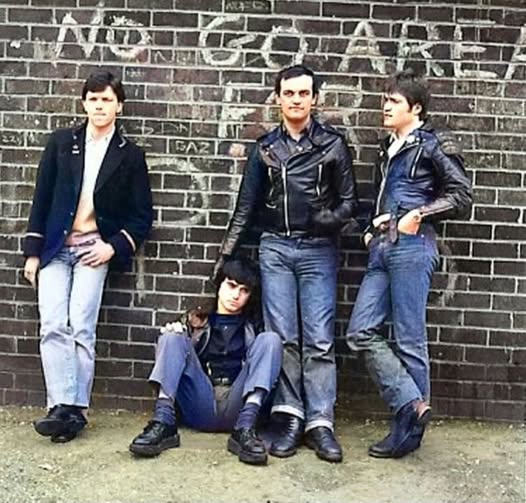
Crass circa 1979 (photographer unknown)
Crass audiences had been repeatedly targeted by the Young National Front before, for example at a benefit gig in Ealing in July 1978. Other targets of the Young NF and British Movement’s campaign of breaking up gigs included The Ruts, Sham 69, The Slits and others. Even so, the pea-brained Crass and their ‘co-thinkers’ in Poison Girls managed to blame the organised left, including Rock Against Racism. In their eyes, the violence was the result of the left-wing politicisation of the punk scene. After all, for a certain type of anarchist, there is no greater bogeyman – and crucially historical rival – than the ‘authoritarian left’.
Ideologically, Crass were secularised Quakers, combining an absolutist pacifism with a suspicion of all organised power. Theirs was a worldview in which the revolutionary, the counter-revolutionary and the fascist could all appear as different expressions of the same problem. In fairness to the Quakers, they have a substantial history of involvement in social struggles.
Fast-forward to June 1981, and Conway Hall once again continued its long tradition of hosting important debates on the issues of the day – this time, Oi! The Debate Part Two, hosted by Sounds journalist and Oi! The Album compiler Garry Bushell.
Dungarees and beards: The Dentists at Rock Against Communism, Conway Hall, 1979
Music:
Skrewdriver – ‘Breakout’ A cracking tune writtten in 1979, when Stuart could never quite decide whether to continue pursuing a music career in London or resign himself to the more modest role of an NF organiser in Blackpool. What the song glorifies as a dramatic decision to leave his hometown behind and chase the bright lights of the capital was, in reality, a period of indecisiveness and drift. After a spell in Manchester with an all-new Skrewdriver line-up and the release of the Built Up Knocked Down EP, Stuart moved back and forth between London and Blackpool several times in that year.
Crass – ‘Bloody Revolutions’ A typically slow-witted number and among the band’s best-known tunes, partly written in reaction to the events at Conway Hall. It lumps together the French Revolution, Mao’s China and the Nazi holocaust as part of one undifferentiated catalogue of horrors. Revolutions are bad, is the clear message. Perhaps only a pacifist countryside commune under eternal feudalism would have met Crass’s exacting standards.
From Red Lion Square, we continue north along New North Street before turning east into Clerkenwell Road. A few minutes later, we turn south into Hatton Garden and arrive at No. 58 – right in the middle of London’s historic jewellery quarter, where diamonds, dodgy dealings and organised crime have long existed in close proximity.
Treasure Isle club, 58 Hatton Garden, Holborn.
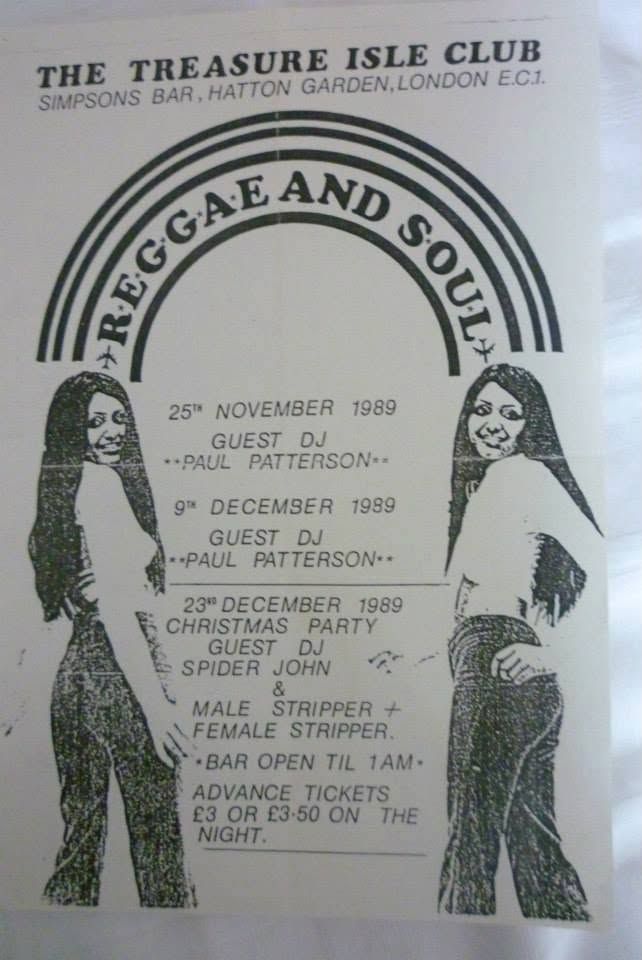
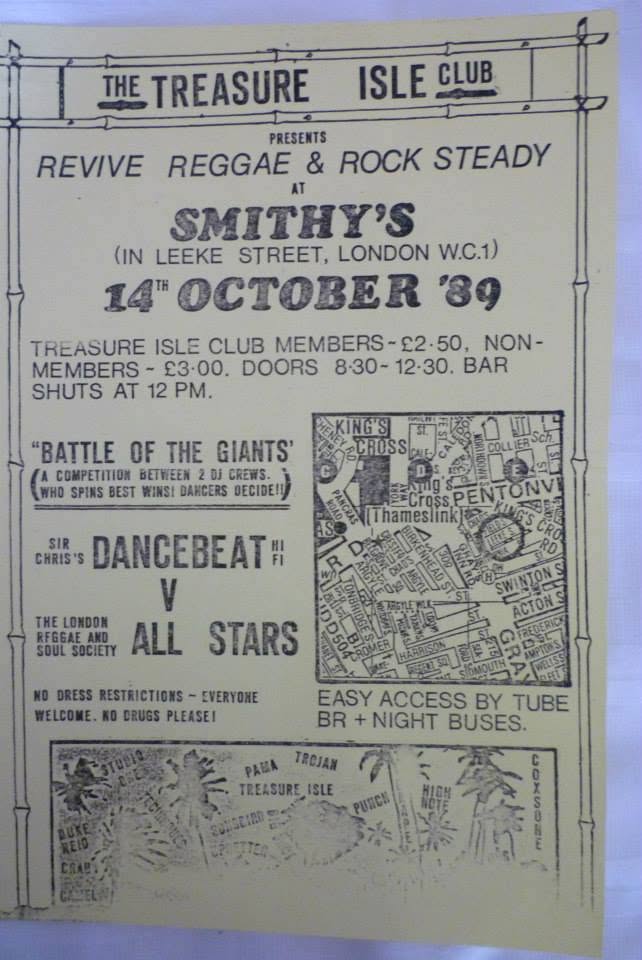
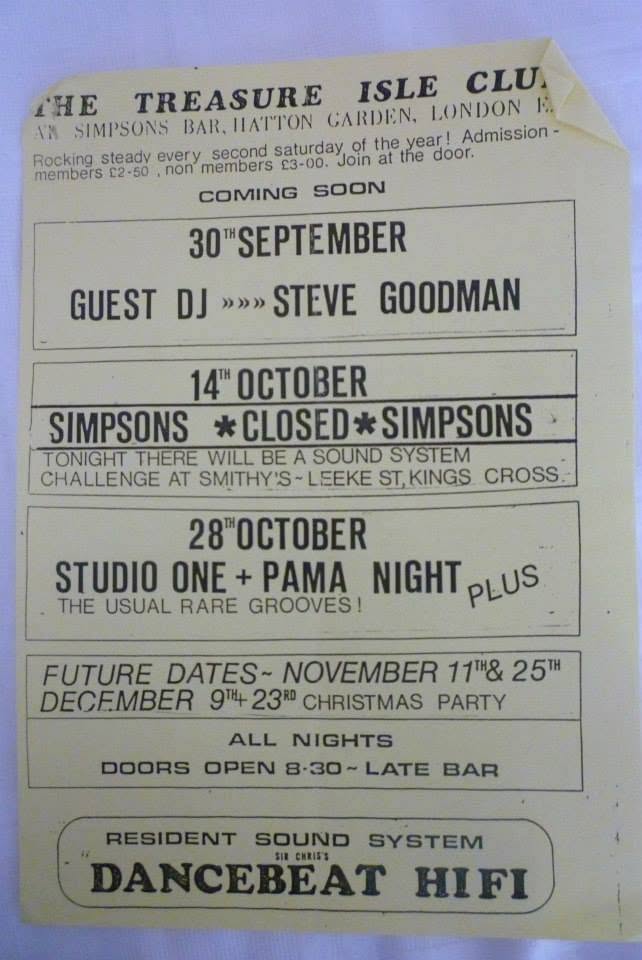
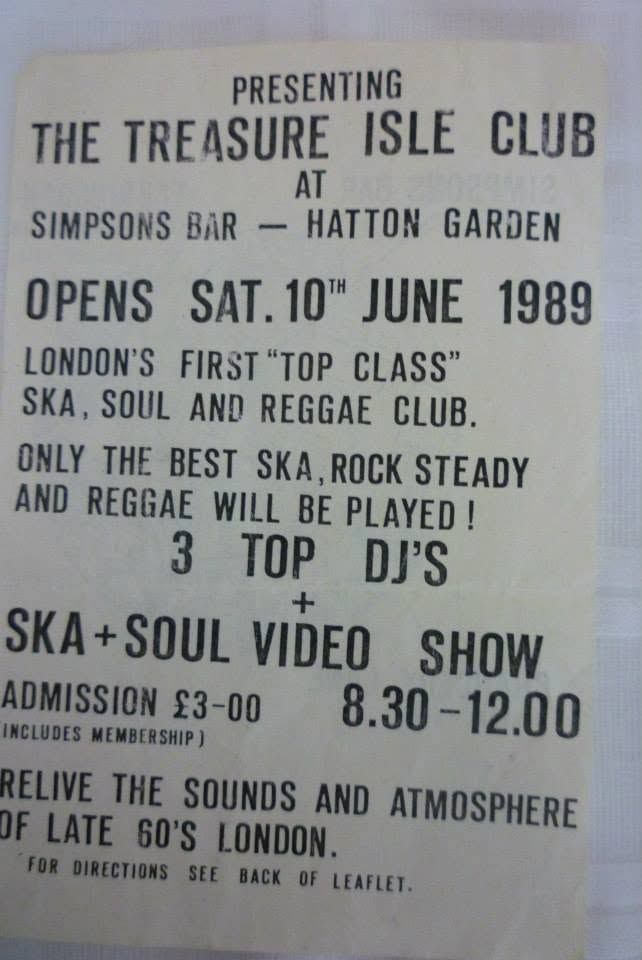
From June 1989 until an end date that remains a mystery, this is where Chris Prete ran Treasure Isle, a DJ night dedicated to boss reggae, ska and soul. As the flyer to the left indicates, it also offered the egalitarian spectacle of both female and male strippers – and guest DJs included Steve Goodman.
Prete was an original skinhead and an authority on Jamaican music. In 1996, George Marshall’s Skinhead Nation described him as follows:
“Chris Prete, who ran the Official Trojan Appreciation Society as well as supplying the label with top notch release projects and sleeve notes to match, is one such skinhead who is a walking encyclopaedia on the subject. Chris first became a skinhead when he was 11 or 12 years old, mainly because all of his mates were skinheads and he liked the sharp, clean image. ‘There weren’t many people who weren’t skinheads or who didn’t have long hair. You were either one or the other, or at least that’s how I saw it at the time. And in London, it seemed to be mainly skinheads.’
Chris and his mates would imitate the older kids who were also skinheads, roaming the local streets in gangs named after pubs, street corners and the like – the Acre, the Estate, the Queensbury. It was the older skins who first introduced him to reggae – Derrick Morgan’s ‘Tougher Than Tough’ was one of the first records Chris heard – and he has been captivated by the music ever since. His Trojan collection boasts over 1,000 singles and 400 albums – he also had a lot of Pama releases too, but sold them to concentrate on his first love, Trojan. There are plenty of skinheads out there who would give their right arm for a tenth of the sounds Chris keeps neatly sorted by label, from Attack to Upsetter, the latter of which he ranks alongside Downtown and Trojan itself as the top names in skinhead reggae. Personally though, he rates the Copperfield Reid and Treasure Isle subsidiaries as the icing on the Trojan reggae cake”.
Prete’s Official Trojan Appreciation Society sent out newsletters, organised competitions and produced membership cards, badges and posters. Incidentaly, it was modelled on British reggae journalist Eric Denham’s much earlier West Indian Music Appreciation Society, who ran it from 1966 to 1977 from a bedroom at his parents’ house. For a number of years in the ’70s, his project was finanically backed by Trojan.
As for Treasure Isle, if anyone has more information let’s hear it – all I’ve really got is the flyers seen here, kindly supplied by Alan Handscombe.
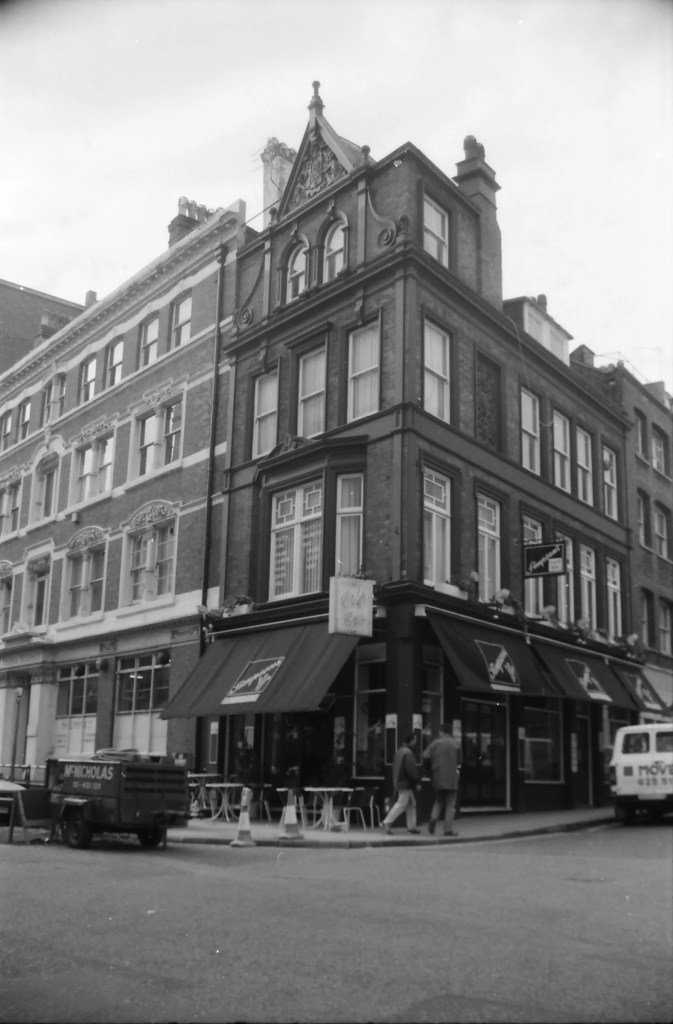
Current status: The Simpsons pub where Treasure Isle was held closed in 1997. The premises subsequently became Tuffo’s Place, a sandwich bar and cafe, in 2001, and are now occupied by Lily’s Dumpling, a Chinese hot pot restaurant.
Simpsons in October 1988
Music: Derrick Morgan – ‘Tougher Than Tough’ Boris Gardiner & Love People – ‘Scarface’ The Starlites – ‘You’re a Wanted Man’ Andy Capp – ‘The Law’
From 58 Hatton Garden, we continue north towards Holborn Viaduct before turning east into Cowcross Street.This part of London was once rather more concerned with meat, markets and working-class life than it is today.
London Lesbian and Gay Centre (LLGC), 67–69 Cowcross Street, Farringdon
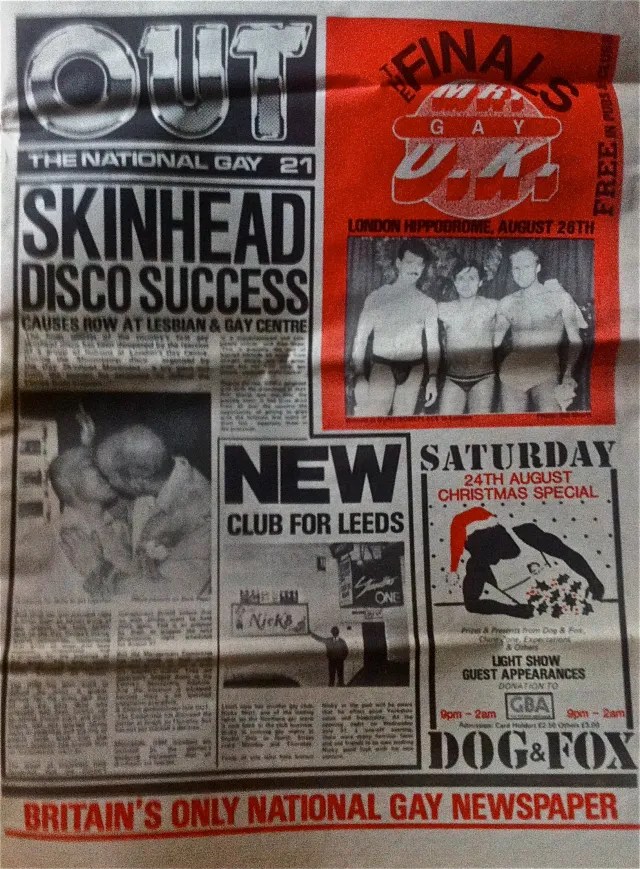
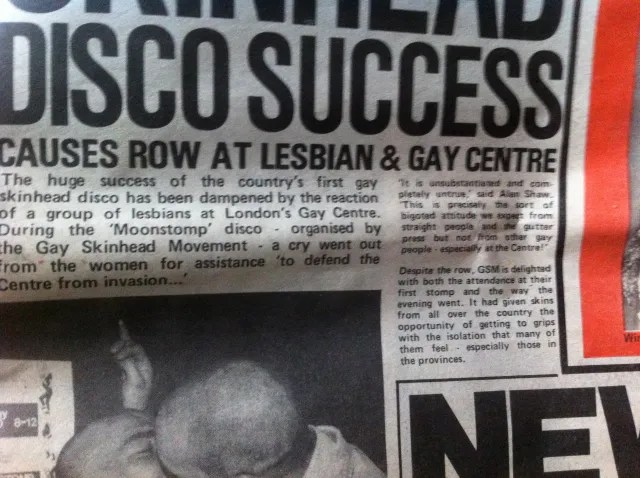
By the mid-80s, there were so many gay skinheads in London that they formed a group called the Gay Skinhead Movement and began organising their own events. The popular narrative says that gay skinheads were merely dress-up fetishists with no connection to actual skinhead culture, and for many of them, that was certainly true. But if the relevant historical literature is to be believed, that’s not how it began.
As far back as 1969–70, there were plenty of gay lads among London’s skins. They met in places such as the Flowerpot in St Ann’s Road in the Tottenham area, or the Union Tavern on Camberwell New Road, which drew fairly huge crowds of gay skins on Tuesday nights for an all-male skinhead reggae disco.
The same seems to have happened in the 80s. It apparently began with gay blokes meeting each other on the regular skinhead scene, then gradually finding their own pubs and venues where they could meet away from the others, before eventually setting up their own events. But the whole thing then became a fashion among the broader gay crowd, and that’s when the cosplayers and fetishists moved in, soon outnumbering the actual skins. Today’s gay skinhead scene, which still limps on in cities such as London and Manchester, has nothing to do with skinhead culture at all: it’s all black-clad bonehead styles, riding-boot DMs, latex Perrys, bleachers and techno music.
Sometime in 1985, the Gay Skinhead Movement organised its first Moonstomp disco at the London Lesbian and Gay Centre at this address. Funded by the Greater London Council before Thatcher abolished it, the centre was a home for London’s various non-straight subcultures, each bringing its own particular subset of earnest identity politics. And identity politics being what they are, they clashed and competed. Before long, the lesbians came to regard the centre as being invaded by ‘fascist skins’, making them feel ‘unsafe’.
The first Moonstomp disco therefore proved to be the last, giving the gay skinheads an early taste of the ‘safe spaces’ concept that, three decades later, would come to haunt the British left – first internally, as a means of suppressing political dissent, then as a weapon for the right to use against the left (see: Israel may not be criticised because this makes Jewish Labour Party members and Jewish students feel ‘unsafe’).
There was, however, an irony lurking in all this. Not a few of those gay skinheads actually were far right and simultanously ran with the Blood & Honour crowd. “We now know that some gay skins started out as fully fledged neo-Nazi skins”, wrote TV historian Tony McMahon on his 70s 80s 90s blog – and some of them stayed that way. Nicky Crane was far from an oddity.
Music: The Apostles: ‘Fucking Queer’ (anarcho-punk was hardly a hotbed of poetic ambiguity, yet here was a notably ambivalent tale of a self-hating gay skinhead. Unlikely an instant hit with all of the genre’s adherents)
Current status: At 67–69 Cowcross Street you will find The Fence, a Fuller’s pub and bar.
We leave Cowcross Street and head west to Farringdon Road, turning left and continuing south. This was once part of London’s Italian quarter.
Penny Black, 106 Farringdon Rd, Clerkenwell.
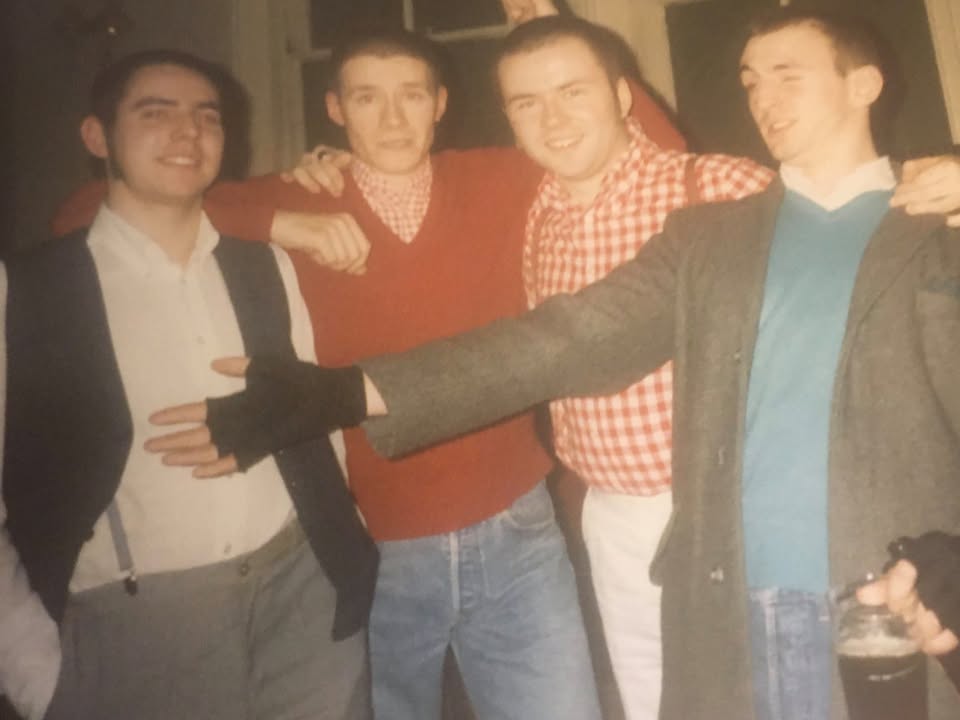
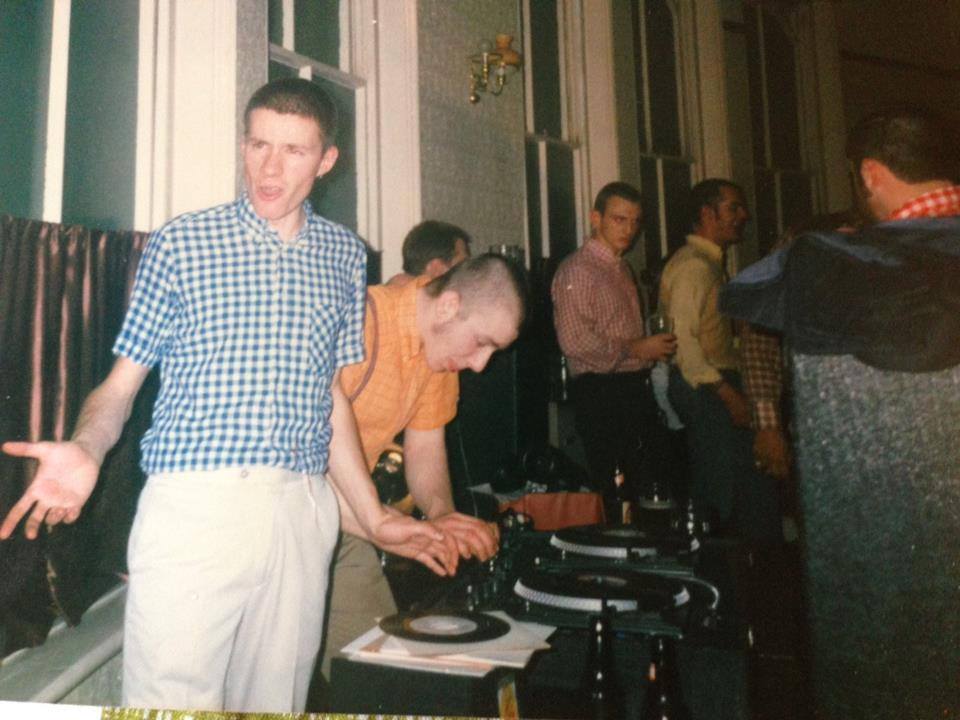
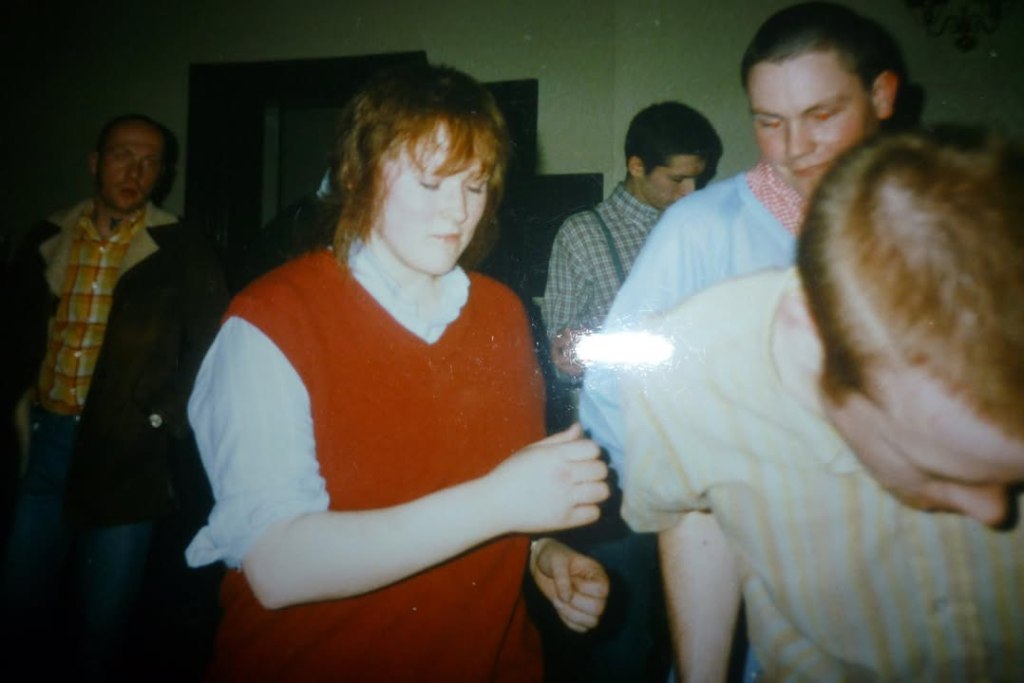
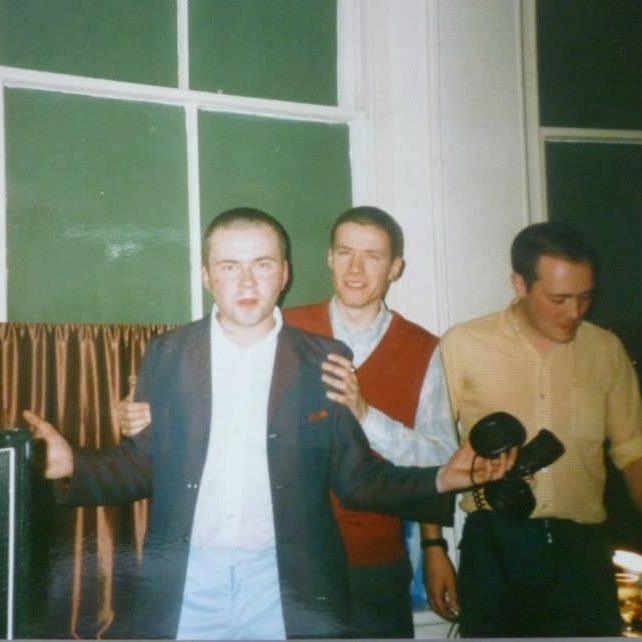
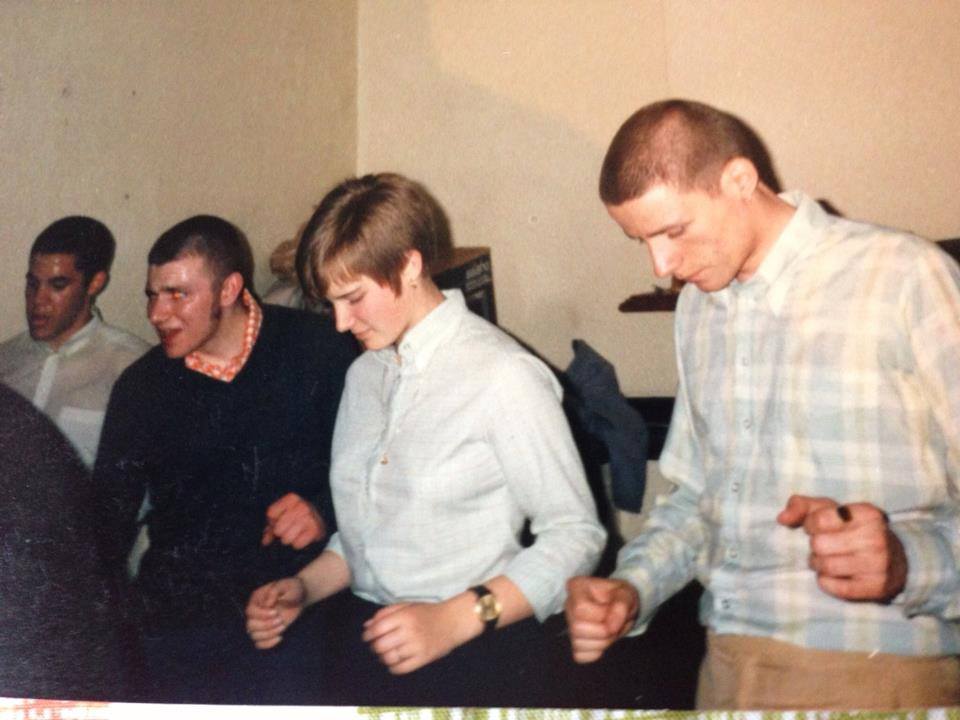
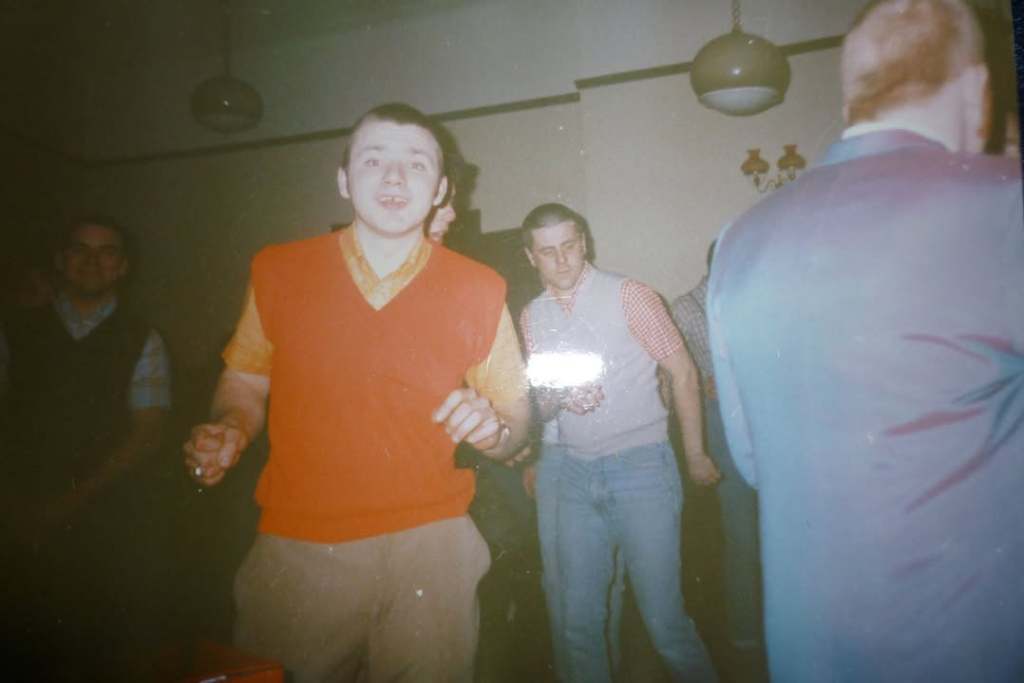
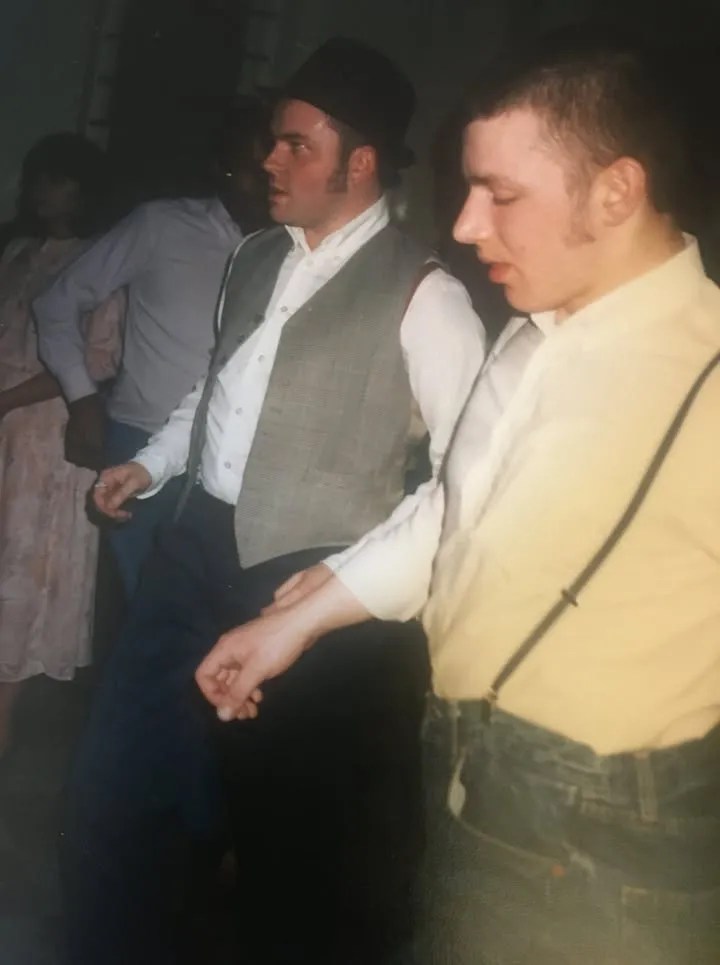
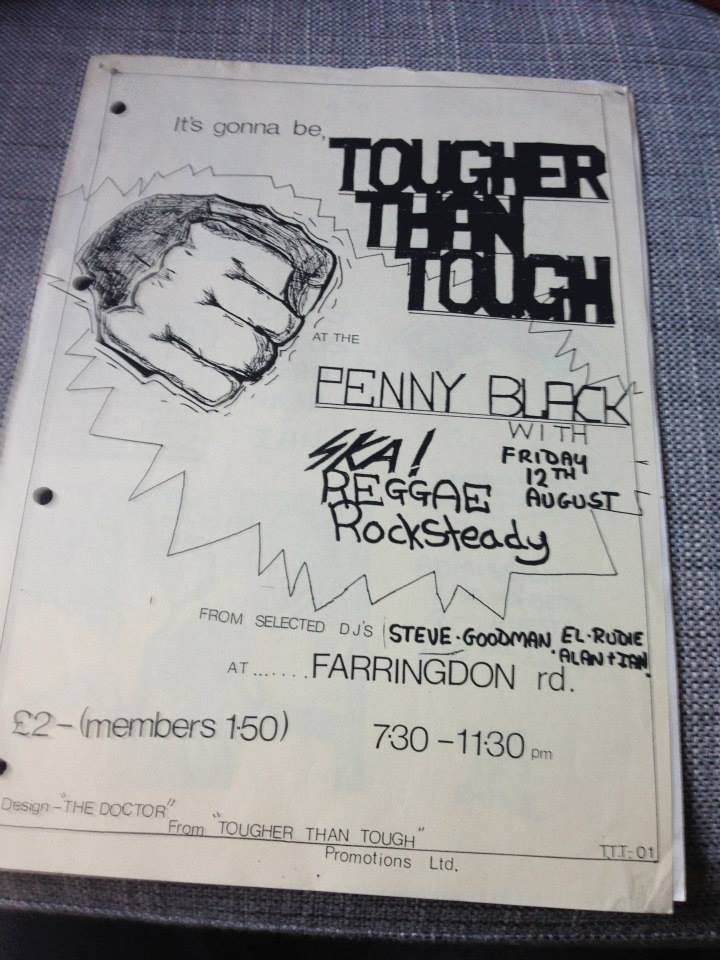
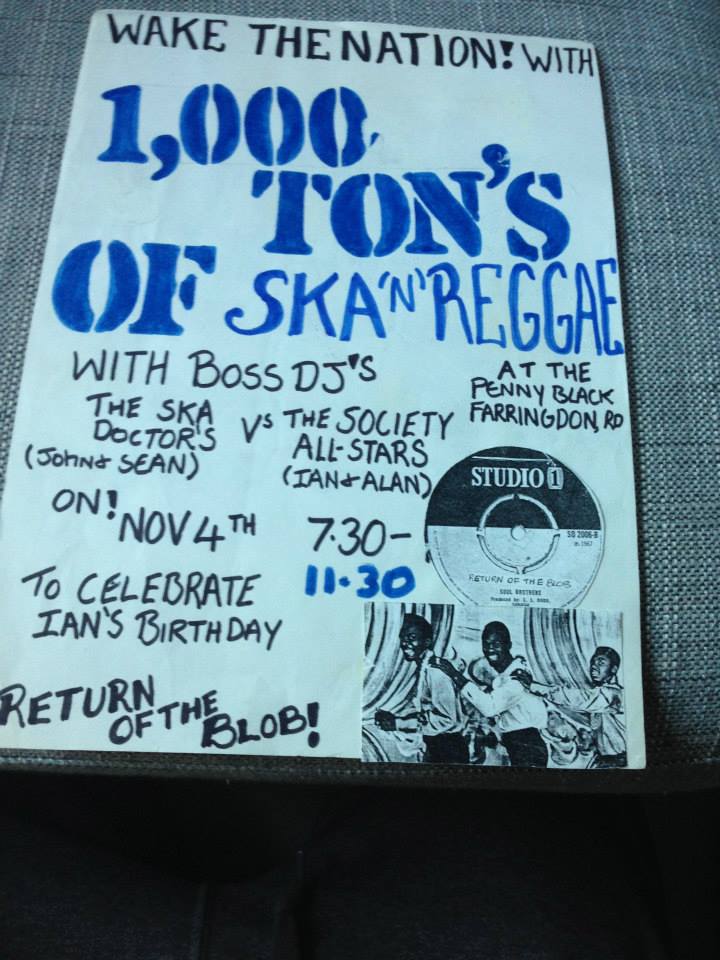
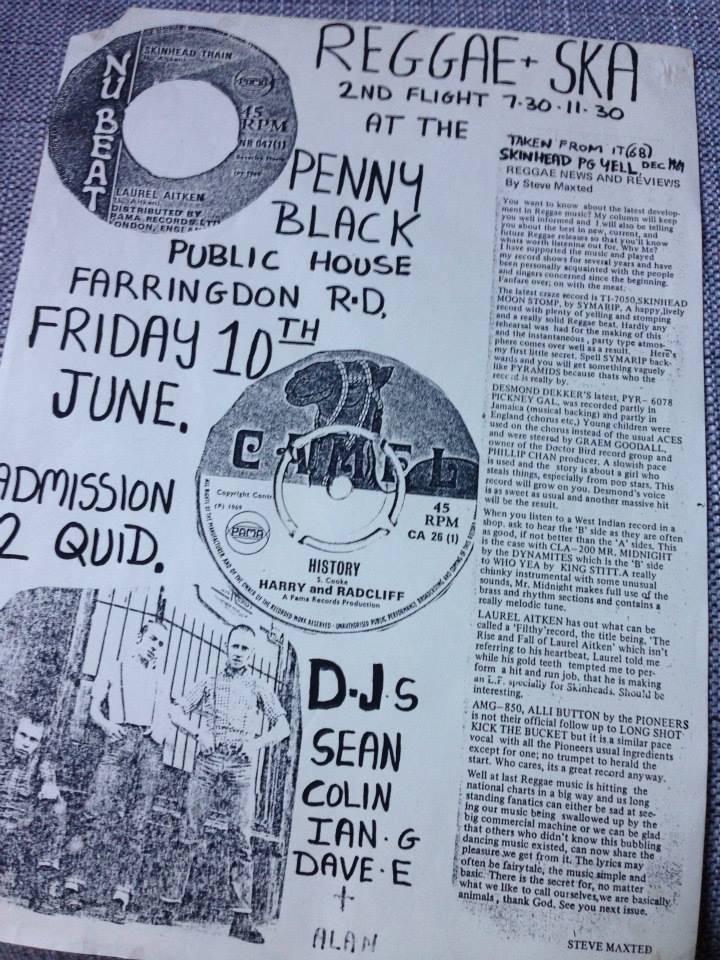
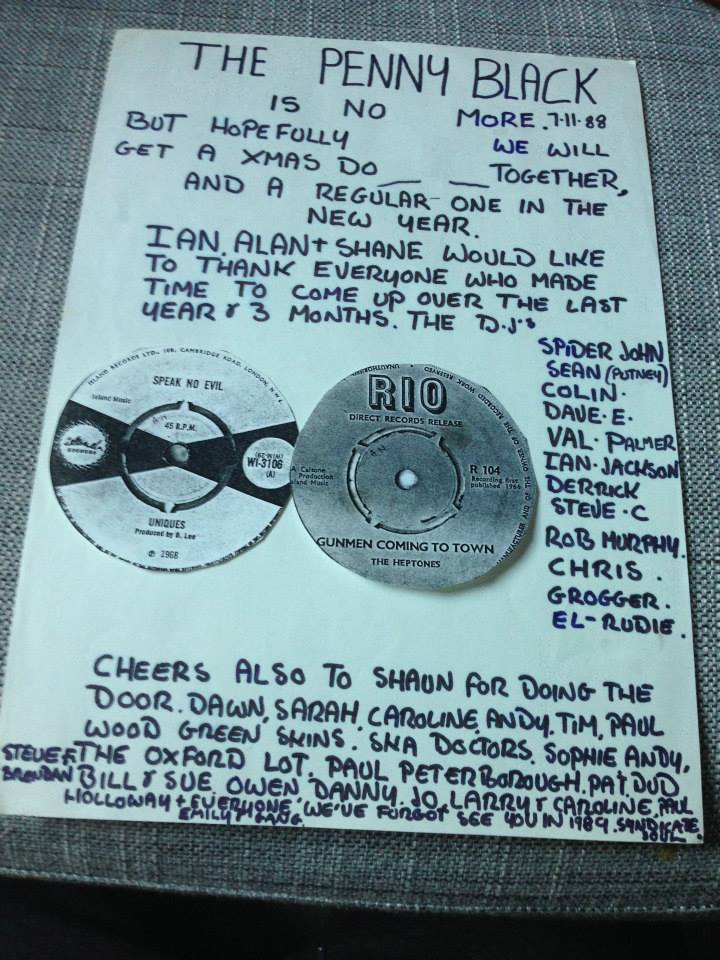
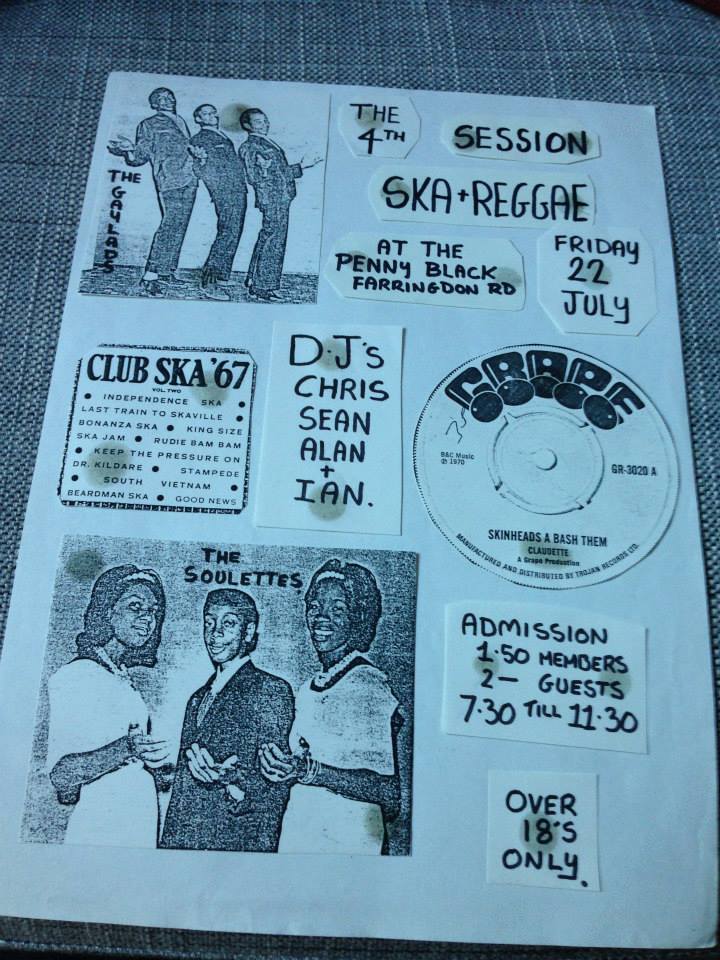
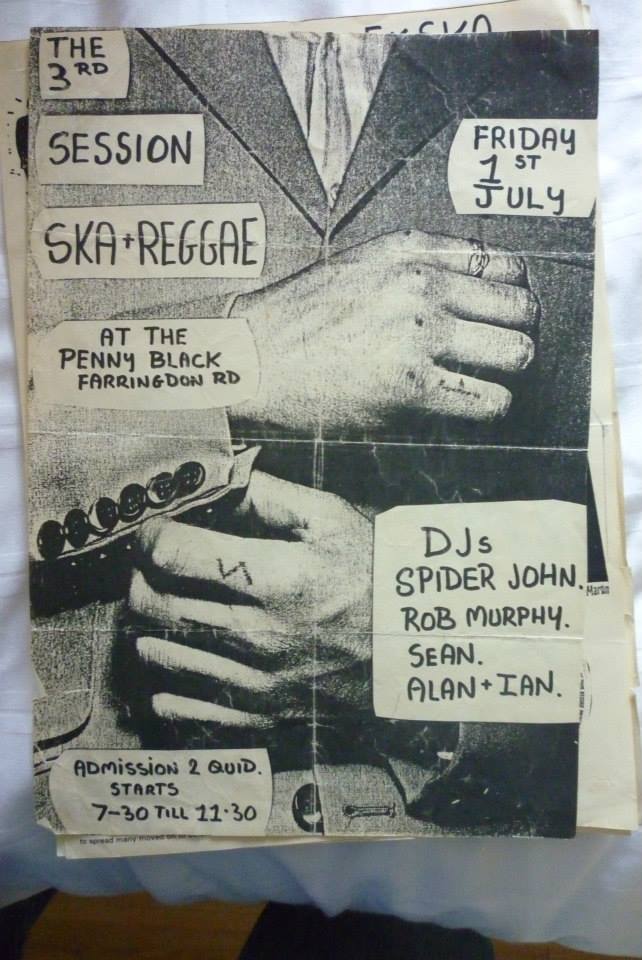
From 1864 until 1877, 106 Farringdon Road, now 2 Exmouth Market, housed the Mazzini-Garibaldi Club, an Italian working-men’s club associated with the Italian patriots and revolutionaries Giuseppe Garibaldi and Giuseppe Mazzini. The site later became home to the Penny Black, a pub built in the 1890s and previously known as the Clerkenwell Tavern. A century later, the Penny Black had become a venue for skinhead reggae and soul nights organised by DJ Alan Handscombe. Over to Alan, who also kindly provided all these photos and flyers from the Penny Black:
I used to run skinhead reggae and soul nights in London in the mid-80s and early 90s at the Penny Black in Farringdon and the Dublin Castle on Parkway in Camden. Still at it 40 years later, but more on the soul side. The Penny Black reggae sessions, I’m pretty sure, I started in ’86/’87, diminished in ’88 – see the last flyer. I then moved to the Dublin Castle in ’89. I just did the flyers on the work photocopier when no one was looking, and it was all word of mouth back then. We used to drink in the Bucks Head in Camden. That was well before everyone decamped to the Elephant’s Head in the ’90s.”
We ended up losing the venue because some of the posties from over the road at the big sorting office felt intimidated by us, even though there were always a few black and Asian skins there. But hey-ho, I was used to that shit back then. I got the Dublin Castle the following year.
Tunes I used to play:
Marcia Griffiths – ‘Mark My Word’ (Coxsone) John Holt – ‘Ali Baba’ (Trojan) Joe Gibbs and the Destroyers – ‘Nevada Joe’ (Amalgamated) Lloyd Robinson – ‘Diss Cuss’ (Duke) Monty Morris – ‘Losing You’ (Pama) Jackie Mittoo – ‘Hot Milk’ (Banana) Martin Riley – ‘Walking Proud’ (Gas) Marcia Griffiths – ‘Workin’ (Bamboo)”
Current status:
The Penny Black closed around 2002, after which the premises became a restaurant, reopening as Craft House London in 2021. In November 2023, it reopened under its historic name, the Clerkenwell Tavern. So have your final pint or two of the day here!
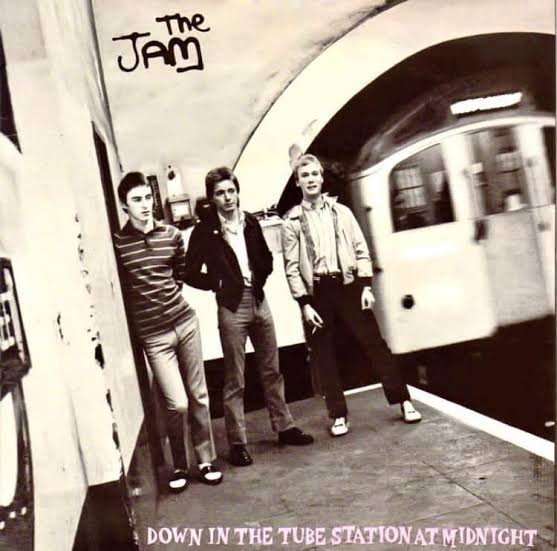
By now, it must be dark. The nearest London Underground station is Farringdon, and if you exit the pub now you may just find yourself down in the tube station at midnight.
This isn’t the first Jam song I reference on this walk, but Paul Weller was an exceptionally astute observer of the social climate of his time. I don’t know whether The Jam had Farringdon or any other London Underground station in mind when they wrote ‘Down in the Tube Station at Midnight’ in 1978. Weller never said. The tube train noises at the beginning and end were recorded at St John’s Wood, while the cover photo was taken at Bond Street. It could have been anywhere in central London, and it hardly matters. The point, after all, was to capture the atmosphere of violence fuelled by booze, industrial decline and social tensions that Weller so dreaded in London at the time (see Part 4 of our walk: ‘A’ Bomb in Wardour Street).
It’s often said that London was exceptionally rough and violent in the bleak late ’70s. Others insist that you can’t walk the streets alone nowadays as you could ‘in the old days’. But what’s the truth?
There’s no straightforward answer. London in the late ’70s had a reputation for street violence that was not undeserved, and in many respects it felt rougher. CCTV was virtually non-existent (the Met had just nine cameras in all of London), and you were far more likely to get caught up in a scrap walking through Soho, outside a pub, or simply while waiting for your tube home to the ones you love, and who love you forever. And when it came to youth cults, it was a free-for-all. Dangerous weapons were a problem even then, but how do the figures stack up against today? That’s where things get murky. The old statistics used different categories and methods of recording crime – ‘sharp weapons’, for example, included both broken bottles and knives, unlike today. I’d imagine bottles were more common weapons in the beer-fuelled ’70s, but because the old stats lumped them together, it’s hard to make a direct comparison.
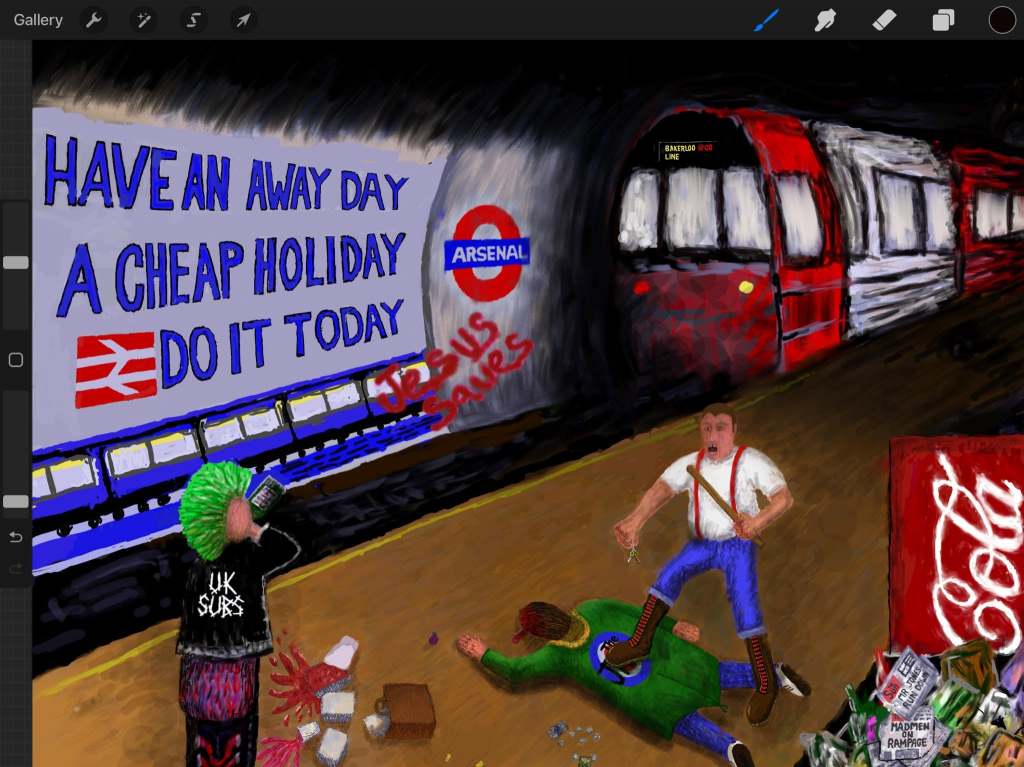
The image below was drawn by old mod Sean Patston from Herne Bay, who now lives in Australia, and shared in the Class of 80’s Mods group on Facebook. The challenge is: how many references to The Jam song can you spot? There are plenty, and the oxblood boots – ‘the smell of brown leather’ – worn by the skinhead are a particularly nice detail. If I were being pedantic, though, and the drawing were meant to depict the year the song came out, I’d point out that the mohicaned punk with UK Subs painted on the back of his leather jacket is probably a year or two early.
Of course, the song also has a political dimension, reflecting the period in which it’s set, but we’ve talked about that enough earlier on in our walk.
Music: The Jam – ‘Down in the Tube Station at Midnight’ Bad Manners – ‘Inner London Violence’ Honey Bane – ‘Violence Grows’ (having slagged off Crass, I must admit I quite like Honey Bane. The naive impressions of the big city seen through the eyes of a 14-year-old runaway are far preferable to her anarcho-pacifist minders’ moralistic hectoring) The Soul Brothers – ‘Lawless Street’ Combat 84 – ‘Violence’
And so, our (Central) London Skinhead Walk comes to an end – I hope you have a safe trip home. I reckon the whole thing is doable in a day, and if anyone gives it a go while visiting London, I’d be thrilled to hear from them. Let me know what you thought of it, or if I left out anything important. And who knows, if there’s enough demand and I’m up for it, I might turn my attention to other parts of London at some point in the future…