Hi Flavio, could you introduce yourself and tell us about your involvement in the world of skinhead?
I was born in Viterbo in 1974. I got involved in the subculture in the early 90s when I first heard some Italian and British Oi bands. I was already into punk and reggae then. In 1995, my mates and I formed the Oi punk band Razzapparte, which means ‘a breed apart’ and is a reference to punks and skins. We are one of very few Italian Oi bands active for over 20 years without interruptions. I’ve written for various skinzines and I did newsletters and websites. I also had a small label in the late 90s called Resta Rude Recs, another one in the 2000s called City of the Dead, and I recently started a new label called Skinhead Sounds. At the moment, I’m promoting a street punk band from my hometown, The Unborn. Their lyrics focus on political horror, and they have a couple of releases out on my label.
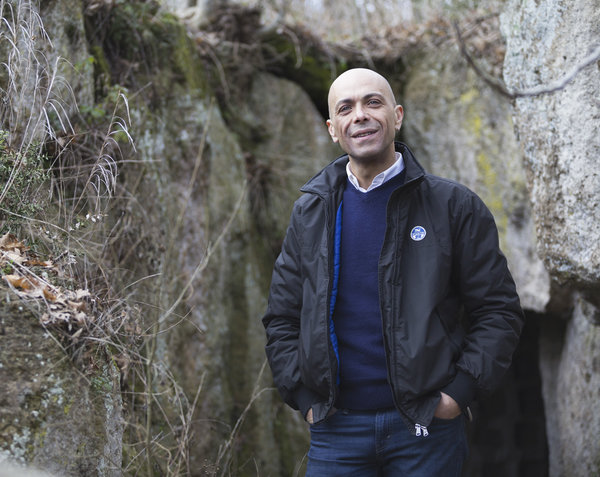
Your new book is called Italia Skins. Have there been any books about Italian skins before?
The original bassist and later guitarist of Nabat, Riccardo Pedrini, has written two books: Skinhead in 1996 and Ordigni in 1998. These books didn’t focus solely on Italian skinheads, but still contained plenty of information about the scene, especially on the first half of the 80s.
As to my book, I thought I’d start where Pedrini left off. That’s why my research largely focuses on the period from the mid 80s to the early 2000s. Italia Skins is about the whole non-racist scene, both political and apolitical. Aside from ethical considerations, I decided to ignore the right-wing scene because from 1983 onwards it increasingly became separate from the non-racist scene.
Can you tell us a bit more about the contents?
The book is made up of two parts. The first is historical and contains two chapters: one about the roots and most important developments of the subculture, while the other one focuses on the Italian scene.
In the second part of the book, I introduce and comment on fragments from interviews I did with some 30 skins and ex-skins from different regions of Italy. We discussed different aspects of skinhead, including personal experiences, attitudes towards politics, patriotism, and so on. The people I interviewed had different experiences and belong to different generations, and of course, they have different opinions on various topics. The idea was to contrast their views in order to represent the whole spectrum of the non-racist scene. In addition, Italia Skins has two appendixes, one of which collates documents produced by skinhead groups, such as leaflets, articles from skinzines, etc. The other appendix contains pictures of the people I interviewed.
As to the title of my book, ‘Italia Skins’ is a popular song by Guerriglia Urbana from Treviso. They were one of the first Italian Oi bands, and the title of my book is a tribute.
Are there any myths about Italian skinheads that your book sets out to demolish?
I don’t think there are any, mainly because the history of Italian skinheads has hardly been documented or studied at all. Of course, you get all kinds of rumours, urban legends, distortions and generalisations from people who see everything in black and white. So chances are I’ve demolished the myths of some individual or group.
Some circles try to distort the history of the subculture – both in general and in its Italian incarnation – to suit their political or apolitical views. For example, they say that all original skinheads were racist or, alternatively, anti-racist or even actively anti-fascist. Skinhead culture is very complex and segmented. After all, skinheads reflect their own social and local environment and carry with them the traits and contradictions of their class and geographical location. This is true of original skinheads, and it’s also true of all the international variations.
My intention was to be as objective as possible, in some way scientific, since I used research and editing methods that I had learnt from my earlier studies of the dialects and folklore of my region.
So when and where did skinheads first appear in Italy?
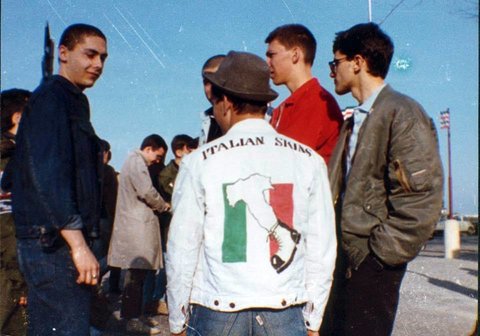
Skins first appeared in towns and cities like Bologna, Genova, Savona, Rome, Torino, Milan and in Tuscany. They were basically shaven-headed punks who saw Oi as way to bring punk back to a street level. In the early 80s, a Crass-like anarcho-pacifist wing of punk emerged, and it was common in those circles to label anyone who didn’t conform to their views as a ‘fake punk’. In response, non-pacifists called themselves ‘nihilist punks’, and eventually most of them started cropping their hair: Italian skinheads were born.
It seems that the term ‘nihilist’ was first used by Steno from Nabat, who was a non-pacifist punk at the time. It was a reference to the Russian nihilist movement, which was anarchist but not pacifist. To be honest, I don’t think many nihilist punks were actually into Russian nihilism, haha!
Anyway, the two wings of Italian punk were never completely separate and sometimes cooperated, even if the relationship between the two was often tense.

Were early Italian skinheads more proletarian than punks?
Well, at least in the beginning, the split was between skinheads and nihilist punks on one side and Crass-like punks on the other. Of course, the Oi and nihilist punk scene was more focused on class than its pacifist counterpart. According to Pedrini, one reoccurring argument of nihilist punks against anarcho-pacifists was that the latter used to buy their clothes in London. You can read that as a clear indictment of belonging to a more secure social class.
How deep was this first wave’s awareness of skinhead history, the mod roots, reggae, and so on?
Thanks to the work of some fanzines in particular, Italian skinheads started to discover their roots around 1982 and understood that their subculture was not just a more class-conscious variation of punk, that it was in fact also tied to mod and to black music. They tried to get as much information as possible about style and music. London was a sort of Mecca, and a lot of them visited often as they could.
Maybe as a consequence, they started to sport the Italian national colours in imitation of British skinheads wearing union jacks, but this wasn’t a political stand just yet. You should know that in Italy the use of the national flag has always been considered controversial by some circles for various reasons, especially after fascism. At some point, the British nationalist scene led by Ian Stuart and Skrewdriver became very strong, so, as Pedrini put it, many Italian skins “left for London wearing anarchist symbols and came back with swastikas”.
Where did early Italian skins get their clobber?
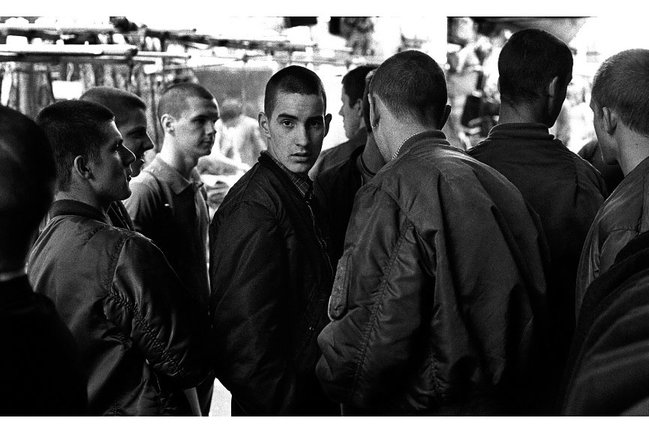
In the early 80s, it was almost impossible to find proper skinhead gear, so the skin look was very simple: army boots, braces, t-shirts, flight jackets, and so on. In addition, most skinheads were ex-punks and in the beginning knew nothing about original skins.
Any fashion quirks that were specific for Italian skins?
In an interview from my book, Fabrizio Barile, a skinhead photographer from Genova, tells that in the early 80s he and his mates used to buy polo shirts that looked similar to Fred Perry and sewed fake laurels onto them. So chances are that in those days, there were more fashion quirks along those lines.
You have to consider that, quite apart from the difficulties and costs involved in getting original gear, the only way to know how British skinheads dressed like was to look at records covers and bad quality pictures that appeared in Xeroxed fanzines. I guess that visiting The Last Resort in London and other places where British skins hung out had an impact. Finally, Italian skins had the chance to see in person what their British counterparts looked like. Some kids also started to buy clothes from the UK via mail-order.
In the second half of the 80s, Italian skins dressed more properly, and some of them even adopted the original look.


You became a skinhead in the early 90s. What was the skin gear situation by then?
When I got into it, the look of most skinheads was generally decent but not very complex. Finding the right stuff was still hard – not as hard as in the 80s, but hard enough! Getting hold of skinhead gear in small towns like Viterbo was almost impossible – except for things such as flight jackets and Levi’s jeans, of course. Even in big cities like Rome, it wasn’t easy at all. My town is only 50 miles from Rome, so we used to go there very often, but sometimes we – like many other skins – had to order stuff by mail from a specialised shop in Genova.
In the second part of the 90s, finding proper clothes got easier when brands like Lonsdale, Fred Perry and Dr Martens became fashionable. Even more ‘sussed’ stuff, such as Ben Sherman, shirts became easier to find, and from about 2000 the internet did the rest. In the 2000s, the casual style became popular on Italian terraces and influenced the look of a certain number of skinheads, including myself. Other skins became proper casuals.
Any distinctly Italian skinhead fashion in your time, then?
I remember that in the mid-90s some redskins, at least in central Italy, used to wear Washington Redskins baseball hats! It sounds funny now, but back then it was fairly common. Also, Adidas gear was and still is very common, and clothes by brands like Arena and Everlast weren’t rare either. Even New Balance trainers became popular at some point.
One thing that is not very common in other countries is hooded sweaters: perhaps they’re less widespread today, but I think in the 90s and early 2000s all Italian skinheads used to wear them, mostly Lonsdale.
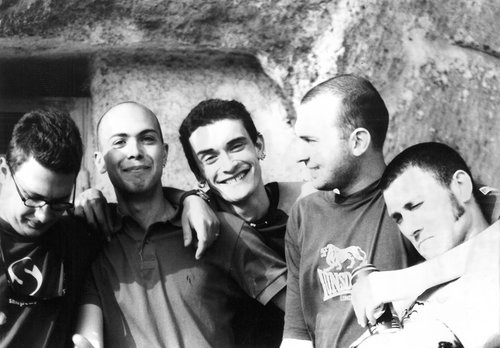
Lonsdale hoodies were quite common in other European countries in the late 80s and 90s, too. Back to 1980s Italy, though… Click for Part 2: Bands, politics and trouble
 Creases Like Knives