When discussing any German punk or skinhead band that played in the late ’80s or early ’90s, it’s impossible not to mention the defining event of the time: German reunification. After 40 years, the socialist bureaucracy of the German Democratic Republic was dismantled, and the ruling Christian-Democratic Party in West Germany initiated fast-track measures to annex the East German territories wholesale into the Federal Republic of Germany. Any attempts to establish a new, sovereign East German state, democratic socialist or otherwise, were quickly outmanoeuvred, with the visible support of substantial sections of the East German population.
One of the symptoms of reunification and capitalist restoration was a massive surge in German nationalism, especially at street level. The exact reasons for this are beyond the scope of this article and, in any case, a matter of controversy. What’s undeniable is that the far right became greatly emboldened, and the streets of Germany, especially the eastern so-called ‘new federal states’, were teeming with militant neo-Nazis. In modern German parlance, the early ’90s are now referred to as the “baseball bat years”, and this is no exaggeration.
Asylum seeker shelters were set alight. In East Berlin, ‘skinheads’ were shoving Vietnamese passengers out of moving underground trains or kicking them senseless, in some cases videotaping the assaults. Young neo-nazis roamed the streets at night in carloads, armed with baseball bats and hunting for punks and immigrants. Whole districts of East German towns became no-go areas for these groups. In Eberswalde, skinheads kicked Amadeu Antonio Kiowa, who was from Angola, to death while twenty police officers looked on from close by without intervening. In Hoyerswerda and in Rostock, asylum seeker centres were under siege and firebombed for days, with little to no police intervention. According to official figures, 90 people lost their lives in attacks of this kind between 1990 and 1994.
I’m using the term ‘skinheads’ loosely, because many of these people adopted the skinhead look to varying degrees of success. But just as many were simply ‘fash’: they combined boots and flight jackets with Hitler Youth haircuts, or even tracksuit bottoms, taches and long hair. Such distinctions mattered little to the press and media: any neo-nazi under 30 was labelled a ‘skinhead’, and any attack involving far-right youths was dubbed a ‘skinhead attack’.
But what does all this have to do with Daily Terror? As you’ll recall from previous instalments of this series, vocalist Pedder became part of the West German skinhead scene – a subcultural package that in the 80s encompassed everything from The Specials to Skrewdriver. The West German scene leaned to the right to varying degrees, and by the end of the decade it had become somewhat detached from its roots (with clueless nazi kids attacking first-generation Oi band Vortex on stage for performing skinhead reggae classics). In 1987, Pedder himself gave an interview to the British National Front zine White Noise, (opportunistically?) signing off with ‘All for Europe! All for white power!’, while remaining remarkably moderate on Daily Terror’s releases: patriotic, Europeanist, and without hostility to any particular group other than “politicians” and the establishment in general.
Like most German skinheads, Pedder had been a staunch advocate of German reunification. Now that this seemingly impossible goal had been achieved, the consequences of the resulting political and economic shock – combined with a ‘crisis of expectations’ among hardline German nationalists – were plain for all to see. The media reported ‘skinhead’ attacks, riots, and anti-immigrant pogroms on a near-daily basis. British nazi bands such as No Remorse, Skullhead and Brutal Attack were capitalising on the lucrative new market and lax law enforcement in East Germany, performing at well-attended concerts and festivals alongside emerging German acts. Sometimes they would perform for thousands of punters at a time.
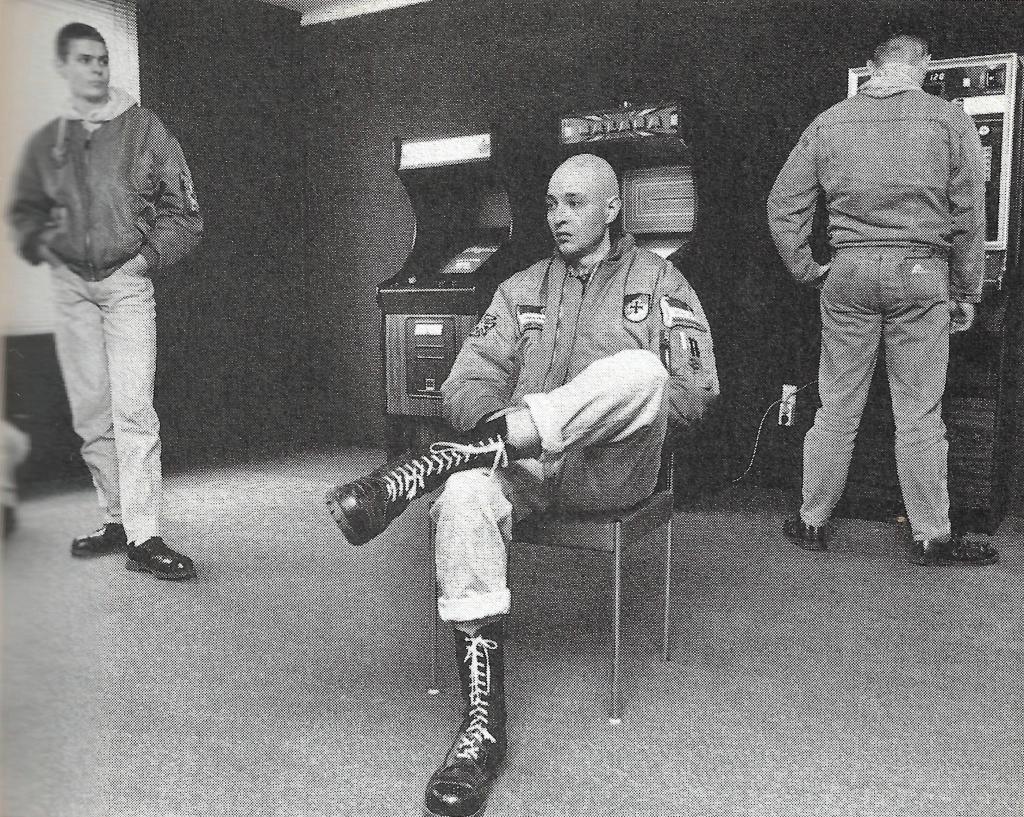
But not all West German skins were enthusiastic about the new breed from the east – least of all those from the first generation. To them, what was happening in East Germany bore little resemblance to the coquettish right-wing posturing of the early wave, or to the occasional street fights with Turkish youth gangs, attacks on punks, or flirtations with far-right splinter groups that some had dabbled in. West German skins in the 80s were no saints and could be nasty, particularly towards punks. But firebombing defenceless women, men and children in asylum seeker centres, or terrorising random non-whites in the streets, had not been part of their culture.
The ferocity with which the new nazis were handling their usually vastly outnumbered victims – who could scarcely be called opponents – filled some first-generation skins with revulsion. “The Ossis [East Germans] are completely nuts”, said one of them in an interview at the time.
One can imagine that these events were an eye-opener for Pedder. Suddenly, playing with identitarian symbols and flirting with nationalist organisations was no longer a game, but deadly serious. Stiff-arm salutes were no longer just edgy subcultural antics, and the nazis were no longer a minority within the scene. Radical German nationalism had become a thriving movement – and its ugly effects were now in full view. As it turned out, its main thrust wasn’t some romantic struggle for national liberation or a rebellion against the powers that be. In practice, it all boiled down to chauvinism and kicking down.
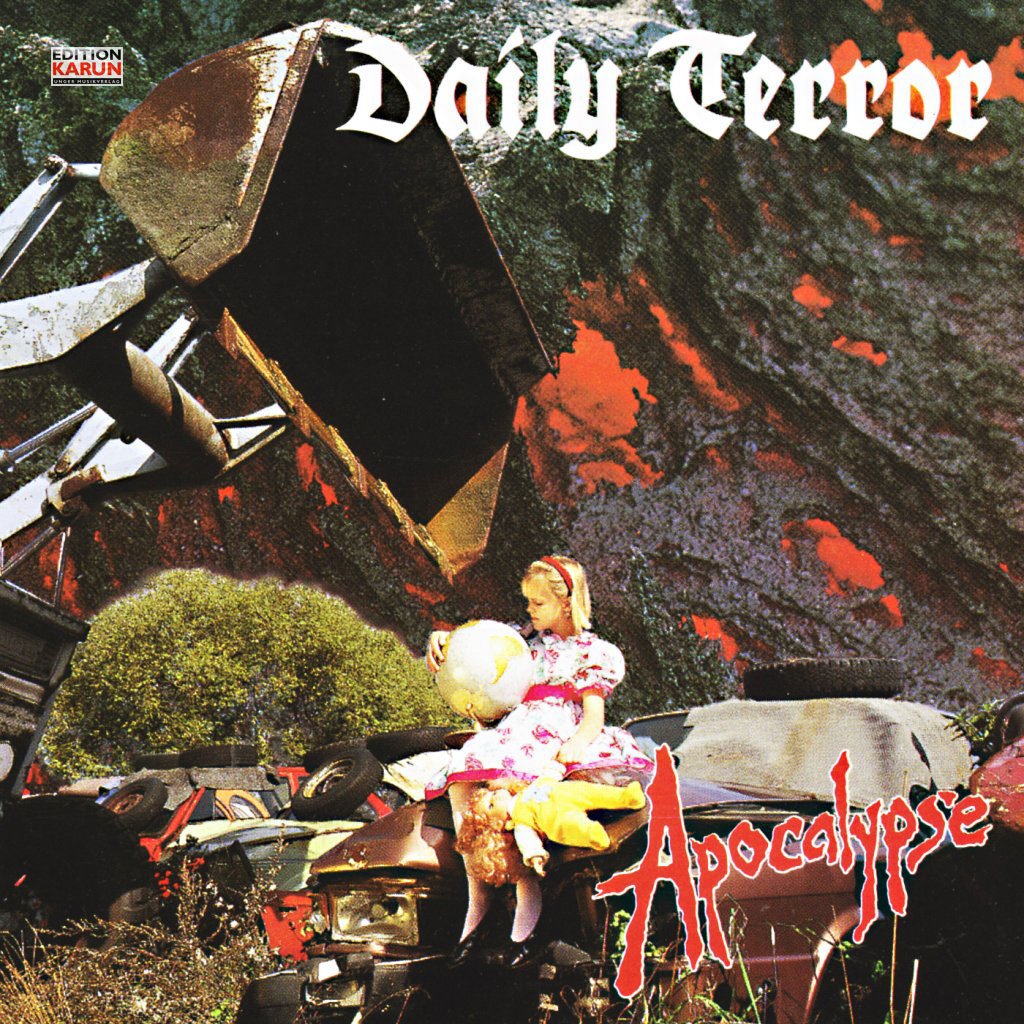
On 4 April 1992, the new Daily Terror album, Apocalypse, hit the shelves. Recent developments had apparently prompted a change in Pedder. Unlike with the previous three albums, there were no German flags on the cover and no patriotic messaging in the lyrics. Instead, the band had re-recorded ‘Andere Zeiten’, a tune from their early punk phase (see Part 1 – The Punk Years 1979-83). The lyrics remained largely unchanged, except for the word “hippies” being replaced with “skinheads”:
If you look different, you’re next,
if you think differently, you’re screwed
We won’t take any more of their crap
From now on, we’re fighting back
They’re cracking down with heavy hands
On leftists, gays, skinheads and punks
They won’t tolerate any filth in their state
So they resort to terror
The mere combination of “leftists, gays, skinheads and punks” signalled where Pedder now stood, or at least where he wished to be seen standing. Musically, too, Apocalypse marked a return to an earlier punk phase reminiscent of their 1984 album Aufrecht. It was less interesting than the previous albums, which had branched out into various rock, chanson and folk styles. But it was also tighter, more focused, and more consistent than its predecessor, Abrechnung. With the departure of guitarist Helge and the arrival of the more punk-oriented Uwe Golz, it also avoided Abrechnung’s overblown rock solos. Lyrics such as the title track, ‘Apocalypse’, were brimming with Pedder’s usual disgust for the political and economic establishment:
Nothing is impossible
Even babies are slaughtered
Politicians’ salaries go up
The murderers are still respected
Elsewhere, recurring personal themes were also evident, such as the theme of rising from the ashes after a difficult period (‘Reinkarnation’):
Show them that you’re not dead
Show them that you’re alive and kicking
Just show them that you exist
And that you still make a difference
In any case, much of the German punk scene was enthused about Daily Terror’s return to their previous form – for the time being, it was as if the past six or seven years had been wiped from memory. Tommy Molotow, who was the vocalist of Molotow Soda at the time and former frontman of the punk band Canal Terror in the early ’80s, interviewed Pedder for a video that same year.
Although he was mostly just teasing his heavily intoxicated old friend, Tommy couldn’t resist asking an awkward question: “What’s your relationship like with other German punk bands?” Pedder, whose hair had grown out just enough to obscure any overt skinhead resemblance, offered a brief reply: “It’s very good”. “I’m asking because there’s been rumours floating around that some bands didn’t want to share the stage with you”, Tommy prodded, without specifying the reasons why that might be. “Well, there may be rumours, but they simply aren’t true”, Pedder replied. Tommy tried again: “Has it ever actually happened though, that a band cancelled, saying they wouldn’t play with Daily Terror?”. Pedder’s answer: “I’m not aware that anything like that ever happened”.
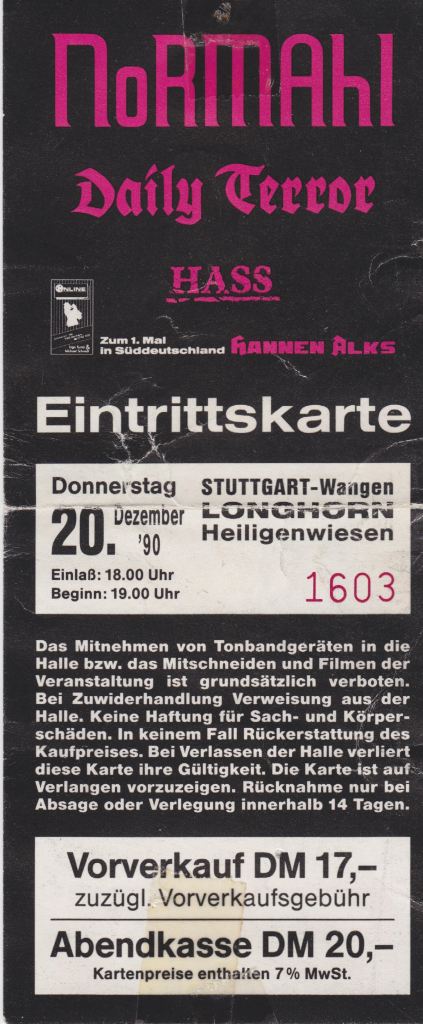
As you may recall from part 5, it did happen at least once – when the anti-fascist punk band Hass cancelled their performance at a punk Christmas show in Stuttgart in 1990 after Daily Terror were added to the line-up. This must have been a last-minute decision as both band names were printed on the concert tickets.
And it probably happened on other occasions too.
Daily Terror had switched from the Aggressive Rockproduktionen label to A.M. Music from Stuttgart – at the time, one of the major players in the German punk music scene, though seen by some as a symptom of its commercialisation and professionalisation. An issue of the label’s glossy mailorder catalogue at that time featured a brief interview with Pedder that could be seen as an attempt at damage limitation. The interviewer euphemistically inquired about “certain rumours”, to which Pedder replied that, as a skinhead and football fan, he had sometimes been in the company of “the wrong crowd”, but that this was now a thing of the past. When asked if he was a violent person, Pedder denied it, but added: “Of course, this doesn’t mean that I shy away from a necessary scrap”.
By the end of 1992, there was huge media and political backlash against the far right in Germany. Politicians, many of whom had fanned the flames of anti-immigrant sentiment in the so-called ‘asylum debate’ of the early 90s, now called on the population to join them in so-called light chains – huge demonstrations that saw the assembled citizenry hold candles and listen to various worthies’ speeches denouncing “violence and hate”. ‘Skinheads’ were identified as the main culprits, and thousands of RAC albums were confiscated in police raids on labels such as Rock-O-Rama. In 1993, the ex-skins of Böhse Onkelz, as well as the far more radical Düsseldorf band Störkraft, published songs distancing themselves from “extremism” (the latter in anticipation of an upcoming court trial for incitement). Police crackdowns intensified and the media campaign against ‘skinheads’ went into overdrive. Many skins grew their hair out and went casual.
Anti-racist initiatives were also organised in leftist punk circles. On 4 September 1993, Daily Terror performed at the opening concert of an ‘anti-racist week of events’ in Filderstadt near Stuttgart alongside Red Alert, UK Subs and others. Various punk and skinhead contingents attended the event, and not all of them were enthused: “I expected a ‘skins & punks united’ event, what I saw instead were leftists, antifa and even Turkish immigrants on crutches”, a right-wing skinzine complained later. As if to pre-empt any questions about their appearance at the festival, Daily Terror had printed special ‘clarification’ leaflets for the occasion. These explained that the band had been “anti-fascist from the beginning” and had always remained so, without once mentioning why anyone might think otherwise.

Peter von Oerzten, a German socialist politician, once wrote the following in a private letter in the 1990s: “I have learned from life experiences – not only in politics – and from historical observations that people do not usually learn or ‘come to terms with their past’ through reflection, by confronting their history head-on, or by repenting or ‘doing penance’. Instead, they tend to change their ways by repressing and reinterpreting their past, their mistakes, omissions, errors and crimes”.[1] The important thing, in Oertzen’s view, was not how or if someone accounted for their past, but that they had changed.
Alas, not everyone subscribes to this generous and positive approach. Berlin’s ZAP – a notoriously humourless punk zine with strong ties to the anarchist side of hardcore – spearheaded an anti-Daily Terror mini-campaign, based on the ‘idea’ that “once a fascist, always a fascist”. Such efforts bore fruit at a Daily Terror gig in Salzgitter, near Pedder’s hometown of Braunschweig, when anti-fascists hospitalised him. In spring 1994, Germany’s leading SHARP zine, Skintonic, featured the following commentary in its news column:
“And then there’s the campaign against Daily Terror, led by ZAP, Kümmerling [another Berlin punk zine] and others – specifically, against singer and band leader Pedder Teumer. Seven years ago, in 1987, he subscribed to nationalist ideas. Rumours about this circulated for a long time, and now we know for sure. But that was then, and this is now! After all, what really matters is what Pedder is doing today – and that stands above any political suspicion. The fact that he was hospitalised by a dozen anti-fascist thugs at a gig in Salzgitter, and later had to be escorted home by concerned anti-fascists from Hildesheim (who had travelled with him to the concert), is hardly the best way to convince people of the anti-fascist cause”.
Anecdotal accounts from the period confirm that Pedder had turned his back on his past dalliances. Daily Terror, although now again embedded in the German punk scene, continued to play to mixed skin and punk audiences, especially in East Germany. Pedder, ever the man of the people, talked to anyone without prejudice. But whenever he noticed a skinhead sporting dubious badges or white laces – as ‘lace codes’ were still observed by some in Europe at the time – he would ask about them. If his suspicions were confirmed, he would shake his head disapprovingly. Much later, in the mid-2000s, a user of Thiazi.net – a white nationalist web forum akin to a German version of Stormfront – listed Daily Terror as one of his favourite ‘patriotic bands’. This met with vehement protest from another user: “I don’t get why some people still believe Pedder is national-minded… I live in Braunschweig and I can confirm: the bloke doesn’t like us!! I know for sure because I’ve had my fair share of run-ins with him personally”.
Daily Terror’s early 90s period of transformation were summed up by Gnadenlos… Live album, which captures 18 songs recorded at three blistering live shows in Paderborn, Kassel and Braunschweig in 1994. The band runs through hits from all its various periods and closes with an acoustic version of Slade’s 1974 single, ‘Far Far Away’ (glam rock was Pedder’s first teenage love). The song selection on Gnadenlos… Live stands as a proud testament to Daily Terror’s contribution to European punk and skinhead music.
STAY TUNED FOR PART 7: UNTIL THE BITTER END
[1] Oertzen had himself been a convinced nazi when growing up and serving as a low-ranking army officer in Hitler’s Germany, but in the decades after WW2 he gradually moved to the far left wing of the Social-Democratic Party.
 Creases Like Knives