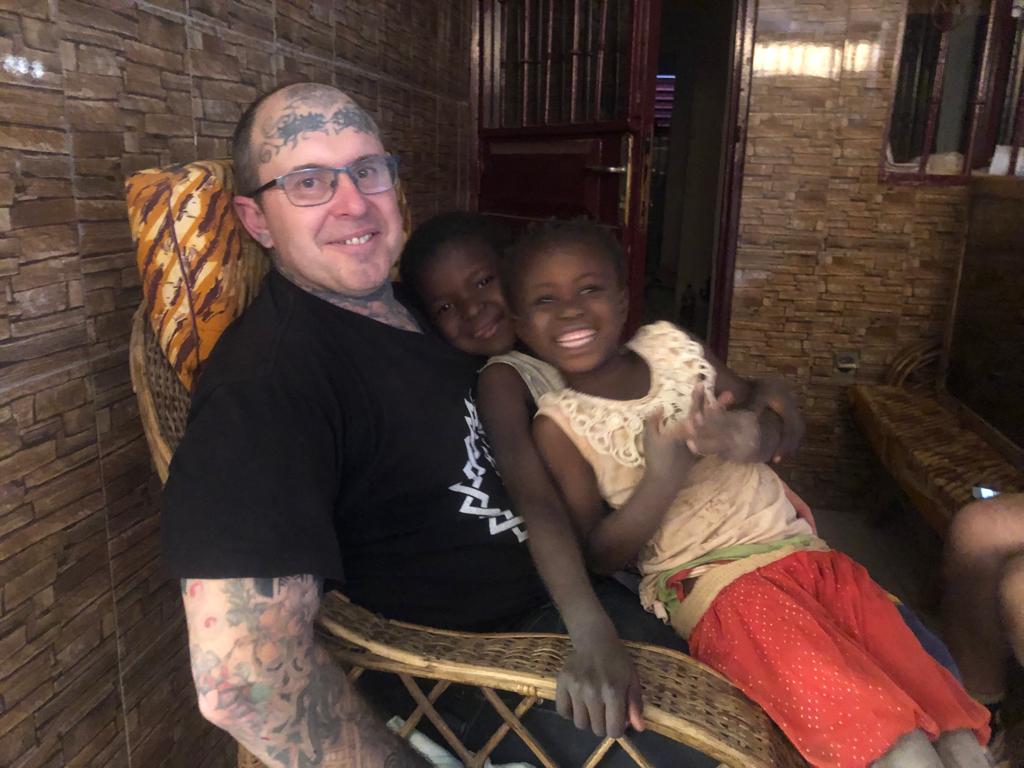
Ben: Around this time, you started taking an interest in tattoos…
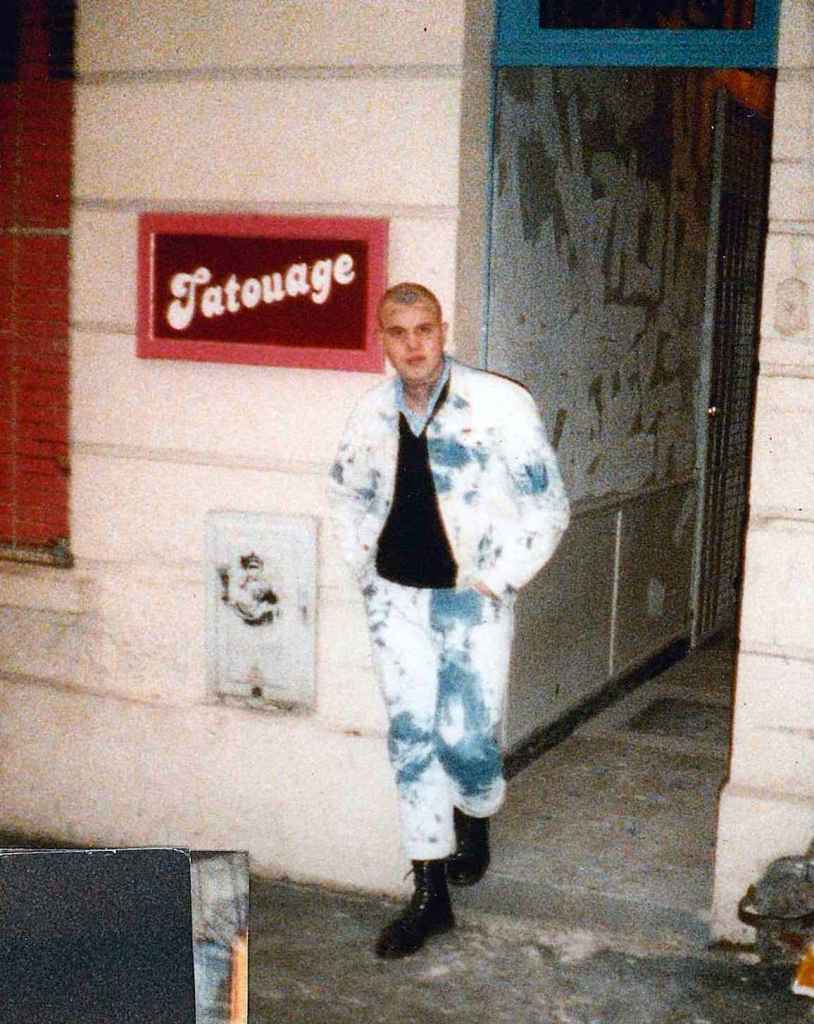
Vincent: The first guys I’d hung around with weren’t interested in tattoos, or they had small ones on their arms, necks or hands… They told me about Jacky, a bloke in central Caen who tattooed people in a flat. I met him one day in Place de la République while he was out walking his husky. At first I was a bit wary, because my brother and all his mates used to tattoo themselves with Bic pens, and it looked awful! It was only after I met Michel, towards the end of 1986, that I started to appreciate good tattoos and realised that real hard men were supposed to be tattooed! So I went straight round to Jacky’s with my 80 or 100 francs and got a little ‘skinhead’ tattooed on my arm.
Karott: Have you still got it?
Vincent: No, it’s covered by a layer of black now, but my second tattoo is still visible – a lovely Viking head on my forearm! After that, I was going there almost every month. I even started selling records to pay for the tattoos. People were beginning to notice them in the schoolyard.
Karott: You must have stood out in the schoolyard.
Vincent: And in our neighbourhood too. Whenever there were little neighbourhood parties, I was the only one with that shaved-head-and-tattoos look, which led to a bit of tension…
Ben: Was Jacky an established local tattooist?
Vincent: He was twice my age and had tattooed all the Brainwash lads… But in 1986 he’d only been doing it for a few years. He’d kept some punk and skinhead designs in his portfolio – flash he’d drawn for various people, though he hadn’t necessarily tattooed them. He was ahead of his time, anyway. He travelled a lot in Belgium, Holland and England. There was a bloke called Franck in Le Havre, Vercingétorix in Saint-Malo, Jean-Marc in Rennes, Alain in Lorient, and then in Paris there were four or five of them, including Marcel and Bruno… But before 1988–89, you’d only find a tattooist every hundred or hundred and fifty kilometres.
Ben: So was Jacky the first tattooist in Caen?
Vincent: There was another one, Fabrice, who had a studio in Rue de Géole, which rather contradicts what I’ve just said! They opened more or less at the same time, and they hated each other. Funny to think about it now, when there must be twenty tattooists in that same town.
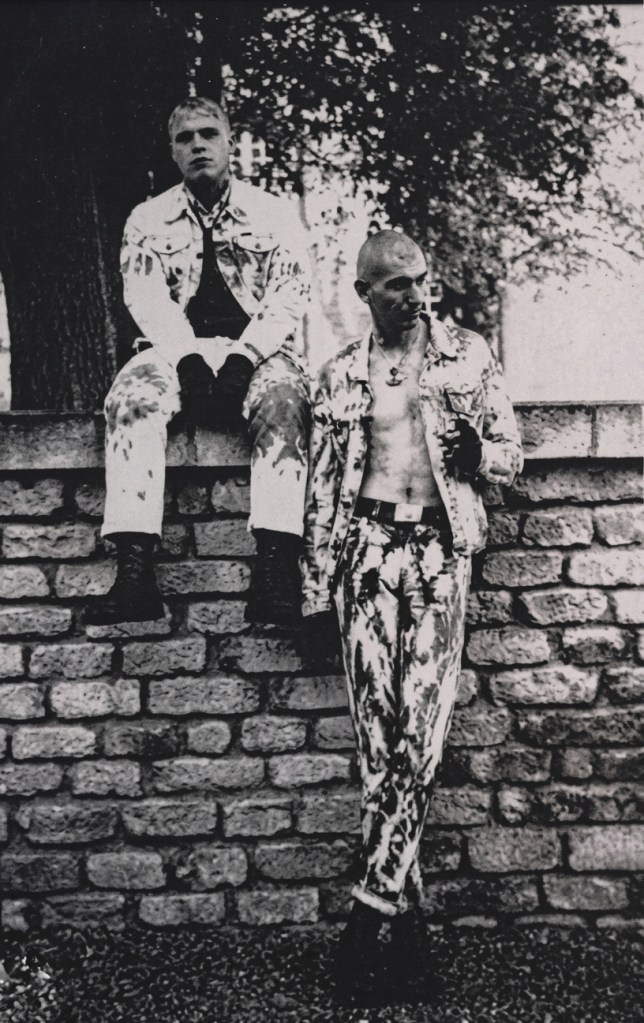
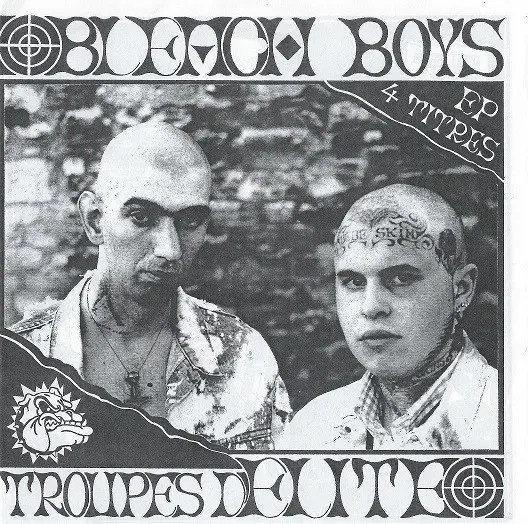
I think Jacky was a great tattooist and a good artist. He did three or four full-back tattoos a year, which was unusual at the time. Whenever I walk past his shop, which is virtually unchanged thirty-five years later, it brings back memories! Things got a bit heated between us at times, particularly in 1992, when I appeared on France 2 to talk about my tattoos. Jacky wasn’t happy that he hadn’t been included in the report… I developed as a tattoo enthusiast alongside him, too, and we designed some motifs together. In 1989, I had my nickname, ‘Bébé Skin’, tattooed on my forehead, but Jacky wanted no part of that! From 1990 onwards, I chose only tribal or spiritual tattoos. The tattoo on my back depicts a Maori with a tree, and it won first prize at the London convention in 1992, so well done, Jacky…
I was still working mornings at Radio 666. It was a part-time contract with that nice little association, and it meant I could spend time with a good crowd of rockers from all sorts of backgrounds and discover new rock, punk, alternative and grunge albums… I spent most afternoons at Jacky’s shop in Rue Démolombe. I’d give him a hand with a few things, and he’d pay me back in tattoos. Eventually I bought a little tattoo machine of my own and tattooed about twenty mates.
Karott: That must have been quite a turning point when you got your forehead tattoo…
Vincent: Yes, of course. There’s not much interesting to say about it – I was going through a crazy phase!
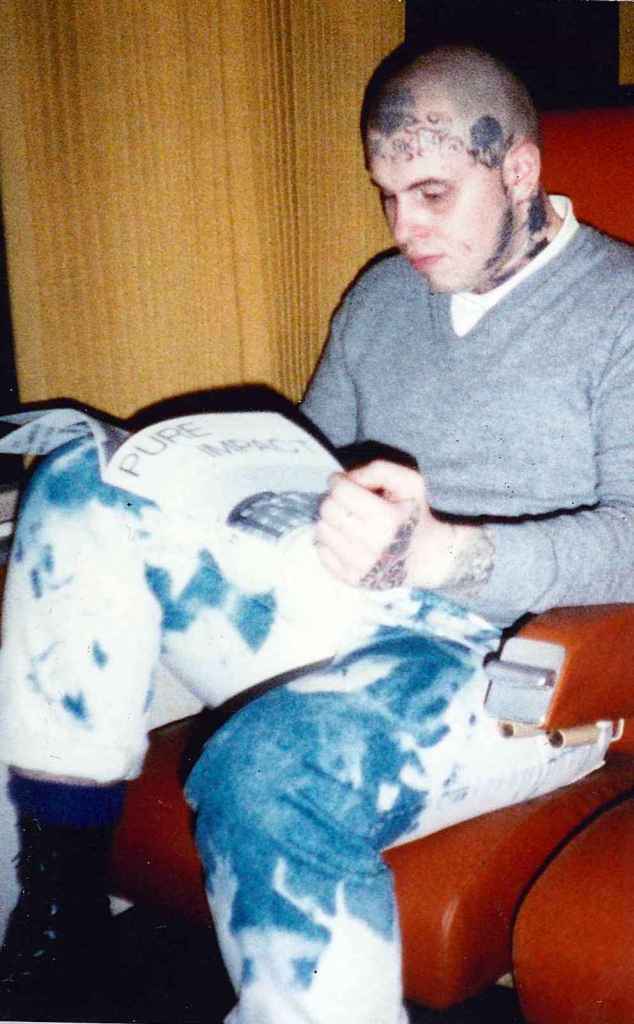
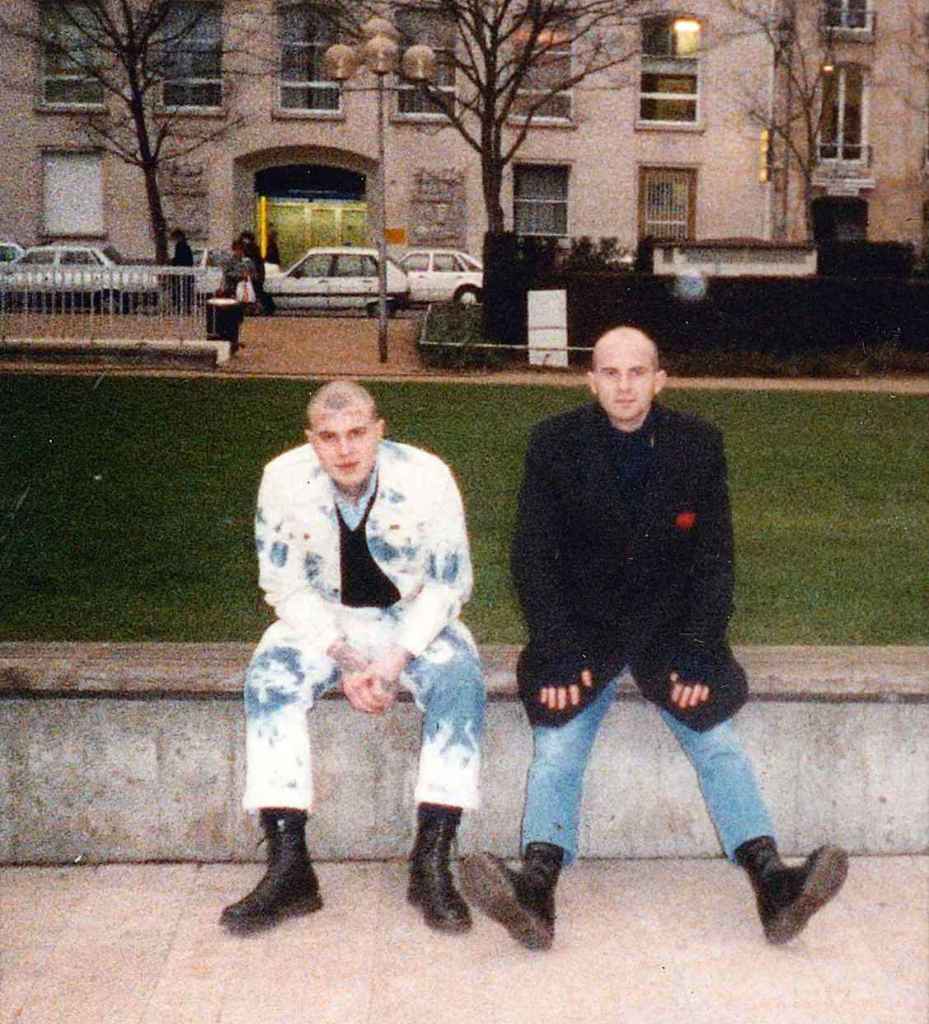
With that face tattoo, I entered a dodgy patch where aggro came my way more often. Gangs of so-called ‘skinhead hunters’ were on the rise, and TV reports were showing violent skinhead attacks. We became the local poster boys for that image.
Karott: What sort of things did you tattoo?
Vincent: A bit of everything: dragons, webs and spiders, celtic crosses, the Trojan logo – black and white only. It was difficult to learn the trade, and I gave it up pretty quickly.
Karott: Did the bikers organise the tattoo scene at the time?
Vincent: Yes, they were the ones who ran the conventions. But the one in Caen, for example, which we mentioned earlier, was organised by the Au Fond des Rues association, with Les Rats from Rennes providing security, if I remember rightly. Jacky used to go to the Free Wheels rally. He was a Harley fan, but there were no tensions in Caen.
Ben: So you took the opportunity to tons of tattoos during that period?
Vincent: Yes, it happens quickly: arms are small, and once there was no room left, I moved on to my chest, neck and hands, then my back in 1991, and finally my legs… At the 1992 Paris convention, there was a photo studio where they invited us to pose, and that’s how I ended up in one of the first French tattoo photography books. It was amusing because the book was put together by a dermatologist from Le Mans, Catherine Grognard, who also helped select the participants for a 1992 edition of the TV programme Envoyé Spécial on Antenne 2. It was a prime-time broadcast watched by ten million people across France!
That was when tattooing became more mainstream, and tattoo removal did too… In the fifteen-minute report, I was presented as a reformed skinhead, with my tattoos on my chest, hands and forehead. It was an interesting programme because all the people featured were so different: the woman who’d had the dolphin from The Big Blue tattooed on her, the family man with his children’s names, the biker who was in prison, and then a few tattooists: Bruno from Pigalle, Tin-tin, and Jean-Marc from Rennes.
Ben: How on earth did you get the idea to get a tattoo on your forehead?
Vincent: It was a mixture of urban legends and teenage daftness. You hear stories about it, that it’s something people do, and there’s the whole forbidden-fruit aspect as well… I was already hanging out with people who had their necks or hands tattooed: Erik, Michel, l’Apache, Doudou. My nickname came from Maryse, a punk girl from Condé-sur-Noireau, my mother’s home town. She reckoned I had skin as soft as a baby’s bottom. I started using it as a bit of a laugh at first, and it stuck with me for a while. You saw facial tattoos in England, but hardly ever in France.
Ben: There was Géno [of L’Infanterie Sauvage], of course.
Vincent: Yes, and Bruno – a skinhead from Paris with ‘Fait en France‘ (Made in France) tattooed on his forehead. Plus the bloke pictured in the book Fait en France with a flag tattooed on his cheek. He was French, but I think he was living in England.
Ben: Right, but that completely changes things, doesn’t it?
Vincent: The tattoo convention near London in 1989 might have been what actually triggered it. Over in England, people were less conformist and were all the better for it. I’d bought Nick Knight’s Skinhead book back in ’86, a cracking book I still recommend 40 years later. As for the forehead tattoo, I remember it just coming up in conversation, and then you go and do it as a dare. You mull it over for a while… It wasn’t the only stupid or rubbish tattoo I’ve had done, haha…
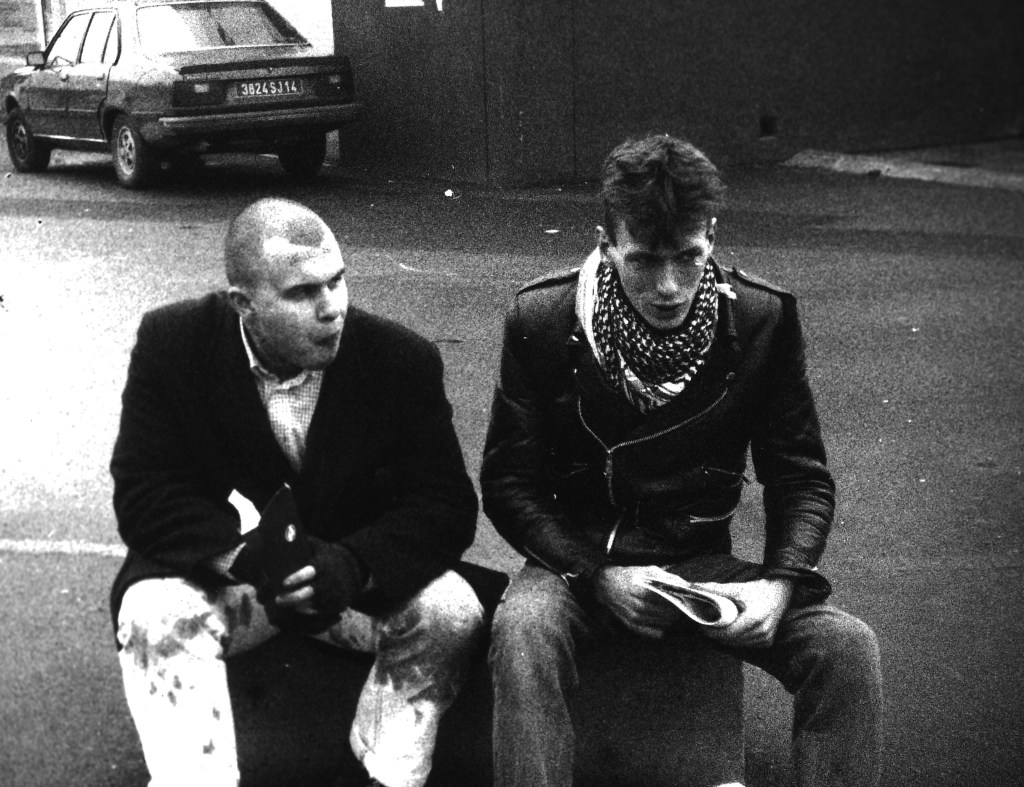
With that tattoo, naturally, I entered a dodgy patch where aggro started to come my way a lot more often. On top of that, within a few months there was a massive surge in so-called ‘skinhead hunter’ gangs (chasseurs de skins, gangs of anti-fascist and immigrant youths – Ed.), and TV reports were showing violent skinhead attacks. We became the local poster boys for that image. Sometimes things ended amicably because we didn’t hesitate to make it clear that we weren’t racists. Other times, things got a bit more heated.
One day, a gang of young zoulous [French youth groups associated with hip-hop culture – Ed.] came looking to do us in. It ended with Saturnin and me getting cornered in the town centre and having our T-shirts slashed to pieces, a bit like Pierre Richard in the ’80s comedy Les Compères!
Within our own circles, it was a complicated dynamic, because friendship counted for more than political differences. I gradually drifted away from the guys who espoused racist views, but it takes time to work out exactly where you stand… It’s not easy to explain that you want to try everything at least once, but that’s what being eighteen is all about. Something can be dangerous, forbidden by your upbringing, even completely at odds with your humanist beliefs, and you still go ahead and do it. I spent some evenings with that far-right scene, though I never attended their gigs. I even went to the annual 1 May demonstration in Paris for the Joan of Arc celebrations. I got a taste of that world, but ultimately I valued my friendships with people from different backgrounds more. We were mates with Donald, for example, who was from the French Caribbean.
Looking back, I think that whole obsession with appearance was rather self-centred… A face tattoo is a bit of a tragedy for the people close to you. It’s a hard thing to explain, even thirty-two years later.
Karott: Going back to the forehead tattoo, do you remember walking out of the shop?
Vincent: Yeah, it was like breaking a taboo and actually pulling it off, so I felt proud. But I definitely had this sinking feeling that I was drifting even further away from the realities of the adult world I’d been raised in, all about work and family. Looking back, I think that whole obsession with appearance was rather self-centred, but I reckon I’ve had a happy life since. A face tattoo is a bit of a tragedy for the people close to you, though – it’s hard to explain even thirty-two years down the line.
Ben: Did the tattooist do it for you without any fuss?
Vincent: I don’t really know what to make of that. Christian was a tattoo artist from the Belleville neighbourhood who was well-known in the punk scene. We ran into each other a few times afterwards and he inked a load of other tattoos on me that were way bigger than that tiny one on my forehead.
Ben: No way! Did you know my first tattoos were done by Blaise at Christian’s shop?
Vincent: That shop had a reputation as one of the best in eastern Paris in the early 1990s. I don’t know how Christian felt about it, but he went ahead and did it. It wasn’t really his style – back then, it was mostly Marcel who tattooed the skins.
Ben: Was this when you started the band Elite?
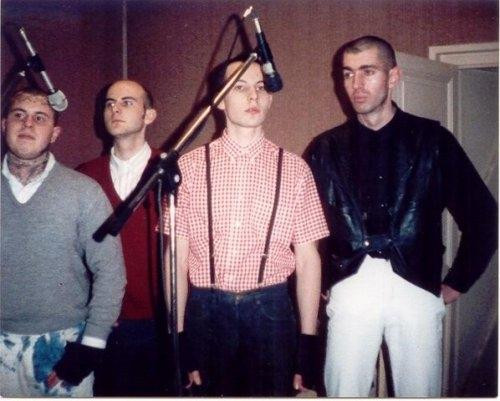
Vincent: Well, we never actually called ourselves that. We knew there was an English band playing under that name, so we wouldn’t have used it. But yeah, it was in 1989 that Boni, Erik, Saturnin and I started rehearsing. It wasn’t easy because we couldn’t practice regularly enough, and neither Saturnin nor I had any experience, so things didn’t progress much. We did manage to write four or five songs though, and played a few covers. Boni was keen to get back behind the drums, four years after Snix had split up. He was into 1977-style punk and glam, and wanted to play that kind of music – which is what he eventually did with the Véro’s about ten years later.
Ben: Right, so not exactly Skinkorps…
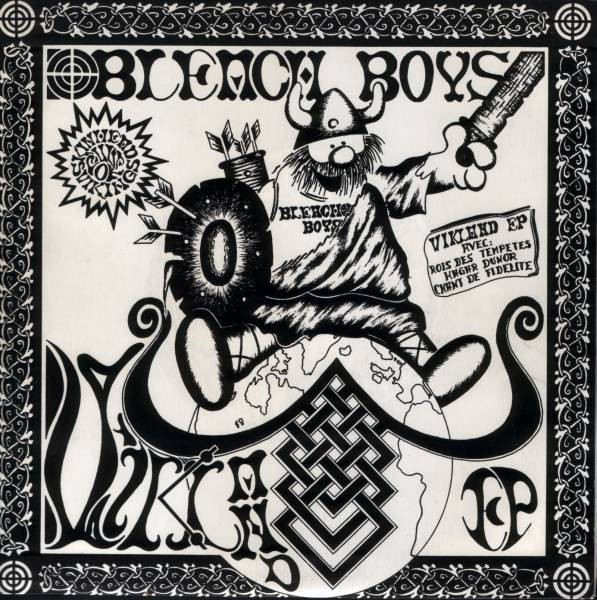
Vincent: Exactly, something a bit more outside the box… On the bus home after a rehearsal, Erik said to me, “What if we started a a bit of a joke band, playing up all the clichés? I’ve got an idea, it could actually work”. Since Boni wasn’t always free on rehearsal days, we brought Gil in on drums. He agreed, as long as we weren’t going to put out an RAC message. Bleach Boys came together really fast, recording four tracks, and after a photo shoot we signed up to put out a 7-inch single, with the Chelsea clobber shop footing the bill. It all happened in six months, though it’s a shame about the other project – I would’ve liked to keep that going. Eric from the Chelsea shop had got the green light from the English bands [The Last Resort and Combat 84] for the cover versions, and I think he even plugged it in Maximum Rock’n’Roll. That first 7-inch went absolutely everywhere (general laughter)! We were thrilled with the whole mad adventure. I was only twenty, and I had no idea kids would still be listening to it thirty years later…
Boni and I stayed mates, but Bleach Boys cracked him up. We were about ten years out of date… The fanzines gave us good reviews. Everyone seemed to think it was great that a bunch of jokers had come along – it made a nice change from all the RAC releases.
When we started Bleach Boys, Erik and I were quite different in age and politically, but we just fancied doing it, showing off in our bleached jeans and playing the cheeky rascals.
Ben: Where did the Viking thing come from?
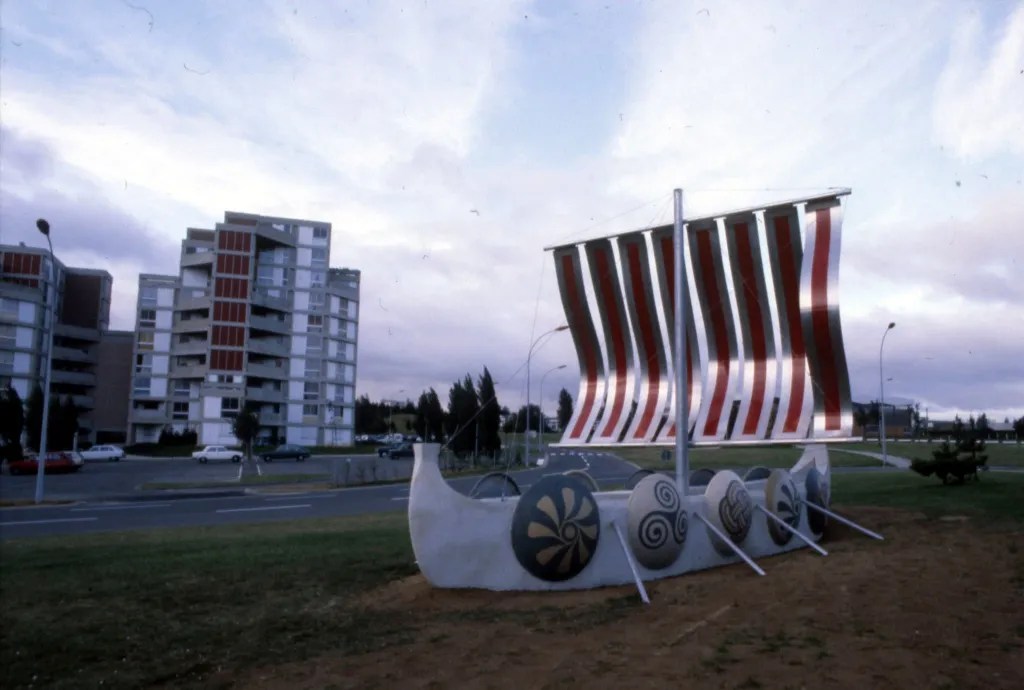
Vincent: Erik wrote ‘Fils de Normandie’, which was about Norman history. Back then, there was hardly any sense of regional identity around here, unlike in Brittany. My interest in the Vikings grew out of a period when I was reading about Norse mythology and the poetry of the time. The Vikings had a strong connection with the natural world. We carried on with that theme on Bleach Boys’ second 7-inch, drawing on everything from humour to mythology. For Bleach Boys, it was a folkloric progression. For Bleach Boys, it was a folkloric progression. Parts of the lyrics to “Normandie réveille-toi” (Normandy Awake) don’t really make sense to me now – lines like “They mutilated our flag” or “Thor Aïe” [a pun on Thor Oi! and Aïe (Ouch)]… But I was still just a kid, and above all I was just happy to be involved in creative projects.
We followed that up with a second 7-inch, and the band with Boni fizzled out. Between his job and his growing family, he just didn’t have the time anymore. Two or three years later, he got back into music with Michel, playing in Les Gens d’Ici.
Dom Pipet [Brainwash manager] had his own cassette label, GKR, and we were mates. He was an incredibly eclectic character. His favourite bands ranged from The Rezillos to Les Shériff, taking in Die Toten Hosen along the way. His tape label was just as wild, putting out hundreds of live recordings and demos (which were rare back in the pre-CD days), everything from Bérurier Noir to Skrewdriver. Anything went, because people would compile their own custom mixtapes. Looking back, I was lucky enough to cross paths with quite a few nutters. Dom set up Bleach Records in 1991 to put out the second Bleach Boys 7-inch.
Personally, I preferred staying in on my own to draw rather than going out. I also reconnected with some childhood mates around then. We’d go hiking and play football…
Between 1991 and 1994, I had practically no contact with skinheads, aside from a few drinks with Saturnin and Florent. When I moved to Brittany in 1995, I met quite a few skinheads who knew me from Bleach Boys. It felt validating, especially after all those years when I’d either stopped thinking about that whole scene or even found it a bit worrying. In 1991, I’d had my forehead tattoo covered up, while Erik had thrown himself wholeheartedly into the [neo-nazi organisation] PNFE. I haven’t seen him since late 1991.
One day, on the terraces, there was so much pushing and shoving that some children ended up crushed against the barriers and started crying. Michel and I were mortified… ‘Hooligan’ is the only Oi song that takes a stand against violence at football matches.
Ben: Did you never speak to each other again?
Vincent: No, there’s no reason to. As far as I know, he stayed committed to that path.
The run-ins with the young hip-hoppers reminded me why I started listening to punk in the first place, 10 years earlier. I was a sensitive, humanistic kid, well aware of how lucky I was to have been born French. SHARP had come onto the skinhead scene and opened up new possibilities just as the most racist bands were emerging. I was more drawn to that side of things, though I’m certainly not going to claim that Bleach Boys were a SHARP band!
Ben: To round things off with Bleach Boys, there’s something I’ve always wondered about. On ‘Hooligan’, your cover/adaptation of the Cockney Rejects’ ‘Bad Man’, were you aware that you were turning the meaning of their song on its head?
Vincent: Yes, absolutely. It was inspired by a real-life event. One day, we actually made children cry on the terraces. When a goal went in, we were shoving people so hard that some children got crushed against the barriers and started crying. Michel and I were mortified. Had it been just skins and hard cases on the terraces, it would have been fine, but this was different. Erik hated football anyway. As you said in your Une Vie Pour Rien? zine, it’s the only Oi song that takes a stand against violence at football matches. To be honest, it was written in two minutes and recorded the following week, with no intention of ever releasing it. Nowadays I know a lot more about football supporter history, gang wars, West Ham, Millwall. We were worlds away from all that when we wrote the song.
Ben: There was also Boots and Braces, the radio show – recordings of it have been doing the rounds. I had them on cassette for years. Yoann from the fanzine L’Avenir Incertain made me a copy back in 1997. Now Droogies Radio is making them available again. You and Boni were the ones presenting the show, right?
Vincent: Yes, we did about forty shows over the course of a year, in 1989. Boni missed two or three of them. We sometimes had guests on, like the time we invited the skinheads from the Carnaby shop in Liège. Belgium had been heavily influenced by the Oi movement because of its proximity to England, and ten years later they had a shop well stocked with collectors’ items.
Ben: When did your next band, Traces, first come together?
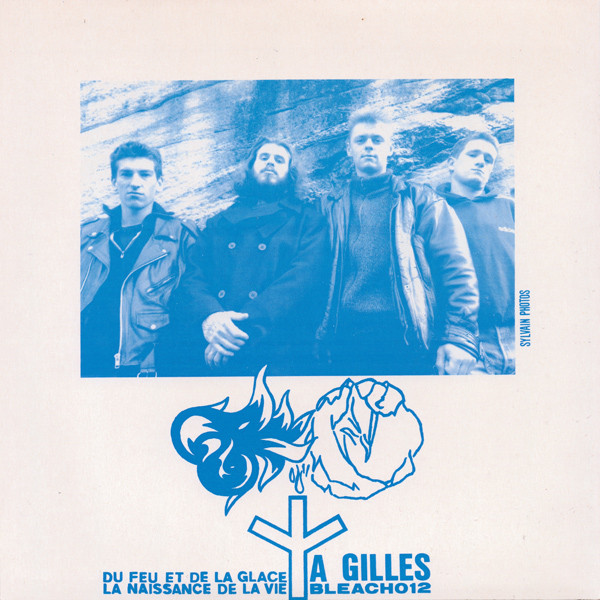
Vincent: I met Stan in the autumn of 1993, outside the Alternatives record shop. He told me he was jamming with two childhood friends and they were looking for a singer. I went along to rehearsal the following Sunday and recognised the drummer: it was Olivier Requin, who’d been at the same technical college as me, doing woodwork too, five years earlier.
Ben: So how did the connection with the whole Viking thing come about?
Vincent: What Viking thing?
Ben: Well, in the imagery… Though, to be fair, perhaps not so much in the lyrics…
Vincent: Haha! Nah, I was just playing dumb! It’s more of a Jim Morrison vibe, back then I was a bit of a poète maudit [doomed poet]! All four of us still love the lyrics nearly thirty years later, I reckon, and that’s what’s great about it.
Ben: I might have that impression because when people were telling me about Traces when I was 16, my mate Eddie said to me, “That’s the bloke from Bleach Boys, it’s viking rock, it’s brilliant!” (general laughter)
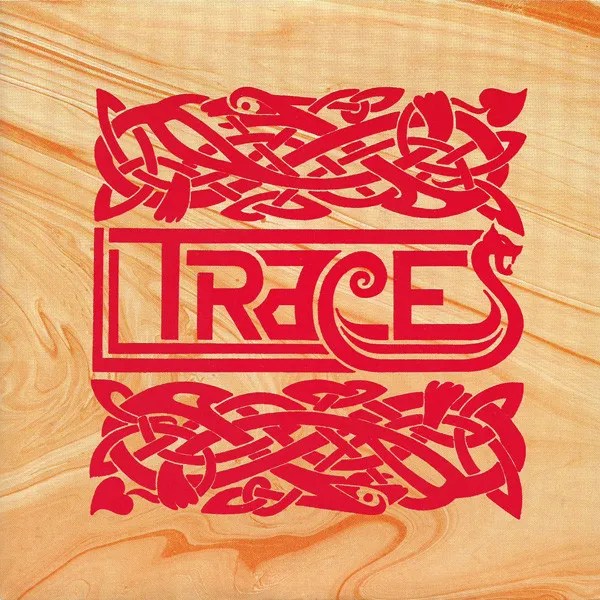
It’s true that the label “viking rock” helped Dom from Bleach Records shift the records quickly, and anyway, we had nothing against it! There’s also a nod to it with the track ‘Vers d’autres terres’ [Towards foreign lands] and the sleeve artwork, the interlace patterns…
(After a few critical digressions about colonialism, antisemitism and historical revisionism, the conversation returns to skinhead culture.)
Vincent: You could say our generation enjoyed a great deal more freedom than the generations before us. We had a bloody good time – got our faces tattooed, listened to punk and Oi, grew our hair long and then cut it all off again! I’m grateful for all those opportunities every day.
The skinhead movement itself is a culture that varies enormously from one place to another, depending on the particular history of each country. For the older generation, it was strange to see the scene come back – and, above all, really take off – in the early 2000s, with your generation. Back in 1996–97, when Philippe Wagner (Zera fanzine and Hard Times, the Paris Oi band) started putting on the first gigs, I was pleasantly surprised. There hadn’t really been any Oi gigs for ten years…
Ben: You never made it to Phil’s early gigs, because you’d stopped going out by then. But I remember those first Braindance gigs in Ternier, and The Business in Beauvais. The crowds were a real mixed bag. I’d turn up, aged 16, and ask, “Who are these blokes? They look a bit dodgy, don’t they?” And someone would say, “Don’t worry, they’re the lads from Méru Korps [a gang associated with nazi band Bunker 84] – but they’re keeping their heads down tonight…’
Vincent: I used to publicise Philippe’s gigs back then. He’d send us flyers, even all the way over in Brittany, but I never actually went to any of them. I was surprised enough to see The Last Resort playing at Fury Fest in 2005 – I’d never imagined I’d get to see them live.
Ben: By the time Traces came along, you weren’t involved with Bleach Records any more?
Vincent: I was only involved in the label’s first release, the second Bleach Boys 7-inch. Dom carried on with it after that. We stayed mates, and he was always happy to let me hear the records he put out afterwards. Traces were lucky Dom wanted to release our 7-inch; otherwise, I doubt we’d have got much of a hearing outside Caen!
For the other three, the chance to put out a record was just as unexpected, although perhaps it all happened a bit too quickly. I’d only just joined the band, and four or five months later we’d recorded the demo. Dom offered to put out a record that very evening, straight after the studio session. I was also really pleased with the reissue David at Euthanasie put out. It gave us an excuse to get together again. By then, in 2012, it was eighteen years since all four of us had last spent time together. We left the studio one afternoon in June 1994, Mickaël moved to Geneva for work the very next day, and that was that…
We had a bloody good time – got our faces tattooed, listened to punk and Oi, grew our hair long and then cut it all off again.
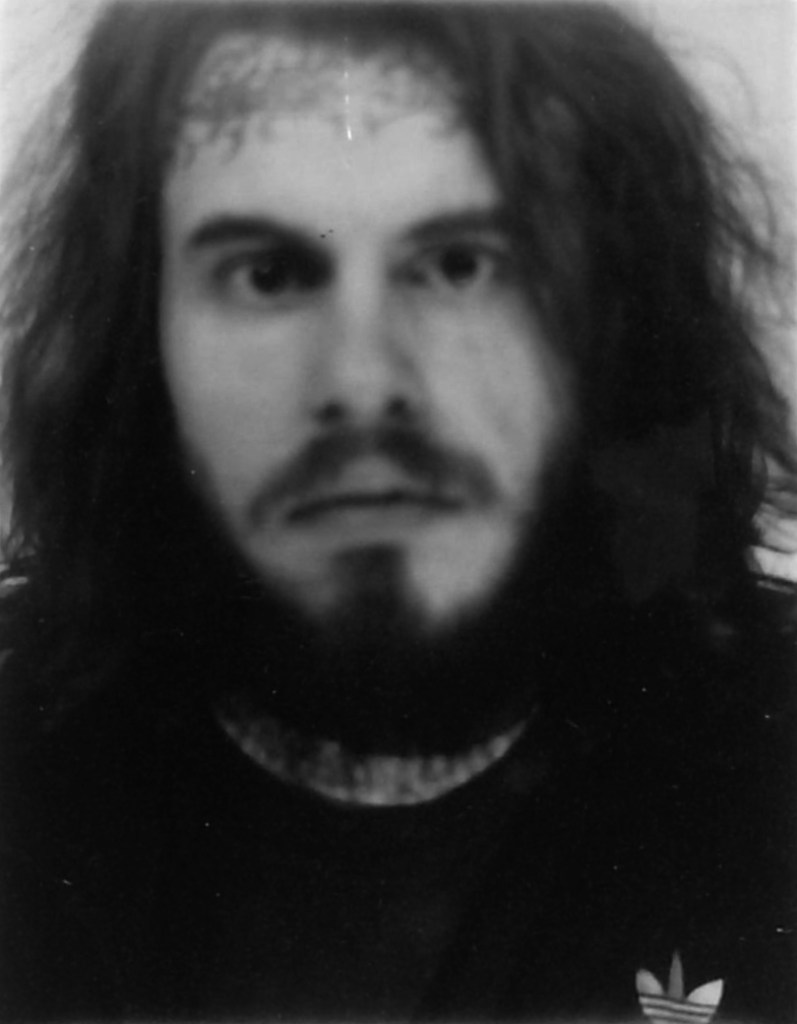
Ben: To round off the Caen years, one band that really stuck in my mind was Les Gens d’Ici [a ’90s punk, reggae and dub band featuring Vincent’s skinhead ‘big brother’ from the early days, Michel Dupont, on vocals – Ed.] . I saw them as anarchist, antisocial rebels – sort of modern-day Mesrines.
Vincent: His idea of a rebel was more along the lines of Albert Spaggiari [French criminal, far-right activist and former member of the OAS, a pro-colonial terrorist organisation, best known for masterminding the 1976 Société Générale bank robbery in Nice – Ed.], who, if I remember right, hadn’t killed anyone. We’ve already talked about Michel, and it’s difficult for me to talk about him because I haven’t seen him for about twenty-five years. We spent a few good years together, despite the age difference – walking his dobermans, going to football matches… I remember the last time we met. He found it amusing that I’d got into hardcore punk, which he was listening to himself at the time. He also liked the seven-track Mass Murderers record, my first production in Brittany, just before I started Mass Prod’ [punk and hardcore record label].
Karott: So we’ve done the Oi years, the tattoo years...
Vincent: I also had the change to meet some rastafarians. I’m really into roots reggae, particularly the stuff from 1972 to 1980, and especially the work of producers like King Tubby, Vivian Jackson and Joe Gibbs.
Karott: Did you turn into a hippy?
Vincent: I had some hippy mates, and I’d regularly go and spend a bit of time with them out in the countryside in the Orne, getting away from it all. We’d listen to Pink Floyd and Deep Purple.
Karott: Didn’t the BB Skin tattoo on your forehead put them off?
Vincent: No, it was covered up by then, and they weren’t bothered about that part of my past anyway. I didn’t want to be pigeonholed any more. And meeting so many people from different backgrounds, particularly Africans who’d settled in Caen, made me think about things differently and helped me grow as a person. We shared a lot of good times. I’m still friends with some of them, like Roger Wango, a singer from Burkina Faso whom I met in Caen in 1992 and saw again in 2014, on my first trip to Burkina Faso.
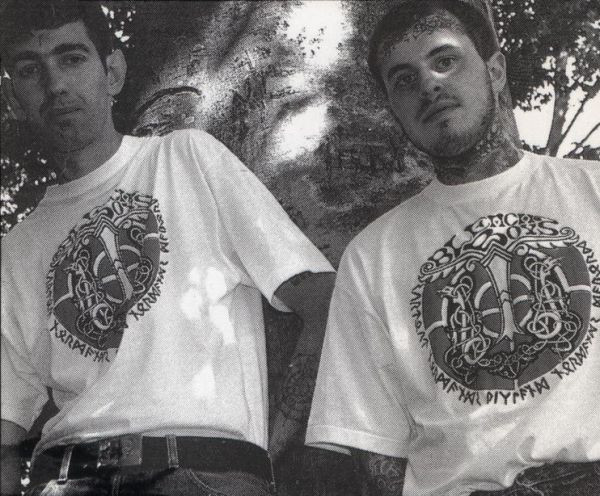
Ben: So all this was before you moved to Brittany… It must have been a bit of a wrench, moving there from Normandy?
Vincent: Brittany had already brought me one great piece of good fortune – getting out of military service with a P3 exemption. The three-day military assessment took place in Rennes. I’d also been going there from time to time since 1991–92 for rock festivals … But to answer your joke, I really didn’t give a damn. Jean-Marc, the tattooist, had suggested I might be able to join his association and train as an apprentice, so my partner and I decided to move to Rennes in 1994. It also meant she could carry on with her studies there.
Just before leaving Caen, I put out three 7-inches: the two compilations of local bands, Caen s’est tu?, and a thrash metal record by Hypnosis. I’d got quite good at organising record pressings … I started DJing at weekends at a club in the north of Rennes called the B52. Then, in November 1994, I met [Breton hardcore punk band] Mass Murderers through Franck from the Stooges-influenced rock band Witchery Wild. He told me, “We’ve got some mates from Saint-Brieuc who’ve moved to Rennes. They’re a great band and could really do with a bit of help. I reckon they’d be right up your street musically” …
(The conversation moves on to the Mass Prod’ label and Breton hardcore punk bands from the ’90s – and stays there for a while.)
Ben: One thing I think is really distinctive about the history of the label, beyond the British bands like Inner Terrestrials and Sensa Yuma, is all those compilations…
Vincent: There are forty-five of them! It’s funny, I used to collect compilations when I was young: Crass’s Bullshit Detector albums, the Punk and Disorderly compilations, the Chaos en France/Europe and Trojan compilations, and loads of other releases on small labels. With Mass Prod’, we’ve had Tour Story, the eleven Breizh Disorder compilations, Girl Disorder, Ska Libre, Rock e Breizh in Breton… I loved your compilation of bands on Une Vie Pour Rien?, by the way, with that amusing ‘vinyl factory’ cover…
The compilations at Mass Prod’ are all my fault, I admit it (…) Perhaps that’s why there are thousands of people in Brittany with Mass Prod’ records at home! Three hundred and fifty bands have featured on the Breizh Disorder compilations, which means there are already 1,200 musicians with records of their own at home. It’s been a fantastic adventure, and I never expected it to go on for so long. We’re a small label, but I think we represent a little spark, and that’s all that matters to me.
When I think of all the mates who run their own labels, like you lot or Christophe at Dirty Punk, I think it’s fantastic: getting to put out records by the bands you love. In a way, we’ve all made our childhood dreams come true!