Continued from A Constructive Rebellion: 1996 Interview with Robson, part 1. Original interview by Łukasz Medeksza. Translation by Matt Crombieboy. Comments and footnotes signed “MC” are the translator’s.
Let’s talk about skinhead bands in the 80s. Was there really a band in Wroclaw called Breslau Oi! Oi!?
Nah, there was no such band. In Poland, Honor were one of the first.
When did they start out?
Difficult to say – sometime around 1990, maybe a little later. Wait, no! The first band was BTM, who I think were from Krakow. [They may have well been the first: their earliest home rehearsal tapes are dated 1986. However, there are live pictures of Baranki Boże taken in the same year – MC].
What about Buty Doktora Martensa from Lodz?
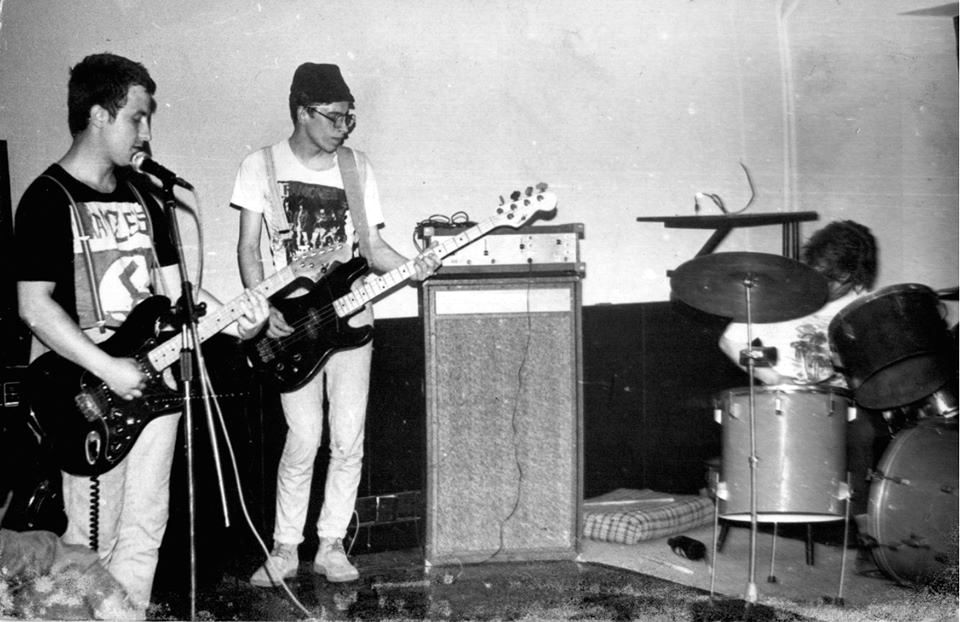
Yes, I remember them, but BTM were the first. There was also a band called Ramzes and the Hooligans [first demo tape 1987, earliest live tape 1988 – MC].
And Baranki Boże?
Their vocalist is the brother of Czarny of the punk band Karcer.
Baranki Boże wrote a few skinhead anthems, didn’t they?
Yes, they were one of the earliest skin bands of the 80s.
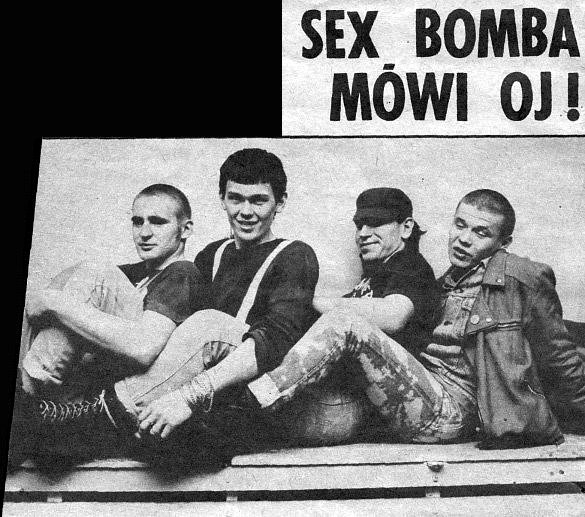
What’s your take on the band Sex Bomba?
Negative. You know why? I still have no idea what they’re supposed to have to do with skinheads. Their lyrics were basically about nothing.
What about the song ‘Dziewczyny kochajcie lysych’ (Girls, learn to love the baldies)?
Well, what about it?
And what about ‘Kazdy troche jest Hitlerem’ (Everybody has a bit of Hitler in them)?
That was a pure punk lyric.
Well, yes – ostensibly pure punk, but everybody thought Sex Bomba were a skin band, and everyone thought there was something dodgy about them.
Mikrofony Kaniony [an experimental post punk band – MC] used the word Hitler in their lyrics too. And what about Dezerter [an anarchist hardcore punk band – MC]? “Twenty-first century – concentration camps. Twenty-first century – smoking chimneys of crematories” – and yet, they weren’t a nazi band. (laughs)
Did you go to Warsaw to attend the Róbrege festival in 1990?
I did. Sex Bomba were playing.
There was a big scuffle when Sex Bomba were on. The singer tried to calm people down.
I was standing next to the stage and heard the singer say something like “you’ve finally learned to bash the baldies”.
Sex Bomba were on first precisely because the promoters were wary that the whole skinhead mob would turn out for them. And they knew the skins would stick around at least until they’ve seen Sex Bomba play.
There was a huge brawl. This time though, it wasn’t just skins bashing people: people were fighting back. A few croptops got a good hiding too. Incidentally I was standing on the side of the stage when it all kicked off, ’cause I wanted to find out what the deal was with Sex Bomba. Until then I’d only heard about them.
That was the night when Arek Marczynski famously thanked the audience for having “given the skins the appropriate response”. He got the biggest applause that night – more than any of the bands.1
For me, Sex Bomba were an embarrassing band. They tried to jump on every bandwagon without having anything to do with it.
Did you guys consider Ramzes and the Hooligans one of ‘your’ bands?
Not really. Jarosz brought their tape from Urko, who we were already in touch with in 1989. We put it into the ether, so it was heard around town. Urko was managing that band, and he passed the tape on to us.
Do you know anything else about Ramzes?
It was a strange band. They had a lyric against emigrating: “A Pole can only live in Poland…”. A few months later, the singer emigrated to the West. They also had a song called ‘Biała siła’ (White Power), but the meaning wasn’t quite clear. The lyrics were ambiguous, as if making fun of it all: “I get up in the morning, emptiness all around me, I don’t know what to do with myself, it’s an ordinary grey day. Best to get up and pull on the boots, go to town and beat someone up”. And then in the chorus he went, “white power, white power, that’s us” – as if ironically.
Who is Urko, then?
Urko is a bloke who’s interested in music. Back in the day he was also interested in politics, but now he’s more into just music, and all kinds of music at that.
He’s an ambiguous character, though. He attends fascist gigs, punk gigs, takes part in Czad Giełda [a punk, hardcore & alternative music fair across several Polish towns – MC], and he’s doing a zine called Kołomir [a Slavic pagan symbol for the cycles of life and the flow of time often used by nationalists, but not exclusively by them – MC].
I’ll tell you only what I know for sure. Urko has travelled to Wroclaw to attend nazi gigs. He went to see No Remorse, for starters. But he also came to see Red London, which is a left-wing skin combo. He went on some trip to France, and when he came back, he wrote that there are too many coloured people crowding the streets there, flooding Europe… You see, he’s just a guy who’s interested in youth culture (laughs). Once upon a time, he was a far-right skin, but I think now he’s interested in everything. I suspect he’s got his mind made up on certain things, such as ‘blacks will be blacks’, but I don’t know for sure because I haven’t talked to him in a long time.
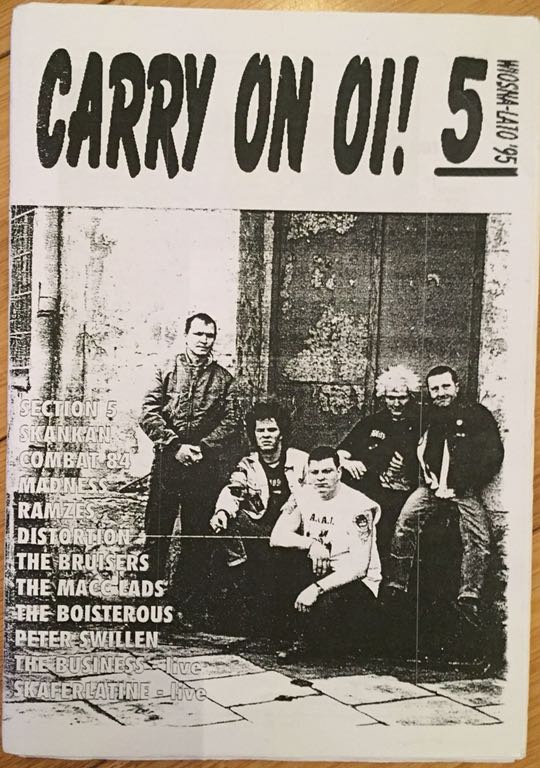
I had a read through Carry on Oi! zine, which is ostensibly just an Oi zine, but ‘Oi’ in the same way as bands like Combat 84 or Brutal Combat are ‘Oi’ – which is to say, actually pretty far right. I read the first or second issue. It’s supposed to be an apolitical zine that has nothing to do with anything, but it features nazi bands alongside groups like Red London. And the authors have explicitly made statements such as “We want a greater Aryan empire of the East”.
They now run a label that is also putting out Ramzes and the Hooligans.
Yes, and that makes me wonder.
They’ve put out Rezystencja too [an Oi band – MC]
Yeah, exactly. It seems to me that these guys just want to be able to attend punk gigs with a straight face. They show up at record fairs because they aren’t nazis, supposedly, but they mix with nazi circles. It’s a very comfortable niche they’ve created for themselves.
Doesn’t that also apply to Urko? He’s the editor of Kołomir, after all.
Now it’s just a music zine – but why didn’t he change the name? He should change it.
Didn’t an interview with Konkwista 88 appear there lately?
Yes, and I’m the one who originally arranged that interview (laughs). It’s a reprint from my Szturmowiec zine.
So he isn’t apolitical.
When it comes down to it, the term ‘apolitical’ is absurd. What is it supposed to mean, ‘apolitical’?
You said yourself that some people call themselves that.
Yeah, I said that, but I don’t even get what ‘apolitical’ means. Does it mean not having any opinions on anything or what? It’s a different matter to be against political parties and reject them all. I do, but I don’t consider myself apolitical, because I have a particular interpretation of reality and opinions on what’s going on. And that’s political. To me, it just seems like a trick, a cop-out: “He’s apolitical” – i.e. he can do whatever he wants. He can shout “Sieg Heil”, he can punch a black man in the teeth, but he isn’t a racist because he isn’t doing it for any particular reason. He can go round bashing people because he’s apolitical.
Let’s get back to Wroclaw and characters like Czeski, Kufel, Mareczek. Who were they, and how did they become skinheads?
Czeski? Well, he used to be a punk before, and then he got into skinhead.
But you said that Czeski had some problems with other skins?
I don’t know for certain, but I think one of the older skins didn’t like him. Maybe Siudy? Maybe Soltys? I’m not sure, but I know that at the Marchewka festival in 1988 he was still a punk.
You mentioned that Mareczek was the ‘iron fist’ of the scene.
Well, he was a fierce fighter and very strong. Punks were very afraid of him.
You availed yourself of his talents to restore order in Popowice?
Yeah, he helped me as a mate.
Tell me something about Kufel – wasn’t he an orthodox punk at first?
Yes, he was. There was some concert at the Centenary Hall, and I saw Adas [of Konkwista 88] mugging him for his boots. Some time later, at a demonstration organised by Fighting Solidarność [a more radical splinter of Solidarność – MC] I saw him again – this time with short hair, polished boots, white laces.
I once attended a protest by Fighting Solidarność, and I remember a few skinheads were there too. Borowa was one of them.
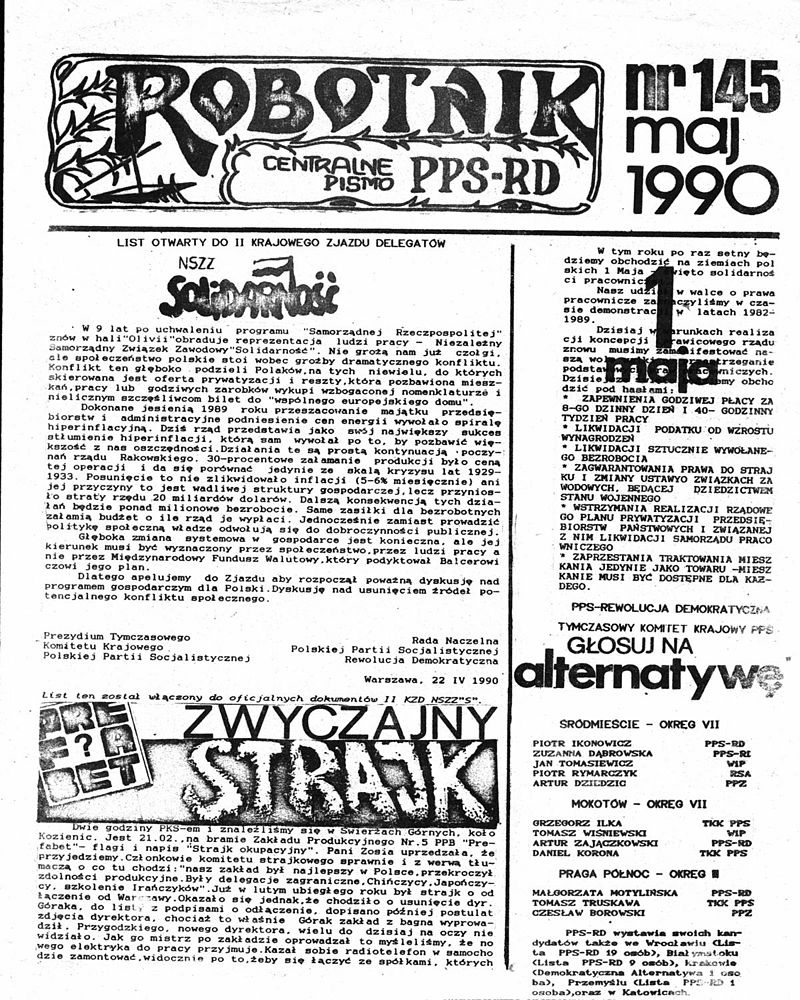
Borowa was a Polish Socialist Party/Revolutionary Democracy activist [PPS-RD, i.e. the majority faction of the left-wing Polish Socialist Party refounded in 1987; name changed to PPS after reunification with the minority faction in 1990 – MC].
He’s the son of Czesław Borowczyk, one of today’s high-ups in the Polish Socialist Party (PPS). How did he find his way into the skinhead scene anyway?
I don’t know how. That was before I ended up there. Gajor was also a PPS member.
Gajor also appears in Zielinski’s book about WKS Śląsk Wrocław fans, where he’s presented as a young, promising hooligan.
That’s because he was quite fierce. As for Borowa, they kicked him out of the PPS after the ruckus on 24 February 1990 in the Wroclaw town centre.
Did you often hit punks?
Not really that often. If I saw one in Popowice, I’d walk up to him. But it wasn’t like the stuff that came later, where you’d really kick the shit out of people or even tried to kill them. It was more about showing your superiority, scaring them. The point wasn’t to beat anyone senseless or kill them for being an ‘enemy of the nation’.
You once told me about a very interesting situation in secondary school: you walked up to a punk and told him to leave the school and not come back.
That’s right. One morning I came to school and learned there was some new punk attending. In the break I walked up to him and said: “What are you doing here? You aren’t coming back tomorrow, or I’ll have a serious word with you”. Well, he didn’t come back – he left the school the next day.
Adam Jarosz is also an interesting character. It seems that he graduated as an architect. Didn’t they mention him in that report on the demonstration that you disrupted? The report said that an eighth-semester architecture student was among the arrested.
Yes, they highlighted the fact. He had been a punk once.
It seems that he was deeply ideological?
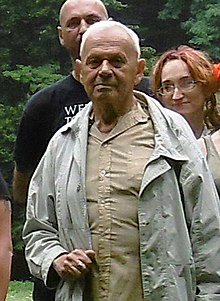
Yes – he was in touch with this geezer called Stanisław Potrzebowski, who was linked to the World Apartheid Movement in South Africa.2 He even lived there for a while, but he left because he got scared of the situation that had developed there.
You mean because Apartheid ended?
Yes. Jarosz had strong ties with Potrzebowski. I also know that Potrzebowski knows Bolesław Tejkowski, but he doesn’t think that Tejkowski is very intelligent [Bolesław Tejkowski was an eccentric, semi-dissident nationalist Communist during Poland’s socialist era who in the 90s became a far-right leader and gained a skinhead following – MC]
Potrzebowski now seems to be teaching at the Academy of Music.
That’s possible – probably some languages.
German.
They wanted to sack him because he was wearing a signet ring, which is a bit over the top. There were even people of colour on his team, but he didn’t bother them because he has a professional attitude to his job. What he’s up to in his private life isn’t really anyone’s business. He’s doing his job well, and if people mind his political views they should complain about them outside work, not try to get him sacked.
And that signet you’re talking about wasn’t a swastika by any chance?
It wasn’t an exact swastika. It was a kind of swastika made up of squares. If he wants to wear that, let him.
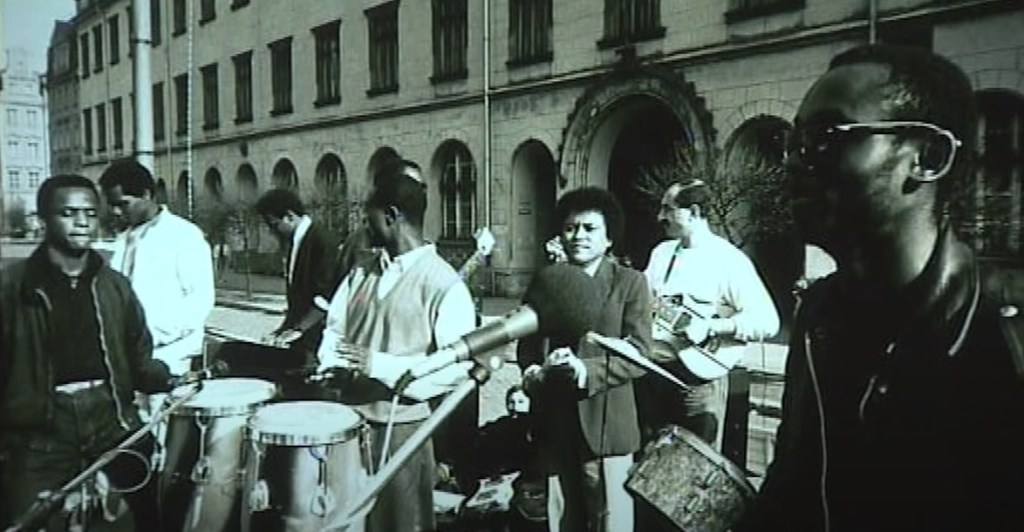
Let’s talk about the demonstration of African students in Świdnicka Street on 24 February 1990. Who had the idea to organise a counter-action, and what was Potrzebowski’s role in it?
He didn’t play any role at all, because nobody knew him yet.
I heard people say that Potrzebowski gave you the idea – that he was even funding you at the time.
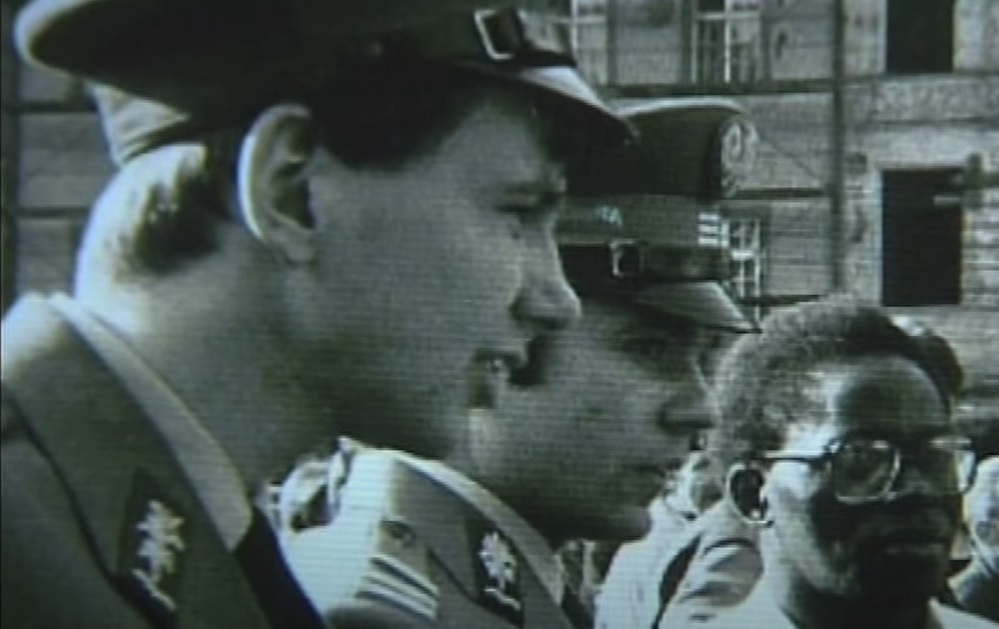
No such thing occurred. The day before, there was a metal gig at the Index. There was a brawl, and then someone found an announcement in a newspaper saying there was going to be a demonstration to celebrate Mandela’s release. It would have gone completely unnoticed, had it not been for that No Remorse song about South Africa. Everyone had heard the song, so we arranged to meet up and go to the rally the next day. There was a lot of talk about democracy at the time. The blacks started marching, and then we came through the gate. We shouted pro-Polish slogans, racist slogans and chauvinist slogans – and then we heard them shouting similar slogans on the other side (laughs).
Like what?
I don’t know exactly, but I think “you Polish oafs” – things like that.
And then it kicked off…
I’ll tell you exactly how it started. Lewy went up to a black guy, took his Mandela banner off him and broke the flag pole – that’s when the scuffle started. Borówa got stabbed in the neck with a knife, Skinol got hit in the face with a knuckleduster.
By who?
By the blacks. They had security guards who were, let’s say, not the tiniest guys. So we all retreated. Then there was another scuffle next to the stage, just a bit of pushing and shoving, and then we beat a hasty retreat. There was a lot of them, like 150 people, and maybe 15 of us. We ran through some gate and hid. Later, when we came out to see what was going on, the police started rounding everyone up. That’s more or less what happened. I managed to escape.
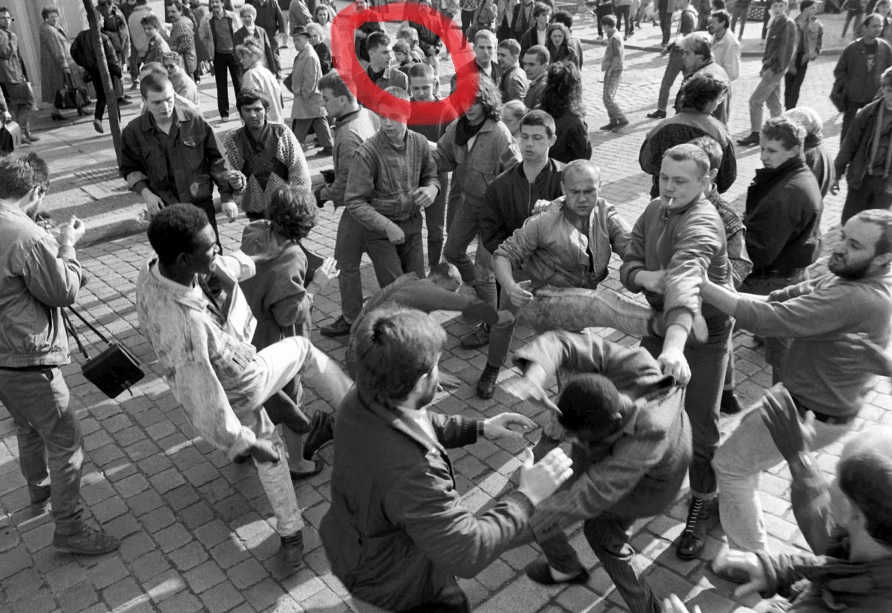
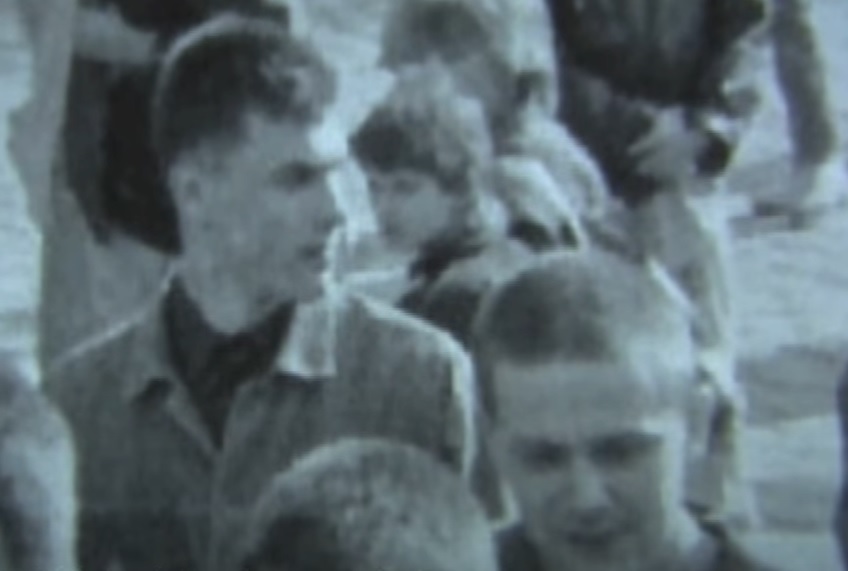
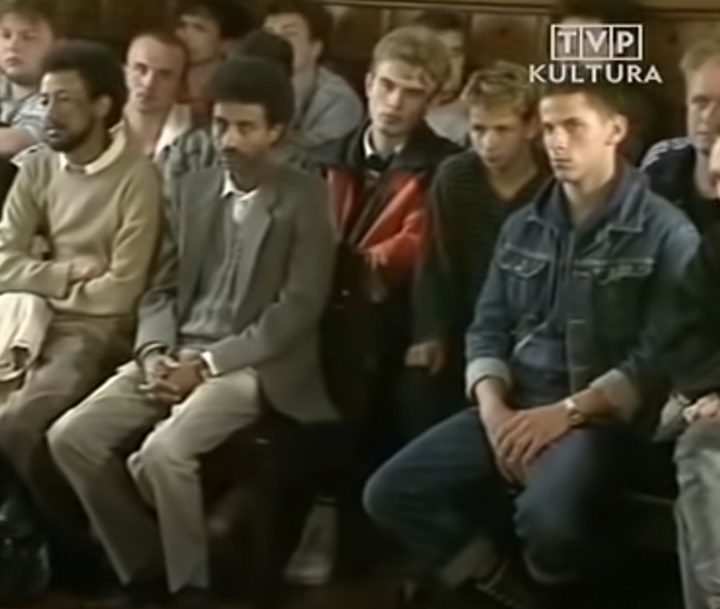
Later there was a court trial.
Yes. I didn’t attend, though. I didn’t show my face anywhere – preventively.
Did anyone get sentenced?
They got one year suspended for five years.
All of them?
Two of them got lesser sentences because they were considered legally insane, and article such-and-such granted them reduced sentences.
But the whole affair gave you guys a bit of scare, didn’t it?
It gave us a scare because television had filmed everything and nobody wanted to get caught for this. There were too many witnesses. Apart from that, none of us had actually wanted to fight, seeing as there were police all over the place as we entered the Market Square. We wanted to shout a bit, but nobody was up for a scrap – especially since it was 15 against 150.
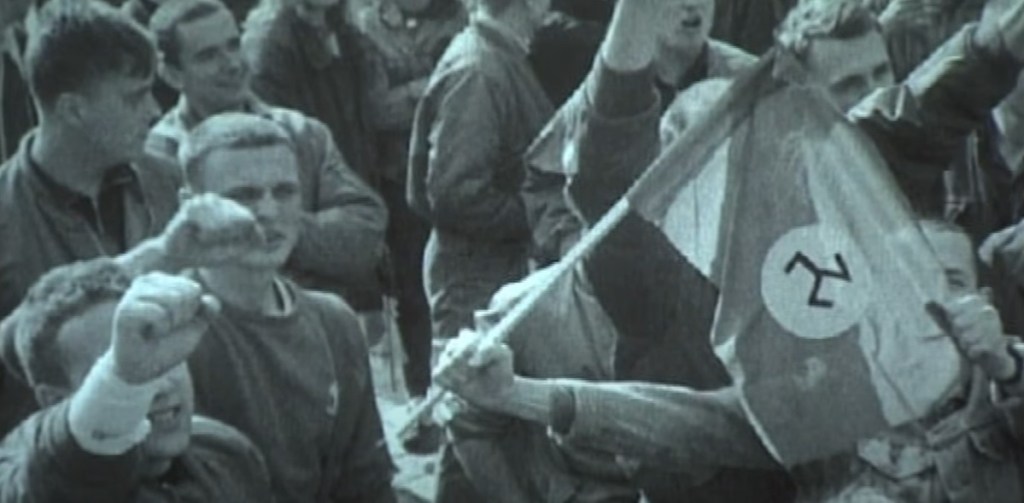
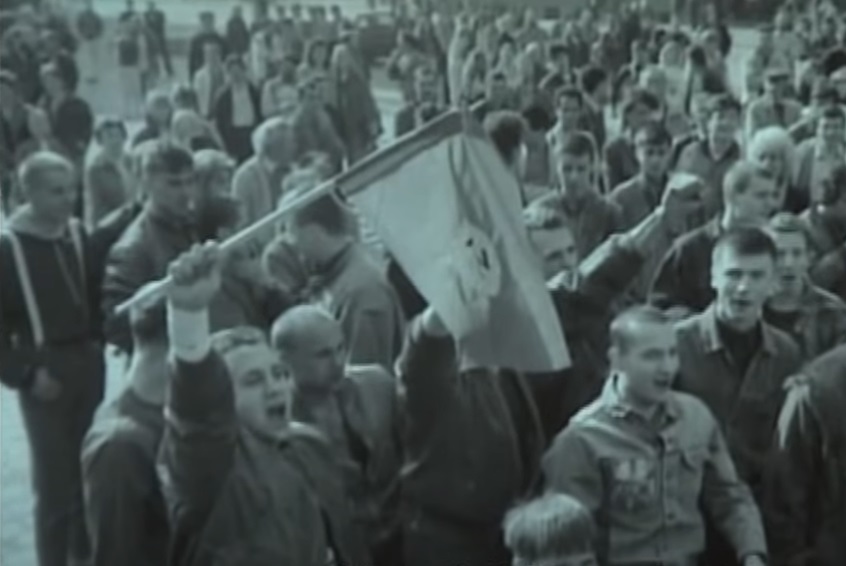
But Lewy started it.
He took that guy’s banner. So yeah, he basically started it. Later the papers said that we had “come to beat people up”, which is why this was a practical rather than ideological issue. They also said there had been no police. But that wasn’t true – the cops were there standing by, and there were cop cars too. When the fight broke out, a cop car drove into the crowd and just tried to disperse it as it wasn’t quite clear who was who. Some whites joined in on the opposing side, and it turned into a general punch-up. The cops didn’t really know what was going on, and they couldn’t just come in and start hitting everyone. The papers complained that the cops had looked the other way. But what were they supposed to do – beat everyone up? Plus, the police were oversensitive at the time – better not hit anyone, lest you hit someone unnecessarily [the country was transitioning to capitalism in that year – MC).
Did you attend the Armia concert in 1988?3
No, but people told me there was a massive fight there. Some had scars on their heads to prove it because they’d been hit with chains, and there were lots of bruised faces. It was real mayhem. Everybody enjoyed it.
What about the concert in Psie Pole [a suburban district of Wroclaw stretching into the countryside – MC] in December 90, where Stan Oskarżenia [a Wroclaw punk band – MC] and others played? You guys invaded that gig.
Well, we met up, travelled to the show…
Had you planned it beforehand?
Yes, we arranged to meet up so we would all go together. We kicked off in the corridor just outside the entrance. Bottles were thrown, glass was broken – a total riot. But it was only a few moments of laying into everything that moved. Then we left because we were wary that the cops would be there soon. We headed for the bus stop, and I remember that a group of punks followed us. Three or four of us turned around and ran towards them, and the punks just ran off. I know for sure that Mareczek and I were among the ones who ran at them. I think Śruba was too, insulting the punks for running away. Why were they running, he shouted, when there’s twice as many of them and tooled up too. We were about 70-100 feet away from the rest of our crew! If the punks had come at us, they could have battered us senseless.
There came a time when there were no more skinhead invasions of punk gigs. It just stopped.
You know why? Because we adopted the wrong tactic. We showed up, thrashed everything in sight and left. If we had done it all more slowly – show up, walk in calmly, then start terrorising people inside the gig – we could just have continued like that. But we were scared of the police. So we’d appear out of nowhere, do our thing quickly and run.
When and why did Bolesław Tejkowski start showing up in Wroclaw?
It was me and Adas who first established contact with Tejkowski’s organisation. They came to visit Adas at home…
Why him?
They sent a letter to the post box address of Konkwista 88 saying they wanted to meet us, so Adas arranged a date. These guys were fanatics.
Did Tejkowski himself show up?
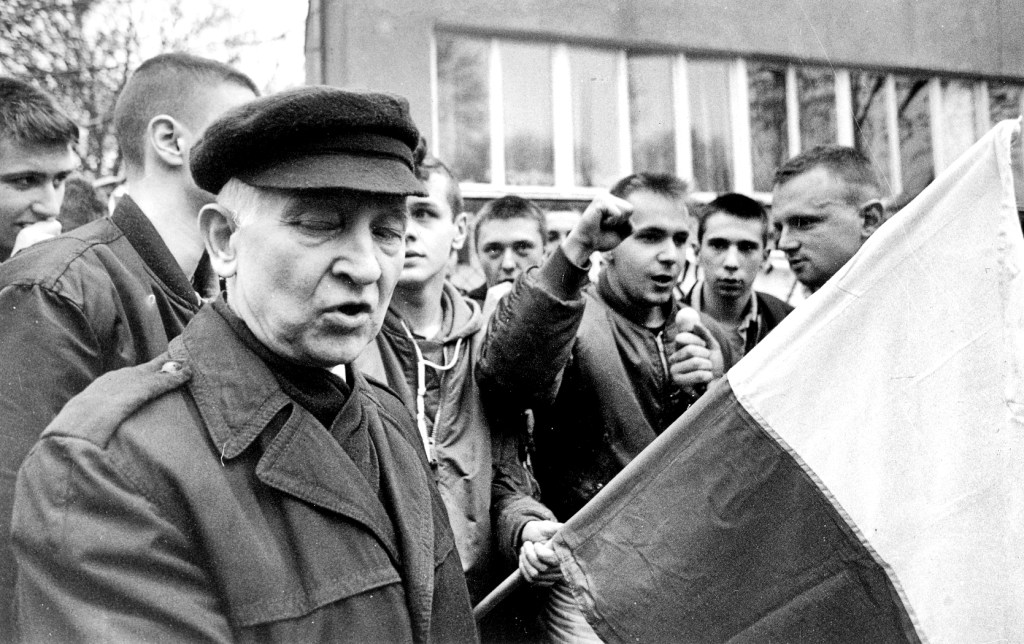
Nah, he didn’t. They were some kind of representatives for the southern Polish section, two of them. Kosmaty was there [Krzysztof Kosmaty, then the boss of Polish National Community (PWN) in Lower Silesia] and some other guy who later completely turned against all this stuff. That guy was relatively reasonable, but Kosmaty was clearly a fanatic. They suggested we collect signatures for Tejkowski, so we went to Jelena Góra with them [a historic city in Lower Silesia – MC].
When was that?
Maybe 1990 or 91. We drove to Jelena Góra by car. We didn’t really feel like doing it, but we were curious to see what would happen. They gave us some lists, books, leaflets, and told us to go to the town centre and collect signatures. We jumped in the car and went to some lake instead. Later we came back, gave them their stuff back and drove back to Wroclaw. And that’s where our contact with Tejkowski ended. They were so full of shit, they made us laugh. Later Smolar got caught up in that stuff.
But Tejkowski had some link to Wroclaw, didn’t he? He even lived here for a while, or maybe he was just hiding here…
He did live here – I even know where.
At Portrzebowski’s place?
Yeah.
Apparently, he was hiding out at Smolar’s place too.
You know, there were stories circulating that if you went to Smolar’s place and rang the bell, Tejkowski would open the door in a bathrobe (laughter)
CLICK HERE FOR ROBSON INTERVIEW PART 3
- Arek Marczyński is a Polish alternative rock personality who set up an independent label and magazine called Antena Krzyku in 1984 – MC ↵
- Stanisław Potrzebowski made a minor military career in Poland before moving to West Germany in 1973 to make his Ph-D. He conducted espionage for the Polish government in order to finance his studies. In 1981, he severed ties with the Polish secret service and decided to stay in the West. He worked as Director of the Bonn Institute of Applied Sociology until 1985 and then moved to South Africa. He returned to Poland in 1990 moving to Wroclaw. In April 1993, the Gazeta Wyborcza newspaper published a series of articles where Potrzebowski was described as a member of the World Apartheid Movement. The paper also claimed that he had paid the bail for the skinheads who had fought with black students at the Nelson Mandela demonstration in February 1990. Potrzebowski is the founder of a neopagan association called Rodzima Wiara – MC ↵
- Armia have been one of Poland’s most important hardcore punk bands since 1984. In the early summer of 1988, they played a concert at the Regional House of Culture near Mazowiecka Street in Wroclaw. The mass brawl that took place at that gig was one of the biggest skin vs punk battles in the history of the city – MC ↵
 Creases Like Knives