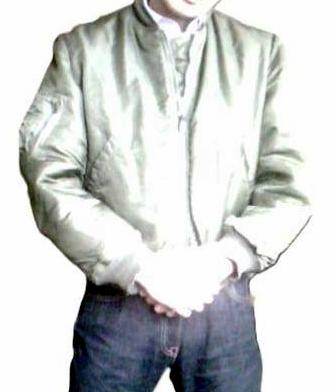
It’s been 10 years since I foolishly sold my 1961 Skyline MA-1, at a time when I badly needed the money, and I’ve regretted it ever since. I mentioned that incredible jacket several times in the MA-1 history we published last year.
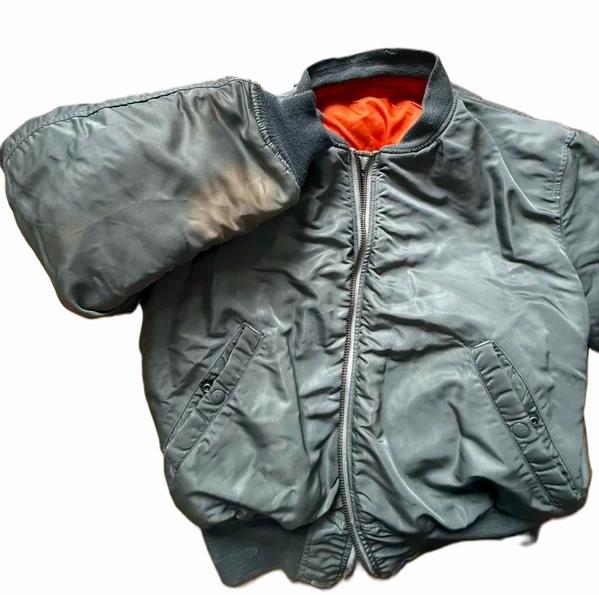
Of course, I’ve had many opportunities to get another original ‘60s Skyline since then, on eBay, Vinted and so on – usually poorly looked-after jackets that truly look their age: dirty, stained, and typically with ribbing torn to shreds by moth nibbles over the decades. Whereas in the 2010s the buy-it-now prices for such jackets started at around 300 quid, today 500, 600 or even 700 aren’t uncommon. By the time I was writing the article, I had little hope of ever finding a reasonably well-preserved specimen I could afford.
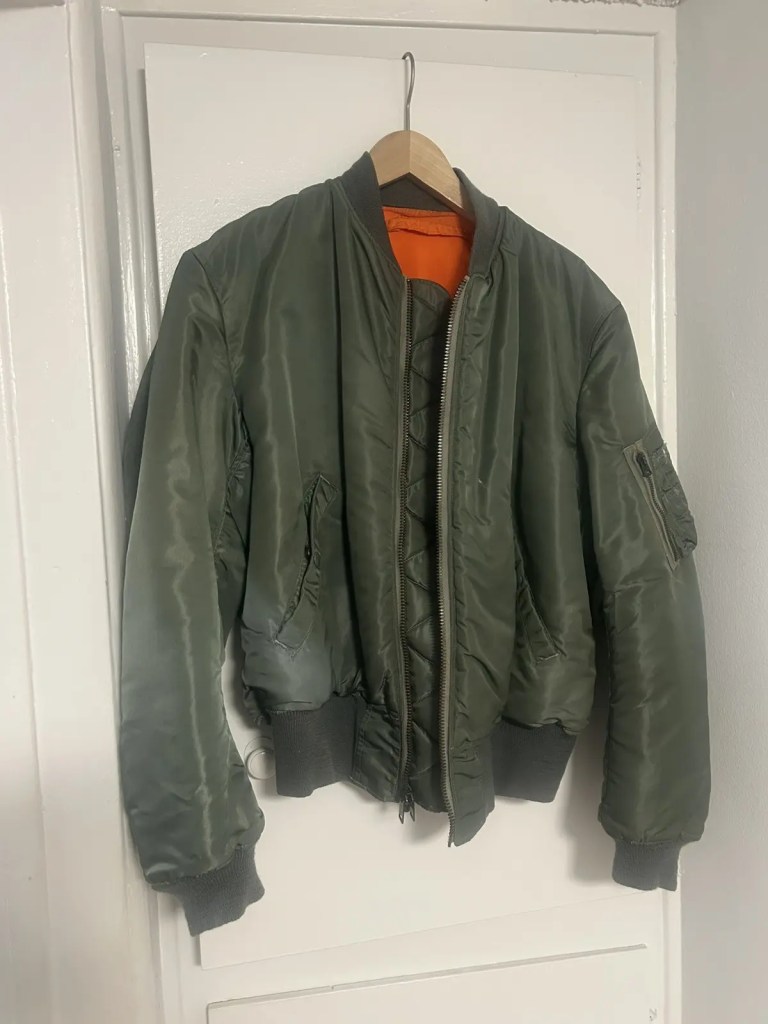
But the story was to have a happy ending. Casually browsing Grailed, which seems to have peaked among hipster types around the Covid period and which I’d never checked before, my eyes unexpectedly fell on a beauty of a 1961 Skyline that, as far as the photos allowed me to judge, was in near-impeccable condition (even though the seller had conservatively graded it 7/10). He only wanted 200 US dollars for it – the price of a new, made-in-China, ‘mall Alpha’ tribute MA-1 – and it had already been sitting there unsold for a month.
These were his pictures: amateur photos shot on a mobile phone in natural indoor light, not exactly detailed.
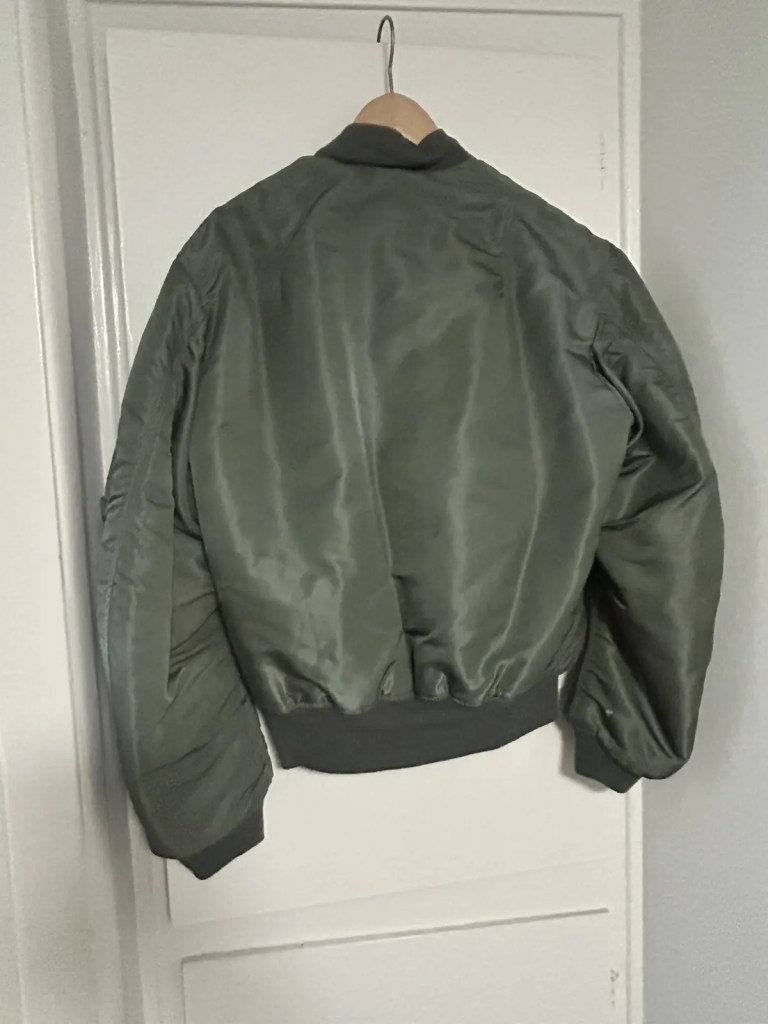
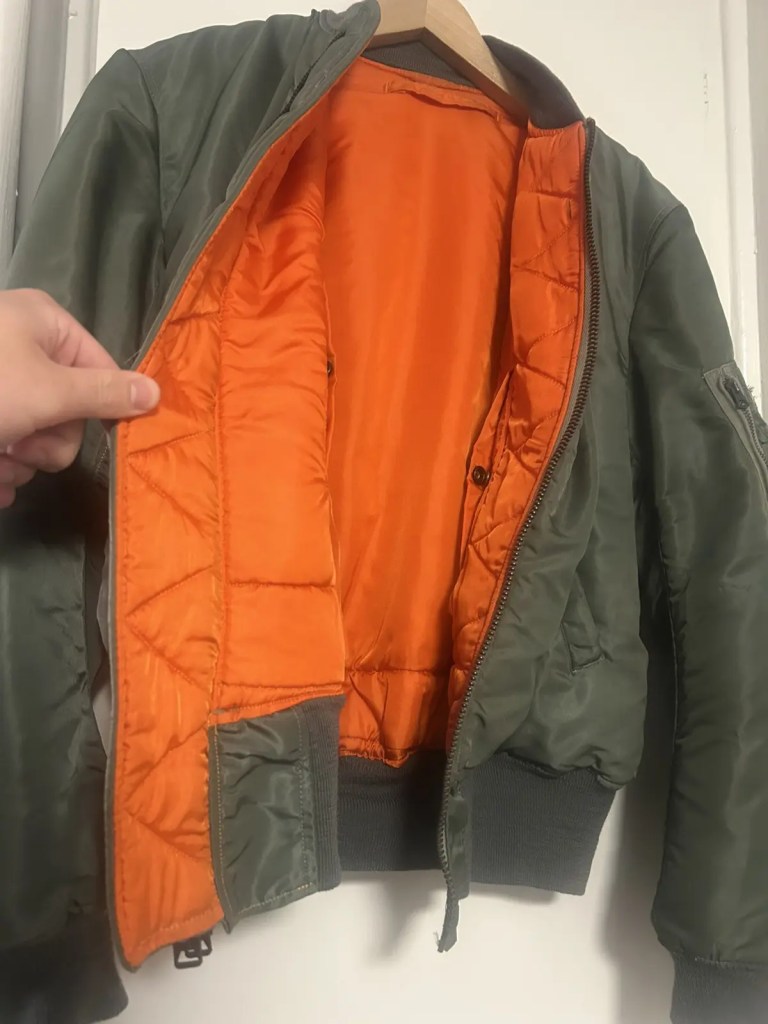
Something had to be wrong with that – a scam of some sort. I asked the seller a series of test questions to check whether the jacket existed and really was what it claimed to be. He was an unassuming casual trader from West LA, with a modest selection of trendy trainers on offer and seemingly no real knowledge of militaria, but he answered every question correctly. The front and pocket zippers both said ‘Conmar’. The pocket label said what it was supposed to say. The measurements were plausible too, even if it took quite a bit of guidance to get him to measure the jacket correctly.
Initially, he hadn’t even intended to ship it outside the US, and it took a fair bit of persuasion to get him to figure out the postage options. The instant I had the good man where I wanted him, I pulled the trigger.
When it finally arrived on my doorstep, I held my breath. I thought it extremely unlikely that everything would be right with it.
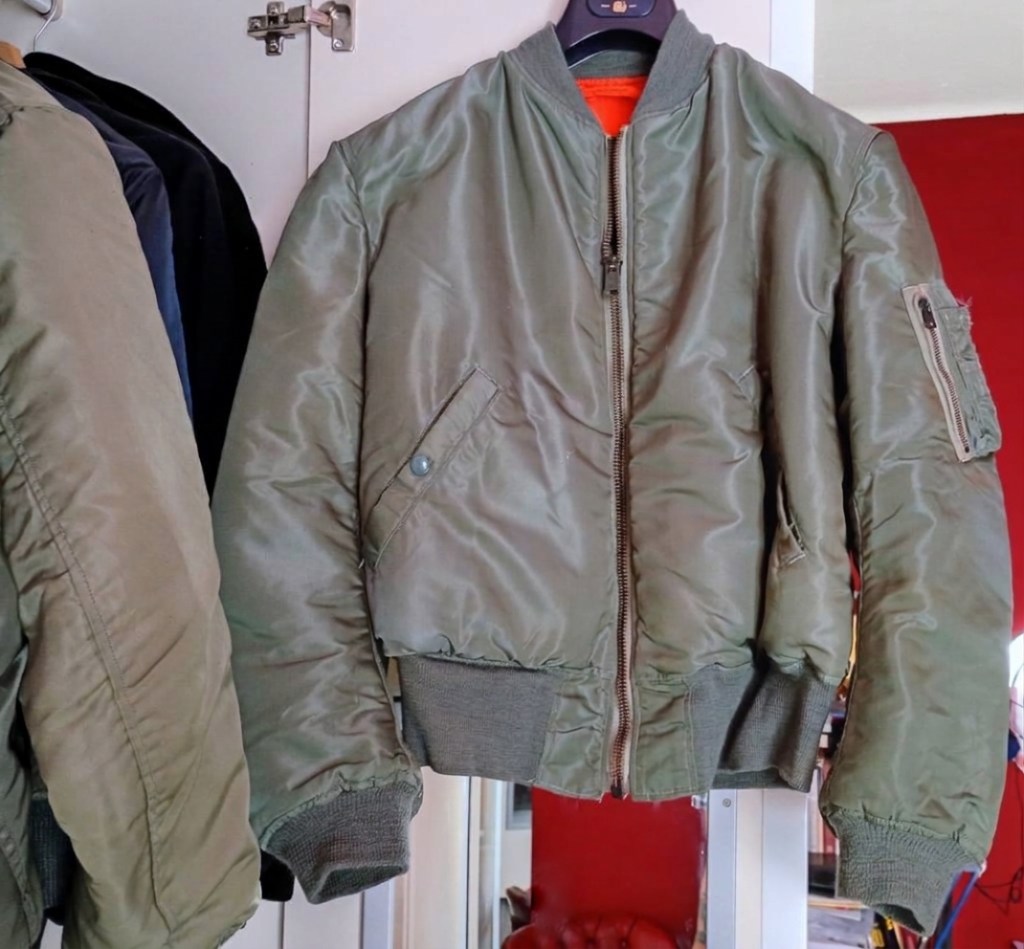
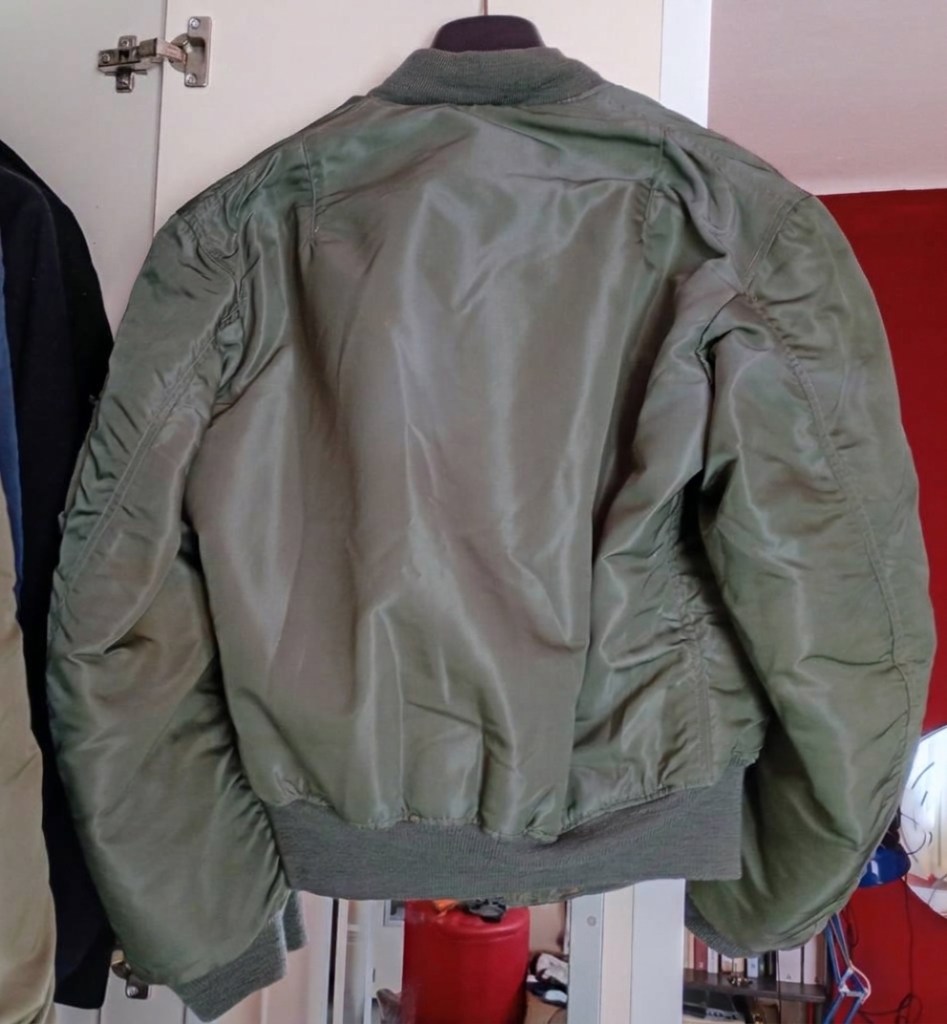
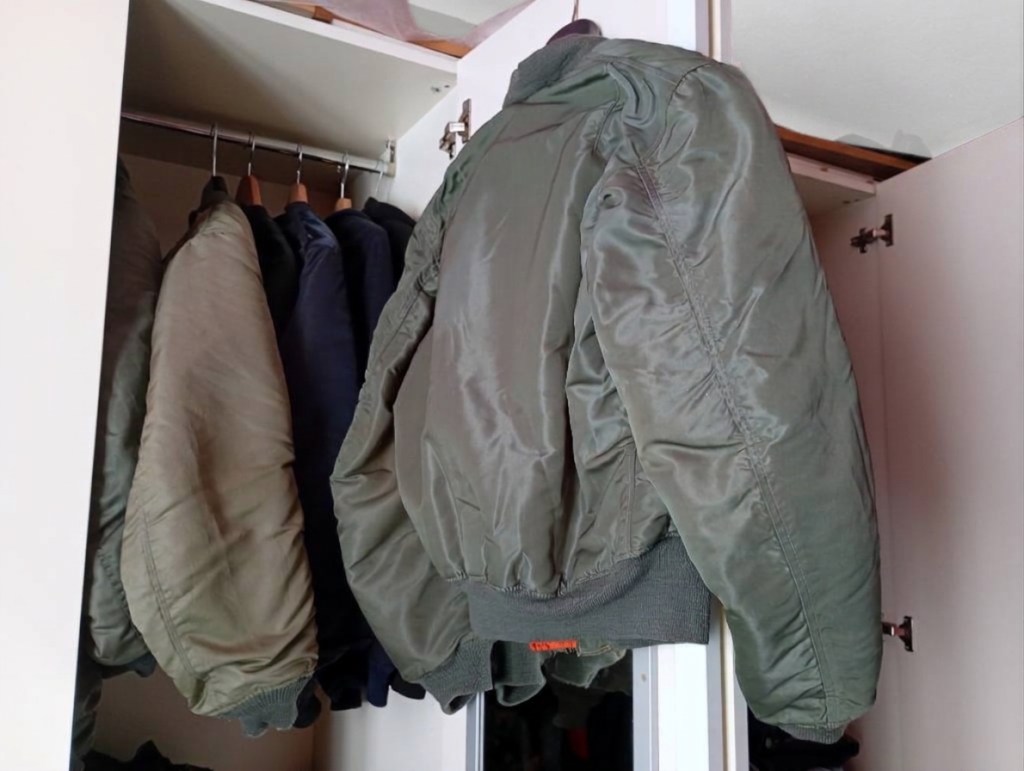
But, apart from two very small, barely noticeable white paint stains, the jacket was in incredible condition for an MA-1 produced 65 years ago. Deadstock? Nope, it had clearly been worn. But sparingly. It had retained its original muted, slightly darker silver-sage green colour and surface sheen, with little oxidation. The wool cuffs, collar and waistband had remained elastic, with no holes or moth nibbles. It was clean. The wool interlining hadn’t degraded, flattened or migrated downwards. The Conmar zipper was in smooth working order.
In short, it was quite an incredible find, in much better condition than the one I’d sold 10 years ago – and it fitted even better.
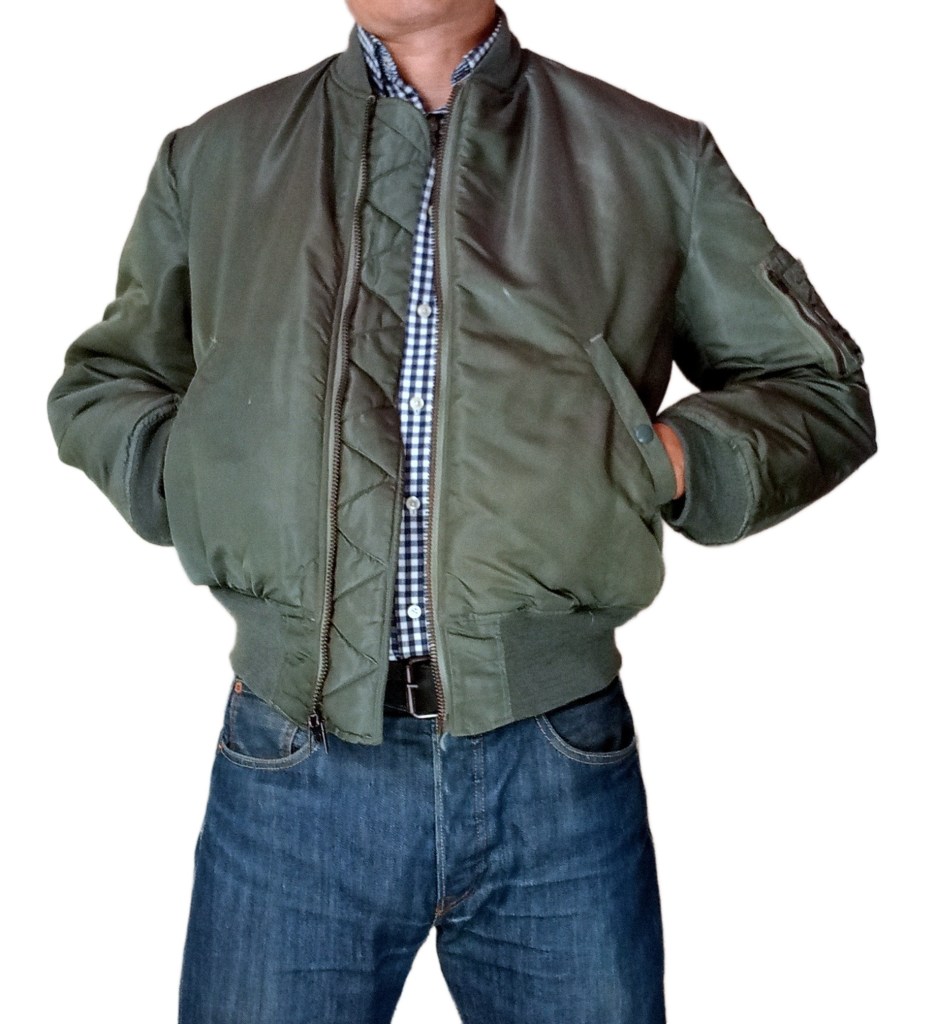
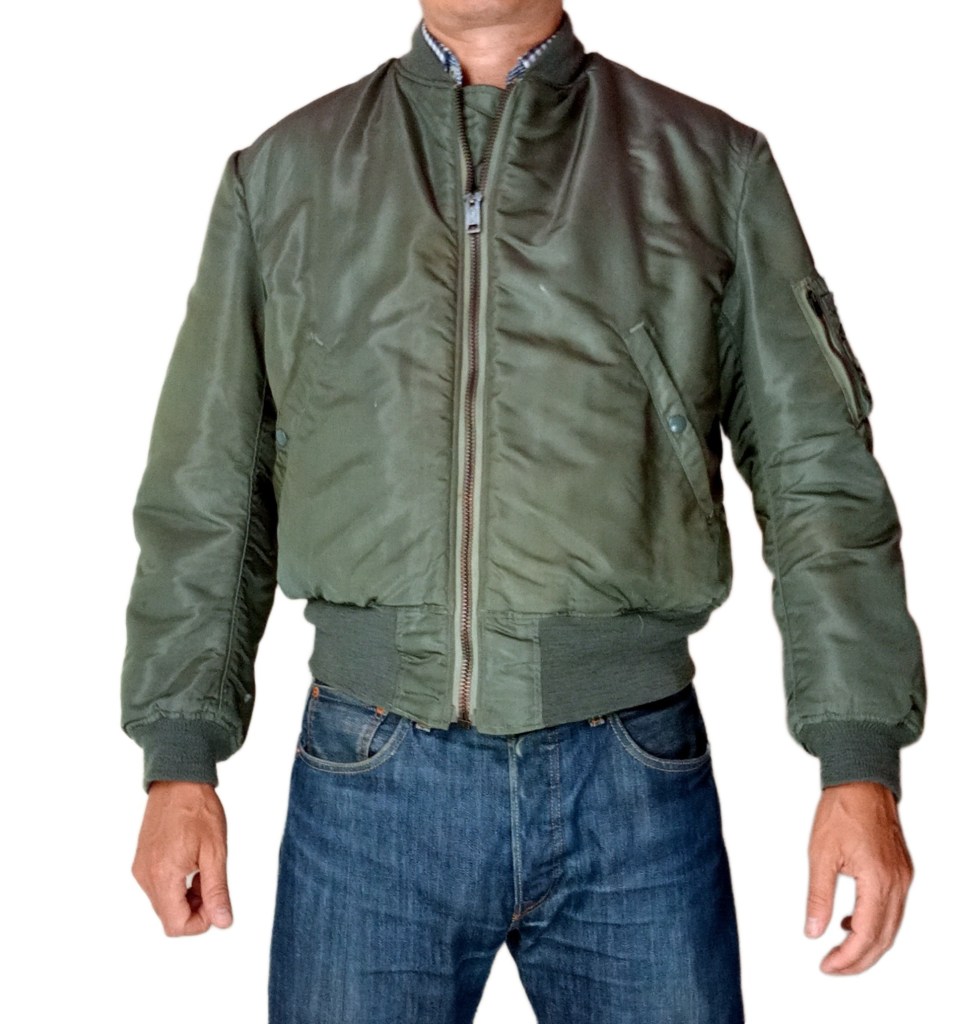
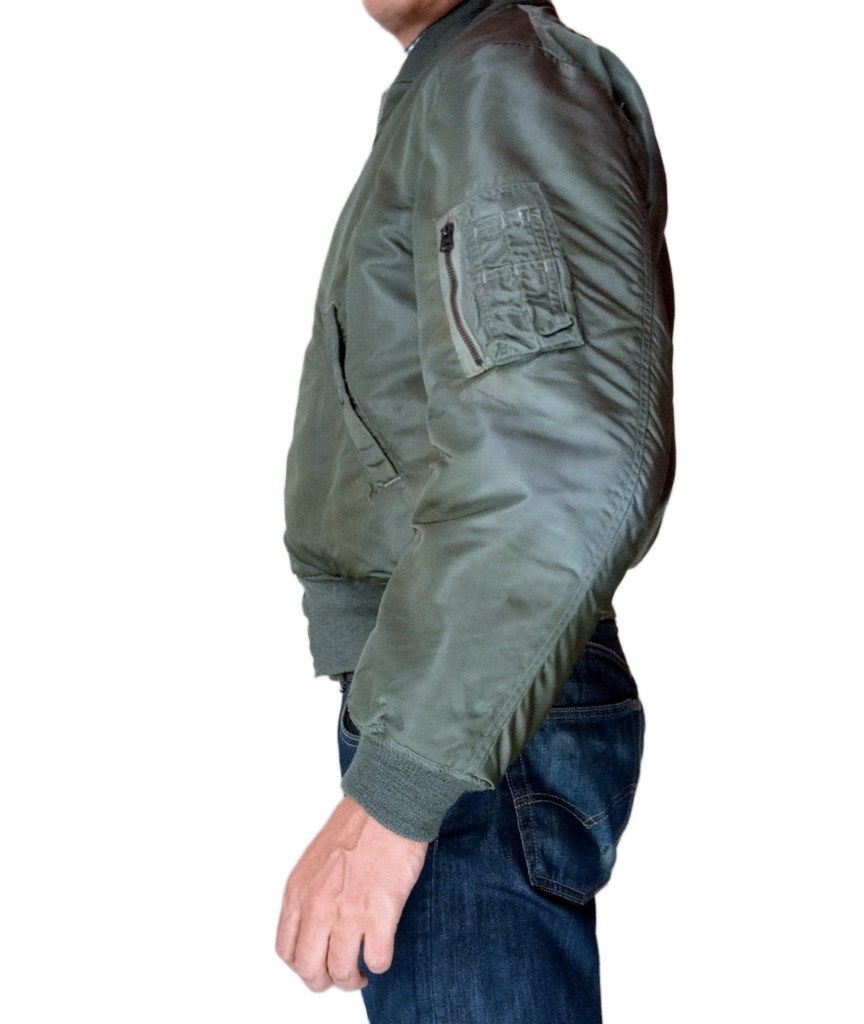
Not quite believing my luck, I searched the web for evidence of faithful 1961 Skyline repros. MASH/MOS of Japan had attempted one, though I believe it was based on the 1962 contract run, and the jacket’s provenance was clearly indicated on the pocket label. Their compatriots Real McCoy’s had produced a near-exact repro of the 1961 model, with ‘Skyline’ printed on the pocket label, over a decade ago. This one was a real possibility.
I sent detailed pics to vintage flight jacket royalty John Chapman – owner of Good Wear Leather Coat Co, which had distributed the Real McCoy’s repro in the US, and one of the planet’s foremost authorities on the subject. Upon inspection, he assured me that, yes, my jacket was indeed “100% original” – the zippers alone were enough to tell the story: “You should see the Conmar zippers made in Japan… OK, but not quite right”.
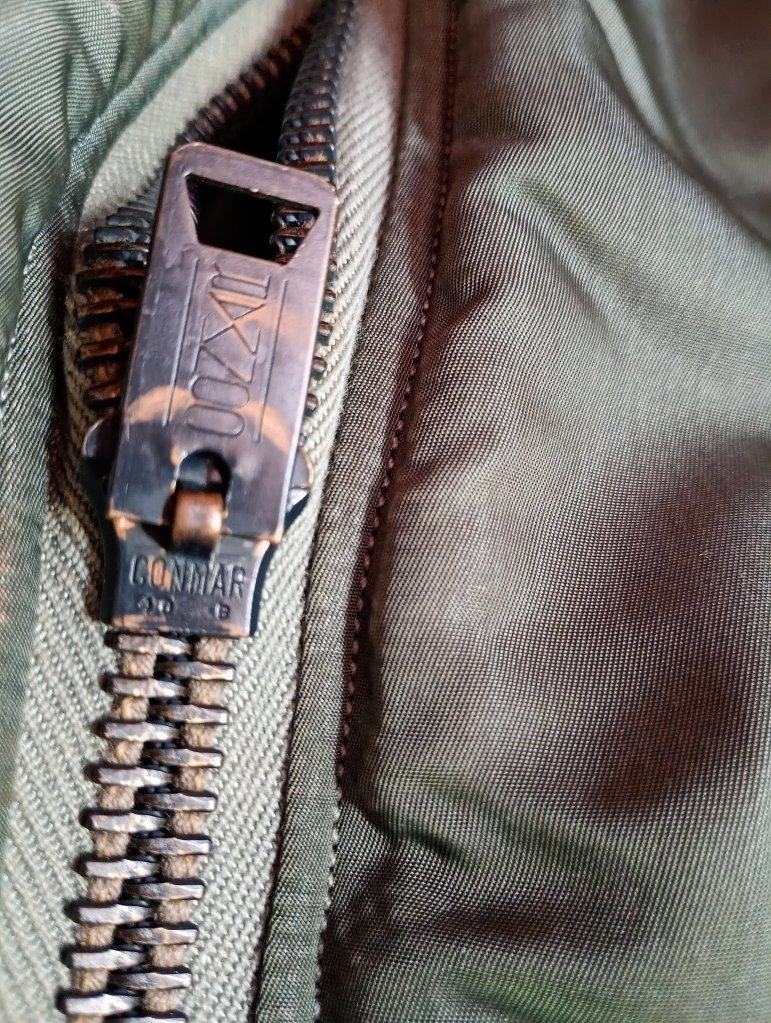
As other collectors have pointed out, including this Japanese one, the 1960s Skyline MA-1s were so carefully made that one could indeed mistake them for modern repros. This was very different from other ’60s jackets, such as those made by Alpha Industries, where the main consideration was sturdiness rather than perfectly straight stitching lines. These tended to have a rougher finish.
The Skyline is also more fitted, with a more pronounced V-taper, whereas the Alphas that followed had a more compact, rounder, broader-looking cut. It’s often said that there are no real functional differences between the C-series (1961–63) and the D-series (1963–70) MA-1. The contracts containing the relevant specs are difficult to access, but my best guess is that the only real change was the D-jacket’s looser fit, allowing for marginally greater freedom of movement.
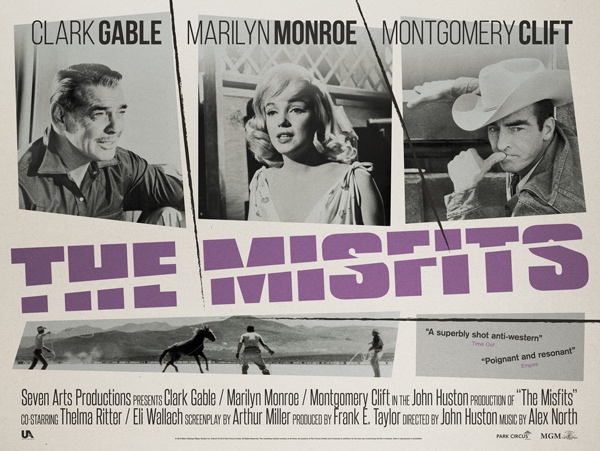
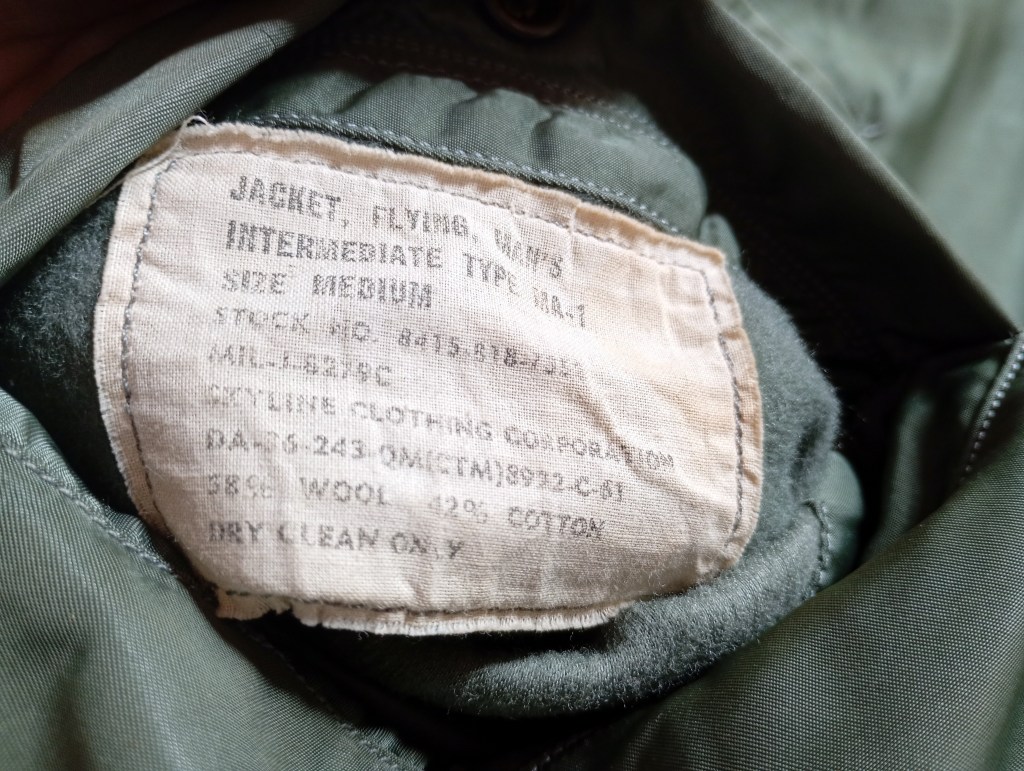
There were four Department of Defense contracts awarded to Skyline Clothing Corporation of Beacon, New York, between 1961 and 1963. As the pocket label shows, my jacket dates from the first contract, DA-36-243-QM(CTM)8922-C-61. It must have rolled off the production line around the time Elvis starred in the colonialism-cum-tourism cheesefest Blue Hawaii, The Ventures hit the charts with their instrumental proto-surf, and Monroe appeared in one of my favourite films, The Misfits – the melancholy swansong to a doomed world of rugged individualists on their way out.
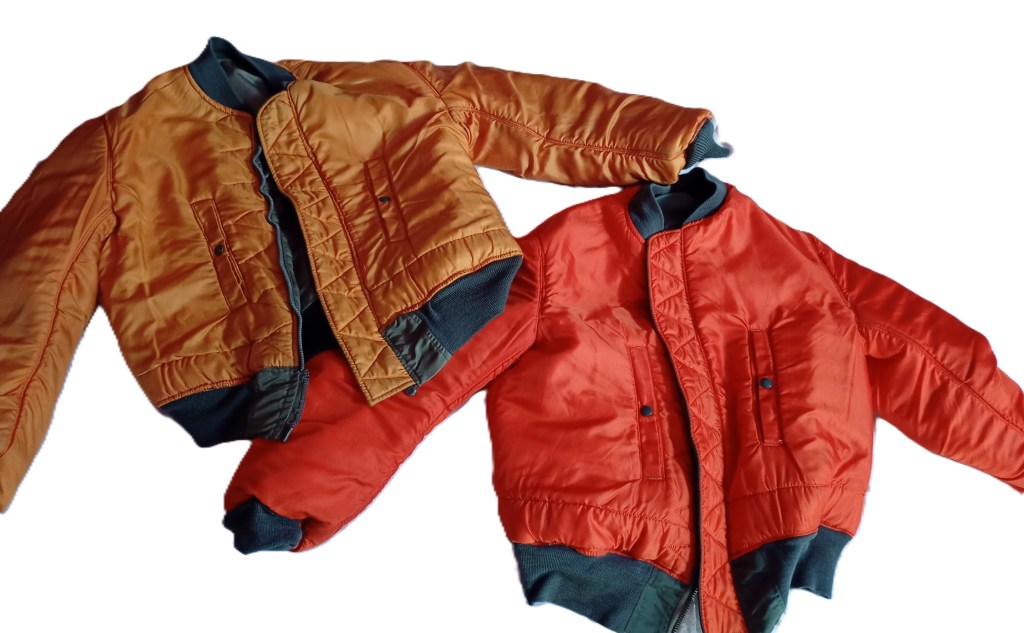
The Indian orange lining, introduced to the MA-1 with this contract, is a deep, fiery red-orange/copper. In this photo, it appears to the right of the lighter, more yellowy orange of my 1963-contract Alpha jacket.
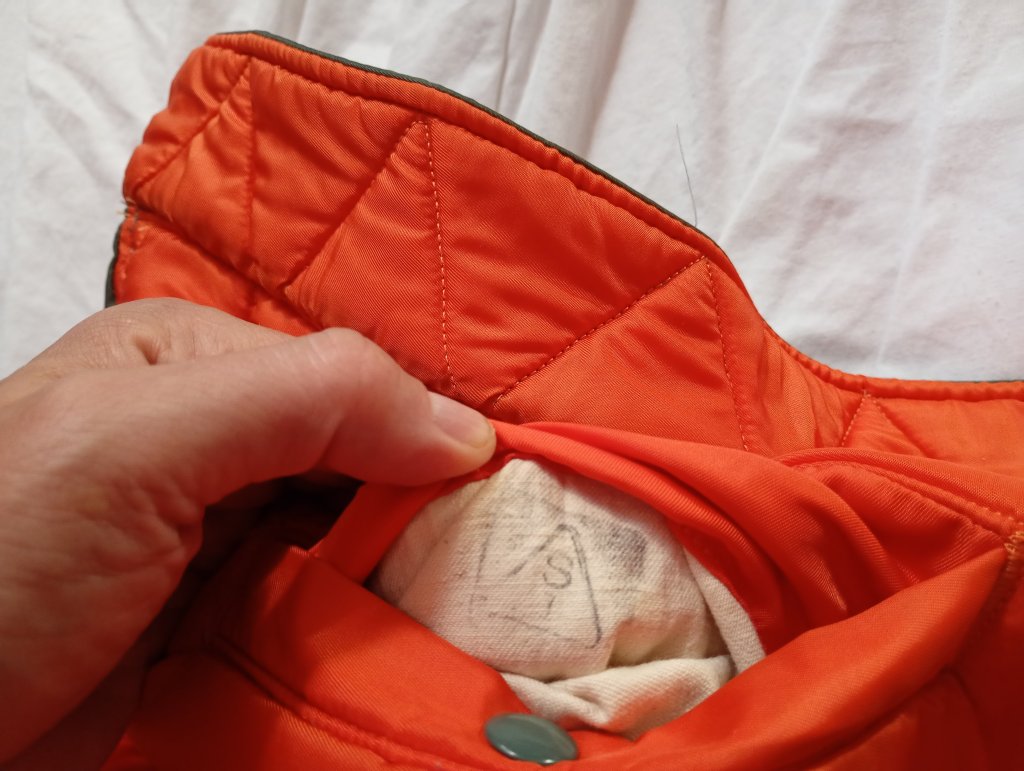
There’s a faded Military Factory Quality Assurance inspection stamp inside the right-hand pocket:
Have I mentioned how warm these are? In the winter months, you can basically wear one over a shirt, with no second layer needed. In my book, the 1961–63 Skyline jackets are the apex of the MA-1. The only way I’ll ever give this one away is over my dead body.
Matt Crombieboy