The 1950: birth of the MA-1
The MA-1 flight jacket is also widely known as a ‘bomber’ jacket, especially in Europe. Some never tire of pointing out that, in the fashion world, ‘bomber jacket’ doesn’t specifically refer to MA-1s, but is a more generic term describing any cropped, waist-length design with a fitted or elasticated waistband and cuffs, typically with a zip closure – including surfer or monkey jackets and the like. In the military aviation world, however, the moniker is accurate: the MA-1 – with its insulated nylon shell – was designed for use in cold weather (–7 °C to +10 °C, the U.S. Air Force’s ‘intermediate zone’) by bomber and transport crews flying at high altitudes. Cockpits were pressurised and heated. The MA-1 wasn’t originally intended for fighter pilots, especially those flying at altitudes where pressure suits or G-suits were required.
The history of the MA-1 begins in the 1950s, when the earliest examples were manufactured under the original MIL-J-8279 specification, officially adopted for service on 27 March 1953. They were essentially a version of the World War II B-15 flight jacket, with the mouton collar replaced by a knitted wool one – for fire safety reasons and for comfort when wearing a helmet. The earliest models came in airforce blue, inside and out, designed to match the USAF uniforms of the time.
A close relative of the MA-1, the L2A, appears in the 1955 film Strategic Air Command, starring James Stewart – essentially the Top Gun of its day.
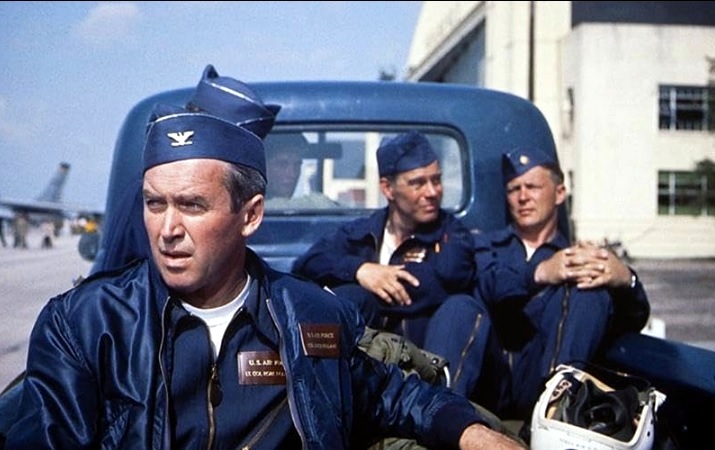
It looks especially vivid on screen thanks to Technicolor, though in reality the shade probably resembled the midnight blue that Alpha Industries now calls ‘replica blue’.

Introduced in 1950, the L2A was a lighter-weight flight jacket than the MA-1. It featured shoulder epaulettes and, unlike the early generations of the MA-1, had pocket flaps.
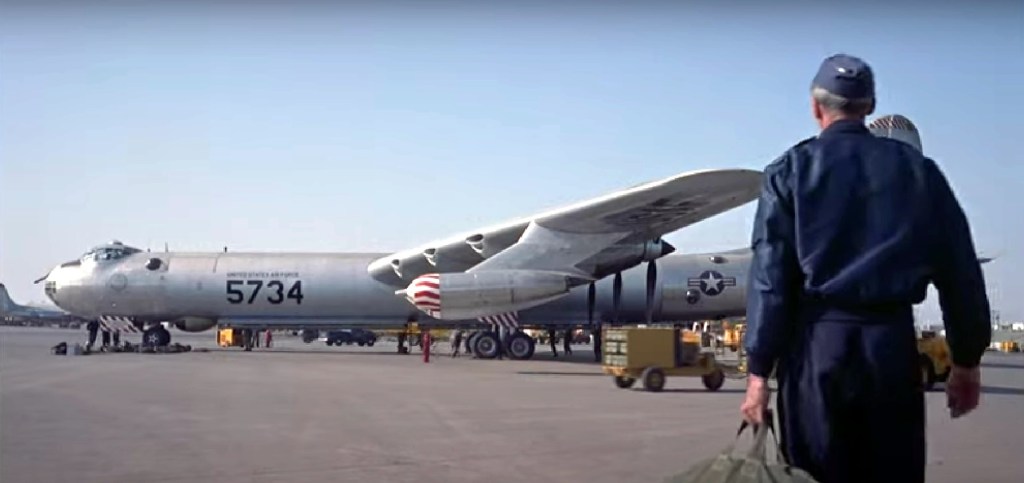
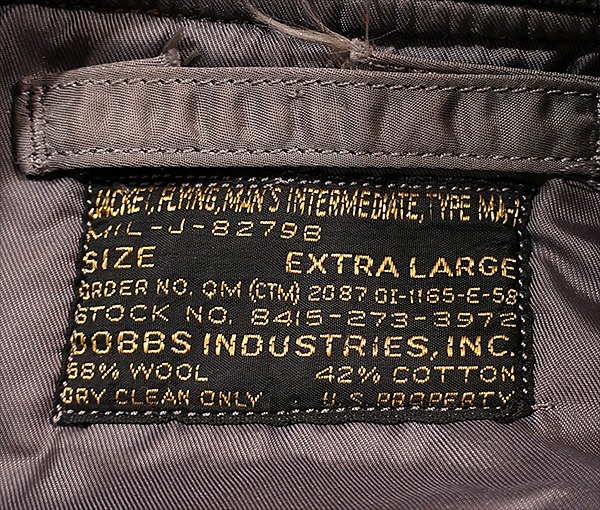
Between 1955 and 1957, the heavier-weight MIL-J-8279 was updated with improved stitching and higher-quality knit materials, and officially standardised as the MA-1 ‘intermediate flight jacket’ under the MIL-J-8279A specification. Surviving examples and archival records from this A-series show that Skyline Clothing, Rolen Sportswear, and Land Manufacturing were among the early makers. The nylon 66 used during this period was a high-strength fibre developed by DuPont. You can recognise the 1950s models by their black label with gold lettering:
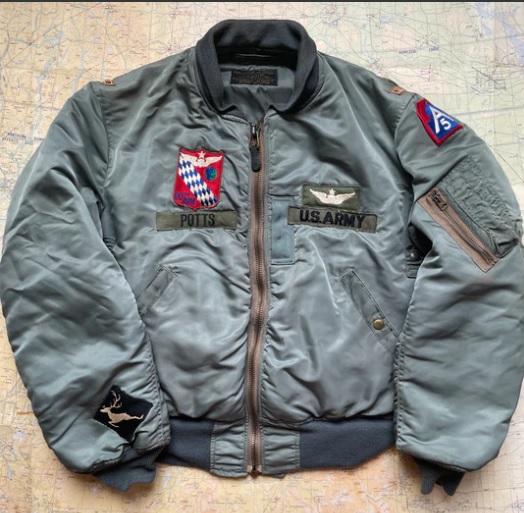
The initial midnight blue colour was soon changed to the now-iconic sage green to provide better camouflage for downed pilots. Although MA-1s were mainly issued to bomber and transport pilots and USAF ground crews, some also made their way into other branches of the military, including US Army ground crews and Navy aviation personnel. Intuitively enough, US Naval Aviation held on to the original midnight blue colour, while the US Army – according to book The Alpha Story at least – opted for a darker olive green.
Up until the late 70s, MA-1s featured a heavy and warm wool interlining, unlike the polyester used in later civilian-market versions. The term ‘wool–cotton blend’ on original labels is a bit misleading: the insulation itself was actually pure wool, grafted onto a cotton mesh backing using a hair-grafting technique. The cotton was only there for structural support, not blended into the wool fibres.
From the outset, the MA-1 was fairly roomy, for several reasons:
- Layering for warmth: pilots often wore multiple layers under their flight jackets due to varying temperatures in the cockpit.
- Mobility: pilots required freedom of movement during operations. The last thing they needed when flying or adjusting instruments, let alone ejecting from the aircraft, was restricted movement in the shoulders, arms, or chest.
- Occasional layering over flight suits.
The MA-1 was also cropped to avoid restricting freedom of movement in cramped cockpits and to prevent the jacket from catching on controls or interfering with the pilot’s seat and flight equipment.
Enter Dobbs and Alpha Industries
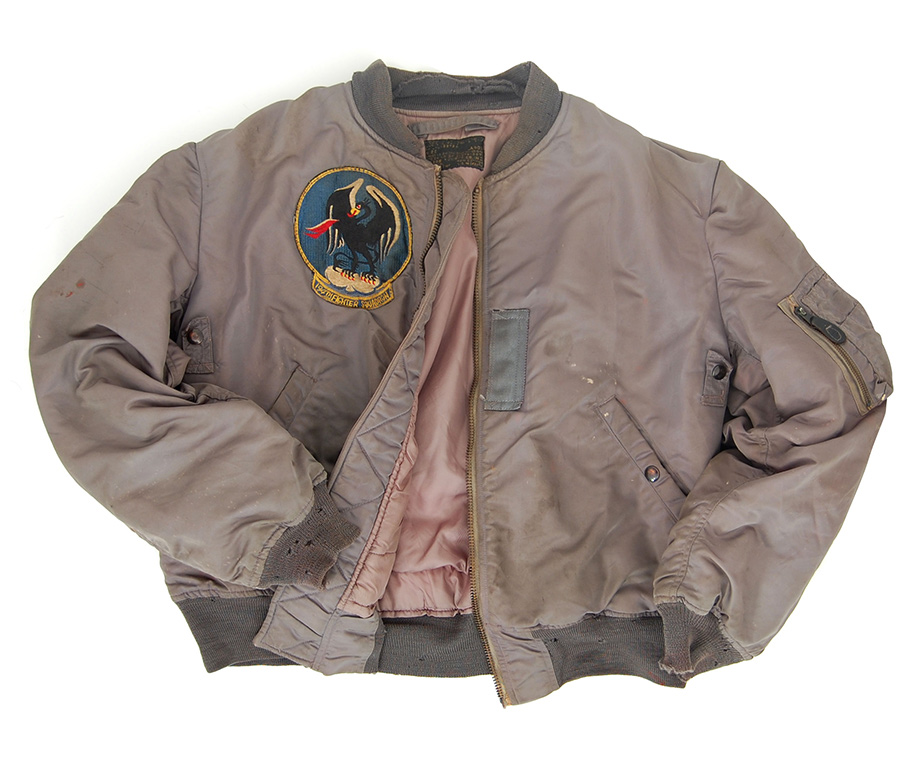
In 1958, Dobbs Industries of Knoxville, Tennessee, entered the scene, securing contracts with the US Department of Defence and manufacturing the MA-1 until 1959. Here’s an example of a Dobbs-made MA-1, taken from The Alpha Story:
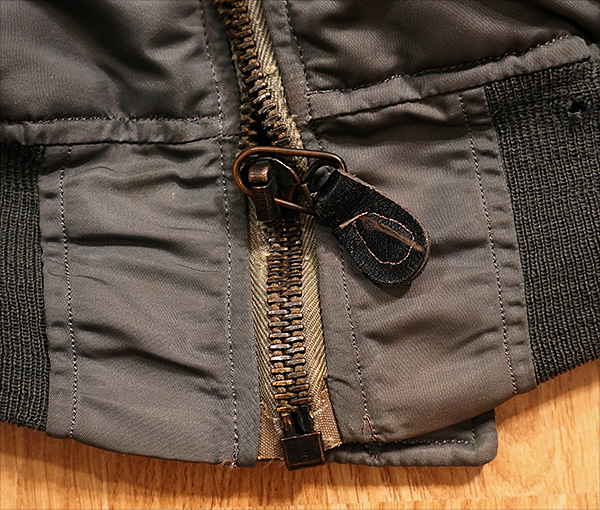
Here’s another one, made in 1959 – a MIL-J 8279 B, the second revision of the MA-1. It came with a wool collar and wool cuffs, wool lining and zippers by Conmar (other jackets in this early period came with Crown zippers):


As you see, it’s a fairly standard fit – nowhere near as balloon-like as the civilian versions from about the 90s onward, but roomy nonetheless.
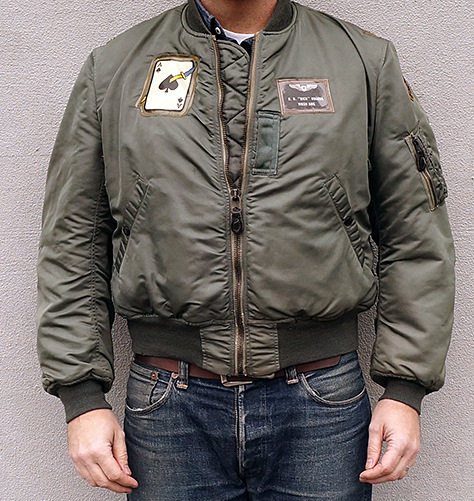
Finding one is like searching a needle in a haystack, but the Chinese company Bronson makes a fairly convincing and affordable reproduction, complete with an oxygen mask tab and a green inner lining. Almost incredibly at its price, it comes with an authentic wool interlining backed by cotton mesh:

I’d be tempted to get one for myself, but the US Air Force logo on the sleeve is the dealbreaker for me. While I love USAF jackets, I despise the role of that organisation in world politics and wouldn’t wear the symbol any more than I’d sport a Third Reich Luftwaffe eagle or an Israeli Air Force emblem. Besides, the USAF logo is ugly – and, in any case, it was soon dropped when the jacket began to be used by other branches of the military. When I contacted Bronson about it, they informed me that, alas, they couldn’t provide a custom version without the USAF logo, but they would consider my input in their future production plans. Here’s hoping!
A past that never existed
Today, Alpha Industries offers a modern slim-fit variation of the MA-1, named the VF-59 (‘Vintage Fit 1959’) and advertised as closely resembling the original cut. This is nothing but a marketing myth, invoking a past that never existed. The cropped cut of true MA-1s – a crucial part of what made them look so cool – is completely absent here. Instead, both the back and front lengths have been adjusted to suit contemporary preferences for lower waistlines.
What you get with the VF-59, then, is a fairly sturdily constructed fashion bomber that passes for an MA-1 to the untrained eye. It’s very slim fitting, with aggressively tapered sleeves. You could politely describe it as contemporary-looking, but you might just as well say it’s for people who are afraid of their own shadow (because it doesn’t cast one). In any case, it’s completely inauthentic. The military specifications for MA-1 jackets certainly didn’t require 1950s pilots to look like 21st-century townies – there’s a reason why you won’t even find a faux military specs label inside the VF-59.
That said, Alpha Industries briefly produced a different ‘1959 jacket’, which was somewhat closer to the original – though the shiny modern nylon wasn’t very authentic, nor was the orange lining:

The 1960s
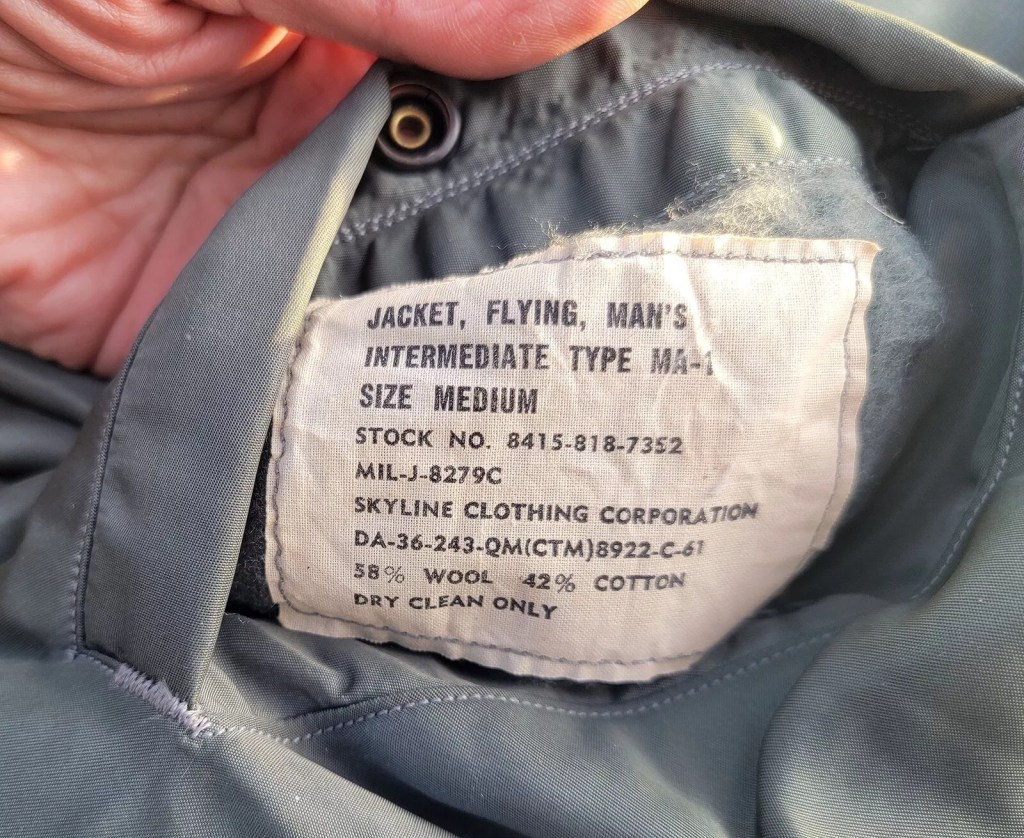
In 1960-61, orange signal lining – along with the reversible zipper closure it required – was introduced with the C revision (MIL-J-8279 C). Here’s an example of a C-series MA-1 produced by Skyline Clothing:
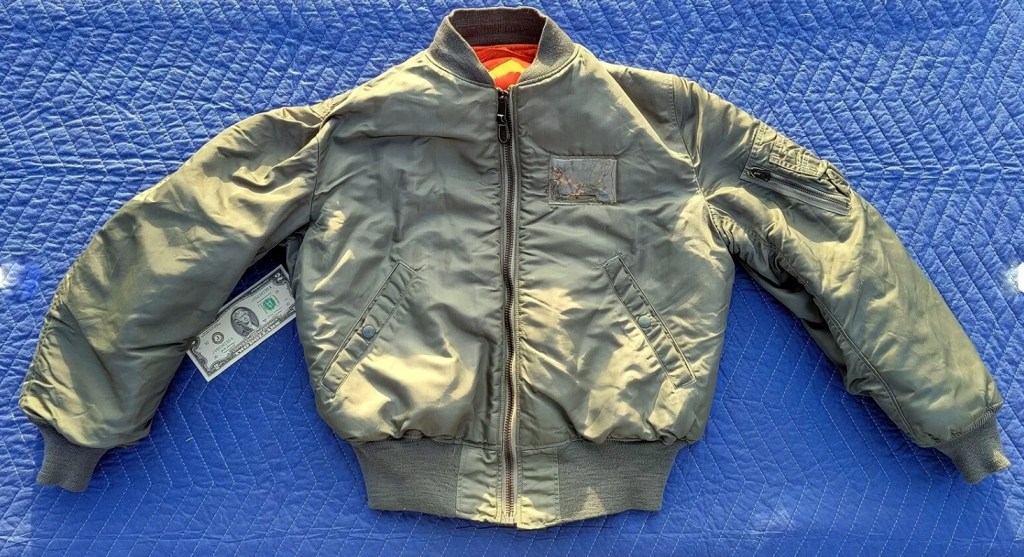
That said, things weren’t always so clear-cut in practice. Just a couple of months ago, I tried on the 1969 D-series Alpha seen below in a street market – and it still had a sage green interior, perhaps for ground crew use:
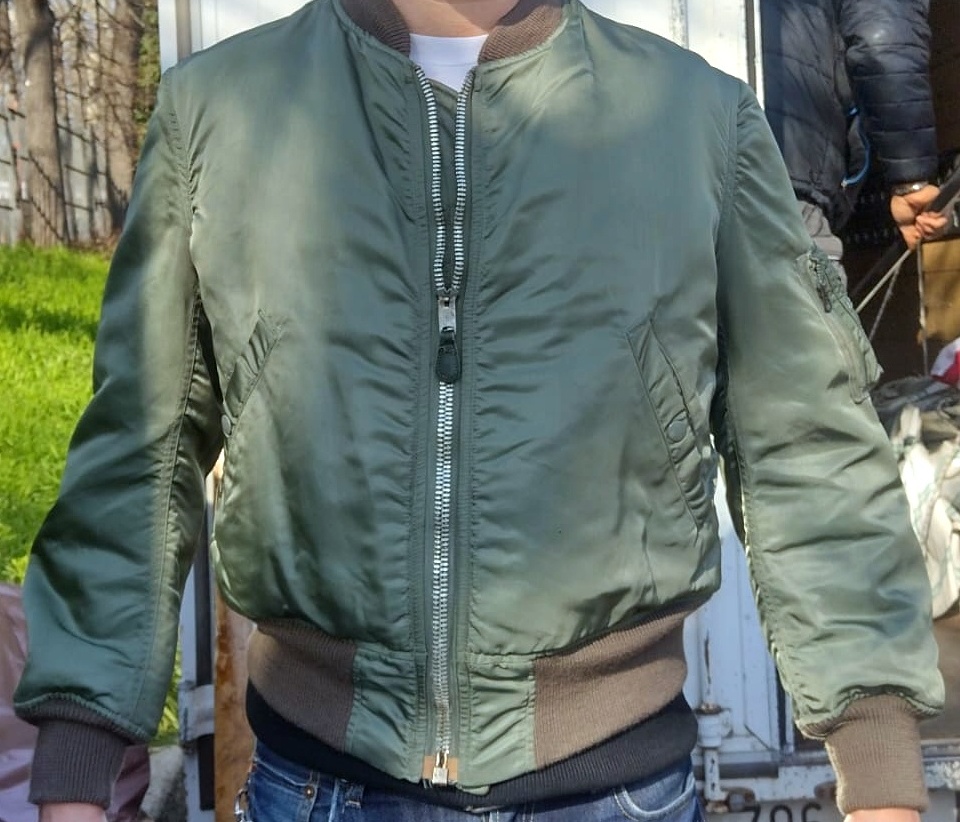
As mentioned at the outset, it’s a mess and difficult to keep track of, which is one reason why there’s no need to go into every minor revision detail.
I once owned an early 1960s Skyline MA-1 myself. The fit was incredible: not a soft, formless balloon, but a roomy yet structured, square-like shape. The wool interlining made it cosy and warm in the winter, and the jacket was so sturdy it could almost stand up on its own! At some point, I foolishly sold it on because I decided the cuffs and waistband were too frayed, and the general condition had reached a point where it started to look like something you’d wear to a crust punk gig. Big mistake! Had I invested a hundred quid or so to have it re-cuffed and dry cleaned, I would still own what I believe was the best flight jacket ever made. Here’s a commemorative picture of my dearly missed Skyline:

In 1963, Alpha Industries – successor to the disgraced Dobbs Industries, whose co-director, Robert Lane, was caught bribing government officials for contracts – managed to win a government deal for the MA-1, although other companies continued to manufacture MA-1s for the USAF as well.
Over the course of the 1960s, the MA-1 quickly underwent several revisions and became boxier compared to the mid-50s original. Here’s a beautiful 1968 contract Alpha:

Here’s a midnight blue D-type jacket also dating to 1968:
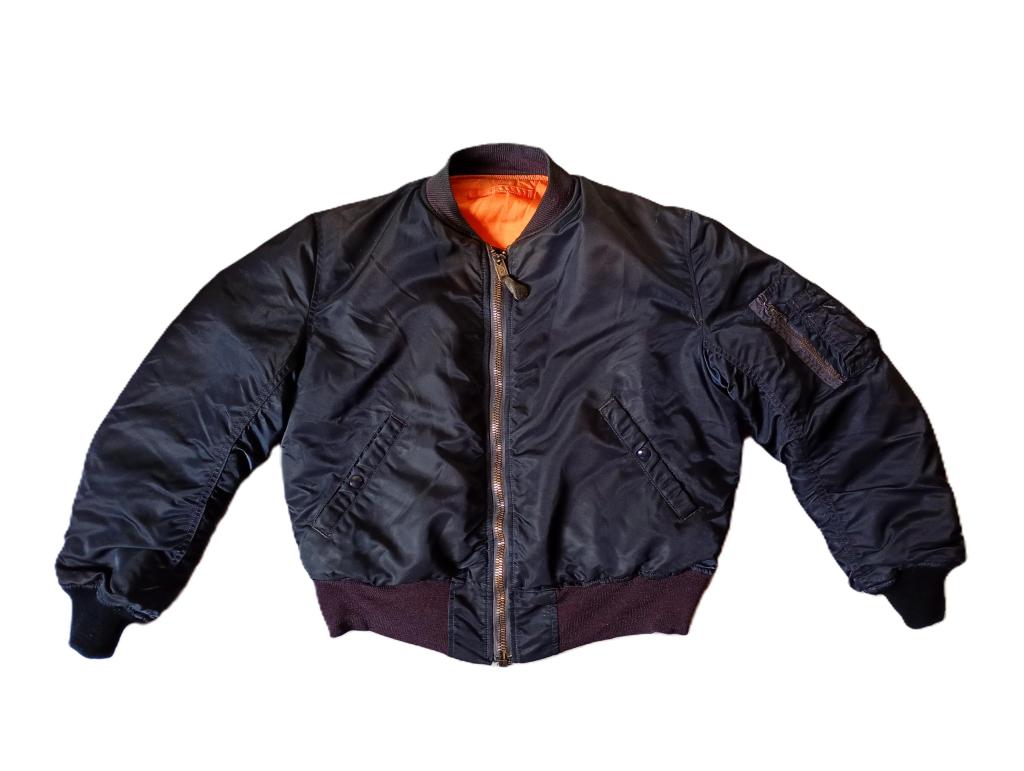
Pocket flaps were added with the E revision in 1970 – who knows why? I prefer the cleaner earlier no-flap look.

The E-series, which ran from 1970 to 1977, was also the last generation of MA-1s to feature a wool pile interlining backed with cotton. This was then replaced by polyester.
Original skinheads
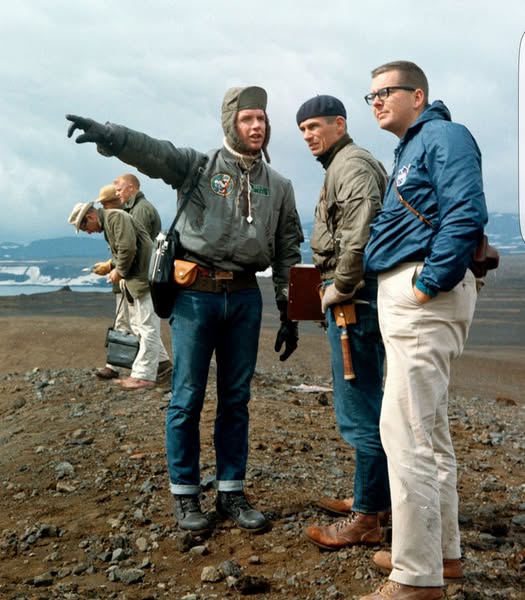
Because of its versatile nature and suitability for cold weather conditions, the MA-1 found use outside the military as well. This image shows NASA astronauts on a mission to Iceland in 1965. Note the cropped length:
Here’s another one of astronauts on an unknown mission:

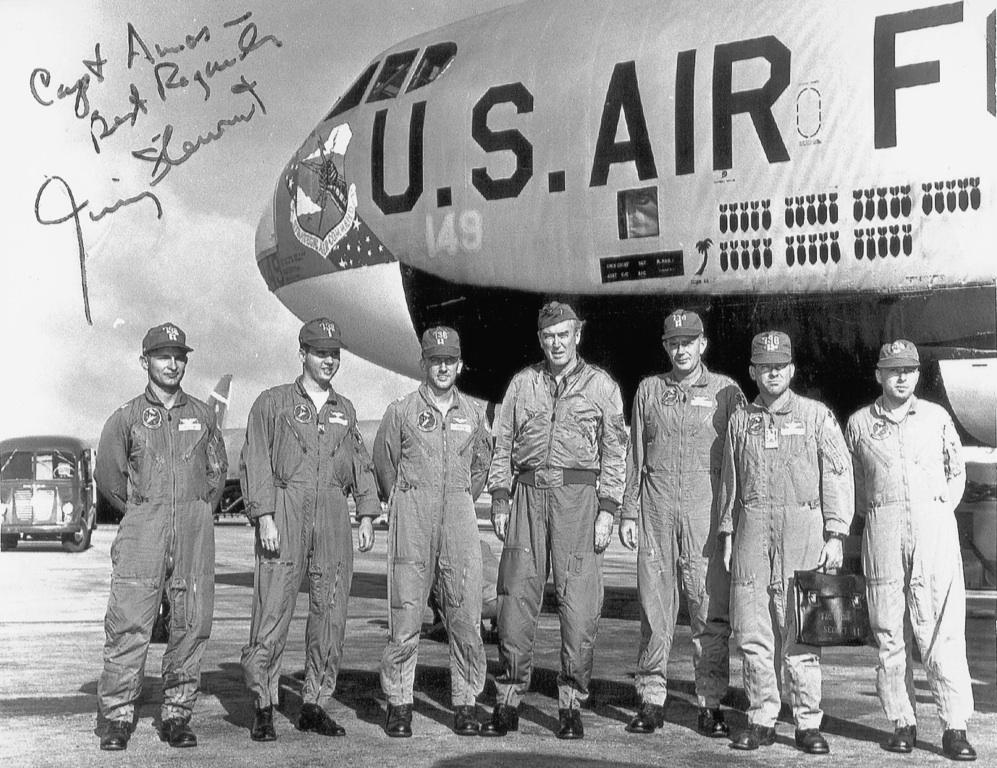
By 1965, the United States began sending troops to Vietnam – a catastrophic experience that would expose the vulnerability of the empire, but for a few years, made for telegenic imagery of GIs, navymen, and pilots. Among them was the aforementioned James Stewart, who was such a great ‘patriot’ that he insisted on participating in a bombing strike against Viet Cong targets in 1966. Here he is, alongside his B-52 crew, wearing an MA-1 of the period. Again, note just how cropped those jackets were:
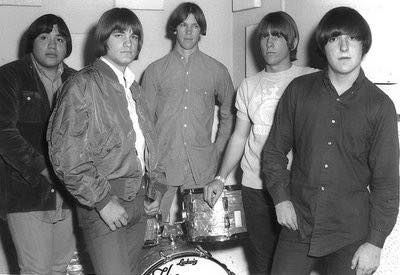
Soldiers who had completed their service were often allowed to keep the flight jackets they’d worn in the war zone. This gave the jacket a new lease of life in civilian settings, where the MA-1 was sold as so-called military surplus. A photo of US garage rock band Zakary Thaks serves as an early example of this civilian crossover:
By the late ’60s, MA-1s began hitting army surplus shops in the UK, where skinhead kids were already kitting themselves out in OG-107 combat trousers, known colloquially as ‘jungle greens’. Although it’s often claimed that the original skinheads didn’t wear the MA-1, both anecdotal and photographic evidence suggest otherwise.
Paul Thompson, a first-wave skinhead from South-East London at the time, recalls: “Around our way – Lewisham, Catford, New Cross and wider – MA-1 jackets were a quite short-lived vogue in late 1969 and early 1970, but only as long as stocks lasted in the military surplus shops. They were mainly worn by older lads because there were no smaller sizes”.
Mainly, but not exclusively… As evidenced by this photo, which shows Chelsea bootboys running near the Lanes in Brighton around 1970, two of them sporting MA-1s, the sizes available in military surplus shops didn’t always offer the best fit for 15-year-old kids:

The same be said about the size worn by the kid in this picture, professionally shot in South London in 1970:

Lastly, there’s a photo of the US rock band Creedence Clearwater Revival posing with local skinhead kids at the Albert Memorial during a visit to London in the 1970s. Aside from debunking the idea that MA-1s were an ‘80s skinhead innovation, it highlights how the boundaries between different subcultures and music scenes were often more fluid than most people assume. Creedence Clearwater Revival were, of course, a top-notch working-class rock band who saw themselves as ‘workers’ rather than artists. Many who attended football matches in London in the early ’70s will recall the mayhem that erupted in the bootboy contingent whenever ‘Bad Moon Rising’ played during the break…
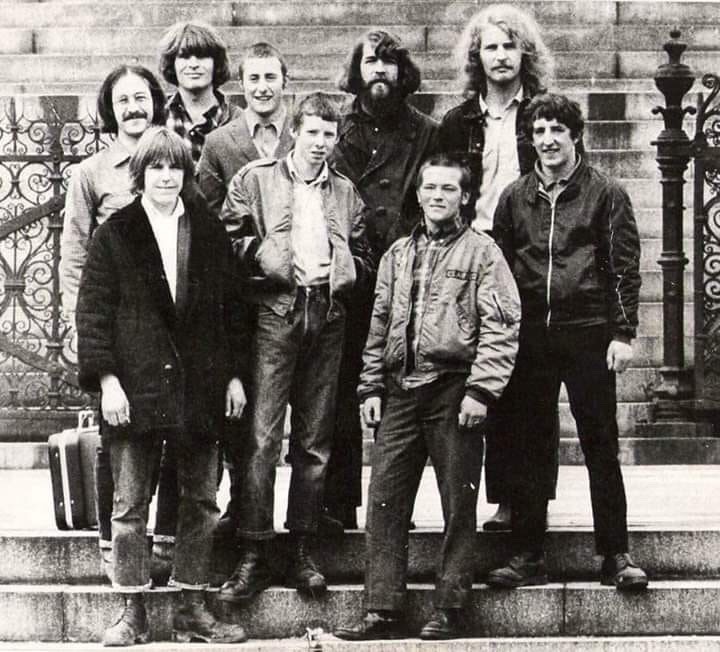
In any case, Paul adds, “No one wore them for long. In 1970, the older lads started to abandon the skinhead style for something artier – and the younger kids began to take their cue from the older ones. By spring 1970, MA-1s were pretty much over”. He never had one back in the day and was “a bit surprised that it became such a big thing among street skins a decade later – like they seized on one brief thing from the original era and turned it into almost a cult uniform”.
The late ’70s: soulboys and the skinhead revival
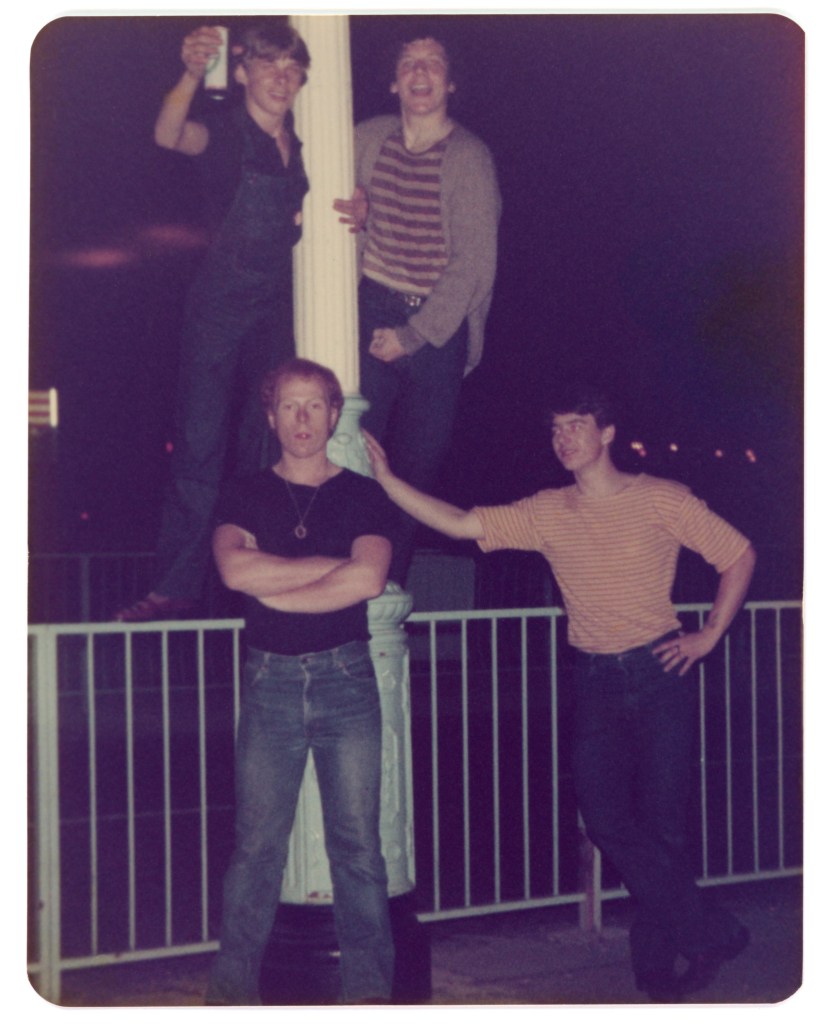
The prehistory of the MA-1 during the skinhead revival of the late ’70s begins around 1976, when the jackets became available at the Great Gear Market on London’s King’s Road – a shop that initially catered to the soulboy scene and, like more than a few soulboys themselves, later shifted to punk. Not unlike the original skinheads, the soulboys of South-East England were largely working-class kids with a taste for the black dance music of their time – in their case, ’70s funk and jazz-funk – though they often came into London from the provinces and suburbs. According to some eyewitness accounts, it was these soulboys who first picked up MA-1s around 1976 or ’77, a couple of years before the skinhead revivalists caught on. The jacket became something of a soulboy staple. Johnny Woollard, a Bromley soulboy who photographed many of his mates – like those seen above – recalls getting a green flight jacket from an army surplus store in Gravesend around that time. From the soulboys, the MA-1 made its way onto the backs of Chelsea and West Ham football lads (later on, there would be some crossover between soulboy and early casual styles as well).

Despite their long-standing association with Oi and the skinhead revival, MA-1s are actually rarely seen in pictures of skins before around 1981. In the late ’70s, Harringtons, Crombies, and denim jackets were all the rage – even sheepskin coats seemed more widespread. Believe it or not, at the time flight jackets were not a ubiquitous part of the uniform, but rather a marker of a particularly clued-up skinhead. Suggs and other members of Madness, the vanguard of London skinhead fashion during those few years, were photographed wearing MA-1s multiple times.
Says Symond Lawes from Wycombe, who became a skinhead in 1978: “They were hard to find then. I know at that time we used to go to the army surplus place [called Laurence Corner] near the Capital Radio building in London, which was very near the Somers Town estate in Camden, so Madness could have got them there” In 1979, the year 2 Tone broke, many eyes were on whatever Madness were wearing. “I know we were devastated when Madness went shoulder pads, but in those first few years, 1979-80, they lead the way in influencing skinhead fashion”, Symond confirms.

Symond himself got his first flight jacket in 1980. “My first was a cheap repro off Wycombe market”, he recalls, “I can’t remember if I got it cos of Madness, but I do know I was the first in my school to have one. To be honest, I got a feeling the film Kelly’s Heros from 1970 might have been my inspiration… The MA-1 was only really picked up after 1980. In 1979 most kids that became skinheads followed the 2 Tone bands: black Harrington and red for girls”.

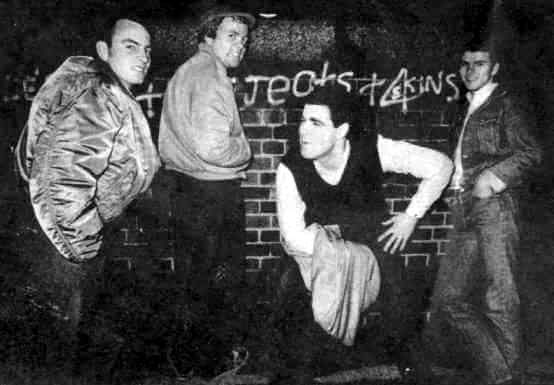
A picture of the first 4-Skins line-up shows Hodges – like Suggs, one of the earliest skinhead revivalists – wearing an extremely oversized MA-1. Yes, they’re meant to be boxy, but this one’s two sizes too big. Perhaps Hodges, in a bid for USAF authenticity, thought parachutes were worn under the jacket rather than over them? If nothing else, he prefigured the gabber techno look of the ’90s.
Perhaps the most famous 4-Skins promo shot shows Hodges sporting a much better-fitting MA-1 in 1980:

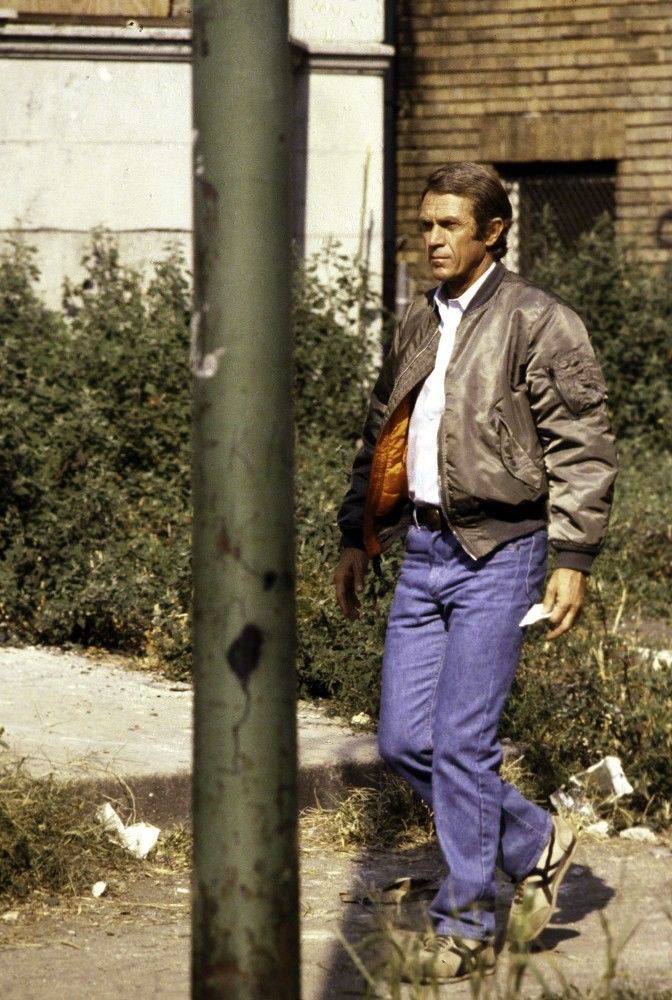
As an aside, Steve McQueen wore an E-revision Alpha MA-1 in the movie The Hunter in the same year, where he played the seasoned bounty hunter Ralph ‘Papa’ Thorson. It would be Steve McQueen’s final role before his death in November that year.
Iggy from Southall, West London, who became a skinhead in late ’79, remembers: “In 1979–80, the green ones were known as Bom jackets, not MA-1s – in Southall anyway. I thought it was short for ‘bomber jacket’, but one of the older lads said it stood for British Movement. As I recall, the old British Movement logo was a B and an M either side of a Celtic cross, so it looked like it read BOM. My mum wasn’t too keen on me getting one because of that. I ended up with a cheapo Southall market job, on the understanding that if I even thought about putting a Union Jack patch on it, I was gonna get a hiding off my old man…” In ’83, he finally got himself a “proper MA-1 from All Weather Corner, an army surplus and outdoor gear shop in Hayes. It was a new one, not one of the used ones they also had, where you could still see where the patches had been removed”. Price? “I don’t think it cost more than £10 or £15”.

By this time, Alpha Industries had begun experimenting with MA-1s for the non-military and civilian market, including in colours such as black. In the UK in the early ’80s, though, only the sage green and olive green versions initially found their way into the skinhead scene, thanks to their wider availability via army surplus shops. In the East End, the Silvermans military gear supply store in Mile End Road – established in 1946 and still going strong – began stocking them, while The Last Resort skinhead shop on Goulston Street tended to flog knock-offs at twice the price of the ones sold in nearby Petticoat Lane Market (legend has it that this is where The Last Resort was getting the bulk of theirs).
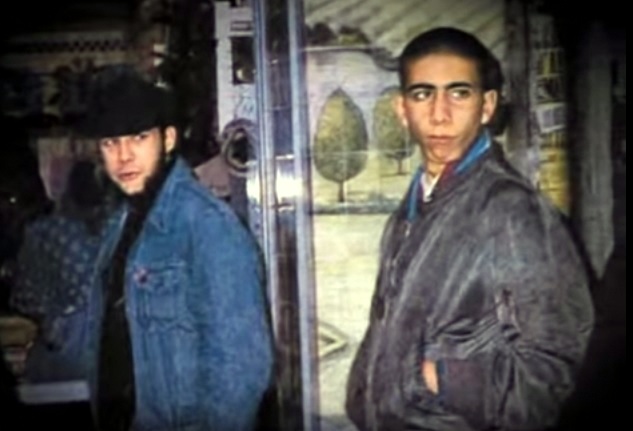
Around 1980, MA-1s also started to appear on the backs of some skinheads outside the UK. The photo above shows Farid – a notorious central figure in the first Paris skinhead gang, the Les Halles crew – taken at the Forum des Halles shopping centre that same year. Like London, Paris at the time had many small, mainly Jewish family-run clothes shops where you could find Made-in-USA Levi’s imports and outerwear like USAF MA-1s that weren’t available elsewhere. But that’s not where Farid got his jacket from: “A pal of mine nicked it from a guy from a neighbouring crew and gave it to me”, he tells me. “Then the crew came to claim it back, so I gave it back… Dangerous people, not as young as us, more like gangsters.”
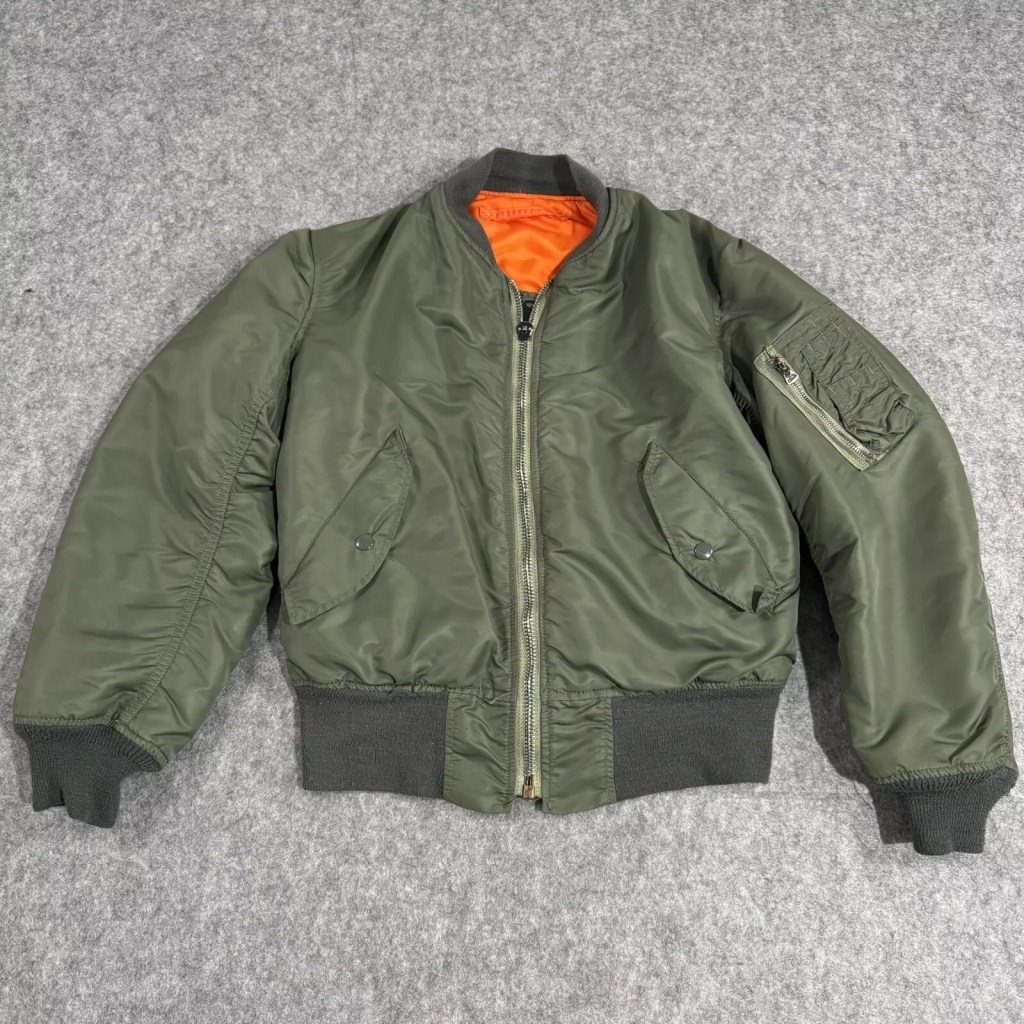
While Alpha Industries was one of the largest and most consistent suppliers, the USAF typically awarded contracts to multiple companies. Contractors such as Skyline, Greenbrier and Concord Industries manufactured MA-1s to the same specifications. Various types of zips were used: Conmar and Crown were largely replaced by Scovill zippers in the ’60s. YKK zippers were prevalent in the ’70s-’80s, before Alpha switched to Ideal zipper in the second half of the ’80s (and finally to Alpha zippers for its commercial range from the mid-90s onward). Some British skins may remember jackets like this vintage ’70s Concord Industries example as their first MA-1.
Let’s wrap up Part 1 of our article with a little overview over the different revisions. Click the link at the bottom for Part 2.
| Revision | Years | Notable changes |
|---|---|---|
| MIL-J-8279 | 1953–56 | Initial model; navy blue inside and out; often referred to as the prototype MA-1 |
| MIL-J-8279 A | 1957–58 | Improved stitching and knits; colour changes to sage green begin |
| MIL-J-8279 B (early) | 1958–59 | Gold-on-black embroidered label; zigzag stitching inside; oxygen mask nylon webbing, Crown/Conmar black zippers |
| MIL-J-8279 B (late) | 1959–60 | Transitional refinements on stitching and materials. Oxygen tab and cord loop are discontinued. |
| MIL-J-8279 C (early) | 1960–61 | Introduction of rescue orange lining |
| MIL-J-8279 C (late) | 1961–63 | Wider adoption of rescue orange interior and other refinements |
| MIL-J-8279 D (early) | 1963–65 | Further refinements in materials and construction. Crown zippers replaced by less costly Conmar and Scovill ones |
| MIL-J-8279 D (late) | 1965–70 | Standardised features for mass production; some civilian crossover begins via army surplus |
| MIL-J-8279 E | 1970–78 | Design tweaks for durability, pocket flaps added. Waistband width expanded. |
| MIL-J-8279 F | 1978–90 | Widespread use; polyester filling replaces wool. |
| MIL-J-8279 G | 1988–94 | Final military-issue generation before being phased out. No longer a flight jacket: ground forces only. Rescue orange lining reverts to sage green |
| MIL-J-8279 G Amendment-1 | October 1990 | Amendment to final version |
| MIL-J-82790 E | 1980s | Early civilian market MA-1 |
| MIL-J-82790 J | 1980s–present | Civilian market MA-1. Ideal zippers till about the mid-90s, then replaced by Alpha zippers |
 Creases Like Knives