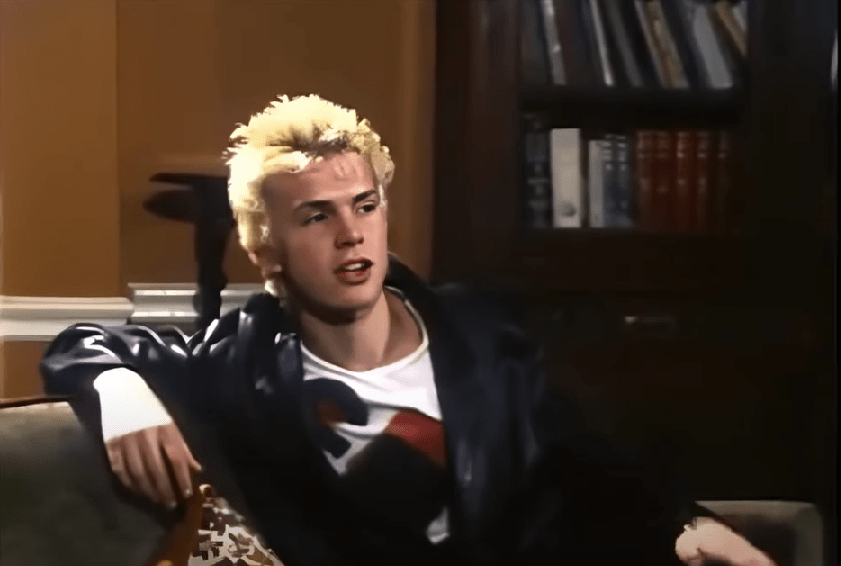
I never thought we’d end up mentioning Billy Idol on Creases Like Knives, but here we are – he references skinheads on his new single ‘Still Dancing’, released a couple of weeks ago. The third verse goes:
Skinheads stomp
Right down the road
Teddy Boys stood
Clutching their combs
Reggae blitz rock
Deep to the core
In Brixton
Punks trying to riot
Up on the high street
Causing a ruckus
Who wants to fight me?
Pogo slam
No need to remind me
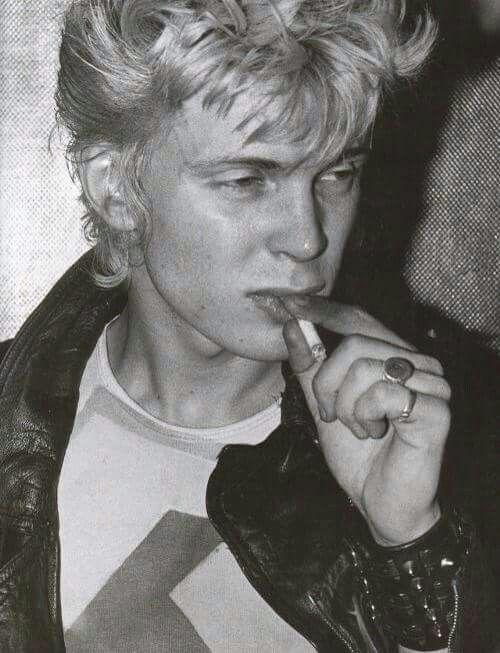
A mildly autobiographical song, it reflects on the time when Idol, a lower-middle-class kid from suburban Bromley, set out to chase the bright lights of inner-city London. The celebration of youth culture in the quoted lines isn’t too far from what he sang on ‘Running with the Boss Sound’, the opening track of Generation X’s second album in 1979:
Yeah, we’re burning up the ground
Where the rockabilly beat pounds
With the ska rhythm pressing down
Where the skinhead moonstomp pounds
Where the heavy metal comes down
When the punk rockers are round
Yeah, you and I are found
Yeah, you and I are found
And indeed, that’s what Generation X were all about: not social commentary or gritty depictions of urban life, but the sheer buzz of being young and part of a tribe. As one of our readers helpfully pointed out, there’s yet another reference to skinheads in one of Idol’s songs – ‘The Untouchables’ (1981) by Gen X, in which he presents a romanticised view of his teenage years and nights out:
You and me
Hung around, to escape
In the days of gold fire,
Drugs and desire
Past the nights
Syncopated sound
Then its time we got along
Where the skins aren’t out
Unlike other early punks like Paul Simonon or John Lydon, who were little skinheads around 1970, Idol remembers a time when he had to dodge the crop-tops. This matches my vague recollection of a Billy Idol interview I read in a magazine when I was 11 or 12 – he mentioned having to run from skins as a teenager when they wanted to beat him up for his long hair.
In his 2014 autobiography, Dancing With Myself, Idol confirms that as a schoolboy in the late 1960s he was a ‘hairy’ into rock like Led Zeppelin (a decade later, Generation X would often play Led Zeppelin’s ‘Rock and Roll’ live). He recalls the time his family lived in Worthing on England’s south coast – not far from Brighton – where he attended a grammar school:
“Worthing High School seemed a bit boring at first … Fashion exploded, and we all started wearing flares and knee-high boots that zipped on the side to school. The coolest were those who had the boots that zipped up to the knee, covered by one’s trousers until they were hiked up and the full glory revealed. We all started growing our hair way beyond what was allowed by the school’s regulations. The whole school started sporting their own fashion choices, while the few skinheads enrolled boasted their No. 1 crops and cherry-red Dr. Martens kicking boots … The skinheads were everywhere in those days, seeing us, with our long hair and flares, as the enemy, forced to kick our heads in”.
As for Idol’s claim that skinheads also “hated black people” – well, I’m sure some did. But skinheads were also the only British youth group you’d often see with black kids mixed in. It seems Idol is conflating them with his memories of late 70s skins, where the following contradiction was more common, though far from general:
“They listened to Jamaican ska and reggae, both huge in England. They also hated Jamaican immigrants and black people – which raised the question, how can you enjoy the music but despise the people who play it?”
Although Idol had his share of run-ins with skins, he also had a skinhead mate at school:
“Gaz was actually a fantastic bloke who didn’t seem to care too much that my friends and I had long hair and were ostensibly hippies in training, while he and his mates had their short hair in a No. 1 crop taken nearly down to the scalp, along with their de rigueur style accoutrements, including Ben Sherman shirts with skintight Levi’s rolled up to display the tops of their high, laced-up, cherry-red Doc Martens”.
This friendship came in handy when Idol and his hairy friends were about to get their arses handed to them one afternoon:
“One Saturday, as the strains of ‘Whole Lotta Love’ blasted out from every shop doorway, we were strolling along the high street on our way to the coffee bar when, horror upon horrors, we ran right into a group of about thirty big tough skins, who immediately walked up to us intent on doing us harm. Showering us with verbal abuse, they were just about to get physical – and give us some “aggro” (slang for a good kicking), when from out of their midst, lo and behold, Gaz Kingston appeared and vouched for me as his mate. Thank God I let him cadge those ciggies off me. Guess good matesmanship pays off after all, as my mates and I got away without being fucked up horribly and ending in a hospital instead of hanging at the coffee bar that afternoon”.
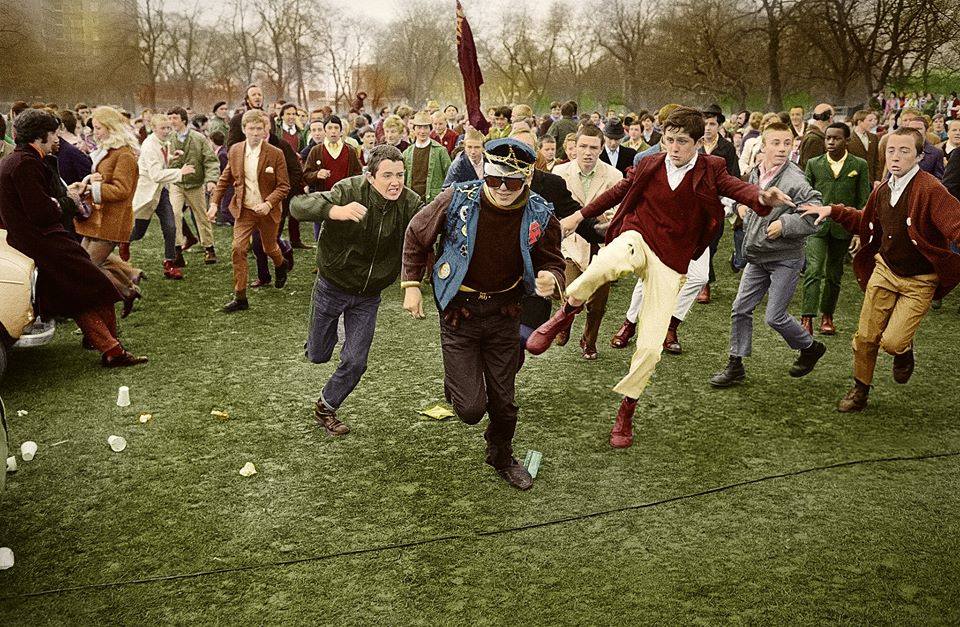
It isn’t the only positive memory Idol has of his skinhead mate Gaz. Elsewhere in his book, he tells us:
“Back then in England, chicks didn’t give blow jobs, but they didn’t mind wanking you off. I had a skinhead friend in my class, Gaz Kingston, who knew all these skinhead girls who would wank you off at the drop of a hat, just for kicks. It was usually a group wank-off, as the skin chicks would jerk each of us off at the same time in some alleyway, where we would go to smoke and hide from adults, family, and teachers alike”.
Is this really what British skinhead girls got up to at the turn of the 1970s – group-wanking their schoolmates, including hippie boys? Or is it just the male fantasy of a rock star, almost 60 at the time, spinning his life story for a ghostwriter? I’ll let those who remember the era be the judge.
I guess these conflicting experiences – fear and friendship, and an apparent fondness for skinhead girls, requited or not – explain Idol’s ambiguous attitude towards skins in his lyrics: an appreciation of the style, music, and energy, mixed with memories of dreading the aggro. His mixed feelings are aptly encapsulated in the line “Where the skinhead moonstomp pounds” – are the boots pounding on the dancefloor or on young Billy’s head, one wonders? Possibly both.
So much for the original late-’60s skinheads. As for the revivalists who emerged alongside punk, Billy’s view is more unambiguously negative. Check out this bit from his autobiography:
“The Vortex was a bit bigger and provided even more bands with a venue to play. More hard-core right-wing bands like Jimmy Pursey’s Sham 69 and Skrewdriver began playing these clubs. Professing their working-class roots and with a minimum of pretension, they appealed to skinheads as much as to punks, and played to the lowest-common-denominator goons in the audience. Sham 69 went on to be one of the most successful bands during this period, with singles like ‘Hurry Up Harry’ dumbing down the punk message. They brought a more violent, soccer-crowd mentality to their shows, which, while amusing at first, turned increasingly fascist in nature”.
True, Sham 69 were accused by some of flirting with right-wing themes on their debut single I Don’t Wanna (which also included the tracks ‘Red London’ and ‘Ulster’) – for example, by the Young Communist League newspaper Challenge, which gave the record a positive review despite these reservations. But dubbing them a “hard-core right-wing band” is absurd. Jimmy Pursey was a liberal individualist (arguably the most boring political stance of all, but not especially right-wing) and clearly wrote the likes of ‘Red London’ and ‘Ulster’ from that perspective. Paradoxically, Sham 69 also played at the Young Communist League’s annual festival in London that November…
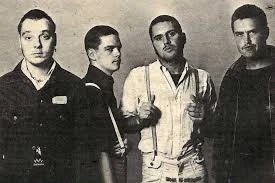
As for Skrewdriver, Ian Stuart later described himself as a “right-wing Tory” at the time, while actual National Front and British Movement skins recall his complete lack of interest in their politics during the existence of Skrewdriver Mk1. At most, both bands attracted a bit of a right-wing following – though they differed in the extent to which they accepted that.
The last mention of skins in Billy’s book is this remark:
“Sworn right-wing enemies of the punks, the skinheads, who were aligned with the fascist National Front political party, were demonstrating on my train route one Saturday as I travelled to Charing Cross. Between the teds, the skinheads, and the punks, it seemed as if all of London was fighting”.
1978 is the likely setting here – a time when the skinhead revival had really taken off (“Do you remember in the summer…”) and wars between youth subcultures were at their peak. Generation X’s ‘Running With the Boss Sound’ actually opens with a description of Billy getting a kicking from teddy boys in a tube station that year. As with skinheads, Idol is in two minds about the aggressors – after all, their style is top notch:
Yesterday by the paper stand
I felt the power of another religion
Rebels with a cause came out of the sun
And spoke the only language they’d been given
Creepers tapping out the beat as I felt the heat
Man, they sure looked neat
On a side note, in 1978 The Clash addressed the same subject in ‘Last Gang in Town’:
Down from the edge of London
The rockabilly rebels came
From another edge of London
Skinhead gangs call out their name
The crops hit the stiffs
And the spikes whipped the quiffs
They’re all looking ’round…
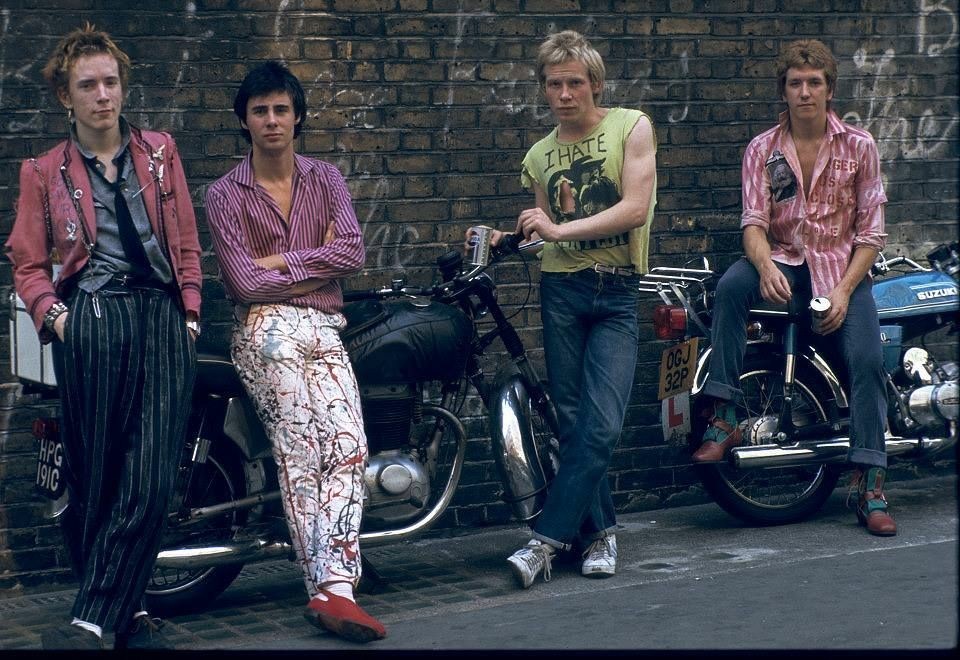
To the best of my knowledge, aside from The Jam’s ‘A Bomb in Wardour Street’, this is the only clear reference to contemporary skinheads during the first wave of punk. Generation X’s references, ‘Where Have All the Bootboys Gone’ by Slaughter and the Dogs, and ‘Saturday Night Beneath the Plastic Palm Trees’ by the Leyton Buzzards were more or less nostalgic nods to the original 60s generation.
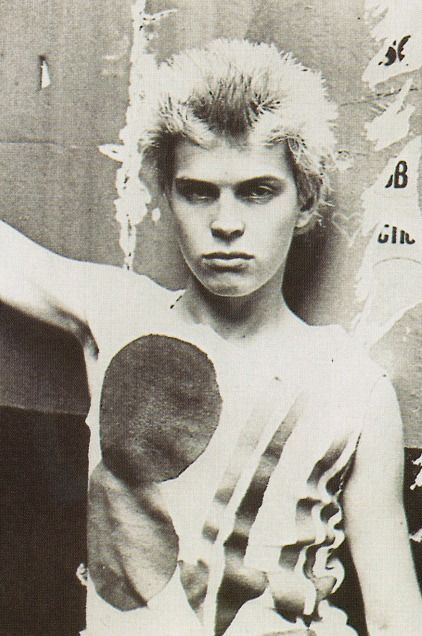
But back to Billy Idol… Idol’s perception of skinheads was shaped as much by his own experiences as by his romantic view of youth culture. People are often fascinated by their adversaries – ‘enemy envy’ might be a fitting term here. We could also use the German term Angstlust to describe how Idol viewed skins and teds: literally ‘fear-lust’, it refers to a mix of excitement and enjoyment with dread. Or we could drop the pop psychology and sum up his stance as simply: ‘Nice threads, shame about the aggro’. In any case, I’m pleased he gave skins a nod once again in his new song – it gave me an excuse to write about a childhood hero.
Matt Crombieboy
 Creases Like Knives
Not really punk, obviously… But The Stray Cats described skinheads quite extensively in their 1981 ‘Rumble in Brighton’…
LikeLike
Ruts – Staring At The Rude Boys ? From 1980, depends on where your cut off point is for the first wave I suppose.
LikeLike
Absolutely, I forgot about that one. And yeah, I’d more or less still count them as part of the first wave.
LikeLike
In the Generation X song Promises Promises there are the lines
Where were you in 75, when there weren’t no gigs? We were just skinheads, skinheads, remember?
(The whole song is a reply to Moot the Hoople’s Saturday Gigs, counting off the years 69 to 74, but that’s another story)
The verses in Promises Promises are all about Chelsea and fighting at matches.
Silly Idol supported Chelsea ?
LikeLike
Sorry, mate, but that’s nonsense. In Promises Promises, Idol sings:
‘Where were you in ’75
When there weren’t no gigs and we were jive’
And the backing vocals go:
‘Promises, promises, promises – remember’.
There’s no mention of skinheads or Chelsea in the song. The lyrics are clearly about starting out as a punk rock band against all odds.
LikeLike
Billy Idol was not really lower middle class he would of been upper middle class since his father was not only a salesman but also a diplomat.
LikeLike
A diplomat? Where did you get that from? In his autobiography, Idol writes about his dad:
“After finishing his education, he became a typewriter salesman, and later sold slotted angle shelving, called Handy Angle. He built up the company’s sales force from one to more than forty and was promised by the owners they’d make him a director, which never happened”.
After a couple of years spent in the US, “dad got a job offer that returned us to England in 1962. He was hired by a company that sold medical equipment”.
I don’t know what he was doing in the US, but people are rarely typewriter salesmen, then become diplomats, only to end up being salesmen again…
Aren’t you confusing him with Joe Strummer?
LikeLike