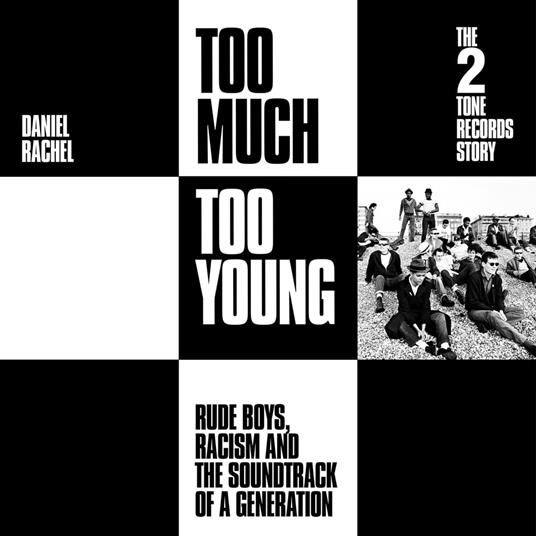
Author of a history on Rock Against Racism and all that came after, followed up by the co-written autobiography with The Beat’s Ranking Roger, Daniel Rachel has made a name for himself as a devoted chronicler and authority on the 2 Tone era. His latest, Too Much Too Young: The 2 Tone Records Story is out now. It may well be the same old show, but Andrew Stevens just had to tune in to hear more about punks, teds, National Front, natty dreads, mods, rockers, hippies and… skin-heads!
When we last spoke you’d just covered the tricky gamut of music and politics from Rock Against Racism through 2 Tone to Red Wedge. Is this a book you’d always wanted to write before then and the Beat book or a natural progression from them? I can only think of George Marshall’s and Garry Bushell’s collected writings from the time which came out not long back.
There has never been a comprehensive book on the 2 Tone label beyond George Marshall’s one in the early 90s. That was great, but thin. So yes, I’ve always wanted to write the 2 Tone Records Story, but the timing was as much to do with getting Jerry Dammers on side.
How important was that? I mean, someone could still write a decent book on Motown without having met Berry Gordy.
It was important to have as many voices in the book as possible. I spoke to around 100 people and with that comes an incredible variety of perspectives. My role as author was then to represent those opinions and bring them together in a narrative. In many ways, the heart of the 2 Tone is a story of contradiction coming from differing musical influences, class, gender. They all contributed to the electric sound of 2 Tone but within those elements also sowed the downfall of many of the bands. So Jerry’s involvement was fantastic, and although 2 Tone was essentially his and he formed the Specials, the identity and growth of the label was something much bigger.
Your earlier books were either oral history or co-written, was there a transition for you writing as yourself? What was your own association with the label?
The first two books I wrote in my own words were The Lost Album of The Beatles and Oasis: Knebworth but Too Much Too Young is considerably longer than those two combined (500 pages). So that was certainly new territory for me, as an author. The challenge remained the same, which is to write a compelling book that has a narrative arc for the reader. As Pauline Black of The Selecter says in her introduction, the story of 2 Tone is really that of Jerry Dammers. He is certainly the protagonist in the book. The story starts and ends with him.
My love affair with 2 Tone started when I was a schoolboy and hearing ‘Too Much Too Young’. I no doubt heard earlier singles by The Specials, Madness and The Beat, but ‘Too Much Too Young’ is the strongest memory I have. I was instantly hooked and remained so throughout all the various band’s splitting up and re-grouping until the label’s demise in 1986. Since then, 2 Tone has continued to shape my love of music and informed the way I dress. I guess, once a rudeboy the attention to detail never leaves you!
Where then does 2 Tone as an era sit with, as you see it, those other books? For instance, The Beatles and Oasis were working-class bands and reflected the British society in which they lived, but there were less questions of gender in either of those books, whereas it was a lot more upfront with 2 Tone.
I’ve never thought of the Beatles as a working-class band. Three of them went to grammar school and John Lennon had quite a middle-class upbringing. You often hear it said that 2 Tone played to working-class audiences. I don’t know how people know this. I don’t remember someone with a clipboard asking me at the door at a UB40 or Madness gig, ‘Excuse me, young lad, are you working, middle or upper class’.
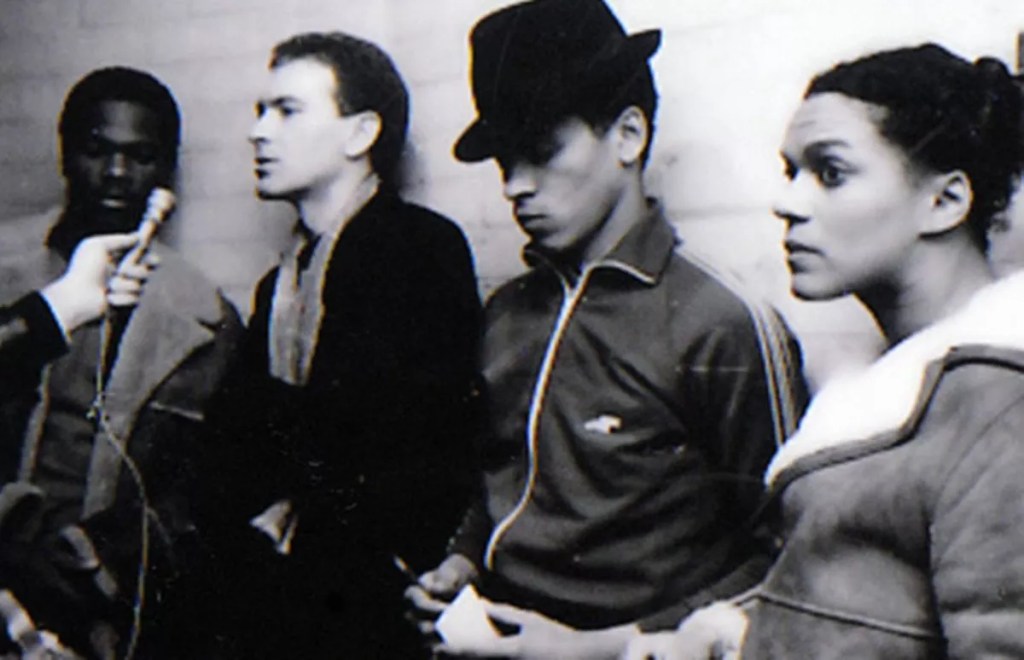
That said, the 2 Tone bands were made up of all classes. That’s interesting, as an author. Gender was upfront in 2 Tone simply because a woman fronted an all-male band i.e. Pauline Black and The Selecter. And The Bodysnatchers were seven women in a male-dominated industry. That was important for audiences, but it didn’t necessarily mean that they, or indeed 2 Tone artists. embraced the women’s right to equitable status. Society still struggles with that today – to its shame.
It comes across strongly in the book and it’s something said over and over in all the documentaries, but there were struggles between the bands and the organised far-right among the audiences. Garry Bushell has even gone as far as saying that 2 Tone had a bigger nazi skinhead problem than Oi, even though the media latched on to Southall.
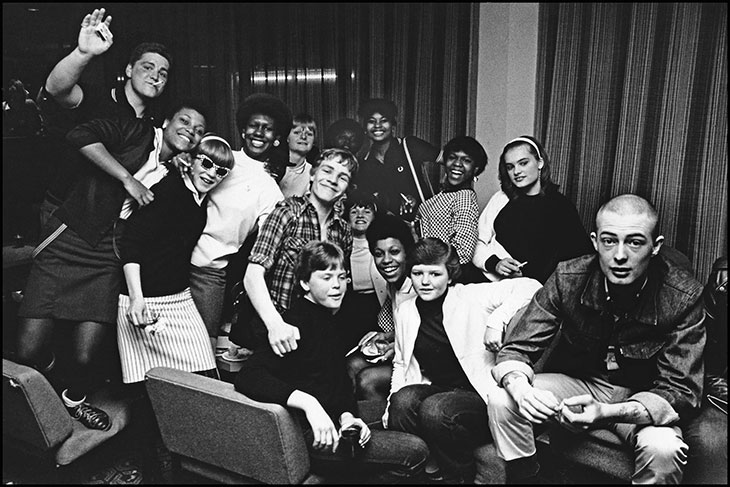
Jerry Dammers is insistent that the majority of 2 Tone gigs were joyous occasions. That said, far-right infiltration at 2 Tone gigs certainly plagued all of the bands. Both Madness and the Specials threatened to split if the trouble at concerts didn’t stop. In fact, ‘Ghost Town’ laid out in simple terms “Bands won’t play no more – too much fighting on the dancefloor”. There were stabbings, attacks, coins thrown, and in Cambridge on the 1980 More Specials tour Terry Hall and Jerry Dammers were arrested.
Why neo-nazis wanted to sieg-heil in front of black musicians is baffling. Moreover, why they would dance to the ska-influenced music. Unlike other movements – like Oi – 2 Tone actively campaigned against violence, be it physical or sexual. It stood for equality, it was anti-racist and anti-sexist. Although, as the book makes clear, the bands, and indeed society at large, struggled to uphold these values. Nevertheless, 2 Tone offered social and political advancement to a backdrop of fantastic music.
As you said, the clobber is enduring, and what anyone would take as a 2 Tone outfit of the era – Harrington, sta-press (or straight-leg indigo jeans), contrasting socks, loafers – were for most youth of that era just fashionable without even thinking about it. Do you think its Top of the Pops ubiquity and connected dress sense is why it ended up down the back of pop music’s sofa by the end of the decade?
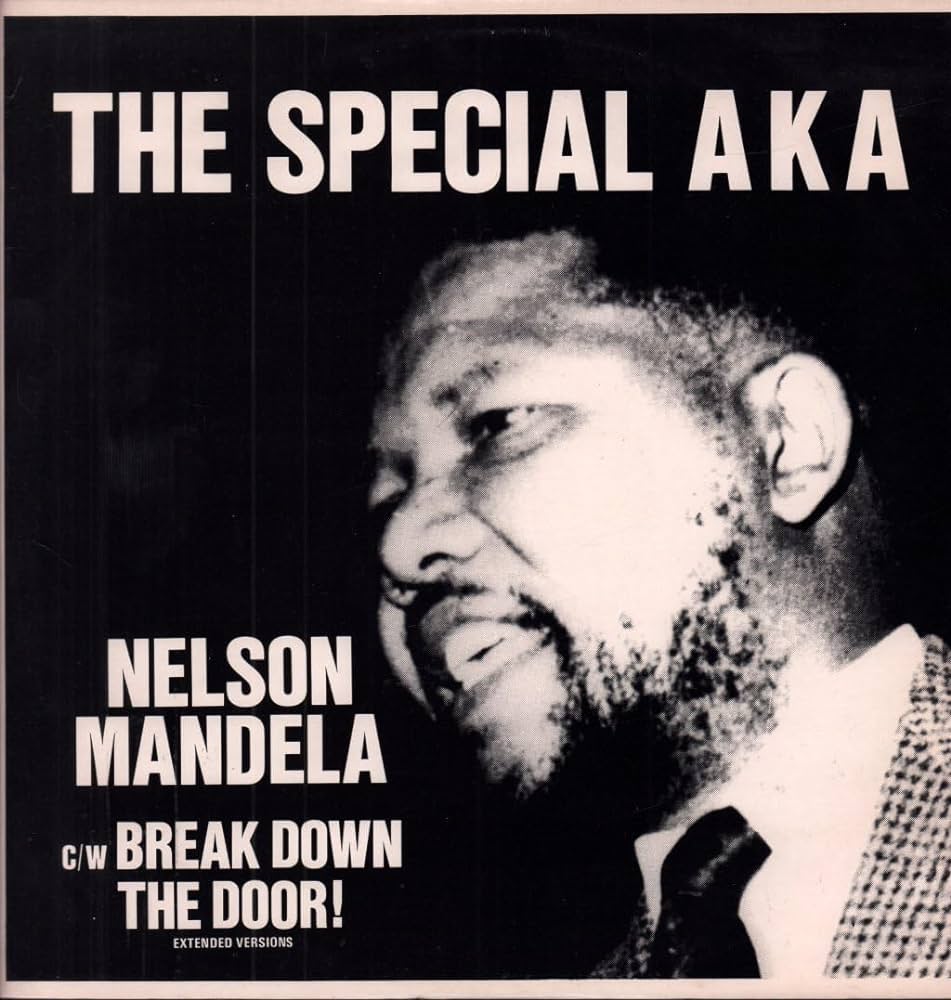
In many ways, 2 Tone endured in the eighties. After ‘Ghost Town’ and the split of the Specials, the Special AKA trail-blazed political pop with songs such as ‘The Boiler’, ‘Racist Friend’ and ‘(Free) Nelson Mandela’. The latter, of course, resulted in the two Wembley concerts when the released Nelson Mandela was the guest of honour and the concert was watched by 600 million people worldwide. It was 2 Tone’s crowning glory.
In the US, 2 Tone prompted the so-called ‘third wave of ska led by No Doubt and others. So the influence – and the hybrid of The Specials and The Beat – lasted into another decade.
But you’re right to say the iconic clothing gave way to New Romanticism in the early part of the eighties. Yet, by then 2 Tone had lasted for 2 years, which in pop culture is a lifetime.
Given you’ve already done two books on aspects of 2 Tone, what emerged from all the interviews you did for this one that you weren’t aware of before, as either a writer or a fan?
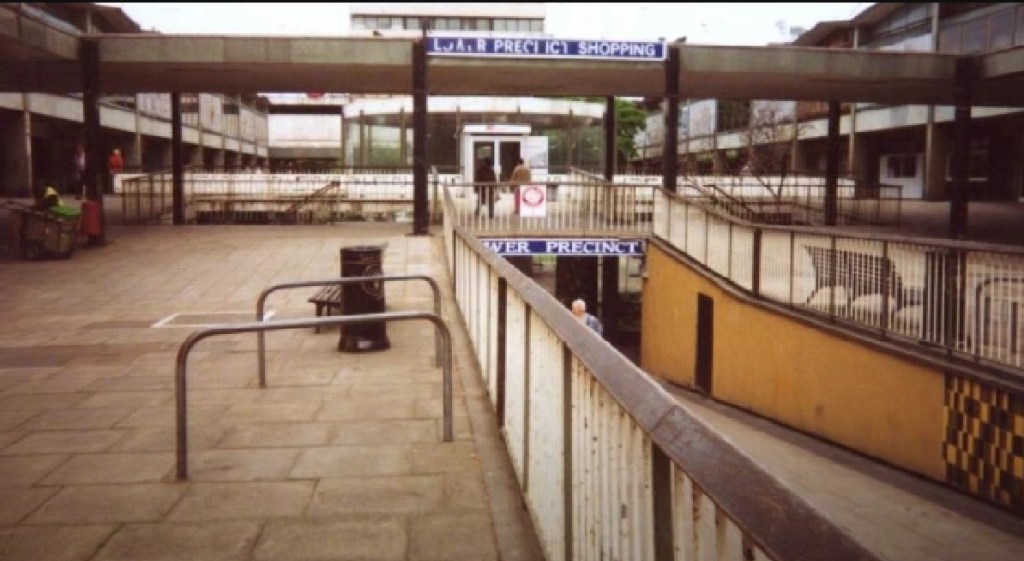
Yes, I used 2 Tone in Walls Come Tumbling Down as the musical political link between Rock Against Racism and Red Wedge. It’s where the roots of Too Much Too Young come from. But in this book, I spoke to many more people connected to 2 Tone from musicians in all the bands through to the 2 Tone fan club secretary, 2 Tone Tess. Everybody had a story to tell, and my depth of knowledge for 2 Tone expanded massively. One example, speaking to Jerry Dammers, was I hadn’t fully realised that ‘Ghost Town’ was as much about the breakup of the Specials as the country. It works on several levels as a song, but as Jerry says most of his lyrics start from the personal.
There is also an incredible story about the eleven months the Bodysnatchers were together. There are so many conflicting views within the band. Likewise, it was great to write a chapter about the relatively unknown Swinging Cats. They only recorded one single for 2 Tone. It’s a fascinating story, not least because members of the band either toured, played with or ended up joining the Specials/Special AKA.
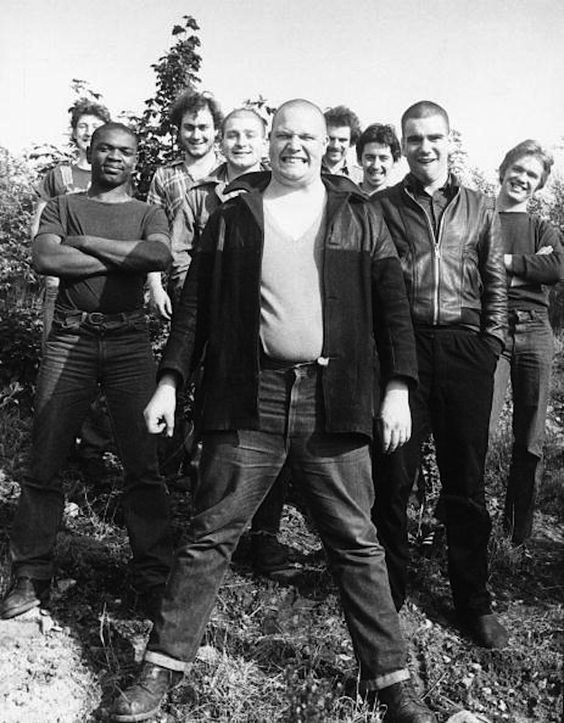
As well as your own book, Dance Craze has finally been given the proper home release it deserves this year via the BFI. As you mention, Bad Manners were asked to participate as honorary members of 2 Tone and brought with them a sea of ‘SKINS’ on Union Jack flags to the gigs.
The story of Dance Craze is fascinating and deserves a chapter in the book. The director was sacked, some of the bands nearly dropped out and the film was saved by the son of Joseph Losey and Chrysalis bankrolling it. Further still, the music in the film is not the music on the soundtrack. But for all that, it is a sensational film. It was made for kids too young to go to 2 Tone concerts and for that it resonated massively. It’s taken years for the master reels to be located and cleaned up. Jerry Dammers invited me to see it at the BFI. I turned up expecting hundreds of people and it was just me and him. We watched the film together and then at the end he said, “Daniel, do you think The Beat are better than The Specials?”
I’ve also been told that any evidence of sieg-heling was edited out of the final cut. But you’re right, Dance Craze brought Bad Manners to 2 Tone. It was fitting because Jerry offered them a deal in 1979, as he did Dexys Midnight Runners. But not Prefab Sprout, whose demo he either passed over or missed.
I think you’ve managed to convey here, and I can’t put it across more strongly how it permeates the book, but it was all about energy, both in terms of what Dammers called the joyous occasions they played and also the political message, which it got across through the music to people who it perhaps might not have done any other way. You also mention in the book the word “communion” as something that existed between the bands on tour, but internally each fell apart as quickly as that formed.
It’s interesting you picked up on the word “communion”. I talk about “the power of mass communion” at 2 Tone gigs. It’s not unique to 2 Tone, but you have only to look back at the footage of the bands, say in Dance Craze, to see the sense of belonging and coming together of a generation. That was enabled by the surging power of the rhythm in the music but also the social message. Sadly, the sense of communion within the bands was fraught. Once the influences of money, drugs and fame entered the frame, many of the groups fragmented and struggled to recover.
That’s why I like the chapter on the Specials and the Beat agreeing to do a double headline mini-tour of Ireland in 1981. The Beat had formed Go-Feet by then but they very much still felt part of the 2 Tone movement. Perhaps, the best evidence of that is when David Steele and Horace Panter swapped roles on Top of the Pops. David playing ‘Do Nothing’ with The Specials and Horace ‘Too Nice To Talk To’ with The Beat. It was a great moment.
As well as communion and energy, location also plays a big factor in the story, by anyone’s reckoning when it comes to 2 Tone, especially given the origins and what we’d now call an ‘ecosystem’ in the Midlands between the Specials, Beat and Selecter. Though you mention the Specials had to squat in London for it all to come together?
Location is interesting because often what was happening in London took time to filter to cities and towns across the country. So you end up having The Specials in Coventry, Madness in London and The Beat in Birmingham all playing a similar influenced style of music but without knowledge of one another. They each talk in the book about the shock of discovering the music of the other bands. I lived in Birmingham and Coventry felt hundreds of miles away, not just a short train journey.
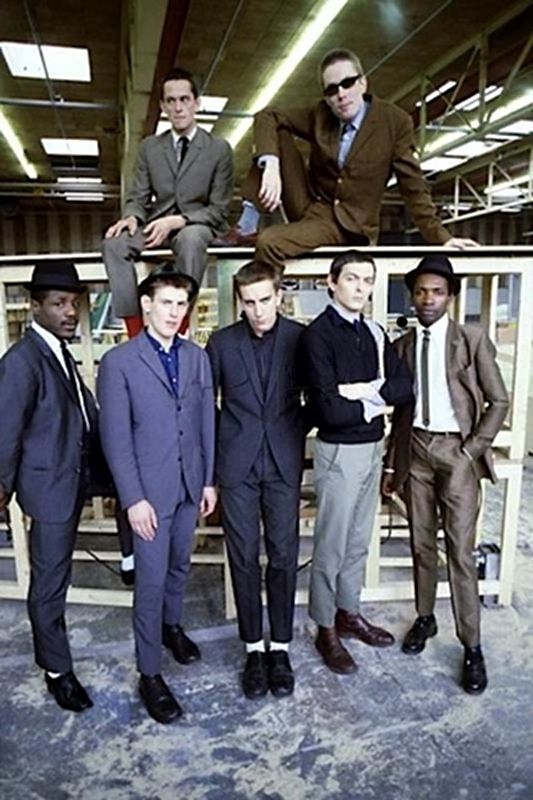
Jerry talks about how desperate he was to get out of Coventry because the music community was too small. He ventured to Birmingham to visit reggae clubs and look for musicians when he was forming The Specials. One of them was drummer Seb Shelton, who played with Dexys. There’s a picture on the back cover of the book taken from the Specials first album shoot. Jerry is carrying a suitcase, which he says symbolised his desperation to leave his adopted hometown. But for all that, the small scene in Coventry is what gave rapid birth to The Selecter and their immediate chart success.
It’s almost a year since Terry Hall died and it’s something which was picked up on globally. Even hardcore bands posted on social media in response. To the end a reformed Specials could still have a number one album with an anti-racist message for this era, with Saffiya Khan. I think what this shows is that it wasn’t all about Jerry Dammers, or am I wrong?
It’s tremendously sad the original seven Specials couldn’t resolve internal differences when they decided to reform. The Specials and 2 Tone happened because of Jerry. But ultimately, audiences remember lead singers. So even though ad hoc members of the band had recorded as The Specials since their break up in 1981, it was only when Terry was involved did it garner nationwide support. I enjoyed the initial concerts, but for me it was like seeing the Sex Pistols in 1996; musically it sounded fantastic, but without the angst and social and political backdrop of the late seventies and early eighties, something was missing.
As well as the book having 96 mentions of the word “skinhead” – usually accompanied by the words NF, aggression or nasty – what does run through it is the sense that Dammers was trying to resolve certain contradictions and conflicts and as he mentions skinheads often hated each other more than any racial group, for instance between skins and mods over their shared heritage?
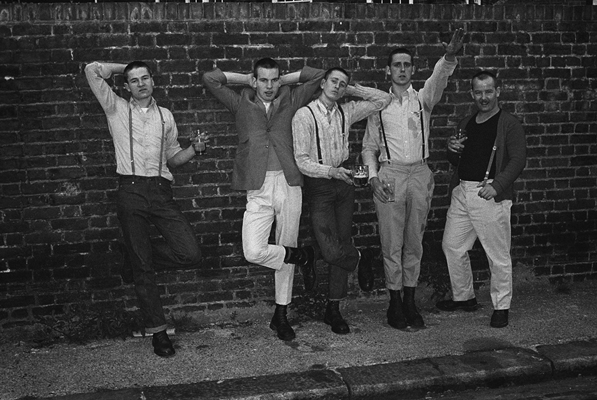
It’s very easy to tar skinheads with the same brush. But as many were non-political or left-wing as were racist. As the book details, Jerry saw the division of tribal groups and the temptation of neo-fascism in young people looking for an identity. His vision of a movement to lure people away from right-wing groups is nothing but commendable. But sadly, whilst many accepted the ideals of 2 Tone, others used it as a battleground of violence and abuse.
At its best, 2 Tone was an amazing source of education and challenged you to think about society. It encouraged compassion in areas that as a schoolboy I had never considered. Records like ‘Racist Friend’ and ‘The Boiler’ and then ‘Nelson Mandela’ with a back sleeve dedicated to the history of the African National Congress was incredible. Pop music became a didactic tool of resistance.
Was he really so worried The Beat were better than The Specials? Was that something you ever discussed with Ranking Roger?
Not worried. It was a light-hearted comment. But I think Jerry and indeed The Specials’ manager Rick Rogers thought The Beat could seriously threaten the Specials’ crown. Ultimately, it doesn’t matter either way because both bands made great music and mutually benefited from one other. Roger was a massive Specials fan. He tried to get on stage to chat on the mic when the Specials played an outdoor gig in Cannon Hill Park, Birmingham when ‘Gangsters’ first came out!
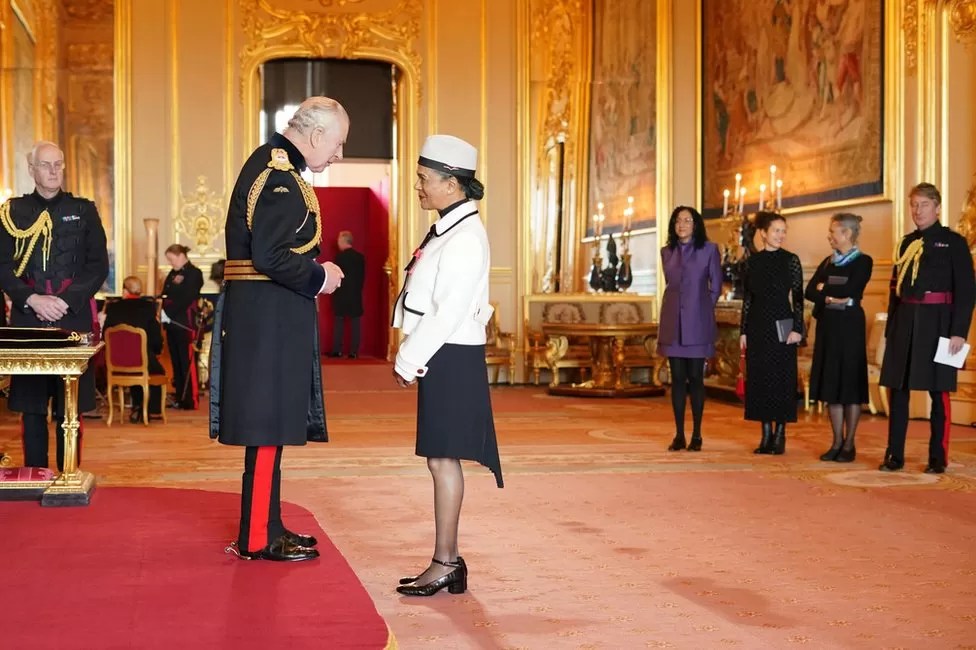
Last time we ended by reflecting on how the once-insurgents had become the establishment. Sir Horace Gentleman may not be an actual knight, but Pauline Black got made an OBE and deputy lord lieutenant and there’s a 2 Tone Museum?
I wouldn’t describe Pauline Black as one of the establishment. Yes, the British Empire is a deep scar on this country’s past, and the horror of how we treated people is beginning to seep into the national curriculum. Pauline knows this as well as anyone, so I respect her decision to accept recognition from the state. The country has changed massively over the last twenty years. Perhaps it’s the children of 2 Tone fans who have absorbed some of the values we grew up with from the songs on the label.

 Creases Like Knives
I had no idea Pauline Black had a gong. I live and learn!
LikeLike
Interesting interview. It’s only an aside but I definitely remember older lads at school who were more into nationalist rhetoric picking up on Bad Manners, until they quickly turned into a novelty group. There was graffiti up in our village for years where an NF symbol was painted alongside ‘Bad Manners’. I don’t see why we should respect Pauline Black for becoming a royal flunkey. Quite the opposite. If she knows about the horror of Empire, why take its rewards?
LikeLike
Lol at big upping the ANC, they’ve turned out to be one of the worst organizations (I use the term loosely) on Earth
LikeLiked by 1 person
I want to congratulate the unbiased articles that this blog has, truly impressive how even though the authors lean farther left than right they still don’t tweak the narrative, congrats, your doing good journalism.
LikeLiked by 1 person