Menace: Prog, Punk, Skinheads & Serendipity by Paul Marko (Punk 77 Books)
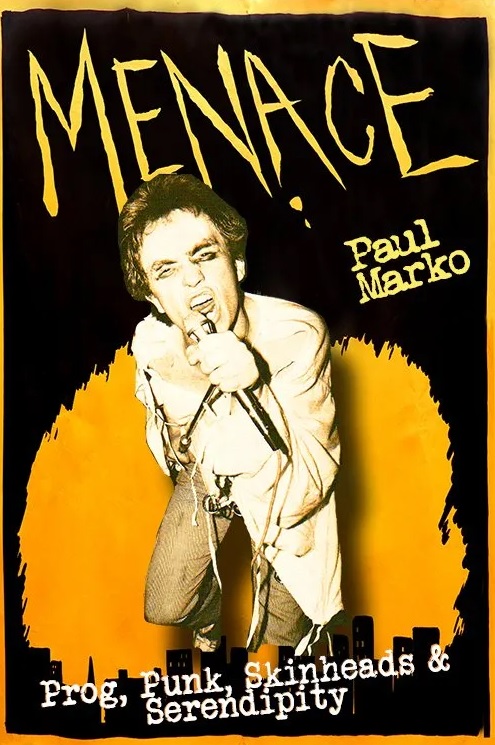
Menace were a classic four man late-seventies punk group. That said, the fact they had an Islington-based Canadian singer was slightly unusual for a London band of the time. Vocalist Morgan Webster was not only a great frontman, with his eye makeup and flamboyant dress he looked way more punk than the rest of Menace. That said, I preferred the real and ordinary dressed-down look sported by the majority of the band, although I can also understand why Paul Marko has opted to use a picture of the band’s singer on the cover of his book. The group created a great racket that was one of the earliest manifestations of what became known as street punk.
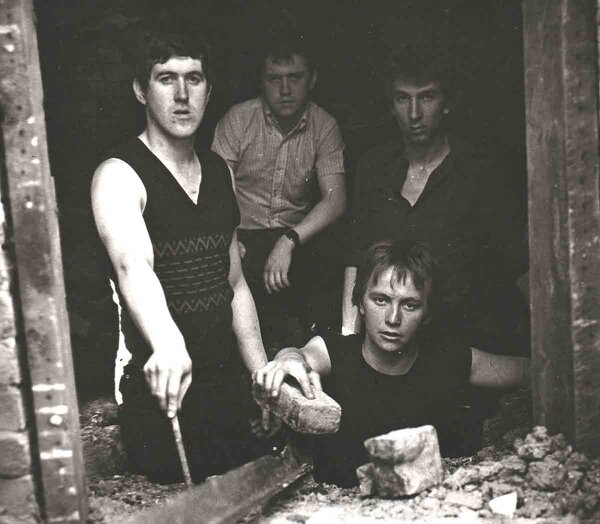
While I knew the original Menace rhythm section had been born in Ireland before moving to London as kids, I had no idea they’d started out in music as a hairy band called Stonehenge. That whole saga is related in detail in Marko’s brick of a book on the band. It gives us a great oral history of not just a shit-hot punk group but working-class experiences around school, work and music, from the second half of the twentieth-century through to today. You never get bored because the book is a collage of different voices that both reinforce and contradict each other.
The main take-away on the early days of the band as Stonehenge is that they honed their musical skills playing US air bases in Germany – a bit like The Beatles at the Star Club in Hamburg. They had to learn five sets of varying musical styles and play for five hours a night with just a 15-minute break between each set. When Stonehenge came back to the UK they evolved into a 1977-style punk act and changed their name to Menace. In the process they lost their keyboard player as he just wasn’t needed in a brickwall punk act.
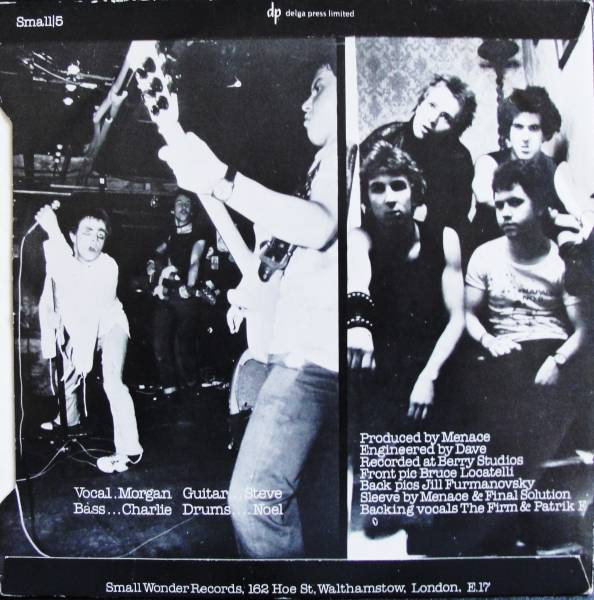
What Marko’s book makes clear is that Menace were basically doing the same short set of songs throughout their initial incarnation. They didn’t have management, didn’t get much press and did one-off record deals for singles – the original incarnation of the band never made an album. With increasing violence at gigs and differences between the rest of the group and the singer, the frontman and backline parted company in 1978. Vocalist Morgan Webster got into drugs, whereas the rest of the band – who’d initially become friends at school – went weightlifting together. While not reaching elite levels, drummer Noel Martin appears to have been able to clean and jerk a very respectable 135kg – way more than I can manage.
While I’d have been interested to know more about the weightlifting and Noel’s martial arts training, the author gives us plenty about Menace and the Roxy Club, the latter being the subject of his previous book. There’s a slew of great stories like the first record deal coming about because Illegal Records supremo Miles Copeland saw Menace at the Roxy when he had studio time booked the following week and needed a band to make use of it. The group talk in a deadpan and totally unimpressed way about ex-Velvet Underground bassist John Cale who acted as a producer during the session.
There’s also plenty about Menace playing with Sham 69 and one of the book’s disputed stories is whether Menace guitarist Steve Tannett ever stood in for Dave Parsons of Sham. I saw Menace support Sham back in the day but didn’t see Steve stand in for Dave. Sham played frequently, so the story may be true. Who knows? I don’t! Likewise, there’s plenty of background on Noel, Steve and bass player Charlie Casey from a variety of voices – but the sources on singer Morgan are rather thinner. What we do know for sure is he ended up back in Canada and died of a drug overdose in his mid-thirties. The only source in the book on Webster’s life before he came to the UK as an adult seems to be the singer himself, so it’s hard to judge if this information is reliable and accurate. Still, the vocalist tells a good prison story in a rare music press feature from the seventies.
After parting company with Webster, Menace became the backing group for the then London-based American singer/punk scenester Vermillion Sands, who was doing odd jobs for one of their record labels, Illegal. The band and vocalist split from each other after Vermillion walked off stage and the group did their old Menace number ‘GLC’ at the end of a set as support to the UK Subs. This was at the London Lyceum on 15 July 1979. I was there and remember being very disappointed by this new incarnation of Menace – Vermillion was decidedly inferior to Morgan in terms of stage presence and I didn’t think much of the new material the band were doing either. Seemingly, Vermillion wasn’t happy with the greatly increased crowd response to the old Menace single in comparison to the lukewarm way in which she’d been received. There’s talk in Marko’s book of the crowd reception to ‘GLC’ causing the UK Subs to feel some heat, but for me it was middle-billed Pure Hell who blew Charlie Harper’s mob off stage that night. Which just goes to show how varied individual perspectives on the same event can be.
Steve Tannett and Charlie Casey both got involved in the business side of the music industry after the first incarnation of Menace ceased operations, and the book covers this as well as their continuing work as musicians. For a while the band were playing simply as The Aces and ploughing a new wave rather than a punk groove – but eventually Steve drifted off while Charlie and Noel kept playing together under different band names. With this band they did Menace’s punk classic ‘GLC’ when supporting Alternative TV at Chat’s Palace in Hackney in the 1990s and were amazed by the reaction to it. So a new version of Menace was put together at the end of that decade. Menace Marks 2, 3,4 & 5 supplemented the original rhythm section with new singers and guitar players. All the different line-ups are discussed in book.
I did a reading with Alternative TV and other bands at Chats Palace around the same time as the incident that led to the reformation of Menace and have no recollection of anyone doing ‘GLC’. Maybe Alternative TV did more than one gig at Chats Palace at that time, so the one that also featured me wasn’t the one with Noel and Charlie’s band, It’s hard to tell. What I remember was Alternative TV having a rapturous reception doing old songs while I was stood thinking why am I watching this? I’d seen the band do the same material about 20 years earlier and it seemed a lot fresher then. The gig was clearly great for those who hadn’t caught Alternative TV live in the 70s, and even some of those who had, but it didn’t float my boat.
I’d never wanted to go and see the bands I’d caught live as a teenager in later decades unless they were doing all new material. I always thought nostalgia shows were likely to ruin my memories of the original gigs. Many disagreed with me and going to see old punk bands doing old songs made them happy, I figured that was great but I just didn’t wanna go to that type of show myself. So when people like Andy Pearson from Fear and Loathing fanzine told me the reformed Menace were great live and I should check them out, I just smiled and ignored the advice.
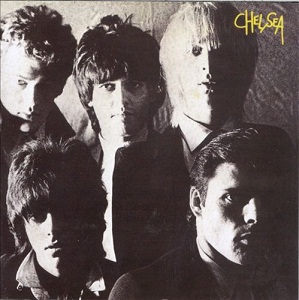
There’s a lot in the earlier part of Marko’s book about the scene in south Islington around Menace in the 1970s – and then later on about festivals like Holidays In The Sun or Rebellion featuring reformed punk bands. I never wanted to see Menace at the annual Blackpool festival – or indeed at the places they still play within walking distance of my flat. I knew, for example, that earlier this year Menace were support to Chelsea at The Water Rats in Kings X but I didn’t go. Chelsea were a band I loved live in the late-seventies and especially when James Stevenson and Dave Martin were their guitarists. I last saw Chelsea in 1980 and I hadn’t seen Menace doing their classic set since 1978. My feeling when I heard about The Water Rats gig was it was best to keep it that way. Incidentally, there’s some curious snippets about Chelsea and their singer Gene October in Marko’s book. It covers quite a bit of the punk scene beyond Menace.
Reading Marko’s oral history of Menace made it clear that what the current version of the band gets out of playing live forty plus years on are social and emotional rewards. If they’d been in it for the money, they’d have knocked it on the head years ago. The book made me think again about whether I could ever enjoy Menace live post reformation. I now realise there are indeed situations in which I’d actually be very happy to see the current incarnation of Menace perform. For example, if they were playing a benefit or had made a record supporting the local opposition to building flats on the Finsbury Leisure Centre football pitches in south Islington – and as you’re reading this, please sign the petition against that:
https://www.change.org/p/keepbunhillopen
As Paul Marko notes towards the end of his book, there have been a lot of changes in south Islington since Menace were first heavily identified with the place in the seventies. Among other things the price of homes in the area has become astronomical both to rent and to buy – but for me, the destruction of our football pitches so that some rich wankers can own flash properties really is a step too far! Like a load of my neighbours, I’m also sick of seeing endless blocks of high rise luxury ghost flats being built around EC1 for investors who neither live in them nor rent them out. The apartments are left empty because the London housing market is so overheated people can make money from buying a property and selling it at a profit a few years down the line without ever bothering to pick up the keys so that they – or someone else – might actually live in it. Nonetheless, there is still a lot of social housing in south Islington occupied by working-class residents.
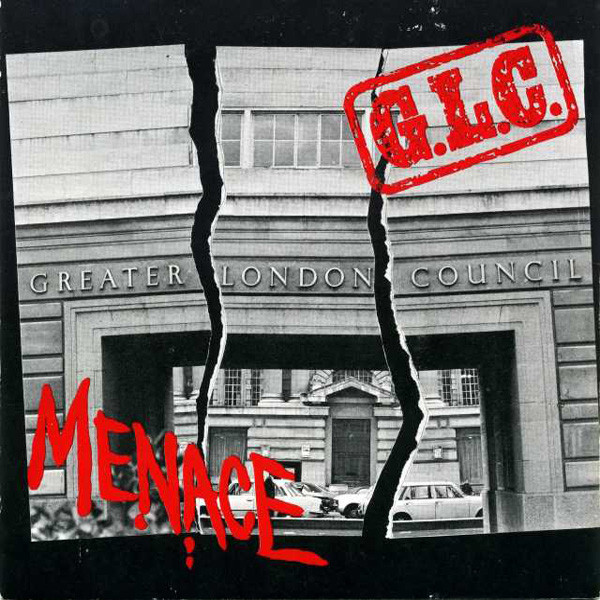
So, having read Marko’s oral history of Menace, I would really love to see them as a local band getting stuck in to the fight to save our football pitches. Maybe they could write a new song, but I’d be just as happy to see ‘Carry No Banners’ done as ‘Save Our Football Pitches’, or the lyrics to ‘GLC’ altered to focus on Diarmaid Ward, deputy leader of Islington council and the local politician leading the charge to destroy our sports facilities. Coz: “Diarmaid Ward, Diarmaid Ward, you’re full of shit, shit, shit, shit, shit!”
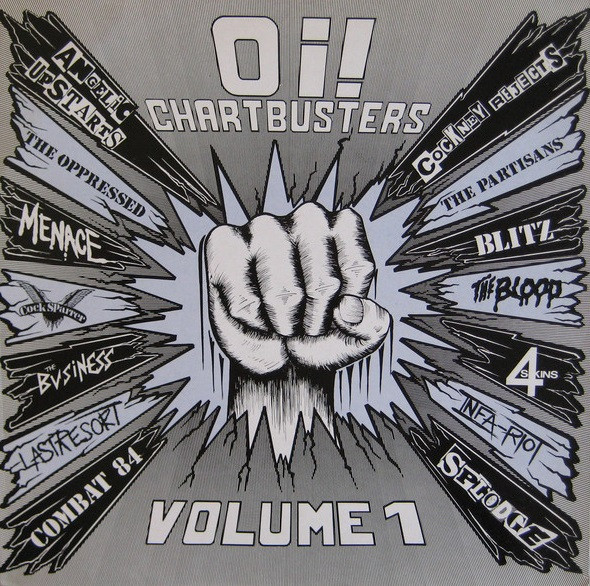
Before the band got into prog and metal some of them had been skinheads at school. The dressed-down look of the Menace backline when they went punk reflected that, and given they combined this with terrace chant choruses in their songs, it’s hardly surprising they picked up a skinhead following in the seventies – including ‘Hoxton’ Tom McCourt, later of the 4-Skins. Marko not only covers this, he gives plenty of space to skinheads and the best known late-seventies English bands with skinhead connections. He also goes into Oi since old Menace songs appeared on a slew of compilation albums dedicated to that genre.
Paul Marko’s fabulous book about Menace isn’t just for skins and punks, the appeal is way broader and it’s clearly essential reading whether you’re interested in music or Islington’s local history – or, like me, both!
Stewart Home
Buy Menace by Paul Marko here: https://punk77.company.site
 Creases Like Knives