 Attentive readers would undoubtedly notice my appreciation for the vitality of the current Catalan skinhead scene. Even those who visit casually would not mistake it for a mere historical re-enactment society. While the scene embraces styles ranging from the 60s, 70s, and 80s to contemporary variations, it seamlessly melds tradition with a resolute sense of purpose and relevance in the present moment. Catalan nationalism has become a major international news item since last year, and although some Catalan skins I spoke to are more critical of it than others, it’s fair to say that, for the most part, they are among its most fervent supporters.
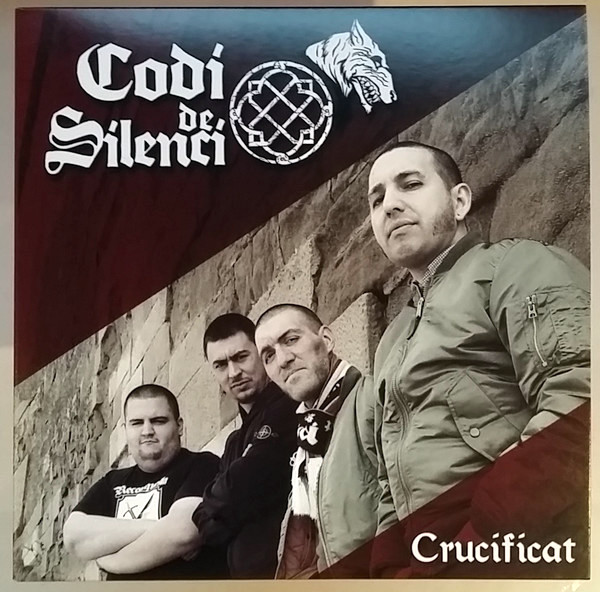
Much like Reconquesta, Rebelion, and earlier groups such as Pilseners, Codi de Silenci is an Oi band that proudly wears its Catalan patriotism as a badge of honour. This sentiment isn’t confined to their lyrics alone; it informs the overall tone and atmosphere of their music. Codi de Silenci aren’t a band that repetitively churn out songs about boots, booze and brawls, nor do they bore you are interview partners. While bassist and primary lyricist Lluís Lacruz stresses that Codi de Silenci identifies primarily as an Oi band rather than a political one, he’ll give you candid opinions that you’re free to embrace or challenge.
Text: Matt Crombieboy
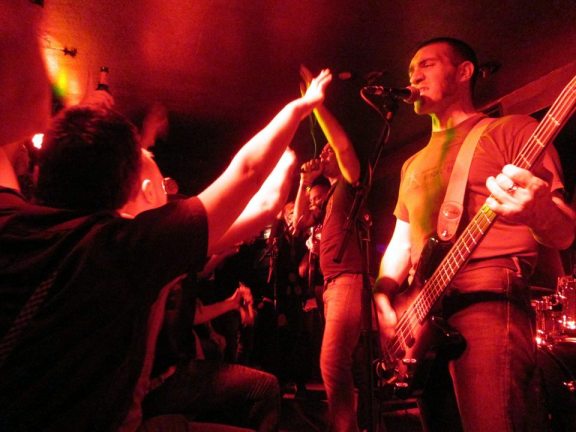
Hi Lluís, can you introduce the band to us?
Codi de Silenci came into being back in 2012 when our vocalist, Dani, and I, Lluís, on bass, got together with the aim of kickstarting a rock ‘n’ oi band right here in Lleida. The spark for this idea ignited during our time playing for the streetpunk band Opinió Pública. So, we set out on the hunt for fellow musicians to join our venture. Now, Lleida is a city with around 100,000 residents, nestled in a semi-rural setting, which can sometimes make it a bit challenging to find everything we needed.
Our band began with just two guitars and a drummer with a background in metal, and together we started rehearsing and crafting our initial songs. However, I had to step away from the band when my first child arrived, and that’s when Pep stepped in as the bassist. Eventually, Luciano came on board to take over lead guitar duties. When I rejoined the band, Pep shifted to rhythm guitar. Further down the road, we made a change in our drummer lineup, and it was Jonathan who joined us for our first recording sessions.
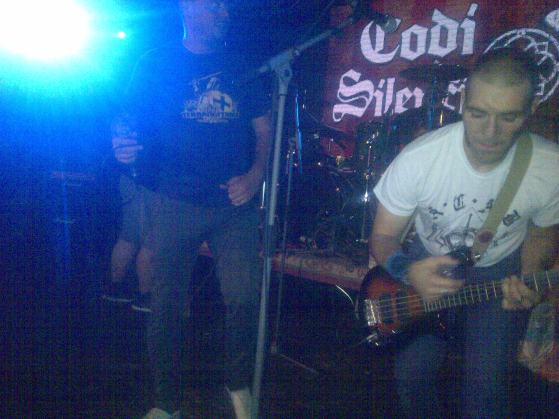
Following our Crucificat 7-inch record release and a couple of shows with temporary drummers, Aleix, who had previously been part of Opinió Pública with us, came aboard as our drummer. And here’s how our journey has unfolded since then: we’ve performed at around thirty gigs, sharing stages with numerous local bands and even some internationally renowned ones like The Crack, Templars, Komintern Sect, and Evil Conduct
 Many of your songs revolve around Catalan nationalism. As working class people, what positive changes do you anticipate Catalan independence might bring to your lives?
For me and the overwhelming majority of those involved in the Catalan independence movement, the prospect of independence holds the promise of a fresh start, where we can shape our own future, particularly when it comes to issues of social justice. Catalonia stands out as a region with a more progressive stance in comparison to Spain. As a simple example, Catalonia has already outlawed circuses that use animals, and, of course, bullfighting is also banned here.
What do you say to critics who argue it would all result in a “meet the new boss, same as the old boss” type situation?
For me and many others, the new situation doesn’t just involve changing one flag to another; it involves changing the paradigm. Catalonia, unlike some other parts of Spain, has a history of entrepreneurial spirit and small-scale ownership, which leads to a distinct perspective on how society should be governed and structured.
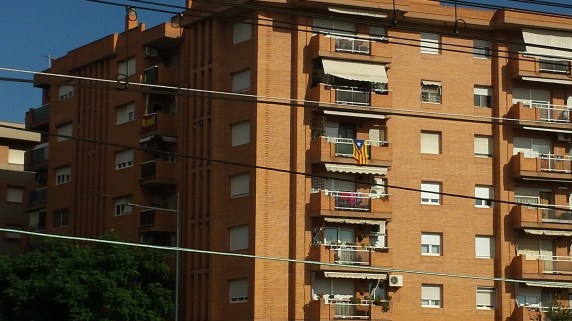
Interestingly, in a recent interview with ‘Boots and Braces’ zine you argued that independence entails “profound changes in the relations between the state and individuals and between citiens and the means of production”. Do you believe the key industries should be nationalised or socialised?
We live in a capitalist economic environment where all resources, including people, can be bought and sold. I think that’s a mistake, and I’ll give you a concrete example to illustrate what I mean.
Spain boasts one of the highest annual sunshine hours among nations. It could be a leading world power in the production of renewable energies, especially solar energy. Instead, those fabulous Spanish politicians are letting themselves be pressurised by energy companies. In fact, a significant number of these companies have former high-ranking politicians sitting on their boards, including former government presidents. As a result of this influence, Spain has become the first country globally to impose a tax on solar panels. Yes, you heard that correctly: a tax penalising citizens who try to break free from dependence on the conventional electrical grid..
This is just one example of how the state attacks its own citizens. I firmly believe that it’s a patriotic duty to reclaim control over crucial sectors of our nation, rather than leaving our national wealth in the hands of multinational corporations and the stock market. The recent trend of rising electricity bills regardless of weather conditions, be it hot or cold, is simply unacceptable. This has an impact on society as a whole, not just its most vulnerable segments. I think it’s a shame to witness these valuable resources being squandered for the benefit of a select few speculators.
 The Catalan push for independence was indeed a major headline last year, but it seems to have somewhat faded from the news lately. The last significant development I recall was the imprisonment of Catalan politicians. Is the independence movement still going as strong as last year?
At the moment, the situation appears to be somewhat tense, with certain leaders either imprisoned or in exile. Political parties are once again vying for gains in the midst of this situation, and a significant portion of the mobilised population is expressing their concerns. In virtually every town, there exists a dedicated group of individuals, even if their numbers are small, who remain committed to sustaining the momentum of agitation.
Since the resurgence of the independence movement’s victory in the December 2017 elections, the Spanish government and various political parties, spanning both the right and left of the political spectrum, have been determined to curtail the authority of the Catalan government. Simultaneously, no new president has been appointed, as the one who was elected with a substantial majority has remained in exile, initially in Belgium and now in Germany.
Currently, our strategies primarily revolve around defensive measures, such as engaging with political prisoners and seeking to regain sovereignty. But there isn’t any proactive counter-attack movement. This is obviously frustrating, even if it keeps people busy. What we truly need is to rekindle the revolutionary spirit of 1st October (independence referendum) and 3rd October (general strike against police oppression) and confront the state in our quest for freedom. It’s difficult, but it has been accomplished before, and the people are ready for it.
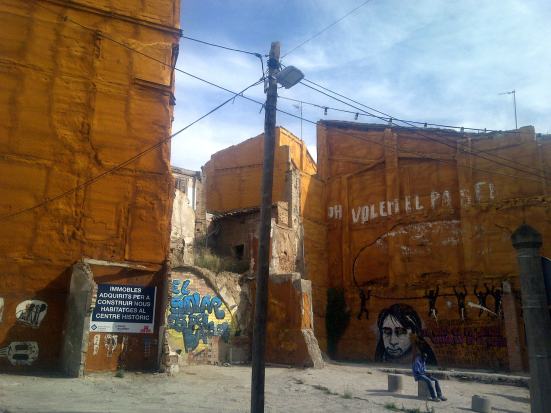
In another interview (with Backstreet Battalion), you described Catalonia as a “land of welcome”. What did you mean by that?
In my view, any region benefits from interactions with external influences. However, it doesn’t imply that the territory in question, Catalonia in our case, must fully embrace those foreign influences. Instead, by valuing these differences, it can help us better appreciate our own unique identity and what we represent..
Catalonia has a historical legacy as a crossroads of trade, travel, and a land of warriors. This has contributed to the development of our distinct way of life, allowing us to incorporate valuable foreign influences without sacrificing our core identity. Currently, because of globalisation, coupled with limited political autonomy to shape our own policies, including immigration policies, we are witnessing a transformation of our region into an amusement park primarily catering to rich western folk, and that is a problem.
We pride ourselves on being a hospitable land, a ‘land of welcome’, where we do not discriminate against individuals based on their origins or beliefs, as long as they don’t impose their views upon us. Our culture and traditions are inherently open and inclusive. It’s really insulting, on the other hand, that there are people who have lived here for 30 or 40 year and don’t speak or even understand Catalan.
As for religions, personally I would ban them all. So, I see no issue in saying that state-funded religious institutions should not exist in my country, and the private ones should be regulated with an iron fist.
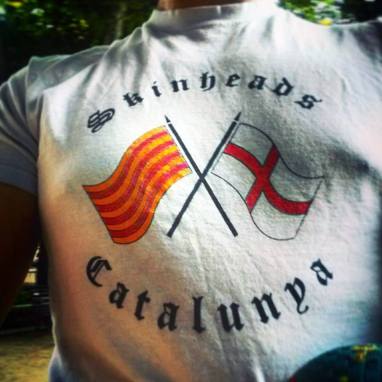 In my review of your split EP with Reconquesta, I wrote that you initially sounded like an “early Samurai Skinhead Spirit band” singing in Catalan. Were those bands a conscious influence on your music?
We listen to a lot of music, and it obviously influences us when we compose ours. It’s obvious that we play within the canons of Oi music, and certain parts of our songs evoke specific styles – many people say that we also do viking rock. However, we prefer to say we play rock ‘n’ Oi, which is accurate and covers all the styles we listen to, from viking rock and metal, 80s and 90s Oi, late 70s punk, hardcore, SSS, and so on.
Some of your songs are quite epic sounding rather than being basic Oi. Do you think that feel is determined by themes of your songs, or is it more a matter of being influenced by Scandinavian bands and such?
I think epic works well with our sound. I agree that the epic quality complements our sound effectively. Moreover, the lyrics harmonise with this ambiance, creating a cohesive whole. While it’s undeniable that the Scandinavian sound, particularly the Swedish one, is a fundamental influence in our music, it’s not a question of copying and pasting; rather, it’s about crafting our distinctive atmosphere and style.
Anyway, I don’t think we can be categorised as a specific style or likened to any particular band because our creative process is a bit peculiar. I write most of the lyrics, and when I finish one, I share it with the band. I give some indication what I imagine the song may sound like, and usually our lead guitarist Luciano tries to figure out how to go about it.
The process considers the lyrics, my mood at the time, the bands I’m most listening to at that time, and so on. This means that the songs aren’t copies of each other even though we can have a homogeneous sound as a band.
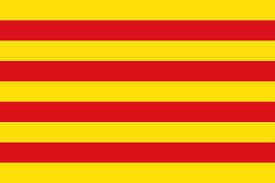
‘Estelada’ is your most stirring anthem. What are the lyrics saying?
This is one of the few lyrics I didn’t write, although it was one of our first songs. Albert Martí, a singer-songwriter and supporter of Lleida Esportiu FC, gave the lyrics to us.
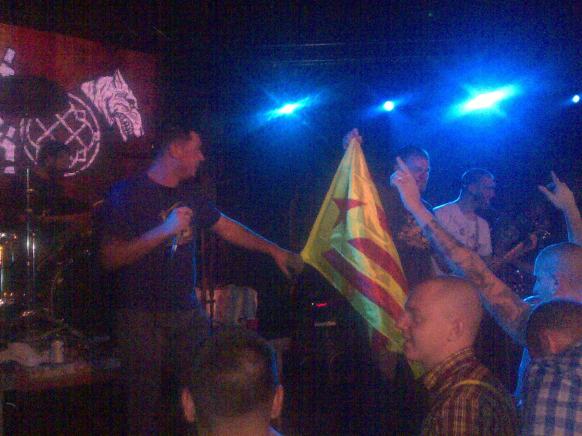
The song is essentially a figurative tribute to the Estelada, the flag associated with the independence movement. In contrast, the traditional Catalan flag, known as the Senyera, has five yellow and four red horizontal bars. This design originates from the coat of arms of the Comtes de Barcelona lineage, a symbol that dates back as far as 1150.
The legend goes that in the ninth century, Count Guifré el Pilós of Barcelona, who was under the rule of the French king, came to the aid of his lord when the Normans launched an attack on France. After successfully defeating the Normans, Count Guifré requested a coat of arms as a reward for his valor. The emperor, moved by his bravery, approached him and, using the fingers of his right hand, traced them in the wound of the count. Then, from above, he handed Count Guifré a golden shield, saying, “This will be your coat of arms, Count.”
And in modern history?
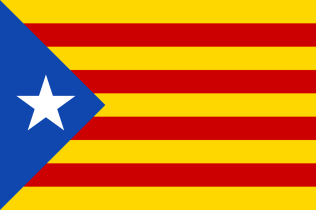
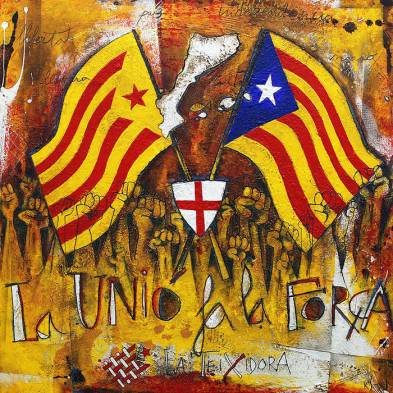
During the late 19th century, there was a rising wave of nationalist and separatist feelings. At that time, several groups emerged advocating for armed actions to achieve national liberation. One of these groups consisted of Catalan exiles in Cuba, and they created a new political flag to represent their cause. This flag featured a blue triangle, which symbolized the sky and humanity, along with a star representing freedom. It was also adopted as a war banner by Catalan volunteers who participated in World War I. It became a unifying symbol used by various patriotic political and armed groups, whether they operated within the bounds of the law or were considered illegal.
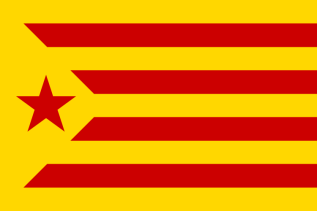
In the 1960s, during a period of global revolutionary and decolonisation movements, young members of the Front Nacional de Catalunya, a covert organisation formed to carry out symbolic and militant acts of resistance during Franco’s dictatorship, started to merge the national and social struggles. As a result, they established the Socialist Party of National Liberation (PSAN). This new political party introduced a fresh flag featuring the Marxist red star.
These days, people often use both flags as symbols of the independence movement, even though they each carry different meanings. The blue triangle is seen as more patriotic, while the red star is associated with social issues and the fight for equality. In a nutshell, the lyrics use metaphors to capture the symbolism of the struggle for national liberation. They talk about sacrifices made (“bars of blood”), the optimism for a better future (“sun of hope”), and the historical journey and future aspirations of our people.
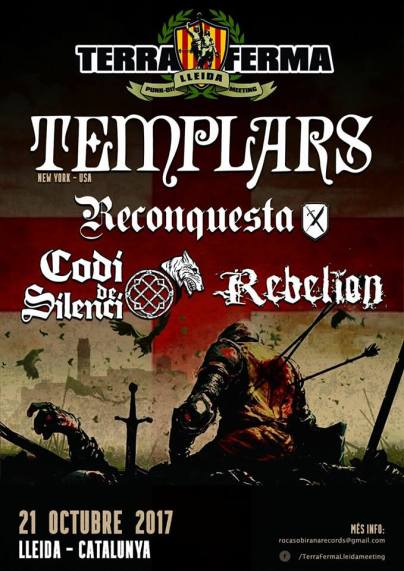 Last year’s Terra Ferma event had a Knights Templar theme, and you generally use quite a bit of Templar imagery, as do other Catalan bands. Obviously, these things don’t mean the same to everyone: Templars (the NYC band) are by their own admission “history nerds”, whereas for someone like Anders Breivik the same imagery has a rather different meaning… What relevance do the Knights Templar have to Catalan skins?
I can only speak for myself. People use the Templar imagery for different purposes. Some are into medieval history and myths. Others, including myself, like that the Knights Templar had a rigid code of conduct that left no room for divergent interpretations. For some, the Templars’ historical role in the struggle against the Saracens os crucial. Others are devout Catholics. And so forth.
To me personally, the religious aspect holds little relevance, but I like the the narrative surrounding the Order of the Temple, the betrayal of the knights by King Philip of France and Pope Clement V, the historical association with the curse of Friday the 13th, and the knights’ dignified manner of facing their fate.
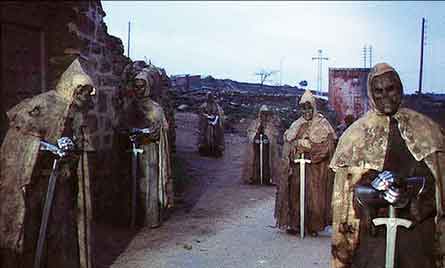
Above all, what stands out about the Knights Templar is their unwavering resolve. If a Templar knight was captured by the enemy, the Order strictly adhered to a policy of not paying any ransom for their release. Instead, they would choose to fight to the death rather than being bought back, as outlined in their statutes. Consequently, when captured, the majority of Templar knights met their fate swiftly at the hands of their Saracen captors.
In addition, the allure of the Knights Templar extends to the enigmatic themes of the Holy Grail, the concealed and lost treasures of the Templars, the enigma of Baphomet, and the secretive rituals of the Order. The entire history of the Order of the Temple is shrouded in an aura of mystery, which, I suppose, is one of the reasons it continues to captivate and attract so many followers.
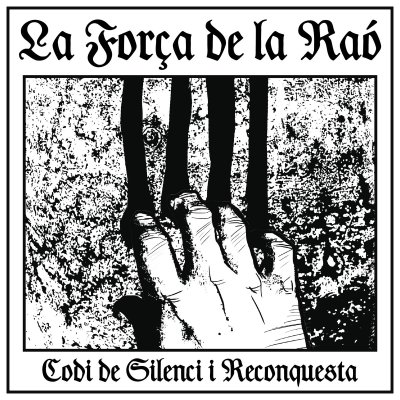 Your split-EP with Reconquesta is awesome; both bands are on fire. Was I right to assume that recent events had fuelled that fire − or did you in fact write these songs before things kicked off?
Well, we had been working in the idea of the split with the people of Reconquesta and Roca Sobirana Records for some time now, and that took a couple of years to put it into practice. As for the lyrics, I cannot speak for Reconquesta, but I can say that the Codi ones, which are mine, are 50-50.
‘El Complot’ is an old lyric that we had been playing for a while but didn’t convince us fully. The original song was very slow and repetitive and lasted more than 6 minutes. We decided to go for a full facelift, giving it a more rock ‘n’ Oi touch and cutting down on lyrics. And in fact, the result was an entirely new proposition.
‘Descans’, on the other hand, we started working on a couple of years ago, but because of our work dynamics we only completed it in time for the 7-inch. Family dynamics make it difficult to follow a constant work rhythm, which is why it takes us longer to compose and finish songs. However, this also gives us time to evaluate changes and things that we might add or remove. Once a song is finished, we won’t change it again.
 In the UK, newer skinhead bands such as Crown Court are returning to straightforward punk without heavy guitars, rock or metal influences. With Codi de Silenci and Reconquesta, I feel you’re evolving in the opposite direction. Do you feel Oi music should evolve or stay true to its origins?
It’s an interesting question because, as I said earlier, we aren’t going in any direction in particular. Rather, we’re trying to evolve. There are obviously elements in our songs that resemble our influences, but we want them to be original. We don’t want to be clichéd or sound like anybody else, although we know that’s very difficult when everything has been done.
Anyway, it’s one thing is to play music that may not be entirely original or groundbreaking and sounding like a medley of influences. What matters to me is that I play the music that I like and, in a way, I don’t care what people think. At the end of the day, everyone should play for themselves, not for mass recognition. I couldn’t write about subjects that people like if I didn’t like them.
But it’s also true that I like bands of both styles you described. So ultimately, everyone should do what they’re into and what makes them feel proud.
There is more money involved in Oi music today than there was in the past. Do you feel this ‘professionalisation’ compromises the integrity of skinhead bands? I.e. does the desire to get on the European festival circuit result in banal music and words that ‘everybody can agree with’?
Yes. Sorry, but this one’s so obvious I don’t think it needs any further explanation.
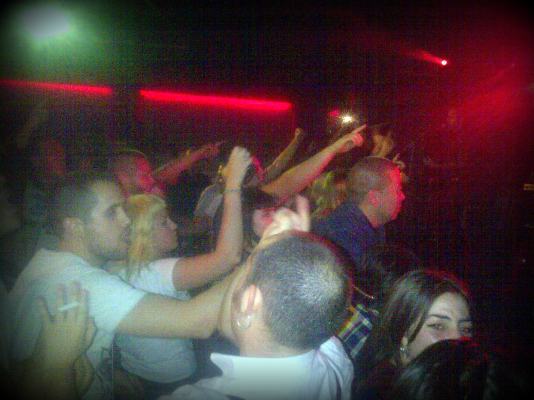
During the 90s Oi revival, a mythical ‘golden age’ when punks and skins stood together was often invoked. What is it like in Catalonia today – are punks interested in your music? At the Terra Ferma festival in Lleida last year, the crowd was pretty much 100% skinhead.
I think everything evolves, and there is now huge segmentation between punks and skins, between punks and punks, and obviously between skins and skins too. We’re no longer talking political vs. apolitical, but different lifestyles.
Let me focus on the skinhead world, which is the one I consider mine. Historically, there has been a division between the sharp-dressed and the “jeans and t-shirt” factions, so to speak. But at the moment, that division is much more pronounced. On one side, there appears to be a sort of elite within the skinhead subculture, while on the other, there are the rest of us. This is rather unfortunate for a subculture based on workers’ pride. It seems that a substantial amount of money is being spent on travel, records, and clothing, yet there’s a conspicuous absence of class pride in the mix.
In any case, the other side is not above criticism either: tracksuits and military boots, studded belts adorned with straps, sleeveless t-shirts and belt pouches – this image is far from the ‘spirit of ’69’. [On a related note, a nod to the unfortunate fellow who left his jeans behind in Madrid and had to attend Terra Ferma wearing the tracksuit bottoms he had on while driving his car. Cheers for the lift – Editor]
In my view, everyone should be criticised, and that is an intrinsic part of the ‘movement’: laughing at everything and everyone, including at politics, bands and other subcultures, but also our own.
I won’t give you a full list of things that I would criticise. What I will say, though, is that this supposed unity against the system – unity not with punks, but between skins – is a sad joke. People are more concerned with the facade of authenticity: posing with their clobber, posing on Facebook and Instagram, boasting about their ska, reggae and northern soul record collections, bragging about their trips, scraps, hooligan lifestyles, arrests, and other stupid meaningless stuff like that.
Somehow, we find it necessary to broadcast everything to everybody, even our farts – and gather a pool of arselickers around us who ‘like’ all our exploits. In this, there is unity: skins, punks, mods, crusties, rudies and everyone else lives for approval from everyone. But this constant quest for approval has led to a loss of individuality.
Do you know much about the Catalan skinhead scene of the 80s?
Back in the 80s, the skinhead scene centered around Barcelona and its surrounding metropolitan area. It was a diverse mix, encompassing hooligans like Boixos Nois and Brigadas Blanquiazules, a few redskins (not RASH, but redskins), skunks, and various other subgroups. There was a large number of squatters, but the skinhead world was very small. To put it in perspective, there would typically be one skinhead for every 50 punks. The scene was rife with politics, including the typical left vs. right dynamic, as well as the Catalonia vs. Spain issue, leading to street confrontations. This is the historical legacy that has been passed down to me.
Are people from that era still around?
There are always some old faces who’ve remained active, but the majority of 80s skins have disappeared. The big skinhead explosion in Catalonia occurred in the early 90s, and there’s still a decent number of people left over from that period. Plus, there’s obviously the new generation.
I’d rather not delve into discussing certain bands that have tried to revive their past successes through rather laughable reunion attempts. I’d prefer not to grant them any additional publicity. [We can probably guess one of them starts with a D – Editor]. On a more positive note, there are other bands that have aged gracefully, and a number of ska/reggae groups have not only remained active but continue to release high-quality records.
So how are things working out between Catalan and Spanish skins – does your patriotism not clash with theirs?
We haven’t had any problems concerning patriotism – mainly because people who follow us already know what we’re about, so there’s no big argument. We feel very close to people in Euskal Herria and Galiza, which are nations also immersed in processes of national liberation. The same goes for groups of skinheads who live in the Spanish state but have no specific national identification.
But in fact, many people who follow us don’t subscribe to our messages at all. We have no problem with that as long as they’re clear who we are and what we want. We’re prepared to discuss anything with anybody, but we’re not a political band. We are patriotic skins, and we sing about things that interest us. If you like what we say, good – and if not, that’s just as well.
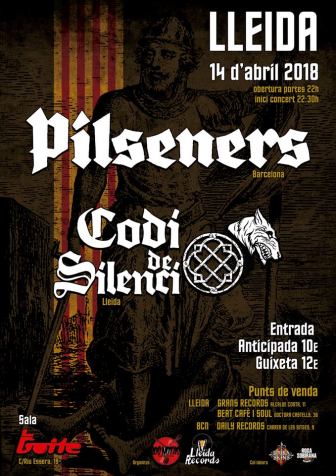 My impression of Catalonia is that skinheads with various viewpoints tend to stand united. The same seems to apply to bands – e.g. Pilseners, who openly identify as Communist, have no issue playing gigs with less radical or less political bands, such as yours. Is this assessment accurate?
Yes, that’s mostly accurate. Of course, you always get fanatics who believe that anyone who doesn’t share their views should die in a gulag or extermination camp. Obviously, they want the ‘scene’ in our country to be even smaller and more ridiculous than it already is.
Fortunately, these folks don’t have a big audience, and most people are capable of forming their own opinions based on what they see with their own eyes. In fact, there are circles that equate Codi de Silenci with RAC. That’s obviously stupid, but I think everybody has the right to talk rubbish.
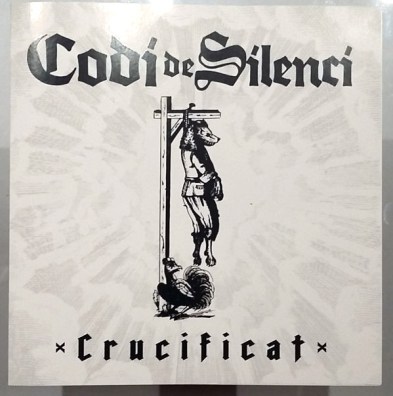
Incidentally, it’s often the same individuals who are most vocal in their criticisms that make the least effort when it comes to organising events, arranging gigs, releasing records, and so forth. Their main domain seems to be the internet. The internet is all they have, and I wrote our song ‘Crucificat’ mainly for them.
There was a time when being a skinhead was risky business, but today it’s fairly safe in most countries. What is it like in Catalonia?
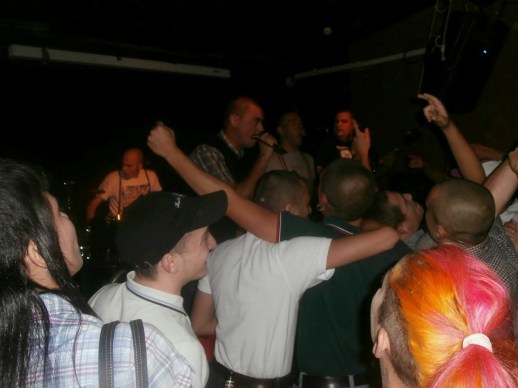 Clearly the 80s and 90s are long over and things have changed a lot. The days of large-scale brawls, razor blades, and casualties have largely become a thing of the past. As far as I can see, the situation appears to be relatively calm. Yes, there may still be occasional skirmishes, but they tend to occur at gigs or parties and are not caused by political differences. The situation isn’t as turbulent as it was a few years ago, and while there’s always the potential for trouble in the streets, instances of extreme violence are no longer the norm.
What does the Catalan public think of skinheads?
Just as things have changed, so has the public perception of skinheads. I wouldn’t say we’re more acceptable: most people, including the media, still equate skinheads with nazis. But nobody really talks about it much until some violent incident occurs, so it’s true that there has been a certain level of normalisation.
Is it still harder for skins to get jobs?
I suppose it’s similar to any other subculture. If you choose to dress smartly for an interview, even if that includes attire like a Fred Perry or Ben Sherman, sta prest trousers, and loafers, you’re unlikely to draw excessive attention compared to other candidates. It’s no longer seen as offensive as it once was to attend an interview with a shaved head or facial piercings.
What about the police?
Well, we all know what they’re like, don’t we? If they want to apprehend you, they have the means to do so, even if it’s merely for strolling down the street. It’s not necessarily a premeditated policy of persecution, but rather the presence of certain individuals with a desire to cause trouble for you.
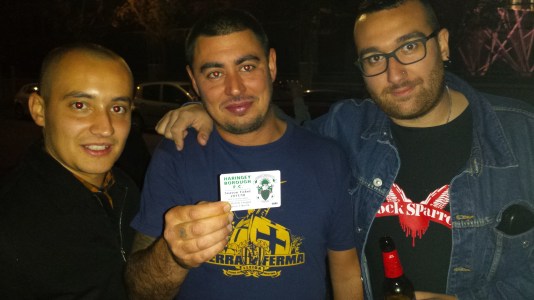
Your vocalist Dani co-founded Lleida’s football firm Rudes. A Catalan mate describes them as “fucking crazy”, and he means that in a positive way. Any memorable events?
Rudes were founded in 2003, and memorable things happen every Sunday when we get drunk and chant and shout for our club. We are about 50 people right now, and we’re on the terraces every Sunday giving everything for our team and our town.
Other memorable moments include the promotion playoffs, which were great times with loads of people on the terraces, even though the goal wasn’t reached. And as for your mate’s description, it is correct, both positively and negatively.
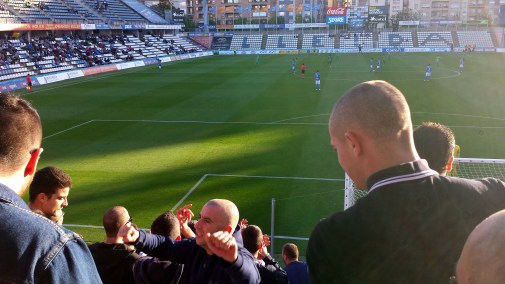
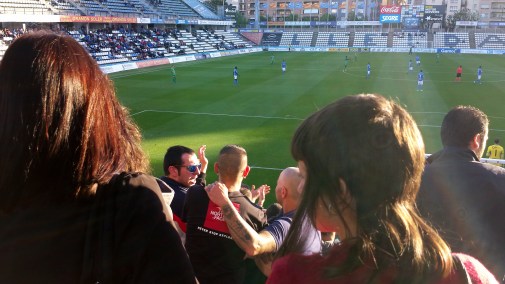
What do you do on weekends if not at football?
I guess it’s like everywhere else: we visit friends, go to parties, gigs, stay with friends, go to parties, concerts or DJ nights. From time to time, we visit people in other towns or just stay at home watching a movie. It’s a small scene and people travel, although usually always the same people do.
How’s the gig situation in Catalonia – is it easy for Oi bands to get booked, and are there many gigs to attend?
In Catalonia, we are lucky enough to have the Estraperlo of Badalona, a place mainly dedicated to the punk and skinhead scene. It also hosts hardcore, pop, techno and virtually all other musical styles, but it’s a mandatory stop for most bands that tour Europe. Obviously, that’s positive.
On the other hand, there is practically only this place plus another one in Barcelona. Putting on gigs is difficult, expensive and dangerous. That’s the case here just as much as everywhere else – there’s no need to discuss boycotts against particular bands here.
New groups do appear, but I think they don’t get enough power.
Why is that?
Partly, the loss of the DIY ideal is to blame. People form bands imagining grand scenarios, but without wanting to play to 15 friends for two beers in shitty bars first. Everyone expects that great phone call and invitation to tour Europe and the US, which usually only happens for those who know the right people.
What’s more, people form bands because it’s cool and gives them a certain status. They write lyrics that appeal to everyone, or they’re extremely offensive for the sake of it, or they’re so soft that they’re basically pop bands. They don’t play for themselves, but for general acceptance.
The Mau Maus rebels said, “People do not want to be classified as extremist, violent or irresponsible. They want to cultivate a nice image, and anyone striving for a nice image can never truly be free”. People are so scared of disapproval, they won’t write anything that might offend somebody.
Finally, can you introduce us to some Catalan skin bands, both historical and new?
Catalonia has had great Oi and skinhead bands, and even though the old days were better, there are still good bands around.
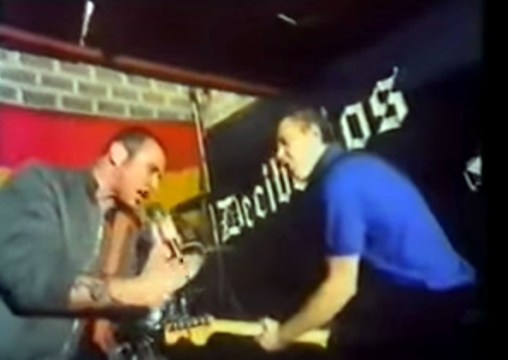
The first and best known band were certainly Decibelios – although everything they did after 1988 should be ignored – and Desperdicis Clínics. There were also the Olor Insoportable and Pisando Fuerte, who had a stronger ‘skinhead ska’ influence.
The early 90s gave us Frontpilsen, and bands like Skatalà and Dr. Calypso had a certain international impact, though they focused more on Jamaican rhythms.
Then we saw the appearance of Pilseners, Suburban Rebels and Opció K-95 in Barcelona, Malas Cartas in Terrassa, and – shortly after – Último Asalto. These bands set the foundations for an important scene and started playing outside our country.


I’m sure I forgot many bands, but I can tell you that the great explosion occurred in the 2000s and has lasted until today. That’s when bands began to form practically all over the country, whereas the bands I mentioned earlier were from Barcelona and the metropolitan area.
So off the top of my head and in no chronological order, I can remember Acero Condal, Barbarians, Rebelion, Desperta Ferro, Cirroi!sis, The Gundown, Secret Army, Bulldozer BCN, Skin Spirit, Youth Voices, Anti Patiks, Crim, Bulldog Firm, Garrotada, Steel Boots, Área de Combate, The Upset, Reconquesta, Opinió Pública, La Inquisición, Revenja, Demencials, Destral de Guerra, Headkick, Arma Letal, Guinness Boys, Between Vandals, Donec Perficiam, Skizoskins, Dröppols, Red Banner, Demasiados Enemigos, Adiktes A La Barra, Doble Malta, La Cobla, Atak-47, and now Exili.
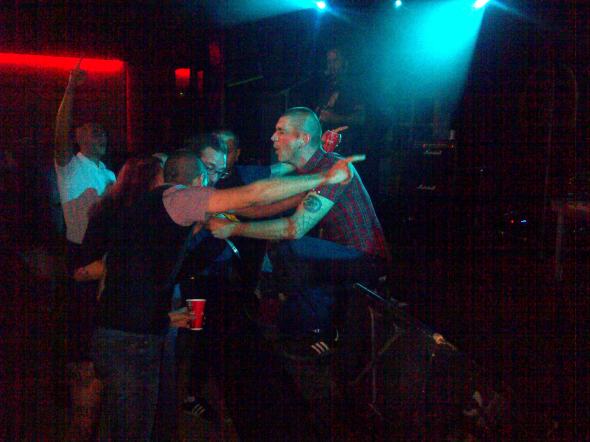
Keep in mind that I only mentioned bands from the Principat de Catalunya, which is but one of several Catalan-speaking territories that are considered culturally Catalan. They include the País Valencià, with bands such as Glory Boys, Shaved Dogs, Drakkar, Rebel Minds, Mercancias, Abriendo Cabezas and many others.
 Creases Like Knives
I like the sound of changing the paradigm. I’m always suspicious of ethnism, but changing the paradigm sounds good.
LikeLike
Pingback: Couldn’t give a fuck, where’s me beer? An Interview with Steve Smith of Red Alert – Creases Like Knives